Hooked Battery Up Backwards and Now Car Wont Start
Hooking your battery up backwards and now car won’t start is a common but serious mistake. Reverse polarity can fry your fuses, damage your ECU, and harm the alternator. This guide walks you through every symptom, fix, and prevention step so you can get back on the road safely.
You just finished swapping out your old battery. You connected the cables, turned the key, and nothing happened. Your car won’t start. Then it hits you. You hooked the battery up backwards and now car won’t start. That sinking feeling is all too real for car owners who have made this common mistake.
A backwards battery connection, also known as reverse polarity, is one of the scariest things that can happen under your hood. The good news is that many cars have some protection built in. The bad news is that protection doesn’t cover everything. Fuses can blow. Electronic modules can fry. And your alternator might take serious damage.
This guide breaks down exactly what happens when you connect your battery the wrong way. We’ll cover the symptoms you’ll notice, the damage that can occur, and the steps you can take to fix the problem. Whether your car is a modern sedan or an older truck, this information will help you understand what went wrong and what to do next.
Key Takeaways
- Reverse polarity causes real damage: Connecting a battery backwards can blow fuses, harm your ECU, and kill your alternator fast.
- Watch for warning signs early: Clicking noises, dashboard lights that don’t work, and a total electrical failure all point to a backwards battery.
- Don’t try to start it again: Repeated attempts after a reverse connection make the damage worse and costlier to repair.
- Professional diagnosis is often needed: A mechanic can scan your car’s computer and test the alternator, fuses, and ECU for hidden damage.
- Prevention is simple: Matching red to positive and black to negative takes seconds and saves hundreds in repairs.
- Check your battery health regularly: Old or corroded terminals increase the chance of a mix-up during installation.
- Know your fuse box layout: A blown main fuse is often the first sign of reverse polarity, and replacing it may not fix deeper damage.
📑 Table of Contents
- What Happens When You Hook Battery Up Backwards
- Immediate Signs Your Battery Was Connected Wrong
- The Damage a Reverse Polarity Connection Can Cause
- Can You Still Start Your Car After Hooking Battery Backwards?
- How to Fix a Car That Won’t Start After Reverse Battery Connection
- How to Prevent Hooking Your Battery Up Backwards
- Key Takeaways
- Conclusion
What Happens When You Hook Battery Up Backwards
When you connect a car battery backwards, the electrical current flows in the wrong direction through your vehicle’s system. Your car’s electrical components are designed to handle current in one direction only. When that direction flips, things go wrong fast.
The battery itself is the first thing affected. Inside the battery, chemical reactions happen in a specific direction. Reversing that direction can cause the battery to overheat, leak acid, or even crack. In worst cases, the battery can swell and become a safety hazard.
The Electrical System Takes the Hit
Your car’s wiring harness and electronic modules are built to handle a specific voltage polarity. When reverse polarity hits, components that aren’t designed for it can burn out almost instantly. The fuse box is supposed to be your first line of defense. But if the current spike is strong enough, it can bypass fuses and reach sensitive parts like the ECU.
The ECU, or engine control unit, is the brain of your car. It controls everything from fuel injection to ignition timing. A reverse polarity event can send the ECU into shutdown mode or cause permanent damage. Repairing or replacing an ECU is expensive, often costing several hundred dollars or more.
Why Modern Cars Are More Vulnerable
Older cars with simple electrical systems sometimes survive a backwards battery connection with minimal damage. They might just blow a few fuses. But modern vehicles are packed with computers, sensors, and digital modules. Each one is vulnerable to reverse polarity.
Your car’s onboard computer, the infotainment system, the power window modules, and the anti-lock braking system all rely on correct voltage direction. Even if your car starts after a reverse connection, hidden damage might be lurking in these systems. That’s why a professional inspection is always a smart move after this kind of mistake.
Immediate Signs Your Battery Was Connected Wrong
So how do you know if you’ve hooked your battery up backwards? There are several clear signs that show up right away. Catching them early can help you avoid turning the key again and making things worse.
No Power at All
The most obvious sign is a complete lack of electrical power. When you turn the key, the dashboard stays dark. The radio won’t turn on. The headlights don’t come on. This means the reverse polarity has likely tripped the main fuse or shut down the electrical system entirely.
Some cars have a reverse polarity protection fuse that blows immediately when the battery is connected backwards. This is actually a good thing. It means your car’s safety systems did their job. But it also means you won’t be driving anywhere until you fix the problem.
Clicking Sounds When You Turn the Key
If you hear rapid clicking when you try to start the car, that’s another red flag. The clicking usually comes from the starter motor trying to engage but not getting enough power. A backwards battery connection can prevent the starter from receiving the correct voltage, leaving you stuck with just clicking sounds.
Don’t keep trying to start the car. Every attempt sends more wrong-direction current through your system. That makes the damage worse and can push it beyond just blown fuses.
Burning Smell or Visible Damage
A burning plastic or electrical smell is a serious warning sign. It means something is overheating inside your electrical system. Check the battery terminals for visible damage. Look for melted insulation on the cables. If you see any of these signs, disconnect the battery immediately and call for help.
The Damage a Reverse Polarity Connection Can Cause
Understanding the full scope of damage helps you know what to ask the mechanic to check. A backwards battery connection doesn’t just affect one part of your car. It can create a chain reaction of problems across multiple systems.
Blown Fuses and Fusible Links
The first thing that usually goes wrong is the fuse box. Your car has multiple fuses designed to protect different circuits. A reverse polarity event can blow several fuses at once. The main power fuse, the ignition fuse, and the ECU protection fuse are the most common casualties.
Replacing blown fuses is cheap and easy. But here’s the catch. If the fuses blew, other components downstream might already be damaged. A blown fuse is often just the symptom, not the whole problem.
Alternator Damage
Your alternator charges the battery and powers the electrical system while the engine runs. It contains diodes that allow current to flow in only one direction. Reverse polarity can destroy these diodes instantly.
A damaged alternator will fail to charge your battery properly. You might get your car started with a jump, but it will die again shortly after. Replacing an alternator costs between $300 and $800 depending on your vehicle model. That’s a steep price for a simple cable mix-up.
ECU and Sensor Damage
The engine control unit and various sensors throughout the car are extremely sensitive to voltage direction. A reverse polarity surge can corrupt the software in the ECU or burn out sensor circuits.
Common sensors affected include the oxygen sensor, the crankshaft position sensor, and the camshaft position sensor. When these sensors fail, your car will run poorly or not start at all. Diagnosing sensor damage requires a professional scan tool that can read error codes from the ECU.
Infotainment and Digital Module Failure
Your radio, GPS, backup camera, and other digital modules can also suffer from a backwards battery connection. These components often have their own internal circuitry that isn’t designed to handle reverse voltage.
Replacing a damaged infotainment unit can cost anywhere from $200 to over $1,000. In some vehicles, the digital modules are integrated into the dashboard, making replacement even more expensive and complicated.
Battery Damage and Acid Leaks
The battery itself can be damaged by a reverse connection. The internal plates can warp, and the electrolyte solution can heat up and start to bubble. In severe cases, the battery casing cracks and battery acid leaks out.
A leaking battery is a safety hazard. Battery acid is corrosive and can damage paint, clothing, and skin. If your battery shows signs of leaking after a backwards connection, do not attempt to use it. Replace it with a new one and dispose of the old battery properly at a recycling center.
Can You Still Start Your Car After Hooking Battery Backwards?
The short answer is maybe, but it depends on the extent of the damage. Some cars with robust fuse protection will simply refuse to start after a reverse polarity event. The blown fuse acts as a circuit breaker and stops all electrical flow.
Other cars might actually start with a backwards battery, especially if the reverse polarity protection is weak or nonexistent. In these cases, the engine might turn over but run rough, stall immediately, or show erratic behavior on the dashboard gauges.
Even if your car seems fine after a backwards connection, internal damage might still exist. The ECU could have received a voltage spike that didn’t trip any fuses but caused micro-damage to sensitive circuits. This kind of hidden damage can show up weeks or months later as mysterious electrical gremlins.
The safest approach is always to assume damage has occurred. Have a professional inspect the vehicle before you keep driving. It’s much cheaper to catch a problem early than to replace a fried ECU or a dead alternator months down the road.
How to Fix a Car That Won’t Start After Reverse Battery Connection
If you’ve already made the mistake and your car won’t start, don’t panic. There are clear steps you can follow to diagnose and fix the problem. Some fixes are simple enough to do at home. Others will require a trip to the repair shop.
Step 1: Disconnect the Battery Immediately
The first thing to do is disconnect the battery cables. Use a wrench to loosen the terminal clamps and remove the cables. Start with the negative cable first, then the positive. This prevents any further electrical damage while you work on the problem.
Take a moment to inspect the battery terminals and cables. Look for melting, discoloration, or corrosion. If the terminals look damaged, they’ll need to be cleaned or replaced before you reconnect anything.
Step 2: Check and Replace Blown Fuses
Open your fuse box and look for blown fuses. The owner’s manual will show you the location of the main power fuse and the ECU protection fuse. Use a fuse tester or visual inspection to identify which fuses have blown.
Replace blown fuses with the correct amperage rating. Using the wrong fuse can create more problems. If the new fuse blows immediately after you reconnect the battery, that’s a sign of deeper damage in the circuit. Stop and call a mechanic.
Step 3: Inspect the Alternator
Have a mechanic or use a multimeter to test the alternator output. A healthy alternator should produce between 13.5 and 14.5 volts with the engine running. If the reading is too low or too high, the alternator might be damaged.
You can also listen for unusual noises from the alternator. A grinding or whining sound often indicates internal damage to the bearings or diodes. In this case, replacement is the only real fix.
Step 4: Scan for Error Codes
Take your car to an auto parts store or mechanic and have them run a diagnostic scan. The scan tool will read error codes stored in the ECU and other modules. These codes can reveal which electronic components were damaged by the reverse polarity event.
Common error codes after a backwards battery connection include codes related to the ECU, the voltage regulator, and various engine sensors. Each code points to a specific system that needs attention.
Step 5: Test the Battery
Even if the battery looks fine on the outside, internal damage might have occurred. Use a battery tester to check the voltage and cold cranking amps. A healthy battery should read 12.6 volts or higher when fully charged.
If the battery voltage is low or the CCA rating has dropped significantly, it’s time for a replacement. Trying to reuse a damaged battery can lead to the same problems all over again.
How to Prevent Hooking Your Battery Up Backwards
Prevention is always better than repair. Taking a few simple precautions can save you from the headache and expense of a reverse polarity mistake. Here are the best ways to protect yourself and your car.
Match Colors Correctly
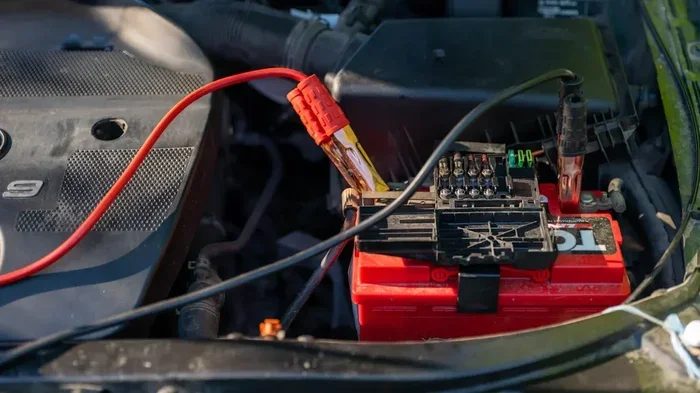
The simplest rule is also the most important. Red cable goes to the positive terminal. Black cable goes to the negative terminal. Always double-check before you tighten the clamps. It only takes a second and it can save you hundreds of dollars.
If your cables are not color-coded, look for the plus and minus symbols on the battery terminals. The positive terminal will have a plus sign and the negative terminal will have a minus sign. Match the cables to the correct symbols every time.
Disconnect in the Right Order
When removing the old battery, disconnect the negative cable first. Then disconnect the positive cable. When installing the new battery, connect the positive cable first, then the negative cable. This order reduces the risk of accidental short circuits and reverse polarity.
Clean the Terminals Before Connecting
Corroded battery terminals can make it harder to see the positive and negative markings. Use a wire brush or terminal cleaner to remove any white or greenish buildup before connecting the new battery. Clean terminals also provide a better electrical connection, which helps your car start more reliably.
Use Battery Terminal Markers
If your battery terminals are hard to read, add small markers or stickers to remind you which is positive and which is negative. Some battery retailers sell terminal covers with color-coded indicators. These small accessories can prevent big mistakes.
Take Your Time
Rushing through a battery swap is the number one cause of backwards connections. Give yourself plenty of time to work carefully. Read the owner’s manual if you’re unsure about the cable layout. It’s always better to take an extra minute and get it right than to deal with the consequences of a mistake.
Key Takeaways
- Reverse polarity causes real damage: Connecting a battery backwards can blow fuses, harm your ECU, and kill your alternator fast.
- Watch for warning signs early: Clicking noises, dashboard lights that don’t work, and a total electrical failure all point to a backwards battery.
- Don’t try to start it again: Repeated attempts after a reverse connection make the damage worse and costlier to repair.
- Professional diagnosis is often needed: A mechanic can scan your car’s computer and test the alternator, fuses, and ECU for hidden damage.
- Prevention is simple: Matching red to positive and black to negative takes seconds and saves hundreds in repairs.
- Check your battery health regularly: Old or corroded terminals increase the chance of a mix-up during installation.
- Know your fuse box layout: A blown main fuse is often the first sign of reverse polarity, and replacing it may not fix deeper damage.
Conclusion
Hooking your battery up backwards and now car won’t start is a stressful situation, but it’s one you can recover from. The key is to act quickly and avoid making the problem worse. Disconnect the battery, check the fuses, and get a professional diagnosis if needed.
Modern cars have more electronic systems than ever before, and those systems are sensitive to reverse polarity. Even if your car seems fine on the surface, hidden damage can cause problems down the road. A thorough inspection after a backwards battery connection is always worth the cost and time.
Prevention is your best defense. Take a few extra seconds to match the cables correctly, clean the terminals, and follow the right connection order. These simple habits will protect your car’s electrical system and keep you on the road without unexpected breakdowns.
If you’ve already made the mistake, don’t beat yourself up. It happens to the best of us. Follow the steps in this guide, get the help you need, and your car will be back to running strong in no time.
Frequently Asked Questions
Can a backwards battery connection destroy my car’s computer?
Yes, a reverse polarity connection can damage or destroy your car’s ECU and other computer modules. The ECU controls critical engine functions, and a voltage spike from backwards polarity can fry its internal circuits. That’s why a diagnostic scan after this mistake is so important.
How much does it cost to fix damage from a backwards battery?
The cost varies widely depending on what was damaged. Replacing a few fuses might cost under $20. But if the ECU, alternator, or multiple sensors are damaged, repairs can range from $300 to over $1,500. Getting a professional diagnosis quickly helps you understand the true cost.
Will my car’s warranty cover damage from a backwards battery connection?
Most car warranties do not cover damage caused by user error, including backwards battery connections. However, it’s always worth checking with your dealer or warranty provider. Some extended warranties or manufacturer recalls might cover specific electrical components regardless of the cause.
How long does it take to diagnose reverse polarity damage?
A basic diagnostic scan takes about 30 minutes. But if multiple systems need testing, the process can take a few hours. A thorough inspection includes checking the ECU, alternator, fuses, sensors, and all electronic modules for damage caused by the wrong polarity.
Can I replace just the fuses and drive my car normally?
Replacing blown fuses is a good first step, but it doesn’t guarantee everything else is fine. Hidden damage to the ECU, alternator diodes, or sensors might not show symptoms right away. It’s safer to have a full electrical inspection before driving the car normally again.
What should I do if I smell burning after connecting the battery?
A burning smell means something is overheating inside your electrical system. Disconnect the battery immediately and do not attempt to start the car. Check for melted cable insulation or damaged terminals. Call a tow truck and have the vehicle taken to a mechanic for a thorough inspection.