Car Wont Start and No Noise Here Are the Likely Causes
When your car won’t start and there’s no noise, it can be really frustrating. This common problem usually points to a few key culprits, including a dead battery, a bad starter motor, or a faulty ignition switch. Understanding the root cause saves you time, money, and a lot of stress. In this guide, we walk you through every likely reason and give you clear steps to diagnose and fix the issue yourself.
There’s nothing worse than turning your key or pressing the start button and hearing nothing at all. Your car won’t start and no noise comes from the engine bay. No cranking. No clicking. Just silence. This situation can leave anyone feeling stuck and confused. You might wonder if your car is completely dead or if it’s something simple you can fix yourself.
The truth is, a silent no-start condition actually gives you some clues. When a car makes noise but won’t start, the problem is often different. But when there’s total silence, the issue usually lives in the electrical system. This guide will walk you through every likely cause, explain how each part works, and give you practical steps to get back on the road.
Key Takeaways
- A dead or weak battery is the most common reason for a car that won’t start with no noise.
- Corroded battery terminals can block electrical flow and prevent your engine from turning over.
- A failed starter motor or starter relay will cause complete silence when you turn the key.
- A faulty ignition switch can stop power from reaching your car’s electrical system entirely.
- Regular maintenance like cleaning terminals and testing voltage can prevent most no-start issues.
- Knowing how to jump-start safely is a valuable skill every driver should have.
- If basic fixes don’t work, a professional mechanic can diagnose deeper electrical or wiring problems.
📑 Table of Contents
- Why Your Car Won’t Start and Makes No Noise
- Dead or Weak Battery
- Corroded Battery Terminals
- Faulty Starter Motor
- Bad Starter Relay or Solenoid
- Ignition Switch Problems
- Neutral Safety Switch Failure
- Wiring and Electrical Connection Issues
- Fuel Pump Failure
- Comparison: Common Causes of Silent No-Start
- Quick Tips to Prevent Silent No-Start Problems
- Expert Insights: What Mechanics Wish You Knew
- When to Call a Professional
- Key Takeaways
- Conclusion
Why Your Car Won’t Start and Makes No Noise
When you turn the ignition and hear nothing, the problem is almost always electrical. Your car needs three things to start: a good battery, a working starter motor, and a complete electrical circuit. If any one of these fails, you get the dreaded silent no-start. Let’s break down exactly why this happens and what each component does.
The starting process is simple on the surface. You turn the key or push the button. Power flows from the battery to the starter motor. The starter motor turns the engine. The engine starts running. But when something breaks in that chain, the whole process stops. And often, it stops without any sound at all.
The Electrical Circuit Explained
Think of your car’s starting system like a light switch. The battery is the power source. The wiring is the path. The starter motor is the bulb. If any part of that circuit breaks, nothing happens. No light. No sound. A car that won’t start and makes no noise usually has a break somewhere in this electrical path. Finding that break is the first step to a fix.
Modern cars have safety features built into this circuit too. The neutral safety switch prevents the car from starting in gear. The ignition switch controls which accessories get power. And the starter relay acts like a gatekeeper, sending power to the starter motor only when you turn the key. Any one of these parts can fail silently and leave you stranded.
Dead or Weak Battery
A dead battery is the number one reason a car won’t start and makes no noise. The battery provides the electrical power needed to crank the engine. When it’s dead or too weak, nothing happens when you turn the key. No grinding. No clicking. Just dead silence.
Batteries don’t last forever. Most last between three and five years. Cold weather makes them weaker. Leaving lights on drains them fast. And old batteries simply lose their ability to hold a charge over time.
How to Test Your Battery
You can test your battery with a simple multimeter. Set it to measure voltage. Touch the red probe to the positive terminal and the black probe to the negative terminal. A healthy battery reads 12.6 volts or higher. If it reads below 12.0 volts, your battery is weak. Below 11.8 volts means it’s probably dead.
Another quick test is the headlights test. Turn on your headlights without starting the car. If they’re dim or don’t come on at all, your battery is likely the problem. This simple check takes just a few seconds and gives you a clear answer.
When to Replace vs. Recharge
If your battery is dead but still in good condition, a jump-start might bring it back to life. However, if the battery is old or damaged, recharging won’t help for long. Look for cracks, bulging, or leaking. These are clear signs you need a new battery. Most auto parts stores will test your battery for free and help you find the right replacement.
Corroded Battery Terminals
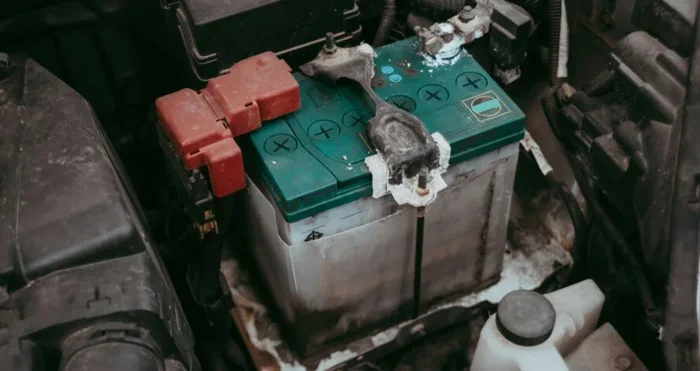
Even with a good battery, corroded terminals can stop your car from starting. Corrosion looks like a white or blue-green powdery build-up on the battery posts. This buildup blocks the electrical connection between the battery and the rest of the car. Power can’t flow properly. Your car stays silent when you turn the key.
Battery corrosion happens naturally over time. Acid fumes from the battery react with the metal terminals. Hot weather speeds up this process. Old batteries corrode faster too. The good news is that cleaning corroded terminals is easy and cheap.
How to Clean Battery Terminals
First, disconnect the battery cables. Always remove the negative cable first. Use a wire brush or a battery terminal cleaner to scrub away the corrosion. You can also make a paste from baking soda and water. Apply it to the terminals and scrub gently. Rinse with a little water and dry thoroughly before reconnecting.
After cleaning, reconnect the cables. Put the positive cable on first, then the negative. Try starting your car. If the corrosion was the only problem, your engine should crank right up. Applying a thin layer of petroleum jelly to the terminals after cleaning helps prevent future corrosion.
Faulty Starter Motor
The starter motor is the part that actually turns your engine over. When it works, you hear a loud cranking sound. But when the starter motor fails, your car won’t start and no noise comes from the engine bay at all. A dead starter motor is one of the more serious causes of a silent no-start.
Starter motors wear out over time. The internal brushes erode. The solenoid can fail. Electrical connections to the starter can corrode or loosen. Any of these problems can break the starting circuit completely.
Signs Your Starter Motor Is Failing
Watch for warning signs before your starter motor dies completely. A grinding noise when you start the car is a red flag. Slow cranking is another sign. Sometimes the starter works intermittently, which makes the problem hard to predict. If you notice any of these symptoms, get the starter checked before it fails entirely.
Replacing a starter motor is a job best left to a mechanic unless you have experience. The starter is usually located near the bottom of the engine, and accessing it can be tricky. Labor costs vary, but most repairs fall between $200 and $500 depending on your vehicle.
Bad Starter Relay or Solenoid
The starter relay and solenoid work together to send power to the starter motor. Think of the relay as a switch and the solenoid as the actuator. When you turn the key, the relay sends a small electrical signal to the solenoid. The solenoid then pushes the starter gear into the engine flywheel and completes the circuit.
If either the relay or the solenoid fails, the starter motor never gets the signal to engage. Your car stays completely silent. No crank. No click. This is a common cause of a no-crank no-start condition that many people overlook.
Testing the Starter Relay
You can test the starter relay with a multimeter or by swapping it with a similar relay in your fuse box. Relays are cheap and easy to replace. If swapping the relay fixes the problem, you’ve found your culprit. If not, the solenoid or starter motor itself may be the real issue.
Listen carefully when you turn the key. A single click from under the hood usually means the solenoid is trying to engage but the starter isn’t responding. No sound at all often points to the relay not sending power in the first place.
Ignition Switch Problems
The ignition switch controls the flow of electricity from the battery to your car’s systems. When you turn the key to the “on” or “start” position, the ignition switch directs power where it needs to go. A faulty ignition switch can break this circuit and leave your car completely silent.
Ignition switches wear out over years of use. The internal contacts erode. The electrical connections loosen. Some older vehicles are especially prone to ignition switch failure. This is one of those problems that can mimic a dead battery because the symptoms look the same.
How to Tell if It’s the Ignition Switch
Here’s a simple test. Turn the key to the “on” position without starting the car. Do your dashboard lights come on? Do your headlights work? If yes, the battery is good and the problem is likely downstream. If nothing happens at all in the “on” position, the ignition switch could be the issue.
Replacing an ignition switch is a moderate repair. The cost is usually between $100 and $250 for parts and labor. On some vehicles, the ignition lock cylinder is combined with the switch, which can raise the price slightly.
Neutral Safety Switch Failure
The neutral safety switch is a safety device that prevents your car from starting unless the transmission is in park or neutral. When this switch fails, your car won’t start even though everything else is working perfectly. It’s a common cause of silent no-start problems that surprises many drivers.
This switch is built into the transmission or the shifter linkage. Over time, it can wear out, get misaligned, or develop electrical faults. The result is the same: you turn the key and hear nothing. Your engine cranks circuit is simply broken by the failed switch.
Quick Fix for the Neutral Safety Switch
Try this before assuming the worst. Shift your transmission into neutral and try starting the car. If it starts in neutral but not in park, the neutral safety switch is likely the problem. The switch needs adjustment or replacement. This is a relatively inexpensive fix that a mechanic can handle quickly.
Some drivers also try wiggling the shifter while holding the key in the start position. If this gets your car to start, the switch is definitely failing and needs attention soon.
Wiring and Electrical Connection Issues
Your car’s electrical system relies on a complex web of wires and connectors. A single broken wire or loose connection can stop the entire starting process. When your car won’t start and no noise comes out, damaged wiring should be on your list of possible causes.
Wires can corrode, fray, or break from vibration over time. Connectors can loosen from regular driving or from undercarriage damage. Ground straps connect the electrical system to the car’s frame, and a broken ground strap can cause all kinds of electrical gremlins.
Common Wiring Problems That Cause Silent No-Start
Look for frayed wires near the battery and starter motor. Check the ground strap connecting the battery to the car’s frame. Inspect connectors at the ignition switch and neutral safety switch for corrosion or looseness. A visual inspection often reveals the problem quickly.
Use a multimeter to check for voltage drops across connections. A drop of more than 0.5 volts across any connection suggests resistance in the circuit. This resistance can be enough to prevent the starter motor from engaging, even if the battery is fully charged.
Fuel Pump Failure
While fuel pump problems usually cause a car to crank but not start, a completely failed fuel pump relay can sometimes prevent the starting circuit from completing. This is rarer than electrical causes, but it’s worth considering if you’ve ruled out the battery, starter, and ignition switch.
The fuel pump sends gasoline from the tank to the engine. When it fails, the engine doesn’t get fuel. In some vehicles, the fuel pump relay is part of the starting circuit. If the relay fails, it can interrupt the entire start process and leave you with no noise at all.
How to Check the Fuel Pump
Turn the key to the “on” position without starting the car. You should hear a brief hum from the back of the fuel tank. This is the fuel pump priming itself. If you hear nothing, the fuel pump or its relay may be dead. However, this symptom alone usually points to a cranking problem rather than a no-crank problem.
Replacing a fuel pump is one of the more expensive repairs on this list, typically costing between $400 and $800. But the good news is that fuel pump failure alone rarely causes a completely silent no-start condition. It’s usually the electrical components around the fuel pump that cause the problem.
Comparison: Common Causes of Silent No-Start
| Cause | Symptom | Likely Cost to Fix | DIY Difficulty |
|---|---|---|---|
| Dead Battery | No sound at all, dim lights | $0 to $150 | Easy |
| Corroded Terminals | No sound, visible buildup | $0 to $20 | Easy |
| Bad Starter Motor | No sound, sometimes grinding before | $200 to $500 | Hard |
| Faulty Starter Relay | No sound, no click | $20 to $80 | Moderate |
| Bad Ignition Switch | No dash lights in “on” position | $100 to $250 | Moderate |
| Neutral Safety Switch | Starts in neutral but not park | $100 to $300 | Moderate |
| Wiring Issues | Varies, intermittent or permanent | $50 to $300 | Moderate to Hard |
Quick Tips to Prevent Silent No-Start Problems
Prevention is always better than repair. A few simple habits can keep your car starting reliably for years. Here are some tips that really work:
- Get your battery tested every spring and fall. Seasonal temperature changes are the biggest killer of car batteries.
- Clean your battery terminals once a year. A wire brush takes five minutes and prevents countless problems.
- Turn off all accessories before shutting off the engine. Lights, radio, and AC put extra strain on the battery at startup.
- Keep your battery terminals tight. Loose connections create resistance and can prevent your car from starting.
- Replace your battery before it dies completely. A battery that’s three years old should be tested regularly.
- Listen for warning sounds. Grinding or slow cranking today can mean a dead starter tomorrow.
- Keep jumper cables or a portable jump starter in your trunk. You never know when you’ll need them.
Expert Insights: What Mechanics Wish You Knew
Experienced mechanics see silent no-start problems every single day. They want you to know a few things that can save you time and money. First, don’t assume it’s the battery just because the car won’t start. A battery test takes seconds and should always be your first step. Second, don’t keep turning the key over and over. Each attempt drains what little charge remains in a weak battery. Wait at least 30 seconds between attempts to let the starter cool down.
Mechanics also want you to understand that the silence itself is valuable diagnostic information. A car that clicks but won’t start usually has a different problem than a car that makes no sound at all. The complete silence points strongly to electrical issues rather than mechanical ones. Share this observation with your mechanic and it will help them diagnose the problem faster.
One more tip from the pros: keep a set of jumper cables in your car at all times. Even if you never need them for yourself, you might be able to help someone else. And in a pinch, a portable jump starter pack can get you home when your battery dies unexpectedly. These small investments pay for themselves many times over.
When to Call a Professional
Some no-start problems are easy to fix yourself. But others need professional tools and expertise. If you’ve checked the battery, cleaned the terminals, and tested the starter relay, and your car still won’t start with no noise, it’s time to call a mechanic. Deep electrical problems, wiring issues hidden in the car’s computer system, and internal engine problems all require professional diagnosis.
A professional mechanic has diagnostic tools that can read error codes from your car’s computer. These codes can point directly to the failing component. This saves you from replacing parts blindly and spending money on repairs you don’t need.
Also, if your car is still under warranty, check with your dealer before paying for any repairs out of pocket. Many no-start conditions are covered under warranty, especially if the car is less than five years old. You might save hundreds of dollars by going through the right channel.
Key Takeaways
- A dead or weak battery is the most common reason for a car that won’t start with no noise.
- Corroded battery terminals can block electrical flow and prevent your engine from turning over.
- A failed starter motor or starter relay will cause complete silence when you turn the key.
- A faulty ignition switch can stop power from reaching your car’s electrical system entirely.
- Regular maintenance like cleaning terminals and testing voltage can prevent most no-start issues.
- Knowing how to jump-start safely is a valuable skill every driver should have.
- If basic fixes don’t work, a professional mechanic can diagnose deeper electrical or wiring problems.
Conclusion
A car that won’t start and makes no noise is scary, but it’s usually fixable. The most common causes are all electrical, which means they’re diagnosable and repairable with the right approach. Start with the battery. Check the terminals. Test the starter relay. Work through the list systematically and you’ll find the answer most of the time.
Remember that a silent no-start condition gives you a clear starting point for diagnosis. Unlike noisy problems that can have dozens of causes, silence usually points to a specific part of the electrical circuit. Use that to your advantage. Follow the steps in this guide, stay patient, and you’ll get your car running again.
Don’t let a silent no-start ruin your day. With the knowledge in this article, you have the tools to diagnose and often fix the problem yourself. And if you can’t fix it, you’ll know exactly what the mechanic needs to do, which saves you money and builds confidence. The next time your car won’t start and no noise comes from the engine, you’ll know exactly what to do.
Frequently Asked Questions
Why does my car won’t start and no noise at all?
The most common reason is a dead or weak battery. When the battery can’t provide enough power, the starter motor never engages, which is why you hear no noise. Other electrical causes include corroded terminals, a bad starter relay, or a faulty ignition switch. Start by testing your battery voltage to narrow down the problem.
Can a bad ignition switch cause a car not to start with no noise?
Yes, a faulty ignition switch can completely break the electrical circuit that powers the starter motor. If your dashboard lights don’t come on when you turn the key to the “on” position, the ignition switch is a likely culprit. Replacing it is usually an affordable and straightforward repair.
How do I know if my starter motor is bad?
A bad starter motor usually causes no sound at all when you turn the key. Before it fails completely, you might hear grinding or slow cranking. You can test the starter by having someone tap it lightly with a hammer while another person turns the key. If the engine starts, the starter motor is failing and needs replacement.
Is it safe to keep trying to start my car if it won’t start and makes no noise?
No, repeatedly turning the key drains what little charge remains in a weak battery and can overheat the starter motor. Wait at least 30 seconds between attempts. If the car doesn’t start after two or three tries, check the battery first before trying again.
How much does it cost to fix a car that won’t start with no noise?
The cost depends entirely on the cause. A dead battery might cost nothing if you can jump-start it, or $100 to $150 for a replacement. A starter motor repair typically costs $200 to $500. An ignition switch replacement runs $100 to $250. Corroded terminals cost nothing to clean. Always diagnose the exact cause before spending money on repairs.
What should I keep in my car to prevent silent no-start problems?
Keep jumper cables or a portable jump starter in your trunk at all times. A set of basic tools, a multimeter for testing voltage, and some battery terminal cleaner go a long way too. These small items can save you from being stranded and help you diagnose problems quickly when they happen.