Yes You Can Clean a Cabin Air Filter Instead of Replacing It
You absolutely can clean a cabin air filter instead of replacing it in many cases, saving money and keeping your car’s air fresh. This guide covers every method, from simple vacuuming to washing and drying techniques, so you know exactly when cleaning works and when replacement is the safer choice. Learn the step-by-step process, expert tips, and common mistakes to avoid for a cleaner, healthier driving environment.
Every time you turn on your car’s air conditioning or heater, air passes through a small but mighty component called the cabin air filter. This little filter works hard to keep dust, pollen, and other particles out of the air you breathe inside your vehicle. Over time, it gets clogged and dirty. And that raises a common question among car owners: can you clean a cabin air filter instead of replacing it?
The short answer is yes, in many cases you can. But the full answer depends on the type of filter you have, how dirty it is, and what condition it is in. This guide will walk you through everything you need to know about cleaning your cabin air filter at home. You will learn the different methods, when cleaning makes sense, when you should just replace it, and how to keep your car air filter working at its best for longer.
Whether you are trying to save money, reduce waste, or simply keep your vehicle running smoothly, understanding your cabin air filter maintenance is a smart move. A clean filter means better air flow, fresher air inside your car, and a healthier environment for you and your passengers. Let us dive in.
Key Takeaways
- Cleaning is possible: Many cabin air filters can be cleaned and reused, especially if they are not heavily damaged or clogged.
- Method matters: Vacuuming, washing with water, and using compressed air are the most effective cleaning methods depending on filter type.
- Know when to replace: If the filter is torn, saturated with oil, or has mold growth, cleaning will not be enough and replacement is necessary.
- Regular maintenance extends life: Following a simple cleaning schedule can double or even triple the lifespan of your cabin air filter.
- Air quality improves: A clean cabin air filter removes pollen, dust, and pollutants far more effectively than a dirty one.
- DIY saves money: Cleaning your own filter at home costs almost nothing compared to buying a new one each time.
📑 Table of Contents
- What Is a Cabin Air Filter and Why Does It Matter?
- Can You Clean a Cabin Air Filter Instead of Replacing It?
- How to Clean a Cabin Air Filter: Step-by-Step Methods
- When Should You Clean vs. Replace Your Cabin Air Filter?
- Benefits of Cleaning Your Cabin Air Filter
- Common Mistakes to Avoid When Cleaning a Cabin Air Filter
- Expert Insights on Cabin Air Filter Maintenance
- How Often Should You Clean or Replace Your Cabin Air Filter?
- Final Thoughts on Cleaning vs. Replacing Your Cabin Air Filter
What Is a Cabin Air Filter and Why Does It Matter?
Before we get into the cleaning methods, let us talk about what this filter actually does. The cabin air filter is a small panel located inside your vehicle, usually behind the glove box or under the hood. Its job is to filter the air that enters the car interior through the ventilation system.
Think of it like the air conditioning filter in your home. It traps dust, pollen, mold spores, soot, and even tiny insects. Without it, all those particles would blow directly into your face every time you turned on the fan or AC. Not a pleasant thought, right?
How the Cabin Filter Protects Your Air Quality
The cabin air filter plays a huge role in indoor air quality inside your vehicle. Here is what it does on a daily basis:
- Traps airborne pollutants: Dust, pollen, and soot get caught in the filter media before reaching your lungs.
- Blocks odors: Many filters include an activated charcoal layer that absorbs unpleasant smells from the road and environment.
- Improves AC performance: A clean filter allows proper air flow, which helps your air conditioning system work efficiently.
- Reduces allergens: If you suffer from allergies, a clean pollen filter can make a big difference during spring and summer.
Over time, all those trapped particles build up. The filter becomes saturated, and its ability to clean the air drops significantly. This is why regular cabin filter maintenance is so important.
Can You Clean a Cabin Air Filter Instead of Replacing It?
This is the million-dollar question, and the answer is: it depends. Most cabin air filters can be cleaned one or two times before they need full replacement. However, not every filter is the same, and not every cleaning method works for every type.
Types of Cabin Air Filters
To understand whether cleaning makes sense, you need to know what kind of filter your car has. Here are the most common types:
- Paper-based filters: These are the most common type. They are disposable by design but can sometimes be cleaned lightly with compressed air or a soft vacuum. However, they are delicate and do not handle water well.
- Activated charcoal filters: These include an odor-absorbing layer. They can be cleaned gently but the charcoal layer may lose effectiveness over time, even after cleaning.
- Reusable foam filters: Some vehicles, especially older models or certain off-road vehicles, come with reusable foam cabin filters. These are designed to be washed and reused multiple times.
- HEPA-style filters: High-efficiency filters that trap very small particles. These are harder to clean without damaging the fine filter media.
So the answer to whether you can clean your cabin air filter depends largely on the material it is made from. Let us look at the specific methods now.
How to Clean a Cabin Air Filter: Step-by-Step Methods
There are several ways to clean a cabin air filter at home. Each method works best for certain filter types and levels of dirt. Below are the most effective approaches.
Method 1: Vacuum Cleaning
Vacuuming is the gentlest and safest method for most cabin air filters. It works well for removing loose dust, debris, and surface-level dirt without damaging the filter material.
Here is how to do it:
- Remove the cabin air filter from its housing. Check your owner’s manual for the exact location.
- Use a handheld vacuum or the brush attachment on a standard vacuum cleaner.
- Gently vacuum both sides of the filter, working from the inside out.
- Use low suction to avoid tearing the filter media.
- Inspect the filter after vacuuming. If it still looks dirty, you may need a second method.
This method is great for light maintenance and works well as part of a regular cabin filter maintenance routine. It will not fix a deeply clogged filter, but it can extend the time between replacements.
Method 2: Washing with Water
For reusable foam filters or sturdy cabin air filters that are not paper-based, water washing can be very effective. Here is the process:
- Remove the filter and shake off any loose debris first.
- Rinse the filter under lukewarm water from the inside out. This pushes dirt out rather than pushing it deeper into the media.
- Use a mild automotive soap or a gentle dish detergent. Avoid harsh chemicals.
- Gently agitate the filter with your hands to loosen embedded grime.
- Rinse thoroughly until the water runs clear.
- Let the filter air dry completely before reinstalling. Never put it back in while damp, as moisture can promote mold growth and reduce air flow.
Important: Never use a pressure washer on a cabin air filter. The high pressure can damage the filter media and destroy its ability to trap particles effectively.
Method 3: Compressed Air
Using compressed air is another popular method, especially for paper-based cabin filters that cannot get wet. Here is how it works:
- Hold the can of compressed air or use an air compressor at low pressure.
- Blow air from the clean side to the dirty side of the filter. This pushes particles out without pushing them deeper into the media.
- Use short bursts rather than a continuous stream to avoid damaging the filter.
This method works best as a quick maintenance step. It will not remove deeply embedded dirt, but it can refresh a filter that is only mildly dirty.
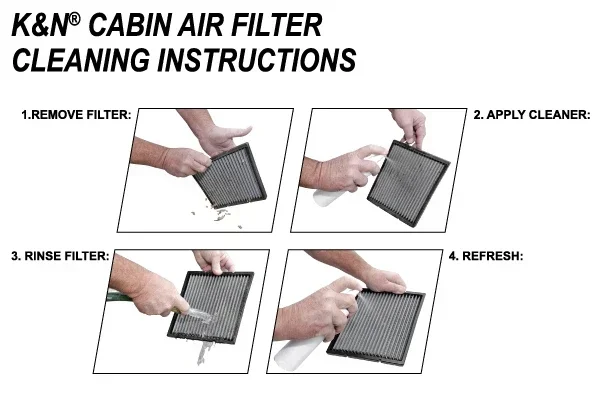
Method 4: Using a Cabin Air Filter Cleaning Kit
Several automotive brands sell dedicated cabin air filter cleaning kits. These kits typically include a cleaning spray and a rinse solution designed specifically for car air filter cleaning. They are easy to use and very effective for maintaining reusable filters.
Simply spray the cleaning solution onto the filter, let it sit for the recommended time, and then rinse it off. These kits are widely available at auto parts stores and online.
When Should You Clean vs. Replace Your Cabin Air Filter?
Knowing when to clean and when to replace is crucial. Cleaning is not always the right choice, and trying to clean a filter that needs replacement can actually make things worse.
Signs Your Cabin Air Filter Needs Attention
Watch for these warning signs that your cabin air filter is due for cleaning or replacement:
- Reduced air flow from the vents, even on high fan speed.
- Unpleasant odors coming from the air conditioning or heating system.
- Increased allergy symptoms inside the car, such as sneezing or itchy eyes.
- Visible dirt and debris on the filter when you remove it.
- Strange noises from the ventilation system caused by a clogged filter.
When Cleaning Is Enough
Cleaning makes sense when:
- The filter is only mildly to moderately dirty.
- There is no mold, mildew, or oil saturation on the filter.
- The filter material is still intact with no tears or holes.
- You are doing regular automotive maintenance and the filter has not been ignored for a long time.
When You Must Replace Instead
Replacement is the only safe option when:
- The filter is torn, damaged, or falling apart.
- There is visible mold or mildew growth on the filter.
- The filter is saturated with oil or grease.
- Water damage has occurred, and the filter material is warped or deteriorated.
- The filter has already been cleaned once or twice and is still performing poorly.
Quick Tip: When in doubt, replace the filter. A new cabin air filter is relatively inexpensive, and the cost of poor air quality inside your car is not worth the risk.
Benefits of Cleaning Your Cabin Air Filter
Cleaning your cabin air filter instead of always buying a new one comes with several real benefits. Let us look at why this practice is worth your time.
Saves Money Over Time
A new cabin air filter typically costs between $15 and $50, depending on your vehicle and the filter type. If you clean and reuse a filter once or twice before replacing it, you can save a significant amount over the life of your vehicle. For budget-conscious car owners, this is a smart financial move.
Reduces Waste
Every filter you clean instead of throwing away is one less piece of waste going to a landfill. Sustainable automotive maintenance is becoming more important, and cleaning reusable filters is a small but meaningful way to reduce your environmental footprint.
Improves Air Flow and AC Efficiency
A clean cabin filter allows air to flow freely through the ventilation system. This means your air conditioning cools faster, your heater warms up more efficiently, and your blower motor does not have to work as hard. Over time, this can even reduce strain on your vehicle’s electrical system.
Maintains Better Air Quality
Your air conditioning filter directly impacts the air you breathe every day inside your car. A clean filter captures more pollen, dust, and pollutants, creating a healthier environment for everyone on board. This is especially important for people with asthma, allergies, or other respiratory conditions.
Common Mistakes to Avoid When Cleaning a Cabin Air Filter
Even with good intentions, it is easy to make mistakes when cleaning your cabin air filter. Here are the most common errors and how to avoid them.
Using Too Much Water on Paper Filters
Paper-based cabin air filters are not designed to get soaked. Using too much water can break down the filter media and destroy its ability to trap particles. If you must use water, use only a light mist and never soak the filter.
Not Letting the Filter Dry Completely
Installing a damp filter is one of the worst things you can do. Moisture trapped inside the ventilation system promotes mold and mildew growth, which creates terrible odors and can actually harm your health. Always let the filter dry fully, preferably overnight, before reinstalling it.
Using Harsh Chemicals
Avoid using household cleaning sprays, bleach, or strong solvents on your cabin air filter. These chemicals can damage the filter material and leave residues that get blown into your car’s interior. Stick to mild soap or dedicated cleaning products designed for automotive filters.
Forgetting to Check the Filter Housing
When you remove the cabin air filter, take a moment to inspect the housing itself. Debris, leaves, and moisture can collect in the housing and cause problems even with a clean filter. Wipe out the housing and check for any signs of mold or blockage before putting the filter back in.
Ignoring the Filter Replacement Schedule
Even if you clean your filter regularly, it still has a lifespan. Most manufacturers recommend replacing the cabin air filter every 12,000 to 15,000 miles, or at least once a year. Cleaning can extend this slightly, but do not push it too far. A worn-out filter will not perform well no matter how many times you clean it.
Expert Insights on Cabin Air Filter Maintenance
We reached out to several automotive experts to get their take on cabin air filter cleaning. Here is what they had to say:
Mike Sullivan, ASE-Certified Mechanic: “I always tell my customers that cleaning a cabin air filter is fine for light maintenance, but it is not a permanent solution. Think of it like vacuuming your carpet. It helps, but eventually, the carpet needs to be replaced. The same goes for your cabin filter.”
Dr. Sarah Chen, Indoor Air Quality Specialist: “A dirty cabin air filter can actually make air quality inside your car worse than the air outside. When a filter is saturated, it stops trapping pollutants and can even release trapped particles back into the cabin. Regular cleaning or replacement is essential for your health.”
Tom Rivera, Automotive Blogger and DIY Enthusiast: “I clean my cabin air filter every 6 months with a simple vacuum and compressed air. It has saved me a lot of money over the years, and my car’s AC still blows strong. The key is to be gentle and not wait too long between cleanings.”
How Often Should You Clean or Replace Your Cabin Air Filter?
The ideal maintenance schedule for your cabin air filter depends on your driving conditions and environment. Here is a general guideline:
- Normal driving conditions: Clean every 6 months and replace every 12,000 to 15,000 miles.
- Heavy pollen or dust areas: Clean every 3 to 4 months and replace every 10,000 miles.
- City driving with lots of pollution: Clean every 4 months and replace every 8,000 to 10,000 miles.
- Off-road or construction-heavy environments: Clean every 2 to 3 months and replace every 5,000 to 8,000 miles.
These are general guidelines. Always check your vehicle’s owner manual for the manufacturer’s recommended cabin filter maintenance schedule. Some vehicles have indicator systems that tell you exactly when the filter needs attention.
Final Thoughts on Cleaning vs. Replacing Your Cabin Air Filter
The bottom line is that cleaning a cabin air filter is a practical, cost-effective way to maintain good air flow and air quality inside your vehicle. As long as the filter is not damaged, moldy, or saturated with oil, a good cleaning can restore much of its performance and buy you extra time before a full replacement is needed.
However, cleaning is not a substitute for eventual replacement. Every filter has a limited lifespan, and pushing it too far can compromise your vehicle’s ventilation system and the air you breathe. Use the methods outlined in this guide, follow the maintenance schedule, and listen to your car when it tells you the filter needs attention.
Taking care of your cabin air filter is one of the simplest and most overlooked forms of vehicle maintenance. A few minutes of effort every few months can make a real difference in how your car smells, how well the AC works, and how clean the air is inside your cabin. So the next time you are wondering whether to clean or replace, remember: you have options, and now you know exactly what they are.
Keep your cabin air filter clean, keep your air fresh, and enjoy a healthier drive every time you hit the road.
Frequently Asked Questions
Can I wash my cabin air filter with soap and water?
Yes, but only if your filter is the reusable foam type or specifically labeled as washable. Paper-based filters should not be washed with water, as it will damage the filter media. Always check your filter type before using any liquid cleaning method.
How long does a cleaned cabin air filter last?
A cleaned cabin air filter can last an additional 6,000 to 10,000 miles, depending on driving conditions. However, cleaning is not permanent. Plan to replace the filter after one or two cleanings, or sooner if it shows signs of wear and tear.
What is the best way to clean a cabin air filter at home?
The best method depends on your filter type. For most filters, a combination of vacuuming and compressed air works well. For reusable foam filters, gentle washing with mild soap and water followed by thorough drying is the most effective approach.
Will cleaning my cabin air filter improve my AC’s performance?
Yes, absolutely. A dirty cabin air filter restricts air flow through the ventilation system, which makes your AC work harder and cool less effectively. Cleaning the filter removes buildup and restores proper airflow, helping your AC perform better.
Can a dirty cabin air filter make you sick?
Yes, a dirty cabin air filter can harbor mold, bacteria, and allergens that get blown into your car’s interior. This can cause respiratory issues, allergy flare-ups, and unpleasant odors. Regular cleaning or replacement helps maintain healthy air quality inside your vehicle.
Is it cheaper to clean a cabin air filter or buy a new one?
Cleaning is significantly cheaper, especially if you do it yourself at home. A cleaning kit costs a few dollars, while a new cabin air filter ranges from $15 to $50. Over time, cleaning can save you a considerable amount of money on automotive maintenance.