Can I Drive My Car With a Parking Brake Malfunction
Driving with a parking brake malfunction is risky and depends on the type of problem you have. A stuck or partially engaged parking brake can damage your brakes and reduce safety. However, if the parking brake simply won’t engage, you can still drive carefully if your regular brakes work fine. This guide covers every scenario, including parking brake repair options, safety risks, and when to see a mechanic immediately.
Have you ever turned the key, ready to head out, only to notice your parking brake malfunction? It’s one of those moments that makes you pause. You wonder if it’s safe to just drive anyway. The short answer is: it depends on what kind of malfunction you’re dealing with. Some issues are minor and manageable. Others are serious safety hazards that need immediate attention.
Your parking brake is a critical part of your vehicle’s brake system. It keeps your car stationary when parked, especially on hills. When it malfunctions, you face real risks. These include rolling away, damaging your brakes, or losing control while driving. This article breaks down every scenario so you know exactly what to do.
We’ll cover brake safety, common causes, repair costs, and practical steps you can take right now. Whether you drive a sedan with rear disc brakes or a truck with drum brake setups, this guide applies to you. Let’s get into it.
Key Takeaways
- You can drive short distances if your regular braking system works and the parking brake is fully released.
- A stuck parking brake can cause overheating, uneven brake wear, and dangerous driving conditions.
- Never ignore the brake warning light, as it signals a serious issue with your brake system.
- Parking brake cable problems are common and often easy to fix with simple maintenance.
- Replacing worn brake pads or cables restores proper parking brake function in most cases.
- Regular brake maintenance prevents parking brake malfunctions before they become expensive repairs.
- When in doubt, have a professional inspect your hydraulic brake system and rear brakes.
📑 Table of Contents
What Happens When Your Parking Brake Malfunctions
A parking brake malfunction can show up in several ways. Each type of problem comes with its own set of risks and solutions. Understanding what’s going wrong helps you make smart decisions about driving.
Stuck or Partially Engaged Parking Brake
This is the most common issue. The parking brake stays partially engaged even when you release it. You might notice a burning smell near the rear wheels. Or you may see smoke after driving a short distance. The parking brake cable gets stuck, pulling the brake pads against the brake rotor or brake drum constantly.
Driving with a stuck parking brake causes several problems:
- Overheating of the rear brakes, which reduces braking power
- Uneven brake pad wear on one side
- Damage to the brake rotor or drum surface
- Reduced fuel efficiency due to drag
- Fire risk in extreme cases from excessive heat
Parking Brake That Won’t Engage
On the other side of the spectrum, some parking brakes simply won’t hold the car. This happens when the cable stretches or breaks, the adjustment mechanism fails, or internal parts corrode. This is especially dangerous when parked on a slope. Your vehicle could roll away and cause an accident.
While this type of malfunction doesn’t damage your brake system while driving, it’s still a serious brake safety concern. You need to address it quickly.
Warning Lights and Dashboard Alerts
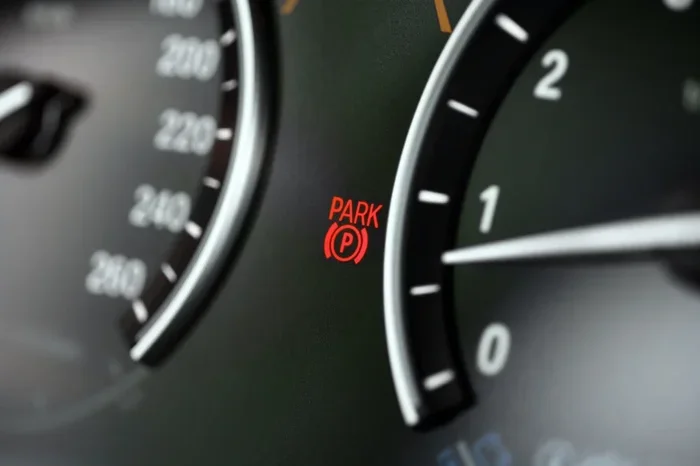
Most modern vehicles have a brake warning light on the dashboard. If this light comes on, it often signals a parking brake malfunction. Sometimes the light indicates low brake fluid in the hydraulic brake system. Other times it points to a sensor issue. Either way, you should never ignore this warning.
The brake warning light is your car telling you something needs attention. Driving without checking could lead to a complete brake failure situation, which is extremely dangerous.
Can You Actually Drive With a Parking Brake Malfunction
This is the question most drivers want answered. The honest answer is: it depends on the severity of the malfunction and whether your primary braking system works properly.
When It’s Safe to Drive Short Distances
If your parking brake won’t engage or release fully and your regular foot brakes work perfectly, you can drive carefully to a repair shop. Keep these tips in mind:
- Drive at low speeds only — avoid highway driving
- Use your foot brake for all stopping
- Avoid steep hills where the parking brake would normally help
- Turn corners gently to reduce stress on the rear brakes
- Listen for unusual sounds like grinding or squealing
Think of it as a temporary workaround, not a permanent fix. You’re essentially using your vehicle with a reduced safety margin.
When You Should NOT Drive at All
There are situations where driving is simply too risky. Do not drive your car if:
- The parking brake is stuck engaged and causing drag on the rear wheels
- You smell burning or see smoke from the wheels
- Your brake warning light is flashing along with other alerts
- The brake pedal feels soft, spongy, or goes to the floor
- You hear grinding noises when braking
In these cases, call a tow truck. Driving with a compromised brake system puts you and others at serious risk. The cost of a tow is far less than the cost of an accident.
Common Causes of Parking Brake Malfunctions
Knowing what causes a parking brake malfunction helps you prevent future problems. Several components can fail, and most are easy to identify.
Worn or Stretched Parking Brake Cable
The parking brake cable connects the lever or pedal to the rear brake calipers or shoes. Over time, this cable stretches, corrodes, or frays. A stretched cable won’t pull the brakes tight enough to hold the car. A corroded cable can seize up and keep the brakes partially engaged.
This is the number one cause of parking brake issues across all vehicle types. Regular brake maintenance includes checking the cable tension and condition.
Brake Pad or Shoe Wear
When your brake pads or shoes wear down too much, the parking brake can’t grip properly. The pads need enough material to clamp against the rotor or drum. Thin pads mean weak stopping power and an unreliable parking brake.
If you’re overdue for a brake pad replacement, this could be the root cause of your malfunction. A mechanic can inspect the pads quickly during a routine service visit.
Broken or Misadjusted Linkage
The linkage system translates your parking brake input into actual braking force. Bolts, levers, and connectors can break or shift out of position. This happens more often in older vehicles or those that have seen a lot of use.
Brake adjustment is a simple fix when the linkage is the problem. A technician can reset the entire system to factory specifications.
Corroded or Damaged Brake Drum or Rotor
The brake drum or brake rotor provides the surface for the brake pads to grip. If these components are warped, scored, or corroded, the parking brake can’t function correctly. Rust buildup on rear drums is especially common in vehicles that sit unused for long periods.
Low Brake Fluid in the Hydraulic System
Your hydraulic brake system relies on fluid pressure to operate. Low brake fluid affects the overall braking performance, including the parking brake in some vehicle designs. A leak in the system could indicate a cracked hose, worn seal, or damaged brake caliper.
If you notice the brake fluid reservoir is low, have the entire system inspected for leaks before driving the vehicle.
Parking Brake Repair: What to Expect
Once you identify the problem, the next step is parking brake repair. The cost and complexity vary depending on what’s broken.
DIY Fixes You Can Try at Home
Some parking brake issues are simple enough to handle yourself. Here are a few things you can try before visiting a shop:
- Adjust the cable tension — most vehicles have an adjustment nut under the car or behind the center console
- Lubricate the cable — a dry cable can stick; applying cable lube helps it move freely
- Check the brake fluid level — topping off the reservoir may resolve warning lights
- Release the parking brake fully — sometimes it just needs a firm pull and release to reset
These quick tips solve many minor parking brake cable issues. But if the problem persists, professional help is the way to go.
Professional Repair Costs
The cost of parking brake repair depends on the vehicle and the extent of the damage. Here’s a general breakdown:
| Repair Type | Average Cost | Time Needed |
|---|---|---|
| Cable adjustment | $50 – $100 | 30 minutes |
| Cable replacement | $100 – $250 | 1-2 hours |
| Brake pad replacement | $150 – $300 | 1-2 hours |
| Brake rotor replacement | $300 – $500 | 2-3 hours |
| Full brake system overhaul | $500 – $1,000+ | 3-5 hours |
These prices vary by location, vehicle model, and the shop you choose. Always get a written estimate before approving any work. And remember, investing in brake maintenance now saves you from costly repairs later.
How to Prevent Parking Brake Problems
Prevention is always better than repair. A few simple habits keep your emergency brake and entire brake system in top shape.
Use Your Parking Brake Regularly
This might sound counterintuitive, but using the parking brake regularly keeps the cable from seizing. If you never pull it up, the cable can rust and stick. Make it a habit to engage the parking brake every time you park, regardless of the terrain.
Get Regular Brake Inspections
Schedule a brake inspection every 10,000 to 15,000 miles. A technician checks the pads, cables, drums, rotors, and fluid levels. Catching small issues early prevents them from becoming expensive problems.
Don’t Ignore Warning Signs
If you notice any of these signs, get your vehicle checked immediately:
- The parking brake lever feels loose or goes too high
- The car rolls slightly when parked on a flat surface
- You hear clicking or rattling from the rear wheels
- The brake warning light stays on after starting the engine
- You feel vibration through the brake pedal
Early detection is the key to affordable parking brake repair and safe driving.
Expert Insights on Parking Brake Safety
We spoke with certified automotive technicians about the most common mistakes drivers make with their parking brakes. Here’s what they had to say.
Don’t Rely on the Transmission Alone
Some drivers put their car in park and skip the parking brake entirely. On flat ground, this might work temporarily. But over time, the parking pawl in the transmission wears down. A sudden bump or impact can cause the car to roll. Always use both the transmission and the parking brake together for maximum safety.
Replace Cables Before They Fail Completely
Technicians recommend replacing parking brake cables every 50,000 to 60,000 miles as part of routine brake maintenance. A fresh cable ensures smooth operation and reliable holding power. Waiting until the cable snaps leaves you stranded and unsafe.
Understand Your Vehicle’s Brake System
Not all brake systems are the same. Vehicles with rear disc brakes use a different parking brake mechanism than those with rear drum brakes. Some modern cars use electronic parking brakes controlled by a motor. Knowing your specific system helps you troubleshoot problems more effectively.
Key Takeaways
- You can drive short distances if your regular braking system works and the parking brake is fully released.
- A stuck parking brake can cause overheating, uneven brake wear, and dangerous driving conditions.
- Never ignore the brake warning light, as it signals a serious issue with your brake system.
- Parking brake cable problems are common and often easy to fix with simple maintenance.
- Replacing worn brake pads or cables restores proper parking brake function in most cases.
- Regular brake maintenance prevents parking brake malfunctions before they become expensive repairs.
- When in doubt, have a professional inspect your hydraulic brake system and rear brakes.
Conclusion
So, can you drive with a parking brake malfunction? The answer is nuanced. If your primary brakes work and the parking brake is fully disengaged, you can drive carefully to a repair shop. But if the parking brake is stuck, dragging, or causing any warning signs, do not drive the vehicle.
Brake safety should always come first. Your brake system is the most important safety feature in your car. A parking brake malfunction is a warning sign that something in your brake system needs attention. Ignoring it can lead to more serious damage and put lives at risk.
Take action today. Check your brake fluid, inspect your rear brakes visually, and listen for unusual sounds. If anything seems off, visit a trusted mechanic. A little attention now keeps you safe on the road and saves you money in the long run. Your car, your passengers, and everyone else on the road will thank you.
Can I drive my car with a parking brake malfunction if the regular brakes work fine?
Yes, you can drive short distances if the parking brake is fully released and the foot brake works properly. However, this is only a temporary solution. Get the parking brake inspected and repaired as soon as possible to ensure full brake safety on your vehicle.
How much does it cost to fix a parking brake malfunction?
The cost depends on the cause. A simple cable adjustment might cost $50 to $100, while a full cable replacement ranges from $100 to $250. More complex repairs involving brake pads or rotors can cost $300 to $500 or more. Always ask for a detailed estimate before approving repairs.
What causes a parking brake to get stuck?
The most common cause is a corroded or seized parking brake cable. Rust, dirt, and lack of use can cause the cable to stick. Other causes include worn brake pads, a broken linkage, or a stuck brake caliper. Regular maintenance prevents most of these issues.
Is it dangerous to drive with the parking brake partially engaged?
Yes, it is dangerous. A partially engaged parking brake creates drag on the rear wheels, which causes overheating, uneven brake wear, and reduced braking performance. In extreme cases, it can cause the brakes to fail completely or even start a fire. If you smell burning after driving, pull over safely and get help immediately.
Can a parking brake malfunction cause the brake warning light to come on?
Absolutely. The brake warning light on your dashboard can illuminate due to a parking brake malfunction, low brake fluid, or a sensor issue. Never ignore this light. Have your brake system inspected right away to identify and fix the root cause.
How often should I check my parking brake?
You should test your parking brake every time you get behind the wheel. During routine brake maintenance — typically every 10,000 to 15,000 miles — have a technician inspect the cable, linkage, and rear brake pads. This simple habit catches problems early and keeps your vehicle safe.
Frequently Asked Questions
What is Can I Drive My Car With a Parking Brake Malfunction?
Can I Drive My Car With a Parking Brake Malfunction is an important topic with many practical applications.