Can I Drive If My Key Fob Battery Dies While Driving
Yes, you can often drive if your key fob battery dies while driving. Most modern vehicles with push-button start have backup systems that let you keep going or restart the engine. Understanding how your key fob battery works and what to do when it fails can save you from a stressful roadside situation. This guide covers everything you need to know about driving with a dead key fob.
You are cruising down the highway, music playing, windows down, and then you notice something strange. Your key fob is unresponsive. The buttons do nothing when you press them. Your heart sinks a little because you wonder, can I drive if my key fob battery dies while driving?
The short answer is yes. In most cases, you can keep driving and even restart your engine after it stalls. Modern cars are designed with backup systems for exactly this kind of situation. But knowing what to do and how your vehicle responds can make the difference between a smooth ride and a very stressful roadside moment.
This article breaks down everything you need to know about driving with a dead key fob battery. We will cover how your car reacts, what backup options you have, how to replace the battery, and how to prevent the problem in the first place. Whether you drive a Toyota, Honda, Ford, or any other brand, this guide has you covered.
Key Takeaways
- You can usually keep driving: A dead key fob battery does not always stop your car immediately, especially if you are already on the road.
- Backup start methods exist: Most vehicles have a hidden key or a designated spot to place the fob for emergency starting.
- Replacement is simple and cheap: Swapping out the battery takes minutes and costs just a few dollars.
- Warning signs are easy to spot: Reduced range and inconsistent locking are early signals that your fob battery is dying.
- Prevention is straightforward: Regular battery replacement and carrying a spare can keep you from getting stranded.
- Know your vehicle: Different car brands handle dead fobs differently, so check your owner manual.
- See a pro if unsure: When in doubt, a locksmith or dealer can help diagnose and fix fob issues quickly.
📑 Table of Contents
What Happens When Your Key Fob Battery Dies While Driving
Understanding what actually occurs when your key fob battery dies helps you stay calm and take the right action. Many drivers panic when their fob stops working, but the situation is usually manageable.
Immediate Effects on Your Vehicle
When the fob battery dies, your car does not instantly shut off. The vehicle’s computer system does not forget that the key fob was already authenticated. If you are driving at highway speed and the battery dies, the engine keeps running normally. You can shift gears, steer, and brake just like before.
However, once you turn off the engine, things get tricky. Most push button start systems need to detect the fob before they will let you restart. Without that signal, the car may refuse to start.
Here is what typically happens when the fob dies:
- Keyless entry stops working: You cannot lock or unlock the doors remotely.
- The push-button ignition fails: The car does not recognize the fob for starting.
- Warning messages appear: A dashboard alert tells you the fob battery is low or not detected.
- Cruise control may deactivate: Some systems rely on fob proximity to maintain cruise control settings.
Does the Car Stall Immediately?
No. This is a common misconception. Your engine does not cut out the moment the fob battery dies. The vehicle continues running because it has already established a connection with the fob. Think of it like a Wi-Fi connection. Just because your phone loses signal does not mean the website you are already on disappears instantly.
The real problem comes when you try to restart after stopping. At that point, the car needs fresh communication from the fob, and a dead battery breaks that link.
Can You Still Drive With a Dead Key Fob?
The answer depends on where you are in your journey. If the battery dies while you are already driving, you can usually reach your destination safely. If the battery dies before you start the car, you need a workaround.
Driving With a Dead Fob: Is It Safe?
Yes, it is safe. Steering, braking, and acceleration all work independently of the key fob. Your vehicle’s safety systems do not depend on the fob to function. You have full control of the car.
That said, you should address the dead battery as soon as possible. Driving without a working fob means you cannot lock your car remotely, and some security features may be limited. Get the battery replaced promptly to restore full functionality.
Backup Start Methods for Different Car Brands
Every manufacturer has a slightly different way of handling a dead fob. Here are the most common backup methods:
Toyota and Lexus: Hold the fob directly against the start button. The car reads the internal chip through the button surface. You can still start the engine even with a completely dead battery.
Honda and Acura: Place the fob against the steering column or the start button. Honda vehicles have a specific sensor zone designed for this purpose. Check your manual for the exact location.
Ford: Ford uses a passive keyless entry system. Place the dead fob in the cup holder or on the center console. Some Ford models have a dedicated fob reader spot near the steering column.
Chevrolet and GMC: Chevrolet vehicles often allow you to press the start button with the fob pressed against it. The proximity sensor picks up the chip signal directly.
Nissan: Nissan vehicles typically have a key slot in the center console. You can insert the mechanical key blade (hidden inside the fob) and use it to start the car manually.
BMW and Mercedes: These luxury brands often have a specific area on the steering wheel or center console where you place the fob. The system reads the fob’s RFID chip through the surface.
Emergency Driving Tips
If you find yourself driving with a dead key fob battery, keep these tips in mind:
- Stay calm: The car will keep running. You have full control.
- Plan your stop: Head to the nearest auto parts store or gas station to grab a replacement battery.
- Carry a spare fob: If you have a second fob, use it to restart after stopping.
- Do not turn off the engine unnecessarily: If you can keep driving to your destination, do so rather than stopping and restarting.
- Use the mechanical key: Every fob has a hidden physical key blade. Use it to unlock the door if the remote fails.
How to Replace Your Key Fob Battery
Replacing the battery in your key fob is one of the easiest maintenance tasks you can do. It takes less than five minutes and costs under ten dollars for most models.
Which Battery Do You Need?
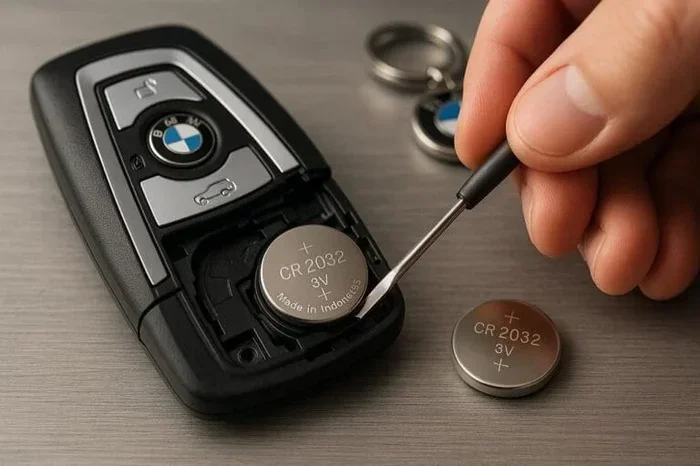
Most key fobs use a CR2032 battery. This is a standard 3-volt coin cell battery available at any grocery store, pharmacy, or gas station. Some fobs use CR2025 or CR1632 batteries, so always check your owner manual before purchasing.
Step-by-Step Battery Replacement
- Find the seam on the fob: Most fobs have a small crack or groove where the two halves meet.
- Insert a flat tool: Use a small flathead screwdriver, a coin, or a key to pry open the fob gently.
- Remove the old battery: Note which side faces up. Take the old battery out carefully.
- Insert the new battery: Place the new battery in the same orientation as the old one.
- Snap the fob shut: Press the two halves together until they click into place.
- Test the fob: Stand near your car and press the lock and unlock buttons to confirm it works.
Common Mistakes When Replacing the Battery
- Forcing the fob open: Use gentle pressure. If it does not open easily, check for a small release button or slot.
- Installing the battery backwards: The positive side must face up in most fobs. Check the markings inside the compartment.
- Using the wrong battery type: CR2032 is standard, but some fobs need a different size. Verify before buying.
- Touching the battery with wet hands: Moisture can damage the internal circuitry. Dry your hands first.
How Often Should You Replace the Fob Battery?
Most key fob batteries last between two and four years. If you use your fob frequently, it may drain faster. As a general rule, replace the battery every two to three years to avoid unexpected failures. Some fobs have a low-battery warning on the dashboard. Pay attention to this alert and replace the battery promptly.
How to Prevent Key Fob Battery Problems
Prevention is always better than dealing with a dead fob at the worst possible moment. A few simple habits can keep your key fob not working situations to a minimum.
Carry a Spare Battery
Keep a spare CR2032 battery in your glove box or wallet. If your fob dies unexpectedly, you can replace it on the spot within minutes. This small preparation saves a lot of hassle.
Store Your Fob Properly
Avoid placing your fob near electronic devices, metal objects, or other wireless signals. These can interfere with the fob’s radio frequency and drain the battery faster. Keep it in a dedicated pocket or pouch when not in use.
Watch for Warning Signs
Your fob gives you clues before the battery dies completely. Look out for these early warning signs:
- Reduced range: You need to be closer to the car for the buttons to work.
- Inconsistent locking: The fob works sometimes but not others.
- Delayed response: There is a noticeable lag between pressing the button and the car responding.
- Dashboard warning light: Many newer vehicles display a low battery icon on the dashboard.
If you notice any of these signs, replace the battery right away. Do not wait until the fob stops working entirely.
Keep Your Fob Clean
Dirt, moisture, and debris can affect the fob’s performance. Wipe it down regularly with a soft, dry cloth. If the buttons feel sticky or unresponsive, cleaning the contacts can sometimes restore function without even needing a new battery.
When to See a Professional
Most dead fob situations are simple fixes. But sometimes, the problem is not just a dead battery. Knowing when to seek professional help saves time and money.
Signs Your Fob Needs More Than a New Battery
Watch for these red flags that suggest a deeper issue:
- The fob still does not work after battery replacement: The internal chip or circuitry may be damaged.
- Water damage: If the fob got wet, corrosion can affect the electronics even with a fresh battery.
- The car does not detect the fob at all: This could indicate a problem with the vehicle’s proximity sensor or antenna.
- The fob needs reprogramming: Some vehicles require fob reprogramming after a battery change, especially in older models.
Who Can Help?
Several professionals can assist with fob issues:
- Car dealerships: They can program and replace fobs for any make and model.
- Automotive locksmiths: A locksmith can diagnose fob problems, replace batteries, and reprogram fobs on the spot.
- Auto parts stores: Many stores sell replacement fobs and batteries and can help with basic troubleshooting.
Keep in mind that replacing a key fob battery is usually simple and inexpensive. But if you find yourself dealing with recurring fob problems, a professional inspection can identify underlying electrical or computer issues in your vehicle.
Key Takeaways
- You can drive with a dead key fob: The engine keeps running if the battery dies while you are already driving. Most vehicles have backup systems that allow you to restart even with a dead fob.
- Backup start methods vary by brand: Each car manufacturer has a specific spot or method to place the dead fob for emergency starting. Check your owner manual to learn yours.
- Battery replacement is easy and affordable: A CR2032 battery costs just a few dollars, and swapping it out takes only a few minutes.
- Warning signs help you prepare: Reduced range, inconsistent locking, and dashboard warnings all signal that your fob battery is running low.
- Keep a spare battery on hand: Storing a replacement battery in your glove box ensures you are never stranded.
- See a professional when needed: If replacing the battery does not fix the problem, a locksmith or dealer can diagnose and resolve deeper fob issues.
- Regular maintenance prevents surprises: Simple habits like proper storage and timely battery replacement keep your fob working reliably for years.
Conclusion
The fear of a dead key fob battery while driving is understandable, but the reality is much less scary than most people think. You can absolutely drive if your key fob battery dies while driving. Your car was engineered to handle this situation with backup systems and emergency start methods built right in.
Knowing your vehicle’s specific backup start procedure gives you confidence and peace of mind. Whether you drive a Toyota, Honda, Ford, or any other brand, there is a simple way to restart your car even with a completely dead fob. Keep a spare battery in your vehicle, watch for warning signs, and replace the battery proactively every few years.
Taking these small steps means you will never have to worry about being stranded because of a dead key fob. A little preparation goes a long way toward keeping your drives smooth, safe, and stress-free.
FAQs
What should I do if my key fob battery dies while I am driving?
Stay calm and keep driving. Your vehicle will continue running normally. Once you reach a safe location, replace the battery using the steps outlined above. If you cannot replace it immediately, use the backup start method specific to your car brand to restart the engine.
Can a dead key fob battery cause my car not to start?
Yes, if the fob battery is completely dead and you turn off the engine, the car may not recognize the fob when you try to restart. However, most vehicles have a backup method that lets you start the car by placing the dead fob against the start button or a designated sensor area.
How much does it cost to replace a key fob battery?
A CR2032 battery costs between one and five dollars at most stores. Some specialty fobs may use a different battery that costs slightly more, but the total cost remains very low. You do not need to visit a dealer or pay for professional service.
How do I know if my key fob battery is dying?
The most common signs include reduced range, inconsistent button response, delayed locking or unlocking, and a low battery warning light on your dashboard. If you notice any of these symptoms, replace the battery right away to avoid being caught off guard.
Can I use any type of battery in my key fob?
No. Always use the battery type specified in your owner manual. Most fobs use CR2032, but some require CR2025, CR1632, or other variants. Using the wrong battery can damage the fob or prevent it from working properly.
Will my car alarm still work if the key fob battery dies?
In most cases, yes. The vehicle’s alarm system operates independently of the key fob. However, if the fob is completely dead and the car does not recognize it, some advanced security features may behave differently. Always replace a dead fob battery as soon as possible to maintain full security functionality.