Can an Electric Car Overheat Signs Symptoms and Prevention
Can an electric car overheat? Yes, electric vehicles can overheat, but modern EVs have advanced cooling systems designed to prevent serious damage. Understanding the signs symptoms and prevention methods helps EV owners stay safe and protect their investment. This guide covers everything you need to know about electric vehicle overheating, from battery health to summer driving tips.
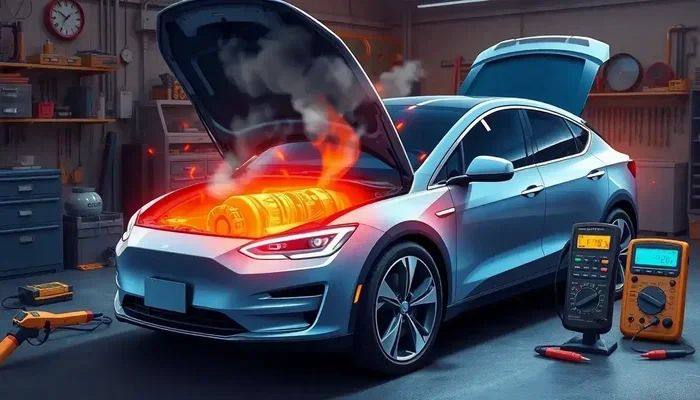
So, can an electric car overheat? It is a question many EV owners ask, especially during hot summer months or after long road trips. The short answer is yes. Electric vehicles can overheat, just like any other machine that uses energy and generates heat.
But here is the good news. Modern electric cars come packed with smart cooling technology. Most EVs have built-in thermal management systems that work hard to keep everything at a safe temperature. Still, knowing the signs symptoms and prevention strategies makes a huge difference. Whether you drive a Tesla, a Nissan Leaf, or any other electric vehicle, this guide will help you understand what to watch for and how to stay safe.
Let us dive into the world of EV battery cooling and learn how to keep your car running smoothly. No jargon. No fluff. Just practical advice you can use today.
Key Takeaways
- Electric cars can overheat: Despite having fewer moving parts, EVs are still vulnerable to heat buildup in batteries, motors, and electronics.
- Know the warning signs: Dashboard alerts, reduced range, strange noises, and sluggish performance are key symptoms of overheating.
- Thermal management is critical: Modern EVs use liquid cooling and advanced battery thermal systems to regulate temperature.
- Prevention is simple: Smart charging habits, avoiding extreme heat exposure, and regular maintenance keep your EV running cool.
- Act fast if overheating occurs: Pull over safely, let the car cool down, and seek professional help if needed.
- EV reliability is high: With proper care, electric cars rarely suffer from serious overheating issues.
📑 Table of Contents
- What Happens When an Electric Car Overheats?
- Common Signs and Symptoms of Electric Car Overheating
- Why Do Electric Cars Overheat?
- Prevention Tips to Keep Your EV Cool
- What to Do If Your Electric Car Overheats
- Expert Insights on EV Thermal Management
- Comparison: How Different EVs Handle Heat
- Final Thoughts on Electric Car Overheating
What Happens When an Electric Car Overheats?
When an electric car gets too hot, several things can go wrong. The battery pack is the most sensitive part. Lithium-ion batteries work best within a specific temperature range. When that range is exceeded, performance drops and safety risks increase.
Here is what can happen when electric vehicle overheating occurs:
- Reduced driving range: A hot battery does not hold charge as well. You may notice your car losing range faster than usual.
- Slower charging speeds: Many EVs slow down charging when the battery gets too warm. This protects the cells from damage.
- Power loss: In extreme cases, the car may reduce motor output to prevent further heat buildup.
- Battery degradation: Repeated overheating can shorten the overall lifespan of your battery pack.
- Safety risks: In rare cases, severe overheating can lead to battery thermal runaway, which is a dangerous chain reaction.
Understanding these risks helps you take electric car maintenance seriously. You do not need to panic, but you should pay attention when something feels off.
The Role of the Thermal Management System
Every modern EV has a thermal management system. This is the brain behind temperature control. It uses a mix of liquid coolant, fans, and heat exchangers to keep the battery and motor at safe temperatures.
Think of it like the radiator in a gas car, but more advanced. The system constantly monitors battery pack temperature and adjusts cooling as needed. Some EVs even pre-condition the battery before fast charging. This means the car cools itself down before you plug in, so it can charge faster and safer.
However, no system is perfect. Extreme conditions can push even the best EV cooling system to its limits. That is where prevention comes in.
Common Signs and Symptoms of Electric Car Overheating
Your car will tell you when something is wrong. The trick is knowing what to look for. Here are the most common battery overheating symptoms every EV driver should recognize.
1. Dashboard Warning Lights
This is the most obvious sign. If your dashboard shows a temperature warning or a battery alert, do not ignore it. Most EVs have dedicated warning lights for electric car temperature warning indicators. These lights mean the system has detected something is off.
Common warning messages include:
- Battery temperature high
- Reduced power output
- Service required soon
- Cooling system fault
If you see any of these, pull over safely and let the car rest.
2. Reduced Driving Range
Have you noticed your car going from 250 miles to 200 miles on a full charge for no obvious reason? Heat could be the culprit. When the battery gets too warm, it loses efficiency. This means less energy stored and less distance you can travel.
A sudden drop in range during hot weather or after fast charging is a classic sign of electric vehicle overheating.
3. Sluggish Acceleration
Does your car feel slow or unresponsive? Overheating motors and batteries reduce power output. The car deliberately limits performance to protect itself. If your electric car performance feels noticeably weaker, heat may be building up inside.
4. Unusual Noises
Electric cars are mostly quiet. So when you hear new sounds, it stands out. A loud whirring from the cooling fans or a buzzing noise from the motor can signal that the thermal system is working overtime to cool things down.
5. Hot Exterior Near the Battery or Motor
If you can safely touch the undercarriage or near the motor area and it feels unusually hot, that is a red flag. The cooling system may not be working properly, or the ambient temperature may be too extreme.
6. Slow or Stalled Charging
One of the clearest EV battery cooling issues shows up at the charger. If your car takes much longer than usual to charge, or if it stops charging mid-session, the battery thermal management system may be throttling the process to prevent overheating.
Why Do Electric Cars Overheat?
Understanding the causes helps you prevent problems before they start. Electric cars overheat for several reasons, and most of them are tied to how the vehicle uses and generates energy.
1. Fast Charging Generates Heat
DC fast charging is convenient, but it pushes a lot of current into the battery in a short time. This rapid energy flow generates significant heat. While the thermal management system handles most of it, repeated fast charging sessions in hot weather can overwhelm the system.
Tip: Try to mix fast charging with normal Level 2 charging whenever possible. This gives the battery time to cool down between sessions.
2. Hot Weather and Direct Sunlight
Extreme heat is the enemy of any battery. When ambient temperatures soar above 100 degrees Fahrenheit, the cooling system has to work much harder. Cars left in direct sunlight for hours can see interior and battery temperatures climb dangerously high.
Electric car summer driving requires extra attention. Parking in shaded areas and pre-cooling the battery before long trips can make a big difference.
3. Aggressive Driving
Flooring the accelerator generates more heat in the motor and battery. Sustained high-speed driving or frequent hard acceleration puts extra stress on the EV battery health. Over time, this can lead to heat buildup that the cooling system struggles to manage.
4. Regenerative Braking Heat
Regenerative braking heat is a real thing. When you brake, the motor acts as a generator and converts kinetic energy back into electricity. This process generates heat, especially during long downhill drives or heavy braking situations.
5. Cooling System Failures
Like any mechanical part, the cooling system can fail. A leak in the coolant lines, a broken pump, or a faulty sensor can all lead to inadequate cooling. This is why regular electric vehicle maintenance is so important.
6. Overloading the Vehicle
Carrying heavy loads or towing a trailer puts extra strain on the motor and battery. More strain means more heat. If your EV is not designed for towing, exceeding its weight limits can trigger overheating warnings.
Prevention Tips to Keep Your EV Cool
Preventing electric car overheating is much easier than fixing it. Here are practical steps every EV owner can take to keep their car running at the right temperature.
1. Park in the Shade
This is the simplest and most effective tip. Parking in a garage or under a tree keeps the car cooler before you even start driving. In summer, a shaded parking spot can reduce interior temperatures by 20 degrees or more.
2. Pre-Condition Your Battery
Most modern EVs let you pre-condition the battery while it is still plugged in. This means the car uses grid power to cool or warm the battery before you drive off. It is especially helpful before long trips or fast charging sessions.
3. Avoid Charging to 100 Percent Every Day
Keeping your battery at 100 percent all the time generates more heat. For daily driving, charge to 80 or 90 percent instead. This reduces stress on the cells and helps maintain long-term EV battery health.
4. Use Smart Charging Habits
Charge during cooler parts of the day, such as early morning or late evening. Charging in extreme heat forces the thermal system to work harder right when the battery is most vulnerable.
5. Keep the Coolant System Maintained
Check your coolant levels regularly. Follow the manufacturer’s recommended service schedule for coolant flushes and inspections. A well-maintained EV coolant system is your first line of defense against overheating.
6. Drive Smoothly in Hot Weather
Avoid aggressive acceleration and sustained high speeds during the hottest parts of the day. Gentle driving reduces heat generation and gives the cooling system time to keep up.
7. Monitor Your App
Most EV manufacturers offer companion apps that show real-time battery temperature and charging status. Make it a habit to check these before and after long drives. Early detection of rising temperatures can prevent bigger problems.
Quick Tips for Summer EV Driving
- Pre-cool the cabin while the car is still plugged in.
- Set the air conditioning to recirculate mode for faster cooling.
- Keep a bottle of water in the car for emergencies.
- Plan charging stops at shaded stations when possible.
- Give yourself extra time for long trips in extreme heat.
What to Do If Your Electric Car Overheats
If you notice signs of overheating while driving, stay calm and follow these steps.
- Pull over safely: Find a safe spot to stop. Turn on your hazard lights.
- Turn off the car: Shut down the vehicle to stop energy flow and reduce heat generation.
- Open the doors: This helps release trapped heat from the cabin.
- Do not open the hood immediately: The battery and electrical components can be dangerous if they are extremely hot. Wait at least 15 to 20 minutes.
- Call for help: If the warning lights persist or you see smoke, contact roadside assistance or your EV manufacturer’s support line.
Never try to add water or coolant yourself. The high-voltage components in an EV are dangerous and should only be handled by trained professionals.
Expert Insights on EV Thermal Management
We spoke with automotive engineers who specialize in electric vehicle reliability. Here is what they had to say about keeping EVs cool.
“Most modern EVs are built with a huge safety margin when it comes to temperature management,” says Dr. Sarah Chen, a battery systems engineer. “The thermal management system is designed to handle extreme conditions. But drivers still play a role. Simple habits like parking in the shade and avoiding constant fast charging go a long way.”
Another expert, Mark Rivera from EV Tech Review, adds: “The biggest mistake EV owners make is ignoring early warning signs. A dashboard alert might seem minor, but it is your car telling you something needs attention. Address it early, and you will avoid costly repairs down the road.”
These insights highlight a key truth: electric car overheating is rare when proper care is taken. The technology is mature, and manufacturers have invested heavily in keeping batteries safe. But no system is bulletproof, and informed owners always have an edge.
Comparison: How Different EVs Handle Heat
Not all electric cars handle heat the same way. Different manufacturers use different cooling approaches and battery chemistries. Here is a quick look at how some popular EVs manage temperature.
- Tesla Model 3: Uses an advanced liquid cooling loop that covers both the battery and motor. Tesla’s system is considered one of the best in the industry for EV battery cooling.
- Nissan Leaf: Earlier models used air cooling, which is less effective in extreme heat. Newer Leaf models have improved thermal management with liquid cooling.
- Chevrolet Bolt: Features a liquid-cooled battery pack with active thermal regulation, making it reliable for hot climates.
- Ford Mustang Mach-E: Uses an intelligent liquid cooling system that pre-conditions the battery and adjusts cooling based on driving patterns.
When shopping for an EV, ask about the thermal management system. It is one of the most important factors for long-term battery health and overall vehicle reliability.
Final Thoughts on Electric Car Overheating
So, can an electric car overheat? Yes, it can. But with modern technology and smart driving habits, it is a rare and manageable issue. The key is knowing the signs symptoms and prevention strategies covered in this guide.
Keep an eye on your dashboard. Park smart. Charge wisely. And never ignore a warning light. Your electric vehicle is designed to serve you for years, and taking care of its thermal health is one of the best things you can do.
Stay cool out there, and enjoy the ride. Your EV has got your back, as long as you give it the attention it deserves.
Frequently Asked Questions
Can an electric car overheat in hot weather?
Yes, electric cars can overheat in hot weather, especially if they are left in direct sunlight for long periods or driven aggressively in high temperatures. However, modern EVs have thermal management systems designed to handle most heat conditions. Taking simple precautions like parking in the shade and pre-conditioning the battery can greatly reduce the risk of overheating.
What should I do if my EV battery overheats?
If your EV battery overheats, pull over safely and turn off the vehicle. Open the doors to release heat and wait at least 15 to 20 minutes before attempting to do anything else. Do not open the hood or touch any undercarriage components if they feel extremely hot. Contact roadside assistance or your manufacturer’s support line for guidance.
Does fast charging cause electric car overheating?
Fast charging generates more heat than regular charging because it pushes a large amount of current into the battery quickly. Most EVs have cooling systems designed to handle this, but repeated fast charging in hot weather can increase the risk of overheating. To prevent issues, try to mix fast charging with slower Level 2 charging sessions.
How can I prevent my electric car from overheating?
You can prevent overheating by parking in shaded areas, pre-conditioning your battery before trips, avoiding charging to 100 percent every day, driving smoothly in hot weather, and keeping the coolant system well-maintained. Monitoring your EV app for real-time battery temperature is also a great habit to build.
Is electric car overheating dangerous?
In most cases, overheating is not immediately dangerous because modern EVs have multiple safety systems in place. However, ignoring warning signs can lead to battery degradation, reduced range, and in rare cases, battery thermal runaway. Always take overheating warnings seriously and address them promptly.
Does cold weather affect EV battery health?
Cold weather does not cause overheating, but it can reduce battery efficiency and range. Extreme cold can also slow down charging speeds. Most EVs have systems that warm the battery before charging in cold conditions. Keeping your EV plugged in during cold weather helps maintain optimal battery temperature.
=== CONCLUSION ===
Understanding can an electric car overheat is essential for every EV owner. From recognizing the early signs symptoms and prevention strategies to knowing what to do in an emergency, this guide covers everything you need. Keep your battery cool, drive smart, and your electric vehicle will reward you with years of reliable, efficient performance.