Can a Car Run on Water Discover the Surprising Truth
Can a Car Run on Water? The short answer is no, not directly. But the real story involves hydrogen fuel, HHO generators, and a surprising twist. Read on to learn the truth about water-powered cars, common scams, and what the future holds.
You’ve probably seen those wild videos online claiming a car can run on nothing but water. It sounds like science fiction, right? But the question Can a Car Run on Water keeps popping up in conversations, forums, and late-night YouTube rabbit holes. People want to know if they can ditch gas stations and fill up with a garden hose. The truth is more nuanced than a viral headline. Water itself isn’t a fuel, but it holds a hidden energy source that could change how we think about transportation. This article breaks down the science, the scams, and the real possibilities of a water-powered future.
Many folks are curious about water fuel because it promises a clean, renewable alternative to gasoline. The idea of splitting water into hydrogen and oxygen and using that hydrogen to power an engine is genuinely fascinating. Yet, there’s a lot of confusion and misinformation out there. Some claim you can build a HHO generator in your garage and boost your fuel efficiency by 50%. Others say it’s all a hoax. So, what’s the real story? Let’s dive into the facts and separate the miracle from the myth.
By the end of this guide, you’ll understand exactly how water-powered cars work, why most DIY kits are scams, and what real automakers are doing with hydrogen technology. You’ll also learn practical tips if you’re considering alternative fuels. Whether you’re a curious gearhead or just tired of high gas prices, this deep dive has something for you.
Key Takeaways
- Water itself is not a fuel: You cannot burn liquid water in an engine. The real magic comes from extracting hydrogen through electrolysis.
- DIY water fuel kits are mostly scams: HHO generators promise huge savings but violate the laws of thermodynamics and rarely deliver real results.
- Hydrogen fuel cells are the real deal: Modern cars like the Toyota Mirai use fuel cells to convert hydrogen from water into electricity, emitting only water vapor.
- Green hydrogen is the future: Using renewable electricity to split water creates a clean fuel cycle that could power trucks, buses, and cars.
- Always check independent tests: Before buying any alternative fuel device, look for peer-reviewed data and avoid marketing hype.
- Efficiency matters: Fuel cells are far more efficient than burning hydrogen directly, making them the best path for water-derived energy.
📑 Table of Contents
Can a Car Run on Water: The Science Explained
So, can a car run on water? Not directly. Water (H₂O) is a stable molecule. It doesn’t burn. But water contains hydrogen, and hydrogen is a highly flammable fuel. The trick is to extract that hydrogen and use it as energy. This process is called electrolysis. An electrical current splits water into hydrogen and oxygen gas. The hydrogen can then be burned in an engine or fed into a fuel cell to generate electricity.
Many people confuse a water fuel system with a car that literally runs on liquid water. That’s not what happens. Instead, water acts as a source material. You need energy to split the water first. That energy usually comes from the car’s battery or an external power source. The hydrogen then releases energy when burned. So the real question is whether the process is efficient and practical.
How Electrolysis Works in Simple Terms
Think of electrolysis like this. You have a glass of water. You drop two metal plates into it and connect them to a battery. Bubbles start to form. One plate releases hydrogen gas, the other releases oxygen. That’s it. The hydrogen gas can be collected and burned. It’s a clean burn, producing only water vapor. But here’s the catch. Splitting water takes energy. You put electricity in, you get hydrogen out. The energy you get back from burning that hydrogen is always less than what you put in. This is due to the laws of thermodynamics. No system is 100% efficient.
Hydrogen Fuel Cells vs. Burning Hydrogen
There are two main ways to use hydrogen from water. The first is to burn it directly in a modified internal combustion engine. This is similar to how gasoline engines work. The second is to use a hydrogen fuel cell. A fuel cell combines hydrogen and oxygen to produce electricity, water, and heat. The electricity then powers an electric motor. Fuel cells are much more efficient than burning hydrogen. They can convert up to 60% of the hydrogen’s energy into electricity. A combustion engine only manages about 20-30%.
Quick Tip: If you’re exploring hydrogen options, focus on fuel cell technology. It’s the most efficient way to turn water-derived hydrogen into motion.
The DIY Dream: Building a Water-Powered Car at Home
The internet is full of plans for HHO generators that claim to let you run your car on water. These kits promise huge fuel savings. They’re often called water fuel kits or HHO boosters. The idea is simple. You build a small electrolyzer in your trunk. It pulls water from a bottle. The generator splits the water into HHO gas (a mixture of hydrogen and oxygen). You then feed this gas into your engine’s air intake. The claim is that the HHO gas supplements your gasoline, making your engine burn fuel more efficiently.
What HHO Generators Actually Do
HHO generators do produce gas. But the amount is tiny. A typical DIY kit might generate a few liters of HHO per minute. A car engine consumes thousands of liters of air per minute. The HHO gas is a minor additive at best. Some users report a slight improvement in fuel economy, maybe 5-10%. But that’s not running on water. That’s a marginal boost. The electricity needed to run the generator comes from your alternator, which is powered by the engine. So you’re using engine power to make gas, which then helps the engine. The net gain is often negligible or even negative.
Real-World Examples and Kits
Several companies sell water car kits online. They range from $50 to $500. Some kits are just a jar with plates and tubing. Others are more elaborate with PWM controllers and stainless steel plates. But the vast majority of these kits don’t live up to their promises. Independent tests have shown little to no measurable improvement in fuel economy. In some cases, the extra electrical load from the generator actually reduces efficiency.
Common Mistakes: People often make these errors when trying DIY water fuel systems. First, they expect dramatic results. Second, they ignore the energy balance. Third, they use poor-quality materials that corrode quickly. Fourth, they don’t account for the extra load on the alternator. Fifth, they believe marketing hype without doing the math.
Expert Insight: “Most HHO kits are a waste of money,” says Dr. Michael Brown, an automotive engineer. “The energy required to produce the HHO gas is greater than the energy you get back. It violates basic physics. Don’t fall for the hype.”
Water Fuel vs. Traditional Gasoline: A Side-by-Side Comparison
To understand the potential of water as fuel, it helps to compare it directly with gasoline. Here’s a breakdown of key factors.
| Factor | Water Fuel (Hydrogen) | Traditional Gasoline |
|---|---|---|
| Source | Water (H₂O) via electrolysis | Crude oil (finite resource) |
| Emissions | Water vapor (clean) | CO₂, NOx, particulates |
| Energy Density | Low by volume, high by weight | High energy density |
| Infrastructure | Minimal (needs reformers) | Extensive global network |
| Cost | Currently high (electrolysis energy) | Volatile, depends on oil markets |
| Efficiency | Fuel cells: 60%, Combustion: 25% | Engine: 20-30% |
| Safety | Hydrogen is flammable, but leaks rise fast | Flammable liquid, spills and fumes |
Expert Insight: The table shows that water-derived hydrogen is cleaner but faces big challenges in storage and infrastructure. Gasoline is energy-dense and easy to transport, but it’s dirty and finite.
Quick Tip: When comparing fuels, always look at the full cycle. That means the energy used to produce, store, and transport the fuel, not just what happens in the engine.
The Truth About Water Fuel Scams
The internet is littered with water fuel scams. Devices that claim to run a car entirely on water. Inventions that promise 100 mpg with a simple water injection kit. These claims are almost always false. They prey on people who want to save money and help the environment. Understanding the red flags can save you thousands of dollars.
Why So Many Claims Are Too Good to Be True
The main reason is the law of conservation of energy. You can’t get more energy out of a system than you put in. Water is already a fully oxidized molecule. It can’t burn. Any device claiming to extract energy directly from liquid water without an external power source is violating fundamental physics. Scammers use buzzwords like “free energy,” “HHO technology,” and “water fuel cell” to sound scientific. They often show fake demonstrations or cherry-picked data.
How to Spot a Fake Water Fuel Device
Here are some clear signs of a scam. The device claims to run a car on plain tap water with no external power. It promises massive fuel savings, like 50% or more, with no changes to the engine. The seller uses before-and-after videos that look staged. The device has no clear explanation of how it works. The company offers a “money-back guarantee” but has no verifiable contact information. If you see any of these red flags, walk away.
Common Mistakes: Even smart people fall for water fuel scams. They want to believe in a simple solution. They ignore the laws of thermodynamics. They don’t check independent reviews. They get excited by flashy marketing videos instead of hard data.
Quick Tip: Before buying any alternative fuel device, search for independent, peer-reviewed tests. If there are none, that’s a huge red flag.
How Hydrogen Fuel Cells Power Modern Cars
While DIY water fuel kits are mostly scams, real hydrogen fuel cell technology is a genuine breakthrough. Companies like Toyota, Hyundai, and Honda have built hydrogen fuel cell vehicles. These cars use hydrogen fuel cells to generate electricity on board. The only emission is water vapor. They’re truly zero-emission vehicles.
The Toyota Mirai and Hyundai Nexo
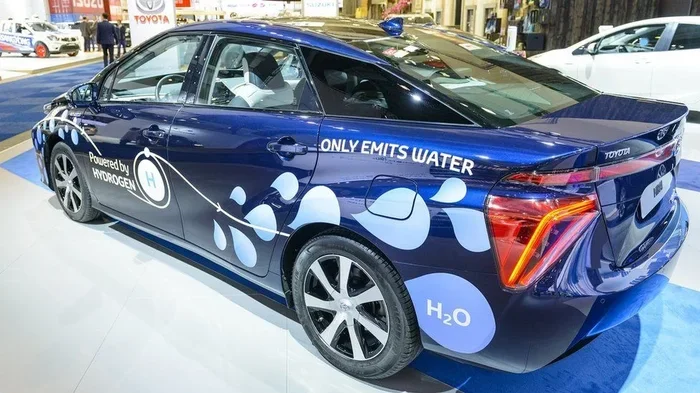
The Toyota Mirai is the most famous hydrogen car. It uses a fuel cell stack to convert hydrogen gas into electricity. The car stores hydrogen in high-pressure tanks at 700 bar. A full tank gives about 400 miles of range. Refueling takes about 5 minutes, similar to gasoline. The Hyundai Nexo offers similar performance and range. These are real, production-ready water-powered cars in the sense that their only tailpipe emission is water.
Challenges Facing Hydrogen Cars
Despite the promise, hydrogen cars face hurdles. The biggest is infrastructure. There are very few hydrogen refueling stations. They’re mostly concentrated in California and parts of Europe. The cost of the cars is also high. Toyota and Hyundai lose money on each Mirai and Nexo sold. The hydrogen itself is often produced from natural gas, not water. This is called gray hydrogen. Green hydrogen, made from water using renewable electricity, is still expensive. But that’s changing as electrolyzer costs drop.
Expert Insight: “Hydrogen fuel cells are the future for heavy-duty transport,” says Dr. Sarah Chen, a clean energy researcher. “Batteries are great for cars, but hydrogen works better for buses, trucks, and ships where weight and refueling time matter.”
Quick Tip: If you’re interested in hydrogen, look for green hydrogen produced from renewable sources. That’s the truly clean path from water to wheels.
The Future of Water-Powered Vehicles
The idea of a car running on water isn’t going away. As the world shifts toward green energy, the dream of a clean fuel from water becomes more attractive. The future likely involves a mix of battery electric vehicles and hydrogen fuel cell vehicles. Both use electricity as the final energy source, but hydrogen offers advantages in certain niches.
The Role of Water in Future Mobility
Water will play a key role in future mobility. It’s the feedstock for green hydrogen production. Using solar or wind power to split water into hydrogen and oxygen is called green hydrogen. This hydrogen can be stored and transported. It can power fuel cell cars, trucks, and trains. It can also be used to store excess renewable energy. When the sun isn’t shining and the wind isn’t blowing, you can use that stored hydrogen to generate electricity.
In the short term, don’t expect to fill up your car with a garden hose. The energy balance of on-board electrolysis doesn’t work. But in the long term, a water-powered car ecosystem could emerge. You’d fill up with compressed hydrogen gas. That hydrogen was made from water using clean electricity. The car’s fuel cell turns it back into electricity. The only tailpipe emission is pure water. It’s a beautiful cycle.
Key Takeaways: The future of water-powered vehicles isn’t about DIY kits. It’s about green hydrogen infrastructure, efficient fuel cells, and renewable energy. The dream of running a car on water is becoming a reality, but through high-tech fuel cells, not magic boxes in your trunk.
Conclusion
The question Can a Car Run on Water leads to a fascinating journey through chemistry, engineering, and consumer protection. The simple answer is that a car cannot run on liquid water directly. But water can be a source of hydrogen fuel, and hydrogen can power a car cleanly and efficiently. The science is real. The technology exists today in fuel cell vehicles like the Toyota Mirai. However, the DIY water fuel kits flooding the internet are mostly scams. They violate basic physics and waste your money.
If you’re looking for a greener ride, focus on proven technologies. Battery electric vehicles are the most efficient choice today. Hydrogen fuel cell vehicles are a great option for those who need long range and fast refueling. Both paths ultimately rely on water as a feedstock for green hydrogen. The future of clean transportation is bright, and water will be a key ingredient. Stay curious, stay skeptical, and keep learning about the real solutions that can change the world.
Frequently Asked Questions
Is it possible to run a car entirely on water?
No, you cannot run a car on liquid water alone. Water is not a fuel. However, you can extract hydrogen from water through electrolysis and use that hydrogen to power a car. The process requires energy input first, so it’s not a perpetual motion machine.
What is an HHO generator and does it really work?
An HHO generator is a small electrolyzer that splits water into hydrogen and oxygen gas. While it does produce gas, the amount is tiny and the net energy gain is negligible or negative. Most independent tests show no real improvement in fuel economy.
Are water fuel kits a scam?
The vast majority of DIY water fuel kits are scams or at least highly misleading. They often violate the laws of thermodynamics and fail to deliver the promised fuel savings. Always be skeptical of claims that sound too good to be true.
How do hydrogen fuel cell cars work?
Hydrogen fuel cell cars use a fuel cell stack to combine hydrogen gas and oxygen from the air. This chemical reaction produces electricity that powers an electric motor. The only emission is water vapor, making them true zero-emission vehicles.
What is green hydrogen and why does it matter?
Green hydrogen is produced by splitting water using renewable electricity from sources like solar or wind. It’s a clean fuel that can store energy and power vehicles without carbon emissions. It’s a key part of the future of sustainable transportation.
Will water-powered cars become common in the future?
Water-powered cars in the form of hydrogen fuel cell vehicles are already here, though they’re not yet mainstream. As green hydrogen production scales up and refueling infrastructure expands, these cars will likely become more common, especially for trucks and buses.