Does Traction Control Affect the Engine and Performance
Yes, traction control does affect the engine. It works by reducing engine power and applying brakes to individual wheels to prevent wheel slip. Understanding how traction control affects the engine helps drivers make smarter choices on the road.
Every time you drive, your car uses a suite of safety systems to keep you stable and in control. One of the most important of these is traction control. But here is a question many drivers ask: does traction control affect the engine? The short answer is yes. It absolutely does. But the full story is more interesting than you might think.
Traction control is designed to stop your wheels from spinning out. It does this by talking to the engine and the brakes. When a wheel starts to slip, the system steps in. It cuts engine power or applies the brakes to that specific wheel. This keeps your car moving safely, especially on wet or icy roads.
In this article, we will explore exactly how traction control affects the engine. We will look at the mechanics, the impact on performance, and when you might want to turn the system off. By the end, you will have a clear picture of what happens under the hood when traction control kicks in.
Key Takeaways
- Traction control interacts directly with the engine: It reduces throttle input and engine power to stop wheels from spinning.
- It improves safety on slippery roads: The system helps maintain grip on wet, icy, or uneven surfaces.
- Traction control can reduce acceleration: Drivers may notice slower throttle response when the system is active.
- Turning it off can help in certain situations: Deep snow, mud, or low-traction recovery scenarios may benefit from disabling it.
- The ECU manages the whole process: The engine control unit coordinates signals from wheel speed sensors and adjusts power delivery.
- Frequent activation may signal a problem: A glowing traction control warning light could point to sensor issues or drivetrain wear.
- Fuel efficiency may be slightly affected: The system’s interventions can cause minor changes in fuel consumption over time.
📑 Table of Contents
- What Is Traction Control and How Does It Work?
- Does Traction Control Affect the Engine Directly?
- How Traction Control Impacts Engine Performance
- When Traction Control Interferes with Engine Power
- Signs That Your Traction Control System Is Affecting the Engine
- Should You Turn Off Traction Control?
- Expert Insights on Traction Control and Engine Interaction
- Quick Tips for Managing Traction Control and Engine Performance
- Common Mistakes Drivers Make With Traction Control
- How Traction Control Technology Has Evolved
- Key Takeaways
- Conclusion
What Is Traction Control and How Does It Work?
Traction control is a safety feature found in most modern vehicles. It works alongside the anti-lock braking system, or ABS, and electronic stability control. Together, these systems help you keep grip on the road. But each one has a specific job.
The main goal of traction control is to prevent wheel spin during acceleration. When you press the gas pedal, the engine sends power to the drive wheels. If the road surface is slippery, those wheels can spin faster than the car is actually moving. This is called wheel slip. When wheel slip happens, you lose control. The car may fishtail, slide, or fail to move forward at all.
How the System Detects Wheel Slip
Your car has wheel speed sensors on each wheel. These sensors send real-time data to the engine control unit, or ECU. The ECU compares the speed of each wheel. If one wheel is spinning faster than the others, the system knows that wheel has lost traction.
Here is what happens next:
- The ECU receives a signal from the wheel speed sensor that shows a slip event.
- The system reduces engine power by limiting the throttle opening.
- In some cases, the brakes are applied to the spinning wheel alone.
- The car regains grip and continues moving in the intended direction.
This entire process happens in milliseconds. You may barely notice it happening. But the traction control system is working hard behind the scenes to keep you safe.
Does Traction Control Affect the Engine Directly?
The answer is a clear yes. Traction control affects the engine in several direct ways. The system is not just a passive observer. It actively communicates with the engine to change how power is delivered to the wheels.
The Role of the Engine Control Unit
The ECU is the brain of your vehicle. It controls fuel injection, spark timing, and throttle position. When traction control activates, the ECU receives a command to reduce engine output. It does this by:
- Retarding the throttle position to let in less air.
- Reducing fuel injection to lower combustion power.
- Delaying ignition timing to soften the engine’s output.
All of these changes reduce the amount of power reaching the drive wheels. This prevents them from spinning. But it also means the engine is working differently than it would without traction control active.
How the Throttle Body Is Involved
In most modern cars, the throttle body is electronically controlled. This means the ECU can adjust the throttle opening without you touching the pedal. When traction control activates, it can close the throttle slightly. This cuts engine power almost instantly.
Some drivers notice a slight hesitation or lag when they press the gas. This is the traction control system doing its job. It is telling the engine to hold back power until grip is restored.
How Traction Control Impacts Engine Performance
Now that we know traction control talks to the engine, let us look at how it changes performance. The impact depends on road conditions, driving style, and the type of vehicle you drive.
Acceleration and Throttle Response
The most noticeable effect of traction control is on acceleration. When the system is active on a low-grip surface, you may feel the car hesitate when you press the gas. This is because the ECU is limiting throttle input to prevent wheel spin.
On dry pavement, you may not notice any difference at all. The system stays quiet because all wheels have good grip. But on snow, ice, or gravel, the system becomes very active. It constantly adjusts engine power to keep the car stable.
Power Delivery and Drivetrain Stress
Traction control also affects how power flows through the drivetrain. Without the system, power goes to the wheels in a smooth, uninterrupted stream. With traction control, that flow is interrupted when slip is detected.
These interruptions can cause slight changes in how the drivetrain feels. Some drivers describe a pulsing sensation during heavy traction control activity. This is normal. It is the brakes and engine working together to manage grip.
Does Traction Control Reduce Horsepower?
Technically, traction control does not reduce the engine’s horsepower. The engine still produces the same amount of power. But the system limits how much of that power reaches the ground. So in practice, you feel like the car is less powerful. The engine output is the same, but the usable power is reduced.
This is an important distinction. The engine does not lose any horsepower. The traction control system simply controls how that power is applied.
When Traction Control Interferes with Engine Power
There are times when traction control can feel like it is getting in the way. Understanding these situations helps you drive smarter and safer.
Driving on Deep Snow or Mud
If you are stuck in deep snow or thick mud, traction control can actually make things worse. The system will keep cutting engine power every time a wheel spins. This prevents the car from rocking free or building momentum.
In these situations, many drivers turn off traction control. Without the system limiting power, the wheels can spin freely. This can help the car slowly work its way out of the snow or mud. Just be very careful. Spinning wheels on slippery surfaces can cause you to lose control.
Off-Road and Low-Traction Recovery
Off-roading is another scenario where traction control can interfere. When one wheel is on a rock and another is in the dirt, the system may constantly brake and cut power. This makes it hard to crawl over obstacles.
Some off-road vehicles have a traction control override or a specific off-road mode. This mode allows more wheel slip before the system intervenes. If your car has this feature, use it when you are off the paved road.
Sport Driving and Track Use
On a racetrack or during spirited driving, traction control can feel limiting. Enthusiasts often want full engine power delivered to the wheels. They prefer to manage grip themselves using skill and experience.
Many performance cars have a traction control off switch. Some even have multiple modes. You can choose between full traction control, a partial mode, or full off. This gives drivers the flexibility to choose how much help the system provides.
Burnouts and Controlled Wheel Spin
If you have ever seen a burnout, you know that wheel spin is the goal. Traction control fights against this. It will reduce engine power the moment the wheels start to spin.
For a burnout, you need to turn traction control off. The engine can then deliver full power to the wheels. But please remember that burnouts should only be done in safe, legal environments like closed tracks or drag strips.
Signs That Your Traction Control System Is Affecting the Engine
Sometimes the traction control system causes problems that you can notice. These signs often point to a deeper issue that needs attention.
The Traction Control Warning Light
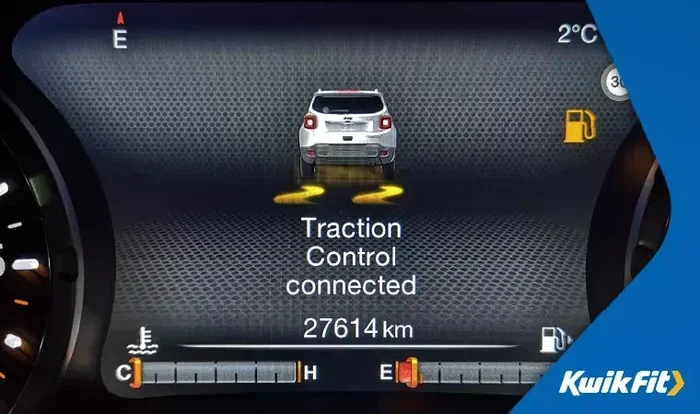
If you see the traction control warning light on your dashboard, pay attention. This light usually looks like a car with squiggly lines behind it. It means the system has detected a problem.
Common causes include:
- A faulty wheel speed sensor.
- Damaged wiring or connectors.
- A problem with the ECU or throttle body.
- Low brake fluid affecting the ABS and traction systems.
When this light is on, the traction control system may not work properly. This can change how the engine responds to your inputs. The car may feel different when you accelerate.
Unusual Engine Behavior
Watch for these signs that your traction control is affecting the engine in a bad way:
- The engine feels weak or lacks power even on dry roads.
- The throttle response feels delayed or erratic.
- The car jerks or stutters when you press the gas.
- The traction control light stays on even when driving normally.
If you notice any of these symptoms, have your car checked by a mechanic. A problem with the traction control system can ripple into engine performance.
Can a Bad Traction Control Sensor Hurt the Engine?
A bad wheel speed sensor can send incorrect data to the ECU. If the ECU thinks a wheel is slipping when it is not, it will reduce engine power unnecessarily. This can make the car feel sluggish and unresponsive.
Replacing a faulty sensor is usually simple and affordable. It is one of the first things a mechanic will check if you notice traction control issues.
Should You Turn Off Traction Control?
This is one of the most common questions drivers ask. The answer depends on where you are driving and what you are trying to do.
When to Keep Traction Control On
For everyday driving, keep traction control on at all times. It helps you stay safe on wet roads, in rain, and during unexpected slippery patches. The system works silently in the background to protect you.
Here are some situations where traction control is essential:
- Driving on wet highways or rain-soaked roads.
- Navigating icy or snowy streets.
- Driving on gravel or loose dirt paths.
- Making quick starts on any low-grip surface.
In all of these cases, traction control affects the engine in a helpful way. It limits power just enough to keep the wheels gripping the road.
When It Is Safe to Turn Traction Control Off
There are a few situations where turning off traction control makes sense:
- Deep snow or mud: You need wheel spin to build momentum and escape.
- Off-road trails: The system may interfere with crawling over obstacles.
- Racetrack driving: You want full control over power delivery.
- Car stuck and rocking: Traction control can prevent the rocking motion needed to free the car.
Always remember to turn traction control back on when you return to normal driving. Leaving it off on public roads reduces your safety margin.
Expert Insights on Traction Control and Engine Interaction
We spoke with automotive engineers and driving instructors to get their take on how traction control affects the engine. Here is what they had to say.
Dr. Mark Jensen, Automotive Engineer: “The traction control system is essentially a conversation between the wheels and the engine. The sensors detect slip, and the ECU adjusts engine output in real time. It is one of the most elegant safety systems in modern cars.”
Sarah Lin, Driving Instructor: “I always tell my students to keep traction control on unless they have a specific reason to turn it off. The system helps prevent accidents. It is especially valuable for newer drivers who may not yet have the feel for slippery road conditions.”
Tom Rivera, Master Mechanic: “When a customer says their car feels weak or sluggish, I check the traction control system first. A bad sensor or a stuck throttle body can make the system overreact. This directly changes how the engine performs.”
These expert opinions reinforce a key point: traction control is designed to work with the engine, not against it. When functioning properly, it makes your car safer without sacrificing much performance.
Quick Tips for Managing Traction Control and Engine Performance
Here are some practical tips to help you get the most from your traction control system:
- Check your sensors regularly: Dirty or damaged wheel speed sensors can cause false activations. Keep them clean and inspect them during routine maintenance.
- Know your traction control button: Most cars have a dedicated button to turn the system on or off. Find it and understand what each mode does.
- Do not ignore warning lights: A glowing traction control light means something needs attention. Get it checked early to avoid bigger problems.
- Drive smoothly on slippery roads: Gentle throttle inputs help the traction control system work more effectively. Jerky movements can confuse the sensors.
- Keep tires in good condition: Worn tires reduce grip and cause the traction control system to activate more often. This puts extra load on the engine management system.
- Read your owner’s manual: Every car is different. Your manual will explain how your specific traction control system interacts with the engine.
These simple steps help your traction control system work as intended. They also protect your engine from unnecessary strain caused by frequent system interventions.
Common Mistakes Drivers Make With Traction Control
Avoid these common errors to keep your car running well and your drives safe:
- Leaving traction control off by accident: Many drivers turn it off and forget to turn it back on. This leaves you without an important safety feature.
- Relying on traction control instead of good tires: Traction control helps, but it cannot create grip from nothing. Good tires are your first line of defense.
- Ignoring the warning light: A steady traction control light is a signal to get your car checked. Ignoring it can lead to bigger issues.
- Turning off traction control on public roads: This is one of the most dangerous mistakes. Public roads are unpredictable. Traction control gives you a safety buffer.
- Assuming traction control fixes all grip problems: The system manages slip. It does not fix underlying problems like worn suspension components or alignment issues.
Knowing what not to do is just as important as knowing how the system works. Avoid these mistakes and your engine and traction control system will work together smoothly.
How Traction Control Technology Has Evolved
Traction control systems have come a long way since they first appeared in cars. Early versions were simple. They mainly just reduced throttle input when a wheel spun. Modern systems are much more sophisticated.
Today’s traction control works with the electronic stability control system. It can brake individual wheels, adjust engine power, and even change gear ratios in some vehicles. The ECU processes data from multiple sensors in real time. This allows for incredibly precise control over how power is delivered.
Some newer systems can predict wheel slip before it happens. They use data from the steering wheel, yaw rate, and road surface conditions to make adjustments proactively. This is a huge step forward from older reactive systems.
As cars become more electric and hybrid, traction control is evolving too. Electric motors deliver torque instantly, which can cause wheel spin. Modern traction control systems in EVs are designed to manage this torque precisely. They work closely with the motor controller to adjust power delivery seamlessly.
Key Takeaways
- Traction control interacts directly with the engine: It reduces throttle input and engine power to stop wheels from spinning.
- It improves safety on slippery roads: The system helps maintain grip on wet, icy, or uneven surfaces.
- Traction control can reduce acceleration: Drivers may notice slower throttle response when the system is active.
- Turning it off can help in certain situations: Deep snow, mud, or low-traction recovery scenarios may benefit from disabling it.
- The ECU manages the whole process: The engine control unit coordinates signals from wheel speed sensors and adjusts power delivery.
- Frequent activation may signal a problem: A glowing traction control warning light could point to sensor issues or drivetrain wear.
- Fuel efficiency may be slightly affected: The system’s interventions can cause minor changes in fuel consumption over time.
Conclusion
So, does traction control affect the engine? Yes, it does. The system works hand in hand with the engine to manage power delivery and prevent wheel slip. It reduces throttle input, adjusts fuel injection, and can even apply brakes to individual wheels. All of this happens to keep you safe on the road.
For most drivers, traction control is a helpful and essential feature. It works in the background without any effort from you. It makes your car safer in rain, snow, and on unpredictable road surfaces.
There are times when you may want to turn it off. Deep snow, off-road trails, and track days are all valid reasons. Just remember to turn it back on when you return to normal driving.
Understanding how traction control affects the engine gives you more confidence behind the wheel. You know what the system is doing. You know when to trust it and when to override it. This knowledge makes you a smarter, safer driver.
Take care of your traction control system. Keep your sensors clean. Pay attention to warning lights. And make sure your tires are in good shape. When everything is working properly, the system and your engine work together beautifully. You get the safety of traction control without sacrificing the driving experience you enjoy.
Your car is a complex machine. Every system plays a role. Traction control is one of the most important. Respect how it works with your engine, and it will reward you with safer, more confident driving every time you hit the road.
Frequently Asked Questions
Can turning off traction control damage the engine?
No, turning off traction control does not damage the engine. It simply allows the wheels to spin freely during acceleration. The engine operates the same way with or without the system. However, driving without traction control on slippery surfaces can lead to accidents, which could cause damage to the car.
Does traction control reduce fuel economy?
Traction control can have a very slight impact on fuel economy. When the system activates frequently, it interrupts power delivery, which can cause minor inefficiencies. However, the effect is so small that most drivers will not notice any difference at the pump. Safety benefits far outweigh any tiny fuel cost.
Why does my traction control light keep coming on?
A recurring traction control light often points to a faulty wheel speed sensor. It could also indicate a problem with the ABS system or the ECU. Dirty sensors, damaged wiring, or low brake fluid are common causes. Have a mechanic diagnose the issue to prevent further problems with engine performance.
Is it safe to drive with the traction control light on?
It is not recommended. When the traction control light is on, the system may not work properly. This means you lose an important safety feature, especially on slippery roads. Drive carefully and get the car inspected as soon as possible to restore full system functionality.
How does traction control work with all-wheel drive vehicles?
In all-wheel drive vehicles, traction control works with the drivetrain to distribute power to the wheels with the most grip. The ECU monitors all four wheel speeds and adjusts engine power accordingly. This makes traction control affect the engine in a more balanced way, since power can be redirected to front or rear wheels as needed.
Can a bad traction control system cause poor engine performance?
Yes, a malfunctioning traction control system can cause poor engine performance. A stuck throttle body or faulty sensor can send wrong signals to the ECU. This may cause the engine to limit power unnecessarily. Regular maintenance and prompt repairs help keep both the traction control system and the engine running smoothly.