Can You Replace a Hybrid Battery Yourself at Home Now
Yes, you can replace a hybrid battery yourself at home, but it requires the right tools, knowledge, and safety precautions. Hybrid battery replacement is one of the most feared maintenance tasks for car owners, yet it is entirely doable with a steady hand and patience. This guide walks you through every step, from gathering tools to resetting your battery system. You will learn about safety risks, common mistakes, and when to call a professional instead. By the end, you will feel confident tackling your own hybrid car battery swap.
Replacing a hybrid battery might sound like a job reserved for certified mechanics. After all, these packs sit inside your car and handle serious power. But the truth is, more and more car owners are rolling up their sleeves and doing it themselves. Whether your hybrid battery replacement is driven by a warning light on the dashboard or simple preventive maintenance, the process is more accessible than you might think.
The idea of working on a high-voltage system can be intimidating. That is completely normal. Hybrid cars use battery packs that operate at 200 to 400 volts. A mistake can be dangerous. But with the right preparation, the correct tools, and a calm mindset, you can absolutely handle this job in your garage. This article breaks down everything you need to know about DIY hybrid battery replacement in clear, simple steps.
Key Takeaways
- DIY replacement is possible: Many owners successfully swap their hybrid battery at home with basic tools and online guides.
- Safety comes first: Hybrid systems carry high voltage. Always disconnect the 12V battery and wait 10 minutes before touching anything.
- Cost savings are real: Doing it yourself can save $1,000 to $3,000 compared to a dealer or shop.
- Right tools matter: You need an OBD2 scanner, torque wrench, insulated gloves, and proper storage for the old battery.
- Know your limits: If you feel unsure at any point, a certified technician is always a safer choice.
- Warranty implications exist: DIY replacement may void your hybrid battery warranty. Check your terms first.
📑 Table of Contents
- Understanding Your Hybrid Battery
- Tools and Safety Equipment You Will Need
- Step-by-Step Guide to Replacing Your Hybrid Battery
- Common Mistakes to Avoid During Hybrid Battery Replacement
- When to Call a Professional Instead
- Cost Comparison: DIY vs. Professional Hybrid Battery Replacement
- Hybrid Battery Maintenance Tips After Replacement
- Environmental Impact of Hybrid Battery Replacement
- Final Thoughts on DIY Hybrid Battery Replacement
Understanding Your Hybrid Battery
Before you start any work, you need to understand what you are dealing with. Hybrid cars use one of two main battery types. The older standard is the nickel-metal hydride battery, often called NiMH. Newer models use lithium-ion technology. Both serve the same purpose: storing energy for the electric motor and capturing energy during regenerative braking.
What Does the Hybrid Battery Do?
The hybrid battery works alongside your gas engine. It powers the electric motor at low speeds, assists during acceleration, and recovers energy when you brake. Over time, these cells degrade. Capacity drops. You might notice reduced fuel economy or a warning light. That is when most owners start searching for hybrid battery replacement options.
How Long Should a Hybrid Battery Last?
Most hybrid batteries are designed to last between 100,000 and 150,000 miles. Some last even longer with proper care. Factors like driving habits, climate, and maintenance play a big role. Hot climates tend to shorten battery life. Frequent short trips can also wear cells faster. If your battery is within the expected range and showing weakness, replacement makes sense.
Why Do Hybrid Batteries Fail?
Battery failure usually happens for a few common reasons. Cell imbalance is the biggest culprit. One weak cell drags down the entire pack. Deep discharge events, like leaving lights on, can also damage cells. Physical damage from road debris or accidents is another cause. Sometimes the battery management system itself fails, which mimics battery problems even when the cells are fine.
Tools and Safety Equipment You Will Need
Gathering the right tools before you start is essential. Skipping this step is the most common mistake beginners make. You do not want to be halfway through the job and realize you are missing something important.
Essential Tools for Hybrid Battery Replacement
- OBD2 scanner: You need this to read error codes and reset the battery management system after installation.
- Socket set and wrenches: A full set of metric sockets covers most hybrid models.
- Torque wrench: Battery terminals and mounting bolts need specific torque values. A torque wrench ensures you do not over-tighten.
- Insulated gloves: These protect you from the high-voltage system. Choose gloves rated for at least 1,000 volts.
- Safety glasses: Sparks and debris can fly during the removal process.
- Battery storage box: Your old battery contains hazardous materials. You need a safe container for transport and recycling.
- Digital multimeter: This lets you verify voltage levels and confirm the system is fully discharged before you touch anything.
- Wheel chocks and jack stands: Safety on the lift or jack is non-negotiable.
Safety Precautions for Hybrid Battery Work
Hybrid systems store energy even when the car is off. The orange cables you see in your engine bay indicate high-voltage components. Never touch these cables or connectors. Here are the safety steps you must follow before starting any work.
- Turn off the ignition and remove the key.
- Disconnect the 12V auxiliary battery. This is usually under the hood or in the trunk. This step disables most electronic systems.
- Wait at least 10 minutes. This allows the high-voltage capacitors to discharge fully.
- Put on your insulated gloves and safety glasses.
- Use a digital multimeter to verify zero voltage on the orange high-voltage cables before touching anything.
Do not skip the wait time. Even after 10 minutes, always double-check with your multimeter. Electricity does not forgive shortcuts.
Step-by-Step Guide to Replacing Your Hybrid Battery
Now comes the hands-on part. Every hybrid model has slight differences, but the general process follows a similar pattern. Always consult your vehicle-specific service manual before beginning. The steps below give you a solid framework that applies to most popular hybrid models.
Step 1: Prepare Your Workspace
Choose a flat, well-ventilated area in your garage. Make sure the floor is clean and dry. Lay down a clean blanket or mat to place the new battery on. Gather all your tools so they are within arm’s reach. You do not want to leave a high-voltage component unattended while you search for a missing socket.
Step 2: Disconnect the 12V Battery
Start by disconnecting the negative terminal on the 12V battery. Use a wrench to loosen the cable clamp and carefully remove the cable. Tuck it away from the terminal so it cannot accidentally reconnect. This step is critical for your safety.
Step 3: Locate the Hybrid Battery Pack
On most hybrid models, the battery pack sits in the trunk or under the rear seat. Some sedans place it under the floor. Consult your owner’s manual or a repair guide for your specific model. You will see a cover panel held by several bolts or clips.
Step 4: Remove the Battery Cover
Unbolt or unclip the cover panel. Set the screws and clips aside in a small container so they do not get lost. Gently lift the cover off. You may see the high-voltage harness connector at this point. Do not touch it yet.
Step 5: Disconnect the High-Voltage Harness
Locate the main high-voltage connector. It is usually a large plug with a locking tab. Press the tab and carefully pull the connector free. Wrap the disconnected end in electrical tape to prevent accidental contact. This is the most critical disconnection step.
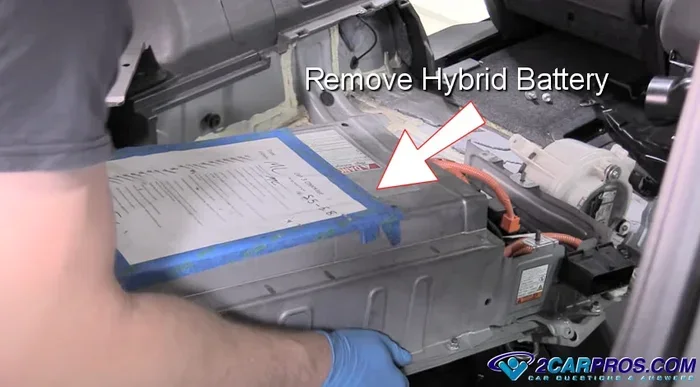
Step 6: Remove the Old Battery
The battery pack is held by several mounting bolts. Use your socket set to remove them. The pack is surprisingly heavy, so get help if needed. Lift the old battery out carefully. Place it in your storage box for safe transport to a recycling center.
Step 7: Install the New Battery
Place the new battery pack in the same position. Align the mounting holes and insert the bolts by hand first. Tighten them gradually in a star pattern to ensure even pressure. Refer to your torque specifications for the correct tightness. Over-tightening can crack the battery housing.
Step 8: Reconnect the High-Voltage Harness
Plug the high-voltage connector back in until you hear the locking click. Give it a gentle tug to confirm it is secure. Double-check that the connector is fully seated and free of debris.
Step 9: Reinstall the Battery Cover
Place the cover panel back on. Secure all bolts and clips. Make sure nothing is pinched or misaligned.
Step 10: Reconnect the 12V Battery
Attach the positive terminal first, then the negative. Tighten the clamp firmly. You should hear the car’s systems power on briefly.
Step 11: Reset the Battery Management System
Connect your OBD2 scanner to the diagnostic port. Clear any stored error codes. Some models also require a battery registration or initialization procedure. Your service manual will have the exact steps for your vehicle.
Step 12: Test the System
Start the car and let it idle. Watch the dashboard for any warning lights. Drive the car slowly around your block. Pay attention to how the hybrid system engages. If everything looks and feels normal, you have completed the replacement successfully.
Common Mistakes to Avoid During Hybrid Battery Replacement
Even experienced DIYers can make errors during hybrid battery replacement. Knowing what goes wrong helps you avoid the same pitfalls.
Skipping the Discharge Wait Time
Rushing the 10-minute discharge period is the number one safety risk. Capacitors in the high-voltage system can hold a dangerous charge for several minutes. Always wait and always verify with your multimeter.
Using the Wrong Torque Values
Every bolt on your battery pack has a specified torque. Too tight can crack the housing. Too loose can cause vibrations and electrical issues. Invest in a quality torque wrench and follow the specifications exactly.
Forgetting to Reset the Battery Management System
After installation, the car’s computer needs to relearn the new battery. Without a proper reset, you may see persistent warning lights or poor fuel economy. The OBD2 scanner is your best friend here.
Mixing Up Battery Modules
If you are replacing individual modules rather than the full pack, keep track of their original positions. Module order matters for cell balancing. Mixing them up can cause the new battery to perform poorly.
Ignoring the Warranty
Many hybrid batteries come with an 8-year or 100,000-mile warranty. DIY replacement often voids this coverage. Before you start, check your warranty terms. If the battery is still under warranty, a dealer replacement might be the smarter financial move.
When to Call a Professional Instead
DIY replacement is rewarding and cost-effective. But there are situations where calling a professional is the right call. Knowing the difference saves you money and, more importantly, keeps you safe.
If your hybrid battery warning light is flashing rather than steady, do not attempt a DIY fix. A flashing light often signals a serious fault in the high-voltage system. A professional technician has the diagnostic equipment to identify the root cause safely.
Also consider calling a pro if your car is still under warranty. As mentioned, DIY work typically voids the warranty. The cost of a dealer replacement might be worth preserving your coverage, especially if a future claim could save you thousands.
Another reason to seek professional help is lack of experience with high-voltage systems. Hybrid technology is different from standard 12V automotive work. If you have never worked with orange-cabled high-voltage components before, a certified hybrid technician can guide you or handle the entire job safely.
Finally, if you do not have access to the right tools, do not improvise. An OBD2 scanner and a torque wrench are not optional for this job. Attempting the replacement without proper tools increases the risk of damage to both the battery and the car.
Cost Comparison: DIY vs. Professional Hybrid Battery Replacement
The cost of hybrid battery replacement varies widely depending on your vehicle model and where you live. Here is a general breakdown to help you decide between DIY and professional service.
| Cost Factor | DIY Replacement | Professional Replacement |
|---|---|---|
| Battery pack cost | $1,200 – $3,000 | $1,200 – $3,000 |
| Labor cost | $0 (your time) | $500 – $1,500 |
| Tools needed | $100 – $300 (one-time purchase) | $0 (shop provides) |
| Total estimated cost | $1,300 – $3,300 | $2,000 – $5,000 |
| Warranty on work | None (unless battery has separate warranty) | Typically 1-2 years on labor |
The savings from a DIY approach can be significant. But remember, your time and effort have value too. If you value your weekends and peace of mind, paying a professional might be worth the extra cost.
Hybrid Battery Maintenance Tips After Replacement
Your new hybrid battery will last longer if you follow a few simple maintenance habits. These small steps can add years of reliable service to your replacement pack.
- Avoid fully draining the battery. Keep your charge level between 20% and 80% when possible. Deep discharges stress the cells.
- Drive regularly. Hybrid batteries benefit from regular use. Sitting idle for long periods can cause cell imbalance.
- Monitor your fuel economy. A sudden drop in MPG can signal battery degradation or a cell imbalance issue.
- Keep the battery cool. Park in shaded areas when possible. Heat is the enemy of battery longevity.
- Use regenerative braking wisely. Smooth, gradual braking charges the battery more efficiently than hard stops.
- Schedule periodic diagnostics. Use your OBD2 scanner every few months to check for early warning signs.
Environmental Impact of Hybrid Battery Replacement
Replacing a hybrid battery has environmental implications worth considering. Old hybrid batteries contain materials like nickel, cobalt, and lithium. These materials can be recycled and reused. Never throw an old battery in the trash. Take it to a certified recycling center or return it to the parts store when you purchase your new pack.
Some manufacturers offer battery recycling programs. Toyota, for example, has a well-established recycling network for their hybrid batteries. Check with your dealer or a local recycling facility to find the best disposal option in your area.
Recycling not only keeps harmful materials out of landfills but also reduces the need for new raw material mining. It is a small step that contributes to a cleaner environment for everyone.
Final Thoughts on DIY Hybrid Battery Replacement
Replacing a hybrid battery yourself at home is entirely possible with the right preparation, tools, and mindset. The process requires patience and attention to safety, but the payoff is real. You save money, gain valuable car knowledge, and build confidence in your mechanical skills.
Start with the safety steps and never rush them. Gather every tool before you begin. Follow each step carefully. If something feels wrong or confusing, stop and research further or call a professional. There is no shame in asking for help.
The hybrid battery is the heart of your hybrid vehicle. Treating it with care during replacement ensures years of reliable, efficient driving ahead. Whether you choose to tackle the job yourself or hand it to a professional, what matters most is that your car gets the hybrid battery replacement it needs to keep running strong.
Now that you have all the information, you can make an informed decision. Weigh the costs, assess your skills honestly, and take the next step. Your hybrid car is counting on you to keep it in top shape.
Frequently Asked Questions
Is it safe to replace a hybrid battery at home?
Yes, it is safe as long as you follow all safety precautions. Always disconnect the 12V battery first, wait 10 minutes for the system to discharge, and wear insulated gloves. Never touch the orange high-voltage cables. If you feel uncertain at any point, stop and consult a professional.
How long does it take to replace a hybrid battery yourself?
Most DIYers complete the job in 2 to 4 hours. The exact time depends on your vehicle model, your experience level, and how easily you can access the battery pack. First-timers should budget extra time for research and careful work.
Can I replace just one module instead of the entire hybrid battery pack?
Yes, in many cases you can replace a single faulty module rather than the entire pack. This approach costs less but requires careful cell balancing afterward. You will need an OBD2 scanner and some technical knowledge to ensure the new module integrates properly with the existing cells.
Will DIY battery replacement void my car warranty?
It might. Many manufacturers consider DIY battery work a warranty violation. Check your warranty terms before starting. If your battery is still covered, a dealer replacement is usually the safer choice, even if it costs more upfront.
What is the average cost of a hybrid battery replacement?
The battery pack itself typically costs between $1,200 and $3,000. Professional installation adds $500 to $1,500 in labor. DIY replacement eliminates labor costs but requires an upfront investment in tools, which can range from $100 to $300 for essential equipment.
How do I know my hybrid battery needs replacing?
Common signs include a flashing or steady warning light on the dashboard, reduced fuel economy, sluggish acceleration, and error codes related to the battery system. Use an OBD2 scanner to read specific codes. A significant drop in miles per gallon is often the first noticeable symptom.
=== CONCLUSION ===
Can you replace a hybrid battery yourself at home? The answer is a clear yes. With the right preparation, tools, and safety awareness, this is a job most car owners can handle. The key is to take it seriously, follow each step carefully, and never skip the safety protocols. Hybrid battery replacement does not have to be a daunting dealer visit or an expensive shop bill. You have the power to do it yourself and save real money in the process.
Remember to check your warranty before starting. Know when to call a professional if the job feels beyond your comfort level. And after the replacement, care for your new battery with smart driving habits that extend its life. Your hybrid car will reward you with years of efficient, reliable performance.