Can Bad Tires Make Your Car Shake and Feel Unsafe to Drive
Yes, bad tires can absolutely make your car shake and feel unsafe to drive. Worn treads, unbalanced wheels, and poor alignment are the top culprits behind tire vibration. In this guide, we break down every cause, symptom, and fix so you can stay safe on the road.
You’re driving down the highway, and suddenly your steering wheel starts vibrating. The whole car feels off. You wonder, can bad tires make your car shake? The short answer is yes. And it is not just a minor annoyance. It can make your vehicle feel unsafe to drive.
Tires are the only part of your car that touches the road. When they go wrong, you feel it. The shaking can start as a mild rumble and grow into something scary. Your steering wheel might vibrate at certain speeds. The car might pull to one side. Brakes might feel different too.
In this article, we will walk through every reason bad tires cause shaking. We will cover tire vibration, unbalanced tires, wheel alignment, and more. You will learn how to spot the problem early and fix it before it becomes dangerous. Let us get into it.
Key Takeaways
- Unbalanced tires are the #1 reason your car shakes, especially at higher speeds.
- Worn tire tread reduces grip and can cause dangerous shaking on wet roads.
- Bad alignment makes your car pull to one side and creates uneven tire wear.
- Tire bulges and cupping are serious warning signs that need immediate attention.
- Regular tire maintenance like rotation and pressure checks can prevent most shaking issues.
- Wheel bearings and suspension parts can mimic bad tire symptoms, so proper diagnosis matters.
- Replacing tires on time keeps your car stable and safe for everyone inside.
📑 Table of Contents
What Causes Car Shaking from Tires?
Car shaking is not normal. It is your vehicle telling you something is wrong. Tires are often the first place to look. Here are the main reasons your tires can cause your car to shake.
Unbalanced Tires
Every tire and wheel has a heavy spot. When these spots do not line up right, your car vibrates. This is called an unbalanced tire. You will usually feel it in the steering wheel. The shaking gets worse between 50 and 70 miles per hour.
Unbalanced tires happen for many reasons. Hitting a pothole can throw off the balance. Driving over speed bumps too fast can do the same. Even small nails or debris can shift the weight. Over time, the tire wears down and the balance changes.
The fix is simple. A mechanic uses a tire balancer to add small weights to the wheel. This costs around $15 to $50 per tire. It is a quick job that makes a big difference.
Uneven Tire Wear
Tires do not wear evenly on every car. How you drive, your alignment, and your tire pressure all play a role. When one tire wears faster than the others, it creates an uneven surface. That uneven surface causes tire vibration while driving.
Some common causes of uneven wear include:
- Poor wheel alignment — the tires point in the wrong direction
- Underinflated tires — the edges wear out too fast
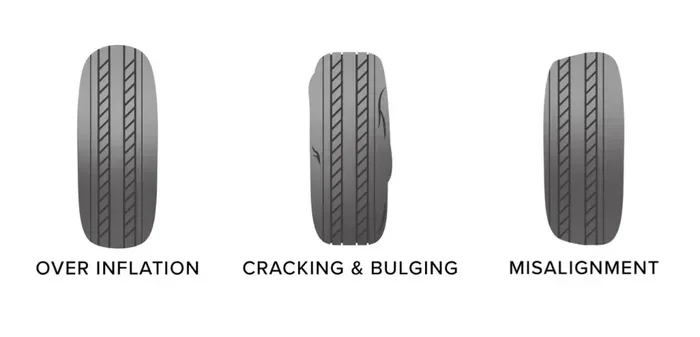
- Overinflated tires — the center wears down quickly
- Worn suspension parts — shocks and struts fail to absorb bumps
Check your tire tread depth regularly. You can use a penny test. Put a penny into the tread with Lincoln’s head facing down. If you can see the top of his head, your tread is too low. It is time for new tires.
Tire Bulges and Blisters
A tire bulge is a bubble in the sidewall. It happens when the inner liner tears and air pushes through. This creates a weak spot that can burst at any time. A bulging tire can cause car shaking at high speed and is extremely dangerous.
Bulges usually come from:
- Hitting potholes or curbs
- Driving on a flat tire
- Age and wear over time
- Manufacturing defects
If you see a bulge, do not keep driving on that tire. Get it replaced right away. A tire blowout at high speed can cause a serious accident.
Bad Tire Symptoms You Should Never Ignore
Your car gives you plenty of warning signs before a tire problem gets worse. Knowing these symptoms helps you catch issues early. Here are the most common bad tire symptoms.
Steering Wheel Vibration
This is the number one sign of tire-related shaking. If your steering wheel shakes or wobbles, your tires are trying to tell you something. At low speeds, a little vibration might be normal. But at highway speeds, it is not.
The vibration pattern can tell you a lot:
- Front wheel vibration often points to unbalanced front tires
- Rear wheel vibration can mean worn rear tires or bad wheel bearings
- Whole car shaking might signal a combination of tire and suspension issues
Car Pulling to One Side
A healthy car drives straight when you let go of the steering wheel. If your car pulls left or right, your tire alignment is off. This puts extra stress on one side of the tire. It also wears out that tire faster than the others.
Alignment problems can come from:
- Hitting a pothole or curb
- Worn suspension components
- Aftermarket modifications like lift kits
- Normal wear and tear over time
Increased Road Noise
Healthy tires are relatively quiet. If you start hearing a loud hum or roar, your tire tread might be worn unevenly. Tire cupping is a common cause. It sounds like a rhythmic thumping that gets louder as you speed up.
Cupping happens when your shocks or struts are failing. The tire bounces up and down instead of rolling smoothly. This creates patches of worn tread that make a lot of noise.
Reduced Fuel Efficiency
Bad tires create more rolling resistance. That means your engine has to work harder. You will notice your fuel economy dropping. If your gas mileage suddenly gets worse, check your tire pressure first. Then look at the tread condition.
Longer Braking Distance
Worn tires cannot grip the road as well. Your stopping distance increases, especially on wet surfaces. This is one of the most dangerous bad tire symptoms. It puts you and everyone else on the road at risk.
How Unbalanced Tires Create Vibration
Tire balance is all about weight distribution. A perfectly balanced tire rolls smoothly without any wobble. When the balance is off, even a small difference of a few ounces can cause noticeable vibration at speed.
The Science Behind Tire Vibration
When you drive, your tires spin hundreds of times per minute. Any imbalance gets amplified by the speed. At 60 miles per hour, a tire with a small imbalance can cause the steering wheel to shake violently. The faster you go, the worse it gets.
Think of it like a washing machine with unevenly distributed clothes. It shakes hard during the spin cycle. Your tires work the same way.
When to Get Your Tires Balanced
You should get your tires balanced:
- Every time you install new tires
- Every 5,000 to 6,000 miles
- After hitting a major pothole or curb
- Whenever you notice steering wheel vibration
Most tire shops include balancing in their installation service. It is a quick process that uses a tire balancing machine. The machine spins the wheel and identifies where the weight needs to be added.
Expert Insight
Many drivers wait too long to balance their tires. By the time they feel the vibration, the tires have already developed uneven wear patterns. Get your tires balanced as soon as you notice any shaking. Early action saves you money on premature tire replacement.
Tire Alignment and Its Role in Car Shaking
Wheel alignment is the angle at which your tires meet the road. When the alignment is off, your tires do not sit flat on the pavement. This causes a host of problems, including shaking and vibration.
The Three Alignment Angles
Your mechanic checks three main angles:
- Camber — the inward or outward tilt of the tire when viewed from the front
- Toe — whether the tires point inward or outward when viewed from above
- Caster — the angle of the steering axis when viewed from the side
When any of these angles are off, your tires scrub against the road instead of rolling smoothly. This creates shaking, pulling, and uneven wear.
Signs Your Alignment Is Off
Watch for these warning signs:
- The steering wheel is off-center when driving straight
- The car pulls to the left or right
- Tires wear more on one edge than the other
- Steering wheel vibration at highway speeds
- The steering wheel feels loose or wandering
A wheel alignment costs between $75 and $150 for a standard four-wheel alignment. It is one of the most affordable maintenance jobs you can do. And it prevents expensive tire replacements down the road.
Alignment After Tire Replacement
Always get an alignment after installing new tires. New tires need to sit at the correct angles to wear evenly. Skipping this step can void your tire warranty in some cases. It also shortens the life of your new tires significantly.
When to Replace Your Tires vs. When to Repair
Not every tire problem means you need new tires. Sometimes a simple repair fixes the shaking. Here is a quick comparison to help you decide.
| Problem | Repair or Replace? | Cost Range | Safety Risk |
|---|---|---|---|
| Minor imbalance | Rebalance | $15 – $50 | Low |
| Small puncture (1/4 inch or less) | Plug or patch | $10 – $30 | Low |
| Tire bulge or blister | Replace immediately | $100 – $300 | High |
| Uneven wear on one edge | Alignment + rotation | $75 – $150 | Medium |
| Tread depth below 2/32 inch | Replace | $100 – $300 per tire | High |
| Cupping or scalloped tread | Replace + check suspension | $100 – $300 | Medium |
| Cracked sidewall | Replace immediately | $100 – $300 | High |
The table above gives you a clear picture of what to do in different situations. Use it as a guide, but always trust a professional mechanic’s advice when in doubt.
Quick Tips: Extending Tire Life
You can make your tires last longer with a few simple habits:
- Check your tire pressure every month
- Rotate your tires every 5,000 to 7,500 miles
- Avoid potholes and sharp objects on the road
- Do not overload your vehicle beyond the tire rating
- Store tires properly if you use seasonal sets
Common Mistakes to Avoid
Many drivers make mistakes that shorten their tire life and cause shaking. Here are the most common ones:
- Ignoring the TPMS light — this warning light exists for a reason
- Skipping tire rotations — uneven wear leads to premature replacement
- Driving on a flat tire — this can destroy the tire and the rim
- Mixing tire types — different brands or sizes cause handling issues
- Neglecting wheel bearings — bad bearings mimic tire problems
How to Prevent Tire-Related Shaking
Prevention is always better than repair. A little maintenance goes a long way toward keeping your tires healthy and your ride smooth. Here is what you should do.
Stick to a Maintenance Schedule
Create a simple maintenance routine for your tires:
- Monthly: Check tire pressure and visually inspect for damage
- Every 5,000 miles: Rotate your tires
- Every 10,000 miles: Get a wheel alignment check
- Every 6 months: Have your tires professionally balanced
Following this schedule catches small problems before they become big ones. It also keeps your car feeling safe and stable on every drive.
Know Your Tire Age
Tires degrade over time, even with plenty of tread left. The rubber hardens and loses grip as it ages. Most experts recommend replacing tires that are more than six years old, regardless of tread depth. Check the DOT code on the sidewall to find your tire’s manufacture date.
Invest in Quality Tires
Cheap tires might save money upfront, but they often wear out faster and perform poorly. Look for tires with good reviews for traction, durability, and ride comfort. The right set of tires makes your car safer and more comfortable to drive.
Listen to Your Car
Your car talks to you. If you notice new vibrations, sounds, or pulling, get it checked. Ignoring these signs can lead to bigger problems and more expensive repairs. A quick visit to the mechanic can save you a lot of trouble and keep you safe.
Conclusion
Can bad tires make your car shake and feel unsafe to drive? Absolutely. Unbalanced tires, poor alignment, uneven wear, bulges, and cupping all contribute to dangerous shaking and vibration. The good news is that most of these problems are preventable with regular maintenance.
Stay on top of your tire pressure, get regular rotations and alignments, and replace your tires when the tread wears down. Your tires are your connection to the road. Taking care of them means taking care of your safety and the safety of everyone around you.
Do not ignore shaking or vibration. It is your car asking for help. Address the problem early, and you will enjoy a smoother, safer ride for miles to come.
Frequently Asked Questions
Can bad tires cause shaking at high speeds?
Yes, bad tires are one of the most common causes of shaking at high speeds. Unbalanced tires, worn tread, and tire bulges all create vibration that gets worse the faster you drive. If your car shakes above 60 miles per hour, get your tires checked immediately.
How much does it cost to fix tire shaking?
The cost depends on the cause. Tire balancing costs $15 to $50 per tire. A wheel alignment runs $75 to $150. If you need new tires, expect $100 to $300 per tire. Most shaking issues are affordable to fix when caught early.
Can worn suspension parts cause the same symptoms as bad tires?
Yes, worn shocks, struts, and wheel bearings can mimic tire problems. They cause vibration, pulling, and uneven tire wear. A mechanic can run a full inspection to determine whether the issue is in your tires or your suspension system.
How often should I rotate my tires?
Most manufacturers recommend rotating your tires every 5,000 to 7,500 miles. Check your owner’s manual for the exact interval. Regular rotation helps your tires wear evenly and prevents shaking caused by uneven tread wear.
Is it safe to drive with a shaking car?
It is not safe. Shaking affects your steering control and braking performance. It also puts extra stress on other vehicle components. If your car shakes while driving, pull over safely and inspect your tires or get roadside assistance if needed.
What is the penny test for tire tread depth?
The penny test is a simple way to check if your tire tread is too worn. Insert a penny into the tread with Lincoln’s head facing down. If you can see the top of his head, your tread is below 2/32 inch and it is time for new tires. This test helps prevent shaking caused by worn tread.