How Many Catalytic Converters Does Your Dodge Ram 1500 Have
Most Dodge Ram 1500 trucks come equipped with two catalytic converters as part of their emissions control setup. The exact number can vary depending on your engine type, model year, and trim level. Understanding your truck’s catalytic converter count helps with maintenance, troubleshooting, and avoiding costly repairs down the road.
Let’s talk about something every Dodge Ram 1500 owner should know. Your truck’s catalytic converter plays a huge role in keeping things running smoothly. It also keeps your exhaust emissions in check. But here’s the question that brings you here: how many catalytic converters does a Dodge Ram 1500 have?
The answer might surprise you. Most Ram 1500 trucks come with two catalytic converters. But that number can change. It depends on your engine, your model year, and even your trim level. This guide breaks it all down. You’ll learn exactly what’s under your truck, why it matters, and what to do if something goes wrong.
Whether you’re a first-time Ram owner or a seasoned truck fan, this article has you covered. We’ll walk through the exhaust system, the signs of a failing converter, replacement costs, and much more. By the end, you’ll know your truck better than ever.
Key Takeaways
- Two converters are standard: Most Dodge Ram 1500 models use two catalytic converters in the exhaust system.
- Engine type matters: The 5.7L HEMI V8 and 3.6L V6 setups may differ slightly in converter configuration.
- Catalytic converter theft is real: Ram 1500 owners should take precautions to protect their exhaust components.
- Replacement costs vary widely: Expect to pay between $1,000 and $3,500 depending on OEM vs aftermarket parts.
- Watch for warning signs: Reduced fuel economy, rattling noises, and check engine lights signal potential converter problems.
- Emissions testing depends on converters: Faulty converters can cause your truck to fail a vehicle emissions test.
📑 Table of Contents
- How Many Catalytic Converters Does a Dodge Ram 1500 Have?
- Understanding the Exhaust System of the Dodge Ram 1500
- Signs Your Dodge Ram 1500 Catalytic Converter Is Failing
- Catalytic Converter Replacement Cost for Dodge Ram 1500
- How to Protect Your Dodge Ram 1500 Catalytic Converter
- Ram 1500 Trims and Their Converter Setup
- Can You Drive With a Bad Catalytic Converter?
- Quick Tips for Dodge Ram 1500 Owners
- Expert Insights
- Key Takeaways
- Conclusion
How Many Catalytic Converters Does a Dodge Ram 1500 Have?
The short answer is two. Most Dodge Ram 1500 models come with two catalytic converters. These converters sit in the exhaust system and work to clean up harmful gases before they exit the tailpipe. They are essential for meeting federal emissions standards and keeping your truck road legal.
But let’s dig deeper. Not every Ram 1500 is exactly the same. The number of converters can shift based on a few key factors:
- Engine type: The 5.7L HEMI V8, 3.6L Pentastar V6, and 3.0L EcoDiesel V6 all have slightly different exhaust setups.
- Model year: Newer models from 2019 onward may have updated emissions systems compared to older trucks.
- Trim level: Higher trims sometimes include additional emissions equipment for stricter compliance.
- Fuel type: Diesel models like the 3.0L EcoDiesel may include a diesel particulate filter alongside the catalytic converter.
For the vast majority of gasoline-powered Ram 1500 trucks, you’re looking at two converters. One sits near the exhaust manifold on the driver’s side. The other is further back in the exhaust system, often close to the mid-pipe. Together, they handle the job of converting harmful gases into less toxic emissions.
Why Two Converters?
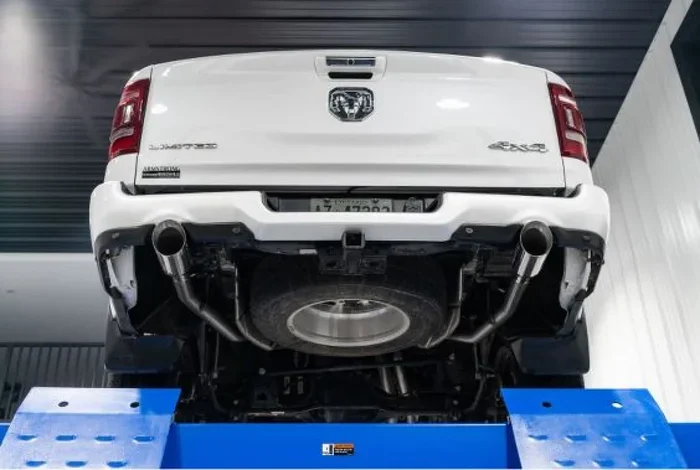
The Dodge Ram 1500 uses a dual exhaust system on most models. That means there are two exhaust pipes running underneath the truck. Each pipe connects to its own catalytic converter. This setup allows for better flow and more efficient emissions control. It also helps the engine breathe easier, which can improve performance and fuel economy.
Think of it this way. One converter handles the gases from the front cylinders. The other handles the rear cylinders. Working together, they make sure almost all of the harmful byproducts get filtered out. It’s a smart design that balances power and cleanliness.
Understanding the Exhaust System of the Dodge Ram 1500
Your truck’s exhaust system does more than just make noise. It’s a carefully engineered path for gases to travel after combustion. Let’s walk through the main parts so you can see where the catalytic converter fits in.
Exhaust Manifold
The journey starts at the exhaust manifold. This is the part attached directly to the engine. It collects hot gases from the cylinders and funnels them into a single pipe. On the Ram 1500, the manifold feeds directly into the first catalytic converter.
Downpipe and Catalytic Converter
After the manifold, gases flow through the downpipe into the catalytic converter. Inside the converter, a ceramic honeycomb coated with precious metals like platinum and palladium triggers chemical reactions. These reactions convert carbon monoxide, nitrogen oxides, and hydrocarbons into carbon dioxide, nitrogen, and water vapor.
The first converter handles the bulk of this work. The second converter acts as a final polish. It catches any remaining pollutants that slipped through the first stage.
Muffler and Tailpipe
After the converters, the cleaned gases move through the muffler. The muffler reduces noise. Then the gases exit through the tailpipe at the back of the truck. The whole system works as one unit. If any part fails, you’ll feel it.
Signs Your Dodge Ram 1500 Catalytic Converter Is Failing
A failing catalytic converter can cause big problems if you ignore it. The good news is your truck gives you plenty of warning signs. Here are the most common catalytic converter symptoms to watch for:
1. Check Engine Light
This is the most obvious sign. When your oxygen sensor detects that the converters aren’t working properly, it triggers the check engine light. Don’t ignore this. A quick scan with an OBD-II tool can confirm whether the converter is the culprit.
2. Reduced Fuel Economy
If your Dodge Ram 1500 is suddenly sipping more gas, a clogged converter might be to blame. When the converter gets blocked, exhaust gases can’t flow out efficiently. Your engine has to work harder. That means more fuel burned and less distance per gallon.
3. Rattling Noise
A rattling sound coming from underneath the truck is a red flag. Inside the converter, the ceramic honeycomb can break apart over time. When it does, those broken pieces rattle around as exhaust flows through. This is one of the most telling catalytic converter symptoms.
4. Failed Vehicle Emissions Test
If your truck won’t pass a vehicle emissions test, the converter is often the reason. A bad converter lets too many pollutants escape through the tailpipe. This is not just a nuisance. It can also mean your truck isn’t legal to drive in states with strict tailpipe emissions rules.
5. Poor Engine Performance
A clogged converter creates back pressure. That pressure can make your engine feel sluggish. You might notice hesitation when accelerating or a general lack of power. In severe cases, the truck may struggle to run at all.
6. Rotten Egg Smell
That sulfurous smell coming from the exhaust isn’t normal. A healthy converter turns sulfur into odorless sulfur dioxide. When it fails, that sulfur escapes as a rotten egg smell. If you notice this, get your truck checked right away.
Catalytic Converter Replacement Cost for Dodge Ram 1500
Nobody wants to hear this, but replacing a catalytic converter isn’t cheap. The catalytic converter price depends on several factors. Let’s break down what you can expect.
OEM vs Aftermarket
An OEM catalytic converter is the original part made by the manufacturer. It fits perfectly and meets all factory specifications. However, it comes with a higher price tag. An aftermarket catalytic converter is made by a third party. It usually costs less but may not last as long or meet the same quality standards.
| Factor | OEM Converter | Aftermarket Converter |
|---|---|---|
| Price Range | $1,200 – $3,500 per unit | $500 – $1,500 per unit |
| Durability | 100,000+ miles | 60,000 – 80,000 miles |
| Warranty | 8-year / 80,000-mile coverage | Varies by brand |
| Fit and Finish | Exact factory match | May require minor adjustments |
| Emissions Compliance | Guaranteed | Check local laws |
Labor Costs
Labor for replacing a catalytic converter on a Ram 1500 typically runs between $100 and $300 per converter. Since most trucks have two, you’re looking at $200 to $600 in labor alone. The total catalytic converter replacement cost for both units usually falls between $1,500 and $4,000.
If you have a diesel model, costs can be higher. The addition of a diesel particulate filter adds complexity and expense to the job. Always get a detailed quote from a trusted mechanic before committing to the repair.
How Long Does a Catalytic Converter Last?
The average catalytic converter lifespan is about 100,000 miles. But that number isn’t set in stone. Driving habits, fuel quality, and engine health all play a role. If you take care of your engine, your converter can last well beyond the average. If you ignore engine problems like misfires or rich fuel mixtures, the converter can fail much sooner.
How to Protect Your Dodge Ram 1500 Catalytic Converter
Prevention is always cheaper than repair. Here are some practical steps to keep your converters healthy and your truck running strong.
Use Quality Fuel
Cheap fuel contains more contaminants. These contaminants can coat the inside of your converter and reduce its efficiency. Stick with reputable gas stations and the recommended octane rating for your engine. Your Dodge Ram engine will thank you.
Fix Engine Problems Quickly
An engine misfire sends unburned fuel into the exhaust system. That raw fuel can melt the inside of the converter. Spark plugs, ignition coils, and fuel injectors all need to work properly. If something feels off, don’t wait. Get it checked.
Watch for Oil and Coolant Leaks
Oil and coolant can enter the exhaust system through leaks. Both substances are harmful to the converter. Regular maintenance checks can catch leaks early. This keeps your converter safe and your truck in top shape.
Protect Against Catalytic Converter Theft
Unfortunately, catalytic converter theft has become a serious problem. The precious metals inside the converter make it a target for thieves. Ram 1500 trucks are especially vulnerable because they sit high off the ground, making it easy to slide underneath.
Here are some tips to reduce your risk:
- Install a converter anti-theft cage or shield.
- Park in well-lit areas or attached garages whenever possible.
- Consider etching your vehicle identification number on the converter.
- Use a motion-activated camera or security light near your parking spot.
- Ask your dealer about converter lock-down hardware.
These steps won’t make your truck theft-proof. But they make it a harder target. That alone is often enough to deter a would-be thief.
Ram 1500 Trims and Their Converter Setup
Different Ram 1500 trims may have slightly different exhaust configurations. Here’s a quick look at what to expect across popular trim levels:
- Tradesman: Standard dual exhaust with two converters. This is the baseline setup found on most base-model trucks.
- Big Horn / Laramie: Same dual converter setup. These mid-level trims don’t add extra converters but may include upgraded exhaust tips.
- Rebel / Laramie Longhorn / Limited: Still two converters. Higher trims focus on comfort and features, not additional emissions equipment.
- TRX: The high-performance TRX model uses a specialized exhaust system. It still has two converters but may include high-flow designs for better performance.
- 3.0L EcoDiesel models: These include a diesel particulate filter in addition to the two catalytic converters. The DPF helps trap soot particles that a standard converter can’t handle.
No matter which trim you drive, the core setup remains the same. Two converters doing the critical work of cleaning your exhaust. Understanding your specific trim’s setup helps when you’re shopping for parts or diagnosing issues.
Can You Drive With a Bad Catalytic Converter?
Technically, yes. A truck with a bad converter can still run. But you really shouldn’t do it for long. A damaged converter can cause a cascade of problems. Unfiltered exhaust gases can damage other components over time. The smell gets worse. And your truck will fail any emissions testing.
Beyond that, a completely blocked converter can cause your engine to stall. In worst-case scenarios, the heat buildup from a clogged converter can even cause a fire. That’s a risk no one should take. If your converter is failing, plan for a repair as soon as possible.
Quick Tips for Dodge Ram 1500 Owners
- Get your exhaust system inspected at every oil change.
- Listen for rattling sounds under the truck, especially on cold starts.
- Keep up with scheduled engine maintenance to protect your converters.
- Know your converter’s location so you can spot damage after off-road driving.
- Save receipts for any converter replacements for warranty tracking.
- Consider aftermarket converters with high-flow designs if you tow heavy loads frequently.
Expert Insights
Experienced mechanics agree on one thing: the catalytic converter is one of the most important parts of your truck’s exhaust system. It’s also one of the most expensive to replace. That’s why preventive care matters so much.
“Most converter failures don’t happen overnight,” says a long-time Ram technician. “Something else goes wrong first. A misfire. A fuel system issue. A sensor problem. By the time the converter fails, the root cause is often already there. Fix the root cause, or the new converter won’t last either.”
This is a crucial point. Replacing a converter without fixing the underlying problem is like putting a bandage on a broken bone. The converter will fail again, and you’ll pay the price twice. Always diagnose the full picture before committing to a replacement.
Key Takeaways
- Two converters are standard: Most Dodge Ram 1500 models use two catalytic converters in the exhaust system.
- Engine type matters: The 5.7L HEMI V8 and 3.6L V6 setups may differ slightly in converter configuration.
- Catalytic converter theft is real: Ram 1500 owners should take precautions to protect their exhaust components.
- Replacement costs vary widely: Expect to pay between $1,000 and $3,500 depending on OEM vs aftermarket parts.
- Watch for warning signs: Reduced fuel economy, rattling noises, and check engine lights signal potential converter problems.
- Emissions testing depends on converters: Faulty converters can cause your truck to fail a vehicle emissions test.
- Diesel models are different: The 3.0L EcoDiesel includes a diesel particulate filter alongside its two catalytic converters.
Conclusion
So, how many catalytic converters does a Dodge Ram 1500 have? The answer is almost always two. These converters work hard every day to keep your truck running clean and legal. They filter harmful gases, reduce toxic emissions, and help your engine perform at its best.
Taking care of your converters means taking care of your truck. Use quality fuel. Fix engine problems fast. Watch for the warning signs of a failing unit. And protect your investment against theft. These simple steps can save you thousands of dollars and a lot of headaches.
Your Dodge Ram 1500 is a powerful machine. It deserves the best care you can give it. Now that you know more about the catalytic converter setup, you’re better equipped to keep your truck in top condition for years to come. Stay proactive, stay informed, and enjoy the ride.
Frequently Asked Questions
Can a Dodge Ram 1500 run with only one catalytic converter?
Technically yes, but it’s not recommended. Removing a converter will cause your truck to fail emissions testing and may trigger the check engine light. It can also hurt engine performance and fuel economy. Always keep both converters in place for optimal operation.
How much does it cost to replace both catalytic converters on a Ram 1500?
The total cost typically ranges from $1,500 to $4,000, depending on whether you choose OEM or aftermarket parts. Labor adds another $200 to $600. The exact price varies based on your model year, engine type, and local labor rates.
Are Ram 1500 catalytic converters prone to theft?
Yes, Ram 1500 trucks are among the most targeted vehicles for catalytic converter theft. Their high ground clearance makes them easy targets. Installing anti-theft devices and parking in secure areas can significantly reduce your risk.
How can I tell which catalytic converter is bad on my Ram 1500?
A mechanic can use an OBD-II scanner to read error codes that point to the specific converter. In some cases, the check engine light will flash, indicating a particular bank of cylinders. A visual inspection under the truck can also reveal physical damage to one converter.
Do diesel Ram 1500 models have more than two catalytic converters?
The 3.0L EcoDiesel still has two catalytic converters, but it also includes a diesel particulate filter. The DPF is a separate component that traps soot and ash. It’s not a catalytic converter, but it serves a similar purpose in cleaning exhaust gases.
What happens if I remove the catalytic converters from my Ram 1500?
Removing converters is illegal in most states. It will cause your truck to fail emissions testing, trigger the check engine light, and increase harmful tailpipe emissions. It may also void your warranty and lead to bigger engine problems over time.