How Does a Truck Hood Latch Work and Why It Matters
A truck hood latch is the simple but essential mechanism that keeps your hood securely closed while you drive. It uses a combination of a primary latch, a secondary safety latch, a release cable, and a hood prop to hold everything in place. Understanding how a truck hood latch works helps you spot problems early, avoid costly repairs, and stay safe on the road.
Every time you pop the hood to check your engine oil or top off the washer fluid, there is a small but mighty system working behind the scenes. The truck hood latch is what keeps your hood firmly shut while you cruise down the highway. Without it, your hood could fly open at 70 miles per hour, and that is a scary thought.
So how does a truck hood latch actually work? It is simpler than you might think. The system uses a few basic parts working together to lock and release the hood. In this article, we will walk you through every part of the hood latch mechanism, show you how it operates step by step, and help you troubleshoot common problems. Whether you are a DIY mechanic or just curious about your truck, this guide has you covered.
Key Takeaways
- Simple Design: A truck hood latch uses a lever, cable, and latch pin to lock and release the hood with ease.
- Two-Stage Safety: Most trucks use a primary latch and a secondary latch to prevent the hood from flying open while driving.
- Common Issues: Sticking, rust, broken cables, and worn springs are the most frequent truck hood latch problems.
- Easy Fixes: Many latch issues can be solved with lubrication, adjustment, or a simple replacement part.
- Regular Maintenance: Cleaning and greasing your hood latch every few months extends its life significantly.
- Safety First: A failing hood latch can be dangerous at highway speeds, so never ignore warning signs.
- Affordable Repair: Replacing a truck hood latch is usually inexpensive and takes less than an hour.
📑 Table of Contents
- What Is a Truck Hood Latch and What Does It Do
- The Main Parts of a Truck Hood Latch System
- How the Truck Hood Latch Mechanism Works Step by Step
- Common Truck Hood Latch Problems and What Causes Them
- How to Fix and Replace a Truck Hood Latch
- Tips to Keep Your Truck Hood Latch Working Well
- Quick Tips for Truck Hood Latch Care
- Expert Insight: The Evolution of Truck Hood Latch Design
- Key Takeaways
- Conclusion
What Is a Truck Hood Latch and What Does It Do
The truck hood latch is the device that secures your hood to the front of the truck. It is usually located near the front edge of the hood, just behind the grille or bumper. Its main job is to keep the hood tightly sealed while you drive. This protects the engine from dirt, debris, wind, and moisture.
But the hood latch does more than just hold things shut. It also gives you easy access to the engine compartment. You pull a lever or cable inside the cab, and the latch releases. Most trucks use a two-stage system, which means there is a primary latch and a secondary latch. This dual latch design adds a layer of safety.
Why the Hood Latch Matters for Safety
Imagine driving on the interstate and your hood suddenly swings open. It would block your view and could cause a serious accident. The truck hood latch prevents this from happening. The secondary latch acts as a backup. Even if the primary latch fails, the secondary latch keeps the hood in place.
This is why it is so important to check your hood latch system regularly. A loose or worn latch is a safety risk. A stuck hood latch can also leave you stranded if you cannot access the engine bay. Keeping the latch in good shape is one of the easiest ways to stay safe and avoid headaches.
The Main Parts of a Truck Hood Latch System
A truck hood latch is made up of several smaller parts. Each one plays a specific role in locking and releasing the hood. Let us break down the main components so you know exactly what is under the hood.
Primary Hood Latch
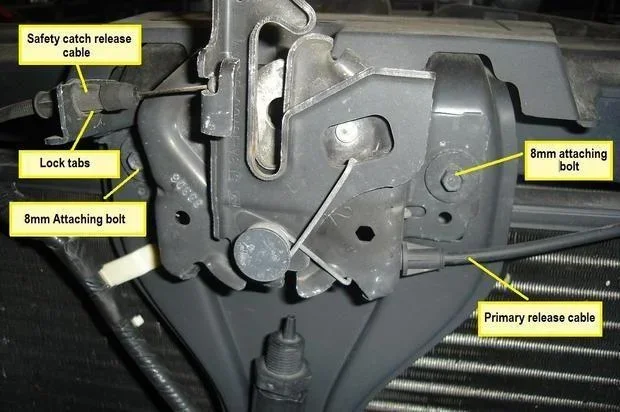
The primary hood latch is the main locking device. It is the first latch the hood catches when you close it. This latch uses a latch lever and a latch pin to clamp the hood to the truck frame. When you pull the release handle inside the cab, a cable pulls the lever, and the pin releases.
Most primary latches are made from steel or durable metal. They are built to handle vibration, weather, and the constant opening and closing of the hood. Over time, however, the latch spring can weaken, and the pin can wear out.
Secondary Hood Latch
The secondary hood latch is a safety feature found on most trucks. It is usually located near the center or rear of the hood. When you close the hood, it drops into a striker plate mounted on the truck frame. This second latch prevents the hood from popping open, even if the primary latch fails.
Some trucks use a hood safety latch that requires a special tool or key to open. This is common on commercial trucks and vehicles that carry valuable cargo in the engine bay area.
Hood Release Cable
The hood release cable connects the handle inside your cab to the primary latch. When you pull the hood release lever, the cable pulls the latch pin, and the hood pops open. The cable is usually made of steel wire wrapped in a protective sheath.
Over time, the cable can stretch, fray, or rust. A broken hood latch cable is one of the most common reasons a hood will not open. If you pull the handle and nothing happens, the cable is often the culprit.
Hood Prop Rod or Hood Support
The hood prop rod is the metal stick that holds the hood open while you work on the engine. It attaches to a hood hinge or a support bracket on the hood itself. Some modern trucks use hood struts or gas springs instead of a manual prop rod. These do the work for you and hold the hood at any angle.
The prop rod might seem simple, but it is an important part of the overall hood latch assembly. Without it, you would have to hold the hood up with your hands while you work. That is not only annoying but also unsafe.
How the Truck Hood Latch Mechanism Works Step by Step
Now that you know the parts, let us walk through how the truck hood latch actually works. The process is straightforward once you see it broken down into steps.
Step 1: Closing the Hood
When you lower the hood, it swings down onto the front of the truck. The primary latch catches the hood first. The latch pin slides into the hood catch and locks the hood in place. At the same time, the secondary latch drops into its own striker plate. Both latches are now engaged.
The hood latch spring keeps tension on the latch lever. This ensures the latch stays locked tight, even when the truck is bouncing over rough roads. The spring is what gives the latch its latching force.
Step 2: Opening the Hood from Inside the Cab
To open the hood, you pull the release handle inside the truck cab. This handle is connected to the hood latch cable. When you pull, the cable tugs on the latch lever at the primary latch. The lever releases the latch pin, and the hood pops up slightly.
At this point, the primary latch is open, but the secondary latch is still engaged. You must walk to the front of the truck, lift the hood a few inches, and release the secondary latch manually. This two-step process is by design. It keeps the hood secure while driving.
Step 3: Securing the Hood Open
Once the hood is open, you insert the hood prop rod into the designated hole on the hood or fender. The rod holds the hood up and gives you full access to the engine bay. If your truck uses hood struts, the hood stays open on its own without a prop rod.
When you are done, you remove the prop rod, lower the hood, and let it drop into the latches. The hood latch pin snaps back into place, and both latches lock. The whole process takes just a few seconds once you are used to it.
Common Truck Hood Latch Problems and What Causes Them
Like any mechanical part, the truck hood latch can wear out or break over time. Here are the most common problems truck owners face, along with what causes them.
Sticking or Jammed Hood Latch
A stuck hood latch is frustrating and common. It usually happens when dirt, grime, or rust builds up inside the latch mechanism. Road salt, moisture, and dust can all cause corrosion inside the latch body. When this happens, the latch pin does not move freely, and the hood will not open or close properly.
Another cause is a bent latch lever. If something hits the front of the truck, the lever can bend out of shape. This throws off the alignment and makes the latch stick. A hood latch adjustment often fixes this problem without needing a full replacement.
Broken Hood Release Cable
The hood release cable is under constant tension every time you pull the handle. Over months and years, the cable can stretch or the inner wire can snap. When this happens, pulling the handle does nothing. You will need to open the hood from the front or replace the cable.
A broken hood latch cable is especially common in older trucks or trucks that sit outside in harsh weather. Salt and moisture speed up the wear process. If your cable is frayed or stiff, it is a good idea to replace it before it completely fails.
Hood Latch Not Closing Properly
If the hood does not latch all the way, it could be a problem with the latch pin or the striker plate. The striker plate can shift over time due to vibration. When it is out of alignment, the latch pin does not catch fully, and the hood feels loose.
A loose hood latch bolt can also cause this issue. The bolt that holds the latch to the frame can work itself loose over time. Tightening it often solves the problem. If the latch itself is worn, you may need a full hood latch replacement.
Secondary Latch Not Engaging
The secondary hood latch can also fail. If the hood safety latch does not drop into the striker plate, the hood is only held by the primary latch. This is a safety concern, especially at highway speeds.
A worn hood latch spring on the secondary latch is a common cause. The spring loses tension over time and cannot push the latch into position. Replacing the spring or the entire secondary latch is usually a quick and affordable fix.
Hood Flying Open While Driving
This is the worst-case scenario and the most dangerous. If both latches fail at once, the hood can fly open while you are driving. It blocks your windshield and makes steering nearly impossible. This can happen if the latch pin breaks, the cable snaps, or the latch spring completely fails.
To prevent this, always check that both latches are secure before you drive. If you notice the hood feeling loose or not clicking firmly, get it inspected right away. A hood latch failure at speed is a serious safety hazard.
How to Fix and Replace a Truck Hood Latch
Replacing a truck hood latch is one of the easier repairs you can do at home. You do not need advanced mechanical skills or expensive tools. Here is a simple guide to get the job done.
What You Will Need
- A replacement hood latch assembly (match it to your truck make and model)
- A set of wrenches or sockets
- A screwdriver (Phillips or flathead, depending on your truck)
- Penetrating oil like WD-40
- Grease or latch lubricant
- A clean rag
Step-by-Step Replacement
First, open the hood and locate the primary hood latch. Spray penetrating oil on any bolts or screws that are rusted. Let it sit for a few minutes. Then, disconnect the hood release cable from the latch lever. You may need to squeeze a small clip or tab to release the cable end.
Next, remove the bolts that hold the latch assembly to the frame. There are usually two or three bolts. Once the bolts are out, carefully pull the old latch away from the truck. Compare it to the new latch to make sure everything lines up.
Now, bolt the new hood latch assembly into place. Tighten the bolts snugly but do not over-tighten. Reconnect the hood release cable and make sure it is secure. Test the latch by pulling the release handle inside the cab and then closing the hood to see if it latches properly.
If your truck has a secondary latch, repeat the same process for that side. Always test both latches after installation. Open and close the hood several times to make sure everything works smoothly.
When to Call a Professional
Most hood latch replacements are straightforward. But if you are dealing with a hood latch stuck issue that you cannot diagnose, it may be worth visiting a mechanic. Sometimes the problem is not the latch itself but the hood hinge or the latch striker plate. A professional can spot these issues quickly.
Also, if you are not comfortable working under the hood, there is no shame in calling a pro. A hood latch repair is usually affordable, and a mechanic can have you back on the road in no time.
Tips to Keep Your Truck Hood Latch Working Well
Prevention is always better than repair. A little regular maintenance can keep your truck hood latch working smoothly for years. Here are some simple tips that make a big difference.
Lubricate the Latch Regularly
Every few months, spray a little latch lubricant or white lithium grease into the latch mechanism. This keeps the moving parts smooth and prevents rust. Focus on the latch pin, the latch lever, and any pivot points. A few sprays go a long way.
Check the Cable Often
Inspect the hood release cable for fraying or stiffness. If the cable feels rough when you pull the handle, it is starting to wear. Replace it before it breaks. A cable replacement costs very little and takes just a few minutes.
Keep the Latch Clean
Dirt and road grime can build up inside the latch and cause it to stick. Wipe down the latch and surrounding area with a clean rag every time you wash your truck. If you live in a snowy or coastal area, wash the undercarriage regularly to prevent salt damage.
Check Alignment
If the hood does not close evenly or feels loose, check the alignment of the latch striker plate. You can adjust it by loosening the bolts, repositioning the plate, and tightening it again. Proper alignment ensures the latch pin catches fully every time.
Replace Worn Parts Promptly
Do not wait for a part to completely fail before replacing it. If you notice the hood latch spring is weak or the cable is fraying, swap them out right away. Catching small issues early saves you from bigger problems down the road.
Quick Tips for Truck Hood Latch Care
- Spray the latch with lubricant every 3 to 6 months to prevent rust and sticking.
- Check the hood release cable for fraying or stiffness during regular oil changes.
- Always confirm both latches are secure before driving, especially on the highway.
- Replace worn latch springs immediately to maintain proper latching tension.
- Keep the striker plate and latch pin clean of dirt, grease, and road grime.
- Carry a spare hood release cable in your truck for emergencies.
Expert Insight: The Evolution of Truck Hood Latch Design
The truck hood latch has come a long way over the decades. Older trucks used simple mechanical latches with no secondary safety feature. If the primary latch failed, the hood could fly open with dangerous consequences. Modern trucks now use dual latch systems that greatly reduce this risk.
Some newer trucks even use electronic hood release systems. These use a button or sensor inside the cab to release the latch. While these systems are more advanced, they still rely on the same basic hood latch mechanism principles. The latch pin and latch lever are still the core components that do the heavy lifting.
Engineers have also improved the materials used in hood latch assemblies. Stainless steel and coated metals resist corrosion better than older designs. This means modern truck hood latches last longer and require less maintenance. But no matter how advanced the design gets, regular care and inspection are still essential.
Key Takeaways
- Simple Design: A truck hood latch uses a lever, cable, and latch pin to lock and release the hood with ease.
- Two-Stage Safety: Most trucks use a primary latch and a secondary latch to prevent the hood from flying open while driving.
- Common Issues: Sticking, rust, broken cables, and worn springs are the most frequent truck hood latch problems.
- Easy Fixes: Many latch issues can be solved with lubrication, adjustment, or a simple replacement part.
- Regular Maintenance: Cleaning and greasing your hood latch every few months extends its life significantly.
- Safety First: A failing hood latch can be dangerous at highway speeds, so never ignore warning signs.
- Affordable Repair: Replacing a truck hood latch is usually inexpensive and takes less than an hour.
Conclusion
The truck hood latch is one of those parts you probably never think about until something goes wrong. But as we have seen, it is a vital component that keeps your hood secure, your engine protected, and your drives safe. From the primary latch to the secondary latch, from the release cable to the hood prop rod, every part plays an important role.
Understanding how your hood latch mechanism works gives you the power to spot problems early and fix them before they become big issues. A little regular maintenance goes a long way. Lubricate the latch, check the cable, and keep the whole hood latch assembly clean. These small habits save you time, money, and stress.
If you ever notice your truck hood latch sticking, feeling loose, or not clicking into place, do not ignore it. Address the issue quickly with a simple adjustment or replacement. Your truck, your engine, and your safety will thank you. Take care of your hood latch, and it will take care of you for many miles to come.
Frequently Asked Questions
How much does it cost to replace a truck hood latch?
A truck hood latch replacement typically costs between $30 and $100 for the part itself. If you take it to a mechanic, labor adds about $50 to $100. Most DIYers can save money by doing the swap themselves in under an hour.
Can a stuck hood latch be fixed without replacing it?
Yes, in many cases. A stuck hood latch is often caused by rust or dirt buildup. Spraying penetrating oil into the mechanism and working the lever back and forth can free it up. Lubricating the latch pin and pivot points regularly prevents sticking in the first place.
Why does my hood latch keep coming loose while driving?
A loose hood latch is usually caused by a worn latch spring or a misaligned striker plate. The spring loses tension over time, and the latch does not grip as firmly. Adjusting the striker plate or replacing the spring usually fixes the problem.
Is it safe to drive with a broken secondary hood latch?
It is not recommended. The secondary hood latch is a safety backup. If the primary latch fails while driving, the secondary latch is your only protection. A broken secondary latch means your hood is only held by one latch, which is a safety risk at highway speeds.
How often should I inspect my truck hood latch?
A good rule of thumb is to inspect the hood latch system every time you change your oil or perform other routine maintenance. Checking the cable, latch, and spring every few months helps you catch small issues before they turn into big problems.
Can I use any hood latch for my truck, or does it need to be model-specific?
The hood latch assembly must match your truck’s make, model, and year. Different trucks have different latch striker plate positions and cable routing. Always check the part number before purchasing a replacement to ensure a proper fit.