Can I Tint a Leased Car Without Breaking the Lease
Yes, you can tint a leased car in many cases, but it depends on your lease agreement, local laws, and tint type. Understanding the rules before you tint helps you avoid costly penalties at lease return. This guide breaks down everything you need to know about lease car window tinting safely and legally.
You just signed a lease for a shiny new car, and the first thing you notice is the glare on the windshield. You start wondering, can I tint a leased car? It is a very common question among lease drivers who want better comfort, privacy, and UV protection. The short answer is yes, but there are important rules and risks you need to understand first.
Leasing a car is not the same as owning one. When you lease, you are essentially renting the vehicle for a set period. The lessor expects the car back in good condition, minus normal wear and tear. Any modification you make could trigger a lease violation if it goes against your agreement. That is why knowing the rules around lease car window tinting is so important. This guide will walk you through everything step by step so you can make a smart decision.
Key Takeaways
- Check Your Lease Agreement First: Always review your lease terms before making any modifications to a leased vehicle.
- Know Your State Laws: Window tint laws vary by state, and your tint must comply with local visible light transmission limits.
- Factory Tint Is Usually Fine: Most lease agreements allow factory tint since it came with the car.
- Aftermarket Tint Requires Caution: Adding aftermarket tint can lead to lease violations if not done properly.
- Removal Before Return Is Smart: Budget for tint removal costs to avoid damage charges at lease return.
- Get Written Approval When Possible: Written permission from your lessor protects you from disputes later.
- Cosmetic Damage Penalties Add Up: Tint-related issues like peeling or bubbling can trigger extra charges at lease end.
📑 Table of Contents
- What Does Your Lease Agreement Say About Modifications?
- Understanding Window Tint Laws by State
- Factory Tint vs. Aftermarket Tint for Leased Cars
- Risks of Tinting a Leased Car
- How to Tint a Leased Car Safely
- Quick Tips for a Smooth Lease Return
- Common Mistakes People Make When Tinting a Leased Car
- Expert Insights on Lease Car Window Tinting
- Key Takeaways
- Conclusion
What Does Your Lease Agreement Say About Modifications?
Before you even think about tinting, grab your lease agreement and read the modification section. This is the most important step. Every lease is different, and your contract will spell out exactly what you can and cannot do. Skipping this step is the fastest way to run into trouble.
Common Lease Restrictions on Modifications
Most lease agreements include a clause about modifications. Here are common restrictions you will find:
- No permanent changes to the vehicle without written approval.
- No aftermarket parts that alter the original factory look.
- All modifications must be reversible before lease return.
- Cosmetic damage penalties apply if the car is returned with any non-factory additions.
- Approval must be obtained in writing from the lessor or leasing company.
Some leases are more lenient than others. Luxury leases or manufacturer-sponsored programs sometimes allow small cosmetic changes. But standard leases tend to be strict. If your agreement does not specifically mention tinting, you should reach out to your lessor and ask for clarification. Getting written approval is the safest route you can take.
Understanding Window Tint Laws by State
Even if your lease allows tinting, you still have to follow the law. Every state has its own window tint laws that dictate how dark or reflective your tint can be. Ignoring these laws can result in fines, failed inspections, and even orders to remove the tint immediately.
Visible Light Transmission (VLT) Explained
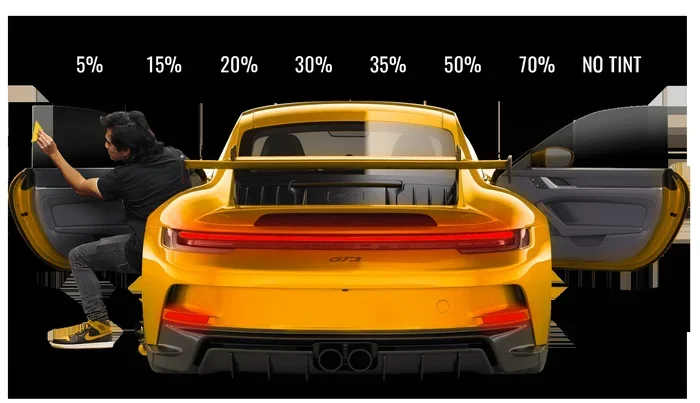
The key metric in tint laws is visible light transmission, or VLT. VLT measures how much light passes through the window. A lower VLT means a darker tint. For example, a 5% VLT tint is very dark, while a 70% VLT tint is nearly clear. Each state sets minimum VLT limits for different windows on your car.
Here is a general idea of how tint laws break down:
- Windshield: Most states allow a non-reflective tint strip at the top of the windshield.
- Front Side Windows: Many states require at least 70% VLT on front doors.
- Rear Side Windows: Rules are often more relaxed for back windows.
- Rear Windshield: Usually allowed to be darker than front windows in most states.
You can find your specific state’s tint laws online or at your local Department of Motor Vehicles office. Always make sure your chosen tint complies before you install it. If you are unsure, ask your tint installer about the legal limits in your area.
Factory Tint vs. Aftermarket Tint for Leased Cars
This is where things get interesting. Not all tint is created equal, and the type of tint you choose matters a lot when you are leasing.
What Is Factory Tint?
Factory tint comes applied to the windows during the manufacturing process. Most new cars have some level of factory tint on the rear and side windows. It is usually a lighter shade, often around 15% to 20% VLT. Because factory tint came with the car, it is generally considered part of the original equipment.
Here is the good news: most lease agreements do not object to factory tint. Since you did not add it, you are not technically modifying the vehicle. When you return the car, the factory tint goes with it, and no one will charge you for it.
What Is Aftermarket Tint?
Aftermarket tint is applied after you purchase the car. It comes in rolls or pre-cut sheets that are installed on the inside of your windows. Aftermarket tint offers more control over darkness level, UV protection, and heat rejection. Popular types include dyed film, metalized film, carbon film, and ceramic film.
Aftermarket tint is where things get tricky with a lease. Because you are adding something that was not there when you picked up the car, it counts as a modification. Unless your lease agreement explicitly allows it or you get written approval, aftermarket tint can be seen as a lease violation.
| Feature | Factory Tint | Aftermarket Tint |
|---|---|---|
| Applied by | Manufacturer | Aftermarket installer |
| VLT Range | Usually 15%-20% | 5%-70%+ |
| Lease Approval Needed? | Usually no | Usually yes |
| Removable? | No | Yes |
| UV Protection | Moderate | High (varies by film) |
| Cost to You | Included in car price | Out of pocket |
Risks of Tinting a Leased Car
Tinting a leased car is not without risks. Understanding these risks helps you make an informed decision and avoid unpleasant surprises at lease return.
Lease Violation Penalties
If your lease agreement prohibits modifications and you tint anyway, you are looking at a lease violation. The lessor can charge you a fee, demand removal, or even deduct money from your security deposit. Some leasing companies charge a flat fee for unauthorized modifications, while others bill you for the full cost of restoring the car to its original condition.
Tint Peeling and Bubbling
Poorly installed aftermarket tint can peel, bubble, or discolour over time. If you return a leased car with bad tint, the lessor will see it as damage. You will likely be charged for professional removal and window restoration. This is one of the most common issues people face at lease return.
Failed Lease Return Inspection
At the end of your lease, the car goes through a detailed inspection. Inspectors check every window, every panel, and every inch of the interior. Tint that does not meet the original factory condition can fail the inspection. This leads to additional charges and delays in getting your deposit back.
Resale Value Impact
Even though you do not own the car, tint affects the inspection report. If the lessor finds non-compliant or damaged tint, it could lower your overall return score. A poor return score can result in extra fees and a less smooth lease-end experience.
How to Tint a Leased Car Safely
If you have weighed the risks and still want to tint your leased car, there is a right way to do it. Following these steps keeps you protected and ensures a smooth lease return.
Step 1: Read Your Lease Agreement
Go through the entire lease document. Look for any mention of modifications, add-ons, or cosmetic changes. If the language is unclear, contact your lessor directly and ask about tinting. Do this before you spend a single dollar.
Step 2: Get Written Approval
If your lessor gives you the green light, get that approval in writing. An email or signed letter works. This document protects you if there are any disputes later. Without written approval, you are taking a real risk.
Step 3: Choose a Compliant Tint
Select a tint that meets your state’s VLT requirements. Do not go darker than the legal limit, even if the lessor approved it. A ceramic tint or carbon tint is a great choice because it is high quality, durable, and easy to remove without leaving residue.
Step 4: Hire a Professional Installer
Do not try to DIY this one. Professional installation ensures a clean, bubble-free finish. A reputable installer will also know the local tint laws and can recommend the right film for your needs. Look for installers with good reviews and a warranty on their work.
Step 5: Budget for Removal
Plan ahead for tint removal before you return the car. Professional tint removal typically costs between 50 and 150 dollars per window, depending on your location and the type of film. Factor this cost into your lease budget from day one. Removing the tint early gives you time to fix any adhesive residue or staining on the windows.
Step 6: Document the Car’s Condition
Take detailed photos of every window before tinting and after removal. This creates a clear record of the car’s condition. If there are any disputes at lease return, your photos will serve as strong evidence.
Quick Tips for a Smooth Lease Return
Here are some practical tips to keep in mind throughout your lease period:
- Start planning for tint removal at least 30 days before lease end.
- Choose a removable tint brand if your lessor is hesitant about approval.
- Keep all receipts for tint installation and removal.
- Avoid tint on the windshield unless your state law allows it.
- Use a trusted local installer who understands lease return requirements.
- Communicate with your lessor at every stage of the process.
Common Mistakes People Make When Tinting a Leased Car
Learning from other people’s mistakes can save you a lot of money and stress. Here are the most common errors drivers make when tinting a leased car:
- Tinting without reading the lease agreement. This is the number one mistake. Always read your contract first.
- Assuming all tints are the same. Different films have different levels of quality, durability, and removability.
- Skipping the lessor approval step. Even if you think it is fine, getting approval in writing is essential.
- Choosing the darkest legal tint. Just because your state allows a certain darkness does not mean your lessor will accept it.
- Forgetting to remove the tint before lease return. Leaving aftermarket tint on the car at return is a guaranteed charge.
- Not budgeting for removal costs. Unexpected fees at lease end can really hurt your wallet.
Avoiding these mistakes puts you in a much better position. It keeps your lease clean and your wallet happy.
Expert Insights on Lease Car Window Tinting
Industry professionals who deal with lease returns every day have seen it all. Here is what they recommend:
Always treat a leased car like you do not own it. Even if you plan to buy the car at the end of the lease, modifications made during the lease period can complicate the buyout process. A lease consultant from a major automotive firm once shared that tint-related charges are among the top five most common lease return disputes. The fix is simple: communicate with your lessor, get approval, and plan for removal.
Another expert tip is to consider UV protection tint that is very light and nearly invisible. These tints offer real benefits like blocking harmful UV rays and reducing interior fading, without triggering most lease modification clauses. They are a great middle ground for drivers who want protection without the risk.
Key Takeaways
- Check Your Lease Agreement First: Always review your lease terms before making any modifications to a leased vehicle.
- Know Your State Laws: Window tint laws vary by state, and your tint must comply with local visible light transmission limits.
- Factory Tint Is Usually Fine: Most lease agreements allow factory tint since it came with the car.
- Aftermarket Tint Requires Caution: Adding aftermarket tint can lead to lease violations if not done properly.
- Removal Before Return Is Smart: Budget for tint removal costs to avoid damage charges at lease return.
- Get Written Approval When Possible: Written permission from your lessor protects you from disputes later.
- Cosmetic Damage Penalties Add Up: Tint-related issues like peeling or bubbling can trigger extra charges at lease end.
Conclusion
So, can I tint a leased car? The answer is yes, but it comes with conditions. Your lease agreement, local laws, and the type of tint you choose all play a role in whether tinting is a safe move. The best approach is always to read your lease, get written approval, choose a compliant tint, hire a professional installer, and plan for removal before lease return.
Taking these steps protects you from unexpected charges and keeps your lease experience stress-free. A little planning goes a long way when it comes to lease car window tinting. Do your homework, follow the rules, and you can enjoy the benefits of tinted windows without breaking your lease. The effort you put in now will pay off when you hand over those keys at lease end with no extra fees and your full security deposit intact.
Frequently Asked Questions
Can I tint a leased car if my lease agreement does not mention modifications?
If your lease agreement does not specifically address modifications or tinting, you should still contact your lessor and ask for written approval. Assuming it is okay without permission can lead to lease violations and unexpected charges at return.
How much does it cost to remove aftermarket tint before returning a leased car?
Tint removal typically costs between 50 and 150 dollars per window, depending on your location and the type of film used. Total costs usually range from 200 to 600 dollars for a full car. Getting quotes from local installers ahead of time helps you budget properly.
Will my lessor notice aftermarket tint at lease return?
Yes, lessors conduct detailed inspections at lease return. Trained inspectors check every window for tint that was not there when you received the car. Even light aftermarket tint can be detected and flagged during the inspection process.
Can I use a removable or temporary tint on a leased car?
Removable tints are a safer option for leased cars because they do not leave residue or damage the windows. However, you should still check with your lessor before using any tint product, even removable ones, to avoid potential disputes.
What happens if I return a leased car with aftermarket tint still on it?
Your lessor will likely charge you for professional removal and any damage caused by the tint. You may also face a lease violation fee. In some cases, the lessor will deduct the total cost from your security deposit without giving you a chance to fix it yourself.
Is factory tint considered a lease modification?
No, factory tint is part of the original vehicle and is not considered a modification. Most lease agreements allow factory tint without any special approval because it was applied before you ever drove the car off the lot.