Can a Supra Beat a Tesla and the Answer Will Surprise You
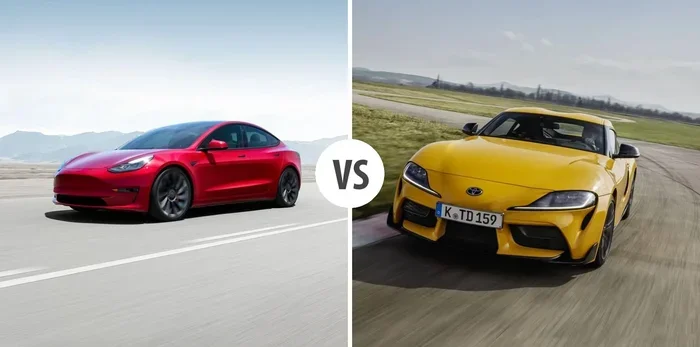
The battle between a Toyota Supra and a Tesla is closer than most people think. With its inline-six engine and sharp handling, the Supra holds its own against electric acceleration. But Tesla’s instant torque and software advantages give it an edge in certain areas. The real answer depends on what you value most in a car.
The question “Can a Supra beat a Tesla?” has sparked heated debates among car enthusiasts for years. Some people swear by the raw power of electric vehicles. Others believe nothing beats the roar of a combustion engine. The truth, as it turns out, is more nuanced than either side wants to admit.
When you pit the Toyota Supra against a Tesla, you are comparing two very different philosophies. One relies on a turbocharged inline-six engine built in partnership with BMW. The other uses electric motors and software to deliver mind-bending acceleration. Both cars have passionate fan bases. Both have clear strengths. And both have weaknesses that their owners would rather ignore.
In this article, we will break down every major comparison point. We will look at specs, real-world performance, driving feel, and practical ownership. By the end, you will understand exactly where each car wins and why the final answer might surprise you.
Let us dive into the great Supra versus Tesla debate and settle this once and for all.
Key Takeaways
- The Supra has a loyal fan base because of its BMW-built inline-six engine and driver-focused feel.
- Tesla dominates in straight-line acceleration thanks to instant electric torque from a standstill.
- The Supra wins on driving engagement with a manual transmission option (in some markets) and rear-wheel-drive dynamics.
- Track performance varies by track type — Tesla excels on drag strips, while the Supra shines on twisty circuits.
- Maintenance costs differ greatly — electric vehicles like Tesla have fewer moving parts, while the Supra needs traditional upkeep.
- Daily driving comfort favors Tesla with its tech-filled interior, over-the-air updates, and lower running costs.
- The surprise answer is that neither car “beats” the other — they excel in completely different ways.
📑 Table of Contents
- The Toyota Supra: A Legend Reborn
- Tesla’s Electric Advantage
- Head-to-Head: Supra vs Tesla on the Track
- Real-World Driving Experience
- Which One Should You Buy?
- The Surprise Answer: It Depends on the Driver
- Common Mistakes People Make When Comparing These Cars
- Expert Insights: What the Professionals Say
- Quick Tips for Supra and Tesla Owners
- Conclusion
The Toyota Supra: A Legend Reborn
The Toyota Supra has a long and storied history. The original A80 Supra from the 1990s became an icon thanks to movies like “The Fast and the Furious.” For years, Toyota kept the name alive through rumors and fan campaigns. Then, in 2019, the fifth-generation Supra finally arrived.
What Makes the Supra Special
The new Supra shares its platform with the BMW Z4. It uses a 3.0-liter twin-turbo inline-six engine that produces around 382 horsepower in the standard model. The Supra RZ variant pushes that number even higher. This engine is mounted at the front and sends power to the rear wheels through an eight-speed automatic transmission.
Here is what makes the Supra stand out:
- Driver-focused handling with sharp steering and balanced weight distribution.
- A sporty exhaust note that sounds aggressive and thrilling.
- Lightweight construction compared to many modern sports cars.
- Rear-wheel-drive dynamics that reward skilled drivers.
- A lower starting price than most high-performance electric cars.
The Supra feels like a traditional sports car. You shift gears (well, the car does for you), you hear the engine, and you feel every bump in the road. It connects you to the driving experience in a way that many modern cars simply do not.
Supra Performance Numbers
Let us look at the hard numbers. The Toyota Supra 2024 model goes from 0 to 60 mph in about 3.9 seconds. Its top speed is electronically limited to 155 mph. The quarter-mile time sits around 12.2 seconds in the stock form. These are impressive figures for a gas-powered sports car.
However, when you compare these numbers to a Tesla, the Supra starts to look less dominant. That is where the Tesla side of the debate comes in.
Tesla’s Electric Advantage
Tesla has changed the automotive industry more than almost any other company in recent history. Their vehicles use electric motors instead of combustion engines. This fundamental difference gives Tesla some unique advantages on the road and track.
Instant Torque: The EV Superpower
The biggest advantage Tesla has is instant torque. Electric motors deliver maximum power from zero RPM. This means a Tesla launches off the line with brutal force. There is no waiting for the engine to build boost. There is no lag. The car simply goes, the instant you press the pedal.
For example, the Tesla Model S Plaid can go from 0 to 60 mph in under 2 seconds. That is nearly two full seconds faster than the Supra. On a drag strip, that difference is enormous. The Tesla simply leaves the Supra in the dust at the start.
All-Wheel Drive Advantage
Most Tesla models come with all-wheel drive as standard. The dual-motor setup sends power to both the front and rear wheels. This gives Tesla incredible traction off the line, especially in wet or cold conditions. The Supra, being rear-wheel drive, can struggle with traction during hard launches. Wheelspin is a real issue, especially on slippery surfaces.
Here is a quick look at how Tesla’s AWD system helps:
- Better launch traction means faster quarter-mile times.
- Improved stability in corners and wet weather.
- More consistent performance across different road conditions.
- Less tire wear during aggressive driving compared to RWD setups.
Software and Over-the-Air Updates
Tesla also has a massive advantage in software. The company regularly pushes over-the-air updates that improve acceleration, handling, and range. Your Tesla literally gets faster over time. The Supra, as a traditional car, does not receive these kinds of updates. Once you drive it off the lot, the hardware is fixed.
This software edge means Tesla can continuously improve performance without any hardware changes. It is a game-changer in the Supra versus Tesla conversation.
Head-to-Head: Supra vs Tesla on the Track
Now let us get to the heart of the matter. Can a Supra beat a Tesla in a real race? The answer depends heavily on the type of race and the specific Tesla model we are comparing.
Drag Racing: Tesla Takes the Win
On a straight drag strip, the Tesla wins almost every time. The instant torque from the electric motors gives it an unbeatable launch. Even the base Tesla Model 3 Performance can beat a Supra in a quarter-mile drag race.
Here is a simple comparison table:
- Tesla Model 3 Performance: 0-60 mph in 3.1 seconds, quarter mile in 11.0 seconds.
- Toyota Supra 2024: 0-60 mph in 3.9 seconds, quarter mile in 12.2 seconds.
- Tesla Model S Plaid: 0-60 mph in 1.99 seconds, quarter mile in 9.2 seconds.
The gap is clear. Tesla’s electric powertrain is simply too powerful for the Supra to overcome on a straight line. The Model S Plaid is in a completely different league.
Road Course and Circuit Racing: Supra Fights Back
Things change when you get to a twisty road course. Here, the Supra starts to close the gap and even take the lead in some cases. Why? Because track performance is about more than just straight-line speed.
The Supra has several advantages on a circuit:
- Better braking feel from traditional hydraulic brakes.
- More precise steering feedback that helps drivers find the racing line.
- A lower center of gravity and balanced weight distribution.
- Lighter overall weight compared to the heavy Tesla battery pack.
On a tight, technical track, a skilled driver in a Supra can outrun a Tesla. The car feels more engaging and responsive. The driver has more control over the driving experience. This is where the Supra truly shines and proves that raw electric power is not everything.
Autocross and Stop-and-Go Events
In autocross events, where drivers navigate tight cones at high speed, the Supra holds its own. The car is nimble and quick on direction changes. Tesla’s heavier weight works against it in these scenarios. The instant torque helps with launches between cones, but the overall handling balance favors the Supra.
Expert drivers often say that the Supra feels more “alive” on a course like this. You feel more connected to the car. You feel every input and every response. That connection matters when you are trying to shave tenths of a second off your lap time.
Real-World Driving Experience
Beyond the track and drag strip, how do these cars actually feel when you drive them every day? This is where the comparison gets really interesting.
Interior and Technology
Tesla’s interior is all about minimalism. A single giant touchscreen controls almost everything. The design is futuristic and sleek. However, some drivers find it too sterile. You do not have the physical buttons and knobs that make driving feel tactile and engaging.
The Supra’s interior is more traditional but well-built. The seats are supportive and sporty. The dashboard layout is driver-focused. You have all the essential controls within easy reach. The interior feels more like a real car and less like a gadget on wheels.
That said, Tesla’s tech has its perks. The large touchscreen offers navigation, streaming, and a range of apps. The car essentially gets better over time through software updates. The Supra’s infotainment system is functional but not as cutting-edge.
Comfort and Daily Use
For daily driving, both cars have pros and cons. The Supra has a low seating position and a stiff suspension that can be harsh on rough roads. It is a car built for driving enjoyment, not necessarily for comfort. You will feel every pothole and bump.
Tesla offers a more comfortable ride in most models. The suspension is tuned for daily use. The quiet electric motor means no engine noise at highway speeds. The cabin is peaceful and refined. For commuting and road trips, Tesla has a clear edge in comfort.
Range and Refueling
This is a big factor for many buyers. The Supra has a gas tank that gives it around 380 miles of range. Refueling takes just a few minutes at any gas station. You can drive cross-country without worrying about charging stops.
Tesla offers impressive range too. The Model S Plaid can go over 390 miles on a single charge. However, charging takes longer than filling up a gas tank. Even with Tesla’s Supercharger network, a road trip requires more planning. You need to factor in charging stops and wait times.
For people who live in apartments or homes without charging access, the Supra is simply more practical. You cannot plug a gas car into a wall outlet.
Maintenance and Ownership Costs
Tesla has lower maintenance costs in many ways. There are no oil changes, no transmission fluid, and fewer brake replacements thanks to regenerative braking. The electric drivetrain has fewer moving parts, which means fewer things can break.
The Supra requires traditional maintenance. Oil changes, brake pads, transmission service, and belt replacements all add up over time. However, the Supra’s BMW-sourced engine is well-proven and relatively reliable. Parts are available and repairs are straightforward at most shops.
Here is a quick cost comparison:
- Tesla annual maintenance: Around $500 to $800 on average.
- Toyota Supra annual maintenance: Around $800 to $1,200 on average.
- Insurance costs: Both cars are expensive to insure, but Tesla’s higher repair costs can push premiums up.
- Tire replacement: Tesla’s weight and instant torque wear tires faster, adding to ownership costs.
Which One Should You Buy?
The answer to “Can a Supra beat a Tesla?” depends on what you want from a car. Let us break it down by use case.
Buy the Supra If…
- You love the feel of a traditional sports car with an engine and exhaust note.
- You enjoy the hands-on driving experience and want more driver engagement.
- You do a lot of road trips and prefer the convenience of gas stations.
- You want a car that is lighter and more agile on twisty roads.
- You value simplicity and mechanical connection over tech-heavy features.
Buy the Tesla If…
- You want the fastest possible acceleration and straight-line speed.
- You care about lower daily running costs and fewer maintenance visits.
- You want cutting-edge technology, software updates, and a futuristic driving experience.
- You need a car that works well as a daily commuter and family vehicle.
- You have access to home charging and want the convenience of “fueling” at home.
The Supra and Tesla serve different needs. They are not direct competitors in every way. The Supra is a driver’s car. The Tesla is a tech platform on wheels. Understanding this distinction is key to choosing the right one for you.
The Surprise Answer: It Depends on the Driver
Here is the part that surprises most people. The Supra can beat a Tesla — but only under the right conditions. On a road course with tight corners, a skilled Supra driver can outrun most Tesla models. On a drag strip, the Tesla wins easily. In daily driving comfort and tech, Tesla takes the lead. In pure driving engagement and fun factor, the Supra wins.
The real surprise is that the comparison is not as one-sided as many people think. Tesla’s dominance in acceleration is well-known, but the Supra’s handling and driver involvement give it a unique advantage that electric cars still struggle to replicate. The feeling of shifting gears, hearing the engine, and feeling the road through the steering wheel is something special.
Car enthusiasts often say that the Supra is not just a car — it is an experience. Tesla is not an experience in the same way. It is a tool that happens to be incredibly fast and capable. Both are valid choices. Neither is objectively “better” than the other in every situation.
If you ask a professional race car driver, many would choose the Supra for a track day. If you ask a tech enthusiast who values speed and convenience, the Tesla wins every time. The answer truly depends on who is behind the wheel and what they value most.
So the next time someone asks you “Can a Supra beat a Tesla?” you can confidently say yes — with the right context. The Supra beats the Tesla on engagement, handling, and driving feel. The Tesla beats the Supra on raw speed, tech, and practicality. Both are winners in their own right.
The automotive world is better for having both of these incredible machines. Whether you prefer the rumble of the inline-six or the silent push of electric motors, there is a place for both the Supra and Tesla on the road and on the track. Choose the one that speaks to your soul, and you will never regret it.
Common Mistakes People Make When Comparing These Cars
Before we wrap up, let us address some common mistakes people make in the Supra versus Tesla debate.
- Only comparing 0-60 times: Acceleration is just one metric. Handling, braking, and driver engagement matter too.
- Ignoring the driving experience: A car is not just a number on a spec sheet. How it feels to drive is just as important.
- Comparing different price points: A base Supra and a Model S Plaid are not in the same price range. Always compare similar trim levels.
- Forgetting about maintenance: Electric cars have lower running costs, but the upfront price is usually higher.
- Overlooking charging infrastructure: Not everyone has access to reliable charging, which makes a gas car more practical in some areas.
Expert Insights: What the Professionals Say
Professional automotive journalists and car reviewers have tested both the Supra and various Tesla models extensively. Most agree that the Supra offers a more engaging driving experience, while the Tesla delivers superior straight-line performance and everyday practicality.
Top Gear and Motor Trend have both praised the Supra for its sharp handling and BMW-sourced engine. They have also acknowledged Tesla’s impressive acceleration and technology. The consensus among experts is that these two cars serve different purposes and excel in different areas.
Racing driver and automotive journalist Chris Harris once said that the Supra feels more like a real car to drive. He praised its balance and feedback. Meanwhile, Tesla fans point to the Model S Plaid as one of the fastest production cars ever made. Both perspectives have merit.
The takeaway from the experts is simple: do not look for a single winner. Instead, understand what each car does best and choose accordingly.
Quick Tips for Supra and Tesla Owners
Whether you already own one of these cars or are planning to buy, here are some quick tips:
- For Supra owners: Invest in quality tires. The RWD setup benefits greatly from sticky, performance-oriented rubber.
- For Tesla owners: Use launch control wisely. The instant torque can wear tires quickly if you launch aggressively every time.
- For both: Keep your tires properly inflated. This improves both performance and efficiency.
- For Supra owners: Consider an upgraded exhaust system to enhance the already thrilling engine note.
- For Tesla owners: Take advantage of over-the-air updates. Tesla regularly improves performance and adds features for free.
- For both: Drive safely and respect your limits. Both these cars are incredibly fast and require responsible handling.
Conclusion
The question “Can a Supra beat a Tesla?” does not have a simple yes or no answer. It depends on the situation, the driver, and what you value most in a car. The Supra wins on driving engagement, handling, and the pure joy of driving a traditional sports car. The Tesla wins on acceleration, technology, and everyday practicality.
The real surprise is that both cars are incredible in their own ways. The Supra reminds us why we fell in love with sports cars in the first place. The Tesla shows us the exciting future of automotive performance. Rather than picking a side, car lovers should appreciate what each vehicle brings to the table.
If you have been on the fence about this debate, hopefully this article has given you a clearer picture. The next time someone challenges you with “Can a Supra beat a Tesla?” you will know exactly how to answer. And that answer? It will surprise them too.
So go out there, enjoy the drive, and remember — the best car is the one that puts a smile on your face every time you get behind the wheel.
Frequently Asked Questions
Can a Toyota Supra beat a Tesla Model 3 in a drag race?
In most cases, no. The Tesla Model 3 Performance has better straight-line acceleration thanks to instant electric torque and all-wheel drive. The Model 3 can go from 0 to 60 mph in about 3.1 seconds, while the Supra takes around 3.9 seconds. However, the Supra can compete on a road course where handling matters more than launch speed.
Is the Supra faster than a Tesla on a track?
On twisty road courses, the Supra can be faster than many Tesla models. Its lighter weight, better braking feel, and more engaging handling give it an advantage on tight circuits. However, on a drag strip or straight-line speed test, the Tesla will almost always win due to its electric powertrain advantage.
Which is cheaper to maintain, a Supra or a Tesla?
Tesla is generally cheaper to maintain. Electric vehicles have fewer moving parts, no oil changes, and less brake wear thanks to regenerative braking. The Supra requires traditional maintenance like oil changes, transmission service, and brake pad replacements. Over time, Tesla’s lower maintenance costs can add up to significant savings.
Does the Supra have a manual transmission?
In most markets, the current Supra only offers an automatic transmission. However, some enthusiasts have found ways to swap in manual gearboxes, though this is not officially supported by Toyota. If a manual transmission is important to you, you may want to look at other sports cars in the same class.
Can a Tesla Model 3 beat a Supra on the highway?
On the highway, both cars perform well, but the Tesla has an edge in efficiency and cruising comfort. The electric motor is quieter and requires less effort at steady speeds. The Supra’s gas engine works harder at highway speeds, which can affect fuel economy. However, the Supra has the advantage of quick refueling at any gas station.
Why do people still prefer the Supra over a Tesla?
People prefer the Supra for its driving engagement, engine sound, and traditional sports car feel. The Supra connects the driver to the road in a way that Tesla’s heavy, tech-focused cars cannot replicate. Enthusiasts value the tactile experience of shifting gears, hearing the exhaust, and feeling the weight transfer during spirited driving. For many, the Supra is simply more fun to drive.