Everything You Need To Know About Montana Window Tint Law
Montana window tint law sets clear rules for how dark or reflective your car windows can be. The state regulates VLT percentages for windshields, front side windows, and rear windows differently. Understanding these limits helps you avoid fines and pass vehicle inspections with ease. This guide covers every legal tint limit, medical exemptions, and practical tips for staying compliant.
Driving through Montana’s wide-open landscapes is a joy, and many car owners love adding window tint to their vehicles. It looks great, reduces glare, and keeps your interior cooler during those bright summer days. But before you tint your windows, you need to know the rules. Montana window tint law has specific limits that every vehicle owner must follow.
Getting your tint wrong can lead to costly fines, failed inspections, and even the hassle of removing and reapplying film. This guide breaks down every rule, limit, and exemption in simple terms. Whether you are a first-time car owner or thinking about re-tinting your current vehicle, you will find everything you need right here.
We will cover legal tint darkness, reflection limits, medical exemptions, penalties, and practical tips for choosing compliant film. By the end, you will feel confident about your tint choices and fully understand what Montana law requires. Let us dive in and make sure your ride stays legal and looking sharp.
Key Takeaways
- Windshield tint is only allowed on the top 6 inches with no reflective coating in Montana.
- Front side windows must allow more than 24% VLT for passenger vehicles.
- Rear side windows and rear windows have no darkness limit for most vehicles.
- Metallic and mirrored tints are illegal on any window in Montana.
- Medical exemptions are available for those with specific skin or eye conditions.
- Tint violations can result in fines up to $100 and failed inspections.
- Always choose a certified tint installer who understands Montana regulations.
📑 Table of Contents
- Understanding Montana Window Tint Law Basics
- Montana’s Legal Tint Limits By Window
- Tint Reflection and Color Restrictions
- Medical Exemptions for Window Tint in Montana
- Penalties for Tint Violations in Montana
- Tips for Choosing Compliant Window Tint
- Common Mistakes People Make with Window Tint in Montana
- Expert Insights on Montana Tint Regulations
- Key Takeaways
- Conclusion
Understanding Montana Window Tint Law Basics
Montana window tint law is designed to balance driver comfort with road safety. The state sets specific rules for how much light must pass through each window. These rules are measured using a scale called VLT, which stands for Visible Light Transmission.
VLT tells you the percentage of light that can pass through your window film. A higher VLT means more light gets through, and a lower VLT means the tint is darker. For example, a 50% VLT film lets half the light through, while a 5% VLT film is very dark and only lets a tiny amount of light pass.
Montana applies different VLT rules depending on which window you are tinting. The windshield, front side windows, rear side windows, and rear window all have their own legal limits. These limits vary based on the type of vehicle you drive, whether it is a passenger car, SUV, van, or truck.
What Is Visible Light Transmission (VLT)?
Visible Light Transmission is the key measurement used in Montana window tint law. It is expressed as a percentage and tells you how much light the tinted window allows to pass through. The higher the number, the lighter the tint. The lower the number, the darker the tint.
Here is a simple way to think about it. Imagine standing by a window on a sunny day. If the window has no tint, 100% of light passes through. If you add a 35% VLT film, only 35% of light gets through, and the rest is blocked. Your eyes will notice a darker view, and the interior of your car stays cooler.
When you buy window tint film, the manufacturer will list the VLT percentage on the packaging. This is the number your local tint installer will use to determine if the film is legal for your vehicle. Always ask for the VLT certificate when purchasing film, and keep it with your vehicle documents.
Why Do Tint Laws Exist?
You might wonder why the government cares about how dark your windows are. The answer comes down to safety. Dark tint can reduce a driver’s ability to see the road, especially at night or in poor weather conditions. It can also make it harder for law enforcement to see inside your vehicle during traffic stops.
Tint laws also protect other drivers on the road. When everyone follows the same rules, it creates a consistent and predictable driving environment. In Montana, the window tint regulations are written to keep both drivers and pedestrians safe while still allowing people to enjoy the benefits of tinted windows.
Beyond safety, tint laws also address concerns about emergency response. Police officers, firefighters, and paramedics need to be able to see into vehicles quickly during emergencies. Legal tint limits help ensure that windows are not so dark that they block this visibility entirely.
Montana’s Legal Tint Limits By Window
Montana window tint law sets different darkness limits for each window on your vehicle. These limits depend on whether you drive a passenger car, SUV, van, or light truck. Let us break down the rules window by window so you know exactly what is allowed.
Windshield Tint Rules
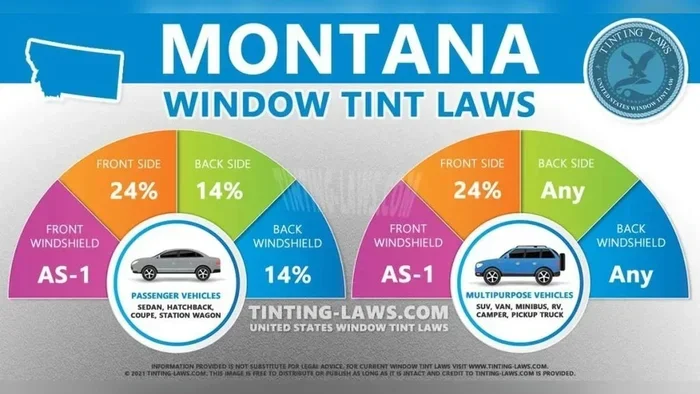
The windshield is the most regulated window when it comes to tint in Montana. State law allows tinting on the top six inches of the windshield only. This strip is often called the sunshade band, and it must be non-reflective. You cannot use metallic or mirrored finishes on this strip.
The reason for this rule is straightforward. The top of the windshield is far from the driver’s direct line of sight. A small tinted strip there helps reduce glare from the sun without affecting your ability to see the road ahead. Any tint below the top six inches on the windshield is illegal in Montana.
If you have a sunstrip or factory tint on your windshield, check its VLT percentage. Most factory sunstrips fall within the legal range, but aftermarket additions must also comply with the six-inch rule and the non-reflective requirement.
Front Side Windows
For passenger vehicles, the front side windows must allow at least 24% of light to pass through. This means the VLT of your front side window tint must be 24% or higher. If your tint is darker than 24%, it does not meet Montana window tint law.
This rule applies to both the driver’s side and passenger side front windows. The front side windows play a big role in a driver’s peripheral vision, which is why Montana keeps the limit relatively strict. Staying at or above 24% VLT ensures you have good visibility from the front seats.
For SUVs, vans, and light trucks, the same 24% VLT minimum applies to the front side windows. There is no exception based on vehicle type for these windows. Whether you drive a compact car or a full-size pickup, the rule is the same.
Rear Side Windows and Rear Window
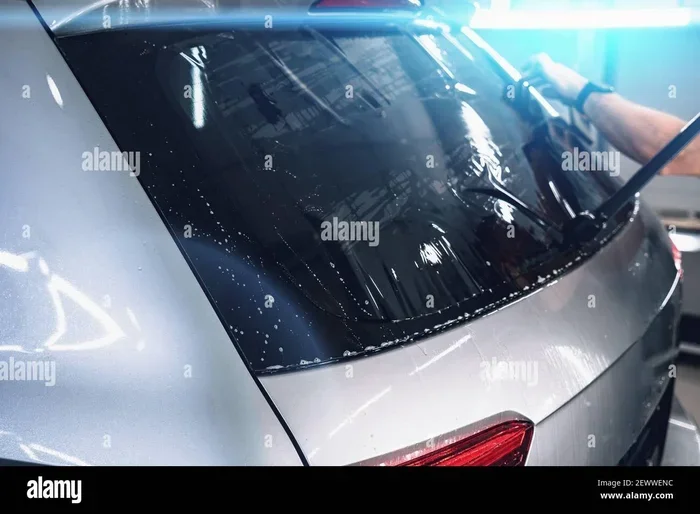
Here is where Montana window tint law gives you more flexibility. For passenger vehicles, SUVs, vans, and light trucks, there is no darkness limit on the rear side windows or the rear window. You can choose any VLT percentage you want, including very dark tints.
This means you can go as dark as you like on your back windows. Many car owners prefer very dark rear tints for privacy and heat rejection. As long as your front side windows meet the 24% VLT minimum, you have full freedom on the rear windows.
One thing to keep in mind is that if your rear window is tinted, your vehicle must have dual side mirrors. This is a safety requirement because a dark rear window can reduce your rear visibility. Montana law requires side mirrors to compensate for the reduced view through the back window.
Tint Reflection and Color Restrictions
Montana window tint law does not only regulate how dark your tint can be. It also controls how reflective the tint can be and what colors are allowed. These rules help prevent glare and maintain a consistent look across vehicles on the road.
Reflection Limits
Reflective tint can create problems for other drivers. It bounces sunlight and headlights back at oncoming traffic, causing glare and distraction. Montana law prohibits any tint that has a metallic or mirrored appearance on any window. This includes windshields, front side windows, rear side windows, and rear windows.
The reflection limit in Montana is clear. Your window tint must not look like a mirror from either side of the glass. If your tint has a shiny, metallic finish, it is not legal. Matte, satin, and non-reflective finishes are acceptable as long as they meet the VLT requirements.
When shopping for tint film, check the product description for reflectivity. Most reputable tint brands clearly state whether the film is reflective or non-reflective. Choose a non-reflective film to ensure compliance and avoid issues during your next vehicle inspection.
Color Restrictions
Montana does not specifically ban certain tint colors by law. However, the state does regulate tint based on its appearance and reflectivity. Red, amber, and blue tints that mimic emergency vehicle colors are generally discouraged and may be flagged during inspection.
Standard tint colors like charcoal, gray, bronze, and green are widely accepted and commonly used. These colors provide good heat rejection and UV protection without drawing attention from law enforcement. If you are unsure about a color choice, stick with neutral tones.
Some tint films also come with a gradient effect, where the tint is darker at the top and lighter at the bottom. These are generally acceptable in Montana as long as they meet the VLT and reflection requirements for each window. Always confirm with your tint installer that the specific film you choose complies with state regulations.
Medical Exemptions for Window Tint in Montana
Montana window tint law does provide a path for medical exemptions. Some individuals have medical conditions that make them extremely sensitive to sunlight. For these people, standard tint limits may not provide enough protection.
Who Qualifies for a Medical Exemption?
People with certain skin conditions, such as lupus or severe photosensitivity, may qualify for a medical exemption. Individuals with eye conditions that make them sensitive to light may also be eligible. The exemption allows for darker tint than the standard legal limits.
To qualify, you need a written statement from a licensed physician. This statement must explain your medical condition and why darker window tint is medically necessary. The physician should provide specific details about your condition and how it is affected by sunlight exposure.
The exemption application is submitted to the Montana Department of Justice. If approved, you will receive a certificate that must be kept in your vehicle at all times. This certificate proves that your darker tint is legal under the medical exemption. Without it, you could still be cited for a tint violation.
How to Apply for an Exemption
Start by visiting your doctor and discussing your condition. Ask them to provide a detailed letter that outlines your diagnosis and the need for darker window tint. The letter should be on official letterhead and include the physician’s contact information.
Next, fill out the medical exemption application form from the Montana Department of Justice. Submit the completed form along with the physician’s letter. Processing times vary, so apply well before you have your tint installed. Once approved, keep the certificate in your glove box and present it if questioned by law enforcement.
Remember that even with a medical exemption, your tint must still be non-reflective. The exemption only allows for darker VLT levels, not for reflective or mirrored finishes. Always follow both the VLT and reflection rules, even when you have an exemption.
Penalties for Tint Violations in Montana
Breaking Montana window tint law comes with real consequences. The state takes tint violations seriously, and the penalties can add up quickly if you do not address them. Understanding the penalties can help you make better choices about your tint.
Fines and Costs
If you are pulled over for illegal window tint in Montana, you can expect a fine. The fine for a first-time tint violation typically ranges from $20 to $100. The exact amount depends on the severity of the violation and the officer’s discretion.
Repeat violations can result in higher fines. If you have been cited before and still do not comply, the penalties increase. In some cases, the court may order you to remove the illegal tint before your vehicle can pass inspection.
Beyond fines, there are hidden costs to consider. Removing and replacing illegal tint costs money. You may also need to pay for a re-inspection to prove your vehicle now complies with the law. These additional expenses can easily exceed the original fine.
Failed Vehicle Inspections
Montana requires vehicles to pass inspections, and window tint compliance is part of that process. If your tint does not meet legal limits, your vehicle will fail inspection. A failed inspection means you cannot register your vehicle until the issue is resolved.
To pass inspection, you will need to either remove the illegal tint or replace it with compliant film. This can be frustrating, especially if you just had the tint installed. Always ask your tint installer about Montana regulations before they begin the job. A reputable installer will know the legal limits and help you choose compliant film.
Tips for Choosing Compliant Window Tint
Staying within Montana window tint law does not mean you cannot enjoy great-looking, high-quality tint. With the right approach, you can find film that looks fantastic and keeps you fully compliant. Here are practical tips to guide your decision.
Work with a Professional Installer
Always choose a licensed and experienced tint installer. A professional will know the exact VLT requirements for each window and can recommend films that meet those standards. They will also provide you with a certificate of compliance, which is helpful during inspections.
Ask your installer about the specific VLT of the film they plan to use. Do not assume that a “legal” tint from one brand is the same as another. VLT can vary between manufacturers, even for films marketed as the same shade. Get the numbers in writing before installation begins.
Keep Your Documentation
Save all receipts, certificates, and documentation related to your window tint. Keep a copy of your tint certificate in your glove box at all times. If you are ever pulled over or stopped for an inspection, having this paperwork ready makes the process smooth and stress-free.
Documentation is especially important if you have a medical exemption. Carry your exemption certificate with your vehicle registration. Law enforcement officers in Montana are required to respect valid medical exemptions, but you need to prove that your exemption is active and current.
Consider Your Driving Habits
Think about when and where you drive most often. If you spend a lot of time on rural Montana highways during bright daylight, you may benefit from higher VLT films that still provide good glare reduction. If you mostly drive in the city, you might prefer slightly darker tints for comfort and privacy.
Your driving habits should guide your tint choices. The goal is to find a balance between comfort, style, and compliance. A good tint installer can help you navigate these factors and recommend options that work for your lifestyle.
Stay Updated on Law Changes
Window tint laws can change over time. Montana may update its regulations, and new amendments can affect what is legal. Stay informed by checking the Montana Department of Justice website or asking your tint installer about any recent changes.
Joining local car enthusiast groups can also help you stay current. Other vehicle owners in Montana will often share updates about tint law changes. Being proactive about staying informed helps you avoid surprises and keeps your vehicle compliant year after year.
Common Mistakes People Make with Window Tint in Montana
Even well-meaning car owners can run into trouble with Montana window tint law. Knowing the common mistakes helps you avoid them. Here are pitfalls to watch out for.
One of the biggest mistakes is buying tint online without checking the VLT. Many online retailers list the tint shade by name rather than by VLT percentage. A film labeled “dark” might be 15% VLT in one brand and 35% VLT in another. Always confirm the exact VLT before purchasing.
Another mistake is assuming all windows follow the same rules. Some people tint their front side windows too dark because they do not realize the 24% VLT minimum applies specifically to those windows. Check each window’s legal limit before tinting.
Skipping the paperwork is also a common error. Some tint shops forget to provide a certificate of compliance, or the customer simply does not ask for one. Without documentation, you have no proof of compliance if you are stopped. Always request written proof from your installer.
Finally, some vehicle owners ignore the dual mirror requirement for rear-tinted windows. If you tint your rear window dark, you must have both side mirrors functioning properly. Missing this requirement can result in a citation even if your tint VLT is otherwise legal.
Expert Insights on Montana Tint Regulations
Local tint installers in Montana deal with these regulations every day. Their advice can save you time, money, and headaches. Most professionals recommend choosing a medium VLT for front side windows, around 35%, which provides excellent comfort while staying well above the 24% legal minimum.
Experts also stress the importance of UV protection. Even legal tint films can block a significant percentage of harmful UV rays. Look for films that offer high UV rejection rates while still meeting VLT requirements. This gives you the health benefits of tint without breaking any laws.
Seasoned installers in Montana also note that the state’s inspection process has become more thorough in recent years. Officers now use tint meters to measure VLT precisely. This means you cannot rely on a visual guess about whether your tint is legal. Always know your exact VLT numbers.
One tip from local professionals is to ask about state-specific tint films. Some manufacturers produce tint lines specifically designed to meet the regulations of individual states. These films are engineered to hit the exact VLT ranges required by law, giving you peace of mind and great performance.
Key Takeaways
- Montana window tint law allows tint on the top six inches of the windshield only, and it must be non-reflective.
- Front side windows must have a VLT of 24% or higher for all vehicle types.
- Rear side windows and rear windows have no darkness limit, but dual side mirrors are required if the rear window is tinted.
- Metallic and mirrored tints are illegal on every window in Montana.
- Medical exemptions are available for individuals with sunlight-sensitive conditions, but a physician’s letter is required.
- Violations can result in fines of $20 to $100 and failed vehicle inspections.
- Always work with a certified tint installer and keep your compliance documentation in your vehicle.
Conclusion
Montana window tint law is clear and straightforward once you understand the basics. The state sets specific VLT limits for each window, and following these rules keeps you legal and safe on the road. From the six-inch sunshade band on your windshield to the freedom you have with your rear windows, knowing the limits makes the process simple.
Whether you are tinting your car for the first time or re-tinting an older vehicle, compliance should always come first. Choose the right VLT, avoid reflective finishes, and keep your documentation organized. If you qualify for a medical exemption, follow the application process carefully and carry your certificate at all times.
The benefits of window tint are real. You get less glare, better UV protection, a cooler interior, and a sleeker look for your vehicle. By staying within Montana window tint law, you enjoy all of these benefits without the risk of fines or failed inspections. Take the time to understand the rules, work with a trusted installer, and drive with confidence knowing your vehicle is fully compliant.
Stay informed, stay compliant, and enjoy the open Montana roads with a beautifully tinted vehicle that meets every legal requirement. Your car, your comfort, and your peace of mind are all worth it.
Frequently Asked Questions
What is the legal tint darkness for front side windows in Montana?
In Montana, front side windows on passenger vehicles must allow at least 24% of visible light to pass through. This means the VLT of your front side window tint must be 24% or higher. The same 24% minimum applies to SUVs, vans, and light trucks.
Can I tint my windshield in Montana?
Yes, but only the top six inches of the windshield can be tinted. This strip must be non-reflective and cannot use metallic or mirrored finishes. Any tint below the top six inches on the windshield is illegal in Montana.
Are there medical exemptions for window tint in Montana?
Yes, Montana allows medical exemptions for individuals with conditions that make them sensitive to sunlight. You need a written statement from a licensed physician explaining your condition and the need for darker tint. Submit the application to the Montana Department of Justice for approval.
What are the fines for illegal window tint in Montana?
Fines for illegal window tint in Montana typically range from $20 to $100 for a first-time violation. Repeat violations can result in higher fines. You may also need to remove the illegal tint and pass a re-inspection to register your vehicle.
Do I need dual side mirrors if my rear window is tinted?
Yes, Montana law requires dual side mirrors if your rear window is tinted. This ensures you have adequate rear visibility despite the darkened glass. Make sure both side mirrors are functioning properly before tinting your rear window.
Can I use reflective or mirrored tint in Montana?
No, reflective or mirrored tint is illegal on all windows in Montana. The state prohibits any tint that has a metallic or mirror-like appearance. Choose non-reflective tint films to ensure compliance with Montana window tint law.