New Mexico Window Tint Law Explained and Key Rules
New Mexico has clear rules for window tinting that every car owner must follow. The state sets specific limits on tint darkness, reflectiveness, and which windows can be tinted. Understanding the New Mexico window tint law helps you avoid fines and pass vehicle inspections with ease. This guide covers legal limits, exemptions, and penalties in simple, practical terms. Read on to make sure your car stays fully compliant.
If you drive in New Mexico, you need to know the New Mexico window tint law. The state has clear rules about how dark or reflective your car windows can be. These laws protect drivers, passengers, and law enforcement officers. Understanding legal tint limits helps you avoid fines and keep your vehicle passing inspection. In this guide, we break down every key rule you need to know about window tinting in New Mexico.
Tinting your car windows offers many benefits. It reduces sun glare, keeps your interior cooler, and adds privacy. But before you tint your windows, you must know what the law allows. New Mexico sets specific limits on tint darkness and reflectiveness for each window. Let us walk through them together.
Key Takeaways
- Front side windows must allow more than 20% of light through in New Mexico.
- Windshield tint is limited to the top five inches and must be non-reflective.
- Rear side windows and rear windshield can be any darkness for most vehicles.
- Reflective tint is restricted on front and rear side windows to prevent glare.
- Medical exemptions are available for those who need darker tint for health reasons.
- Tint violations can result in fines up to $175 and failed vehicle inspections.
- Always keep your tint certificate and receipt handy during traffic stops.
📑 Table of Contents
- What Is the New Mexico Window Tint Law?
- Legal Tint Limits by Vehicle Window
- Understanding VLT and Tint Darkness
- Reflective and Colored Tint Rules
- Exemptions and Special Permits
- Penalties and How to Stay Compliant
- Common Mistakes to Avoid
- Expert Insights on New Mexico Tint Laws
- How New Mexico Compares to Neighboring States
- Frequently Asked Questions
- Conclusion
What Is the New Mexico Window Tint Law?
The New Mexico window tint law sets rules for how much light must pass through your car windows. These rules apply to passenger cars, SUVs, and vans. The state uses a measurement called Visible Light Transmission, or VLT, to determine legal limits. VLT tells you what percentage of outside light can enter your vehicle through the glass.
New Mexico traffic law requires that every vehicle meet specific tint standards. If your car window film is too dark or too reflective, you risk getting a tint ticket. You could also fail your annual vehicle inspection. That is why it is so important to know the rules before you tint your windows.
Why These Rules Exist
Window tint laws exist for safety reasons. Dark tint can make it hard for police officers to see inside your vehicle during a traffic stop. It can also reduce your visibility at night or in bad weather. The state wants to balance personal comfort with public safety. That is the core idea behind the New Mexico window tint law.
Law enforcement officers need to see drivers and passengers clearly. They also need to spot potential threats or illegal activity inside vehicles. Tint darkness that is too dark can interfere with this important work. The rules are designed to keep everyone on the road safer.
Legal Tint Limits by Vehicle Window
New Mexico has different rules for each window on your vehicle. The front windshield has its own set of rules. The front side windows, rear side windows, and rear windshield each have separate limits. Let us go through them one by one.
Front Side Windows
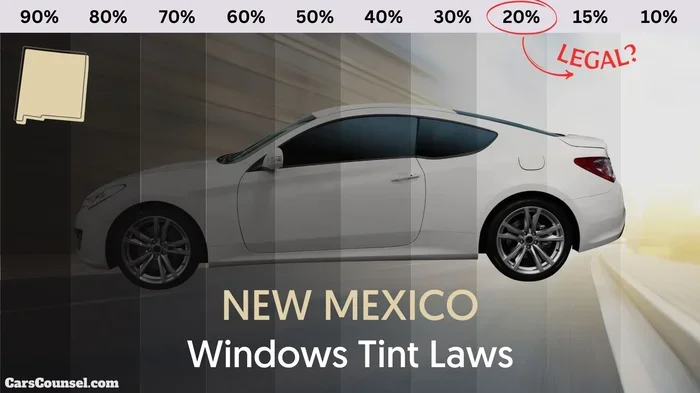
The front side windows on your car must allow more than 20% of light to pass through. This means your tint percentage cannot block more than 80% of visible light. This rule applies to both the driver and passenger front doors. The purpose is to keep the driver’s view clear and allow officers to see inside.
If you currently have tint on your front side windows, check the VLT rating. Most tint shops will provide this information on your tint certificate. If your tint is darker than 20% VLT, you may need to replace it to stay legal.
Rear Side Windows
Good news for back seat passengers. The rear side windows on most vehicles can be tinted to any darkness in New Mexico. There is no minimum VLT requirement for these windows. This gives car owners more flexibility when choosing aftermarket tint for their rear doors.
However, there is one important exception. If your rear side windows are tinted, your vehicle must have dual side mirrors. This helps compensate for reduced visibility through the rear windows. Many drivers overlook this requirement, so make sure your mirrors are in place.
Windshield and Rear Window
The front windshield has strict rules in New Mexico. You can only tint the top five inches of the windshield. This strip must be non-reflective. The rest of the windshield must allow full light transmission. This rule keeps the driver’s main line of sight clear and unobstructed.
The rear window can be tinted to any darkness. There is no VLT limit for the rear windshield. This applies to sedans, SUVs, and vans alike. Just remember that if you tint your rear window, dual side mirrors are required by law.
| Window | Legal Tint Limit | Reflectiveness Allowed |
|---|---|---|
| Front Windshield | Top 5 inches only, non-reflective | No reflective tint |
| Front Side Windows | More than 20% VLT | Not more than 20% reflective |
| Rear Side Windows | Any darkness allowed | Not more than 20% reflective |
| Rear Window | Any darkness allowed | Not more than 20% reflective |
Understanding VLT and Tint Darkness
Visible Light Transmission, or VLT, is the key concept in window tint law. VLT measures the percentage of light that passes through your window film. A higher VLT means more light comes through. A lower VLT means the tint is darker. For example, a 70% VLT tint lets 70% of light through and blocks 30%. A 5% VLT tint is very dark and blocks 95% of light.
What Is VLT?
VLT is measured using a special device called a tint meter. Law enforcement officers use this tool during traffic stops to check your tint. Tint shops also use VLT meters when installing car window film. The measurement is taken directly from the glass, not the film alone.
Understanding VLT helps you choose the right tint for your vehicle. If you want a light tint that still blocks some glare, look for 50% to 70% VLT. If you want maximum privacy and heat reduction, you might choose 5% to 20% VLT. But remember, the front side windows must stay above 20% VLT in New Mexico.
How Tint Percentage Works
The tint percentage is the opposite of VLT. If your tint blocks 80% of light, the VLT is 20%. Many tint shops describe their films by the percentage of light blocked. So when a shop says they sell “80% tint,” they mean 20% VLT. This can be confusing at first, but it becomes easy once you understand the relationship.
Here is a quick way to think about it. The higher the number a tint shop gives you for darkness, the lighter your tint will be. And the lower the number, the darker it gets. Always ask your tint installer for the VLT rating before you commit to a job.
Reflective and Colored Tint Rules
Not all tint is created equal. Some window films are reflective, and some are colored. New Mexico has specific rules for both types. These rules help prevent glare and maintain visibility for all drivers on the road.
Metallic and Reflective Tint
Reflective tint contains metallic particles that bounce light away from the vehicle. This can reduce heat and glare significantly. However, highly reflective windows can blind other drivers, especially at night. That is why New Mexico limits reflectiveness on all side windows.
The law states that reflective tint on front and rear side windows must not exceed 20% reflectiveness. The windshield cannot have any reflective tint at all. If you are considering a metallic or mirrored finish, make sure your installer stays within these limits.
Tint Color Restrictions
New Mexico does not ban specific tint colors like red or blue. However, some colors may draw extra attention from law enforcement. The state focuses more on tint darkness and reflectiveness than on color. Still, it is wise to choose neutral tones like charcoal or gray for your car window film.
Some drivers prefer colored tint for its aesthetic appeal. While this is not illegal in New Mexico, it is important to remember that very dark or unusual colors can affect how others perceive your vehicle. Stick with standard colors for the best results and least trouble on the road.
Exemptions and Special Permits
Not everyone can follow the standard tint rules. Some people have medical conditions that require darker window tint. New Mexico offers exemptions for these situations. There are also special rules for certain types of vehicles.
Medical Exemption
If you or a passenger has a medical condition that makes you sensitive to sunlight, you may qualify for a tint exemption. Conditions like lupus, photosensitivity, or melanoma may require darker tint than the law normally allows. In New Mexico, you can apply for a medical exemption through the Motor Vehicle Division.
To get a medical exemption, you will need a signed letter from your doctor. The letter must explain your condition and why darker tint is necessary. Once approved, you will receive a special permit that you must keep in your vehicle at all times. This permit protects you from tint violation fines during traffic stops.
Government and Emergency Vehicles
Police cars, fire trucks, and ambulances may have different tint rules in New Mexico. These vehicles often need darker tint for operational reasons. However, they must still follow specific guidelines set by the state. The New Mexico traffic law allows some flexibility for official emergency vehicles.
If you drive a government or municipal vehicle, check with your agency’s fleet manager about tint regulations. These vehicles may have permits that differ from standard passenger car rules. Never assume that your vehicle type exempts you from tint laws without proper documentation.
Penalties and How to Stay Compliant
Breaking the tint law in New Mexico can cost you money and time. The state takes tint violations seriously, and the penalties can add up quickly. The best way to avoid trouble is to stay informed and compliant.
Fines and Violations
If you are pulled over for illegal window tint in New Mexico, you can expect a fine. The tint violation fine typically ranges from $50 to $175, depending on the severity of the violation. A first offense usually results in a warning or a smaller fine. Repeat offenses can lead to higher penalties.
In addition to fines, you may be required to remove the illegal tint before your vehicle can pass inspection. This means paying for tint removal and then paying for new, legal tint. The costs can add up fast. It is always cheaper to follow the rules from the start.
Tips for Staying Legal
Staying compliant with the New Mexico window tint law is easier than you think. Here are some practical tips to keep in mind:
- Ask your tint installer for a certificate that shows the VLT of your film.
- Keep your tint receipt and certificate in your glove box at all times.
- Check your tint regularly for fading or bubbling, which can change the VLT.
- Choose a reputable tint shop that knows New Mexico regulations well.
- Get your vehicle inspected on time to catch any tint issues early.
- Do not add tint on top of existing tint without checking the combined VLT.
Following these simple steps can save you from headaches down the road. A little preparation goes a long way toward keeping your vehicle legal and your wallet full.
Quick Tips for Choosing the Right Tint
When you are ready to tint your windows, keep these tips in mind. First, decide what you want from your tint. Are you looking for heat reduction, privacy, or UV protection? Different films offer different benefits. Second, talk to your tint installer about legal options in New Mexico. A good installer will recommend films that meet the law and your needs. Finally, always get a written warranty from your tint shop. Quality window film should last for years without fading or peeling.
Also consider the climate where you live in New Mexico. The state gets a lot of sun, especially in the southern regions. A good tint can block up to 99% of harmful UV rays. This protects your skin and keeps your car interior from fading. Look for films that offer high UV rejection while staying within legal limits.
Common Mistakes to Avoid
Many car owners make mistakes when tinting their windows in New Mexico. One common error is buying tint online without checking the VLT. Online tint films vary widely in quality and darkness. You might end up with tint that is too dark for your front side windows, leading to a costly removal and replacement.
Another mistake is ignoring the rearview mirror requirement. If you tint your rear windows, you must have dual side mirrors. Some drivers tint the back windows and forget about this rule. During a vehicle inspection, missing mirrors can cause you to fail, even if your tint is legal.
Some drivers also try to tint their windshield below the five-inch strip. This is illegal in New Mexico. The windshield tint rule is strict, and officers will notice violations immediately. Stick to the top five inches only, and make sure the tint is non-reflective.
Expert Insights on New Mexico Tint Laws
Local tint installers in New Mexico see the same questions every day. The most common one is, “Can I tint my front windows dark?” The answer is no, not below 20% VLT. Many drivers want the darkest possible tint for privacy, but the law does not allow it on the front side windows.
Experts also recommend choosing a professional tint installation over DIY kits. Professional installers know the exact VLT requirements and use quality films that last longer. DIY tint kits often bubble, peel, or block too much light. You risk both a failed inspection and a tint ticket with low-quality film.
Another expert tip is to consider ceramic tint. Ceramic films offer excellent heat rejection without the metallic look. They are also less likely to interfere with electronic signals in your vehicle. While ceramic tint costs more upfront, it lasts longer and performs better over time.
How New Mexico Compares to Neighboring States
Tint laws vary from state to state. If you frequently drive in Arizona, Texas, or Colorado, you may notice differences. Arizona allows slightly darker tint on front side windows than New Mexico. Texas has similar rules but different enforcement practices. Colorado has stricter rules on reflective tint.
Understanding these differences is important if you travel frequently or move between states. What is legal in New Mexico may not be legal in your next destination. Always check the local window tint law before you travel to a new state. This simple step can save you from unexpected fines.
Frequently Asked Questions
What is the legal tint percentage for front side windows in New Mexico?
The legal tint percentage for front side windows in New Mexico must be above 20% VLT. This means your tint can block up to 80% of visible light but no more. The driver and passenger front windows must both meet this requirement. If your tint is darker than 20% VLT, you could receive a tint ticket.
Can I tint my windshield in New Mexico?
Yes, but only the top five inches of the windshield can be tinted. The tint on the windshield must be non-reflective. The rest of the windshield must allow full light transmission. This rule keeps your main line of sight clear and unobstructed while driving.
Do I need dual side mirrors if my rear windows are tinted?
Yes, New Mexico law requires dual side mirrors if your rear side windows or rear window are tinted. This rule exists because dark rear windows reduce your visibility to the sides and rear. Without mirrors, you increase the risk of accidents and will fail your vehicle inspection.
How much is the fine for illegal window tint in New Mexico?
The fine for illegal window tint in New Mexico ranges from $50 to $175. The exact amount depends on the severity of the violation and whether it is a first or repeat offense. In addition to fines, you may be required to remove the illegal tint before your vehicle can pass inspection.
Can I get a medical exemption for darker window tint in New Mexico?
Yes, New Mexico offers medical exemptions for people with conditions that require darker tint. You will need a signed letter from your doctor explaining your condition and why darker tint is necessary. Once approved, you must carry the exemption permit in your vehicle at all times to avoid tint violation fines.
Does New Mexico allow colored or reflective tint on car windows?
New Mexico does not ban specific tint colors, but reflective tint is limited to 20% reflectiveness on side windows. The windshield cannot have any reflective tint at all. It is best to choose neutral tones like charcoal or gray for your car window film to avoid drawing extra attention from law enforcement.
Conclusion
The New Mexico window tint law is clear and straightforward once you understand the basics. Front side windows must stay above 20% VLT, while rear windows can be any darkness. The windshield can only have a non-reflective strip on the top five inches. Reflective tint must stay under 20% on all side windows.
Exemptions are available for medical needs, and penalties for violations can be costly. The best approach is always prevention. Choose a reputable tint installation professional, keep your documentation handy, and stay informed about the rules. Whether you are tinting your car for the first time or replacing old film, knowing the law keeps you safe and compliant.
Take the time to learn the rules before you tint your windows. It is a small effort that pays off in the long run. With the right car window film and a little planning, you can enjoy all the benefits of tinted windows without the worry of fines or failed inspections. Stay informed, stay compliant, and enjoy the ride.