Is It Really OK to Drive in 4-Wheel Drive All the Time
Is it OK to drive in 4-wheel drive all the time? The short answer is no for most vehicles. Using 4WD continuously can hurt your fuel economy, wear out drivetrain parts, and cause handling issues on dry pavement. This guide explains why, when it’s safe, and how to protect your vehicle.
Have you ever wondered if you can just leave your truck in 4-wheel drive and forget about it? Maybe you drive a 4WD SUV and think it gives you extra safety all the time. The truth is, driving in 4-wheel drive all the time can cause real problems for your vehicle. It’s not as simple as flipping a switch and forgetting.
Many drivers assume that more wheels spinning means better control. But that’s only true when the surface needs extra grip. On dry roads, 4-wheel drive can actually work against you. It creates unnecessary strain on your drivetrain and burns more fuel. So, is it OK to drive in 4-wheel drive all the time? Let’s break it down.
In this guide, I’ll explain how 4WD systems work, when you should use them, and what happens if you leave them engaged. You’ll learn simple tips to keep your vehicle healthy and save money at the pump. I’ll also share common mistakes to avoid. By the end, you’ll know exactly when to switch into 4WD and when to leave it alone.
Key Takeaways
- Don’t use 4WD on dry pavement: It can damage your transfer case and front differential.
- Full-time 4WD is different: Some vehicles are built to run 4WD all the time safely.
- Fuel economy drops: Expect up to 2–3 mpg less when 4WD is engaged.
- Tire wear increases: Uneven wear happens when 4WD is used on high-traction surfaces.
- Use 4WD for traction: Engage it only when you need extra grip on snow, mud, or rocks.
- Check your owner’s manual: It tells you exactly when to use 4WD and when to disengage.
📑 Table of Contents
What Does 4-Wheel Drive Actually Do?
Before we answer the big question, let’s understand what 4WD really does. A 4-wheel drive system sends power to all four wheels instead of just two. Most cars and trucks are either front-wheel drive or rear-wheel drive. That means only the front or rear axle gets the engine’s torque.
When you engage 4WD, a transfer case splits the power between the front and rear axles. This gives you more traction. It’s incredibly helpful when you’re stuck in mud, snow, or on rocky trails. The system also often includes a low range gearing option for slow, crawling speeds over tough terrain.
But here’s the catch: 4WD is a tool, not a permanent setting. It’s built for specific conditions. Using it incorrectly can lead to wear, noise, and even damage. So, what happens when you leave it on all the time? Let’s find out.
The Two Main Types of 4-Wheel Drive Systems
Not all 4WD systems are the same. Your vehicle’s design determines whether you can safely drive in 4-wheel drive all the time. There are three main types: part-time, full-time, and automatic.
Here’s a quick comparison:
| Type | How It Works | Can You Use It All the Time? | Best For |
|---|---|---|---|
| Part-Time 4WD | Driver manually locks front and rear axles together | No – only on low-traction surfaces | Off-road, snow, mud |
| Full-Time 4WD | System always sends power to all four wheels | Yes – designed for all conditions | All-weather driving, light off-road |
| Automatic 4WD (AWD-like) | Computer engages 4WD when slippage is detected | Yes – seamlessly switches | Mixed driving, rain, light snow |
Let’s look at each type in detail.
Part-Time 4WD
Part-time 4WD is the most common system in trucks and off-road SUVs. You have a shifter or button to switch between two-wheel drive and four-wheel drive. When you’re on the highway, you stay in 2WD. When you hit a slippery road, you shift into 4WD.
The key rule: never use part-time 4WD on dry, paved roads. Why? Because the front and rear axles are locked together. On a high-traction surface, the wheels try to spin at the same speed. But your front and rear wheels actually need to rotate at slightly different speeds when turning. This causes wheel binding. It can damage the transfer case, front differential, and even your transmission.
If you drive a part-time 4WD truck, you must remember to shift back to 2WD when the road clears. Leaving it in 4WD on pavement is one of the most common 4WD mistakes.
Full-Time 4WD
Full-time 4WD systems are built to run all the time. They use a center differential or a viscous coupling to allow the front and rear axles to spin at different speeds. This prevents wheel binding on dry pavement.
Vehicles like the Jeep Grand Cherokee or Toyota 4Runner in full-time mode can safely cruise on the highway in 4WD. The system handles the speed differences automatically. So, if you own a full-time 4WD vehicle, driving in 4-wheel drive all the time is actually fine. It’s what the engineers designed it for.
However, full-time 4WD still uses more fuel than 2WD. The drivetrain is heavier and has more friction points. So while it’s safe, it’s not always the most economical choice for daily highway driving.
Automatic 4WD and AWD
Many modern vehicles use an automatic 4WD or all-wheel drive (AWD) system. These don’t require manual shifting. A computer monitors wheel slip and automatically sends power to the wheels that need it most.
With these systems, you can drive on any surface without worry. They’re essentially full-time systems that behave like part-time when needed. So, driving in 4-wheel drive all the time is perfectly normal for AWD vehicles. Just remember that AWD systems are typically designed for light off-road and weather, not extreme rock crawling.
Is It OK to Drive in 4-Wheel Drive All the Time?
This is the heart of the question. The answer depends entirely on your vehicle type. If you have a part-time 4WD system, the answer is a clear no. If you have full-time 4WD or AWD, the answer is yes.
Let’s look at the risks for part-time systems first.
The Problem with Dry Pavement
When you drive in 4-wheel drive all the time on dry pavement, your front and rear driveshafts are locked. The engine forces them to spin at the same speed. But when you turn a corner, the outside wheel needs to travel farther than the inside wheel. On a dry road, there’s no give. The drivetrain fights itself.
This causes a binding sensation. You might hear clunking or vibrating. Over time, this wears out U-joints, the transfer case, and the front differential. It can also make your vehicle handling feel vague. The steering might feel heavy, and your brakes could wear unevenly. So, driving in 4-wheel drive all the time on dry roads is a recipe for expensive repairs.
Fuel Economy and Drivetrain Stress
Another big reason to avoid 4WD on dry roads is fuel economy. A 4WD system adds weight, friction, and parasitic drag. When you’re in 4WD, your engine works harder. You’ll notice a drop of 1 to 3 miles per gallon in most trucks.
That might not sound like much, but over a year of daily driving, it adds up. More importantly, the drivetrain components run hotter. The transfer case fluid and front differential fluid work harder. If you never switch back to 2WD, you’re asking those parts to run at peak load constantly. This accelerates wear and can lead to premature failure.
For full-time 4WD and AWD vehicles, the fuel hit is smaller because the systems are designed for continuous use. But you’ll still see a slight drop compared to 2WD mode.
When You Should Switch to 4WD
So when is the right time to engage 4WD? The rule of thumb is simple: use it when you need extra traction. Here are the key situations.
Off-Road and Slippery Surfaces
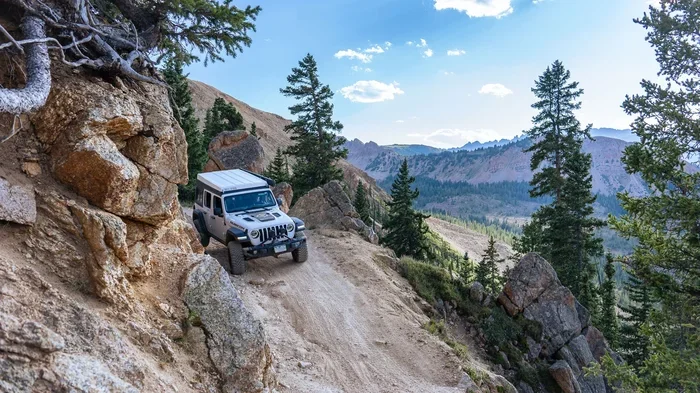
If you’re heading off-road, 4WD is your best friend. Mud, sand, gravel, and rocks all demand the extra grip. In these conditions, having all four wheels pulling can save you from getting stuck. It also gives you better control on uneven ground.
For part-time 4WD trucks, remember to engage 4WD before you hit the slippery surface. Don’t wait until you’re already spinning. And when you’re back on solid, dry ground, shift back to 2WD immediately.
Snow, Ice, and Mud
Winter driving is a common reason people use 4WD. Snow and ice reduce traction dramatically. 4WD helps you accelerate and climb hills. But it doesn’t help you stop faster. That’s what your brakes and tires are for.
Many drivers make the mistake of thinking 4WD prevents accidents. It doesn’t. It only helps you move forward. On icy roads, you can still slide into a ditch if you brake too hard. So use 4WD for traction, but drive slowly and carefully.
Towing and Heavy Loads
When you’re towing a trailer or carrying a heavy load in your truck bed, 4WD can help. The extra traction keeps your vehicle from getting bogged down, especially on unpaved roads or in wet conditions. If you’re hauling a boat or a camper, engaging 4WD at the start of your trip is a smart move.
Just remember to disengage it when you reach the highway. Towing in 4WD on dry pavement can cause the same binding issues as normal driving.
Expert Tips for Using 4WD the Right Way
To get the most out of your 4WD system and avoid damage, follow these practical tips.
Quick Tips for 4WD Drivers
- Read your owner’s manual: It tells you exactly when to engage 4WD and when to disengage.
- Test your system regularly: Try shifting into 4WD a few times a year, even in summer, to keep the system lubricated.
- Watch for warning signs: Clunking, vibration, or difficulty shifting means something is wrong. Check your transfer case fluid.
- Use the correct tires: Mixing tire sizes or types can damage your drivetrain, especially in 4WD.
- Drive smoothly: Avoid sudden acceleration and hard braking when in 4WD on loose surfaces.
Common Mistakes to Avoid
Even experienced drivers make these errors. Don’t let them ruin your drivetrain.
- Leaving 4WD on dry pavement: This is the #1 mistake for part-time 4WD owners. It causes rapid wear and can lead to costly repairs.
- Forgetting to shift back to 2WD: After a snowy day, always return to 2WD before hitting the highway.
- Using 4WD on flat, dry highways: You don’t need it. It wastes fuel and adds wear.
- Ignoring fluid changes: The transfer case and front differential need regular fluid changes, especially if you use 4WD often.
- Assuming 4WD means all-season safety: 4WD helps with traction, not cornering or braking. Winter tires are still essential.
Expert Insight: The Real Cost of 4WD Misuse
According to automotive technicians, the most common 4WD repair is a worn transfer case. When drivers leave part-time 4WD engaged on dry roads, the internal gears and chains suffer. A replacement can cost anywhere from $1,500 to $3,000. That’s a steep price for a habit you can easily avoid.
Full-time 4WD vehicles also need maintenance. The center differential fluid should be changed according to the manufacturer’s schedule. Ignoring this can lead to premature wear and a costly rebuild.
Conclusion
So, is it really OK to drive in 4-wheel drive all the time? The answer is nuanced. If you have a full-time 4WD or AWD system, yes, you can drive in 4-wheel drive all the time safely. Your vehicle is designed for it. But if you have a part-time 4WD system, you must only use it when traction is low.
Leaving 4WD engaged on dry pavement wastes fuel, wears out your drivetrain, and can cause expensive damage. The simple habit of shifting back to 2WD when the road clears can save you hundreds of dollars in repairs. It also keeps your vehicle running smoothly for years.
Now you know the rules. Use 4WD when you need it, take care of your drivetrain, and enjoy the confidence that comes with proper vehicle maintenance. Your truck or SUV will thank you for it.
Frequently Asked Questions
Can I drive in 4-wheel drive on the highway?
Only if your vehicle has a full-time 4WD or AWD system. Part-time 4WD should never be used on dry highways. It causes wheel binding and can damage your transfer case and front differential. Always check your owner’s manual for the correct usage.
Does driving in 4WD all the time ruin your car?
For part-time 4WD vehicles, yes, it can cause serious damage over time. The drivetrain components are forced to spin at the same speed, leading to excessive wear. For full-time 4WD and AWD vehicles, the system is built for continuous use, so it won’t ruin your car. Just remember to keep up with regular maintenance.
How much does 4WD affect fuel economy?
Using 4WD can reduce fuel economy by 1 to 3 miles per gallon. The extra weight, friction, and parasitic drag from the drivetrain require more engine power. On long highway trips, this adds up. If you don’t need 4WD, switching to 2WD can save you money at the pump.
What is the difference between 4WD and AWD?
4WD typically refers to part-time or full-time systems with a transfer case that can lock the front and rear axles. AWD is usually a full-time system that uses a center differential to allow speed differences between axles. AWD is more convenient for everyday driving, while 4WD is better for serious off-road and heavy-duty tasks.
When should I shift out of 4WD?
Shift back to 2WD as soon as you’re on a dry, high-traction surface like a paved road or highway. For part-time 4WD, this is essential to prevent drivetrain damage. For full-time 4WD and AWD, you don’t need to shift at all—the system handles it automatically.
Can I use 4WD on flat, dry dirt roads?
Even on flat, dry dirt roads, part-time 4WD can cause wheel binding. Dirt can still provide enough traction to lock the drivetrain. It’s best to stay in 2WD unless the surface is genuinely slippery, such as mud, snow, or loose gravel. When in doubt, use 2WD and switch only when needed.