How Long Can Frozen Food Stay in a Car Without Spoiling
Frozen food in a car can safely last anywhere from 2 to 48 hours, depending on the outside temperature, insulation method, and how often you open the car door. Keeping frozen food in a car requires smart packing, quality coolers, and awareness of the temperature danger zone. This guide covers everything you need to know about storing frozen food in a car without spoiling your meals.
Key Takeaways
- Time Limit: Frozen food in a car can stay frozen for 2 to 48 hours depending on conditions.
- Temperature Matters: Outside temperatures above 90°F dramatically speed up thawing.
- Insulation is Key: Using a high-quality cooler or insulated bag extends frozen food life significantly.
- Dry Ice and Ice Packs: These tools help maintain freezer-level temperatures inside your vehicle.
- Avoid Opening the Car: Every time you open the door, warm air enters and melts ice faster.
- Food Safety First: If frozen food reaches above 40°F for over two hours, it may no longer be safe to eat.
- Plan Ahead: Proper planning makes it easy to keep frozen food safe during any car trip.
📑 Table of Contents
- How Long Can Frozen Food Stay in a Car Without Spoiling?
- Factors That Affect How Long Frozen Food Stays Frozen in a Car
- The Best Ways to Keep Frozen Food Frozen in a Car
- The Temperature Danger Zone for Frozen Food in a Car
- Common Mistakes People Make When Storing Frozen Food in a Car
- Quick Tips for Road Trips with Frozen Food
- Can You Use Your Car’s Built-In Fridge or Freezer?
- How to Tell If Frozen Food Has Gone Bad After Being in a Car
- Expert Insights: What Professionals Say About Frozen Food in Cars
- Key Takeaways
- Final Thoughts: Keeping Frozen Food Safe in Your Car
How Long Can Frozen Food Stay in a Car Without Spoiling?
Have you ever loaded up a cooler and wondered, “How long can frozen food stay in a car?” It is a question many people ask, especially during summer road trips or when moving homes. The short answer is that frozen food in a car can remain safe for anywhere from 2 hours to 2 full days. But the real answer depends on several important factors.
When you store frozen food in a car, the outside temperature plays the biggest role. On a hot summer day with temperatures above 90°F, your frozen items will thaw much faster than you expect. On a cool or cloudy day, they can last significantly longer. The type of container you use also matters a lot. A basic plastic bag will not protect your food nearly as well as a heavy-duty insulated cooler.
Food safety is the real concern here. The United States Department of Agriculture (USDA) says that perishable foods should not sit in the temperature danger zone between 40°F and 140°F for more than two hours. If the temperature rises above 90°F, that safe window shrinks to just one hour. This is why understanding how long frozen food in a car stays safe is so important for your health.
The good news is that with the right tools and a little planning, you can keep your frozen food in a car for much longer than you might think. This guide will walk you through everything you need to know. We will cover the factors that affect frozen food storage in your vehicle, the best methods to keep things cold, and common mistakes to avoid. By the end, you will feel confident about transporting frozen food in your car, no matter the trip length.
Why Frozen Food Safety in Cars Matters
You might think frozen food stays frozen forever, but that is not true. Once you remove frozen food from a freezer and place it in a car, the thawing process begins immediately. Bacteria start growing rapidly once the food reaches temperatures above 40°F. This is why knowing the limits of frozen food in a car is essential for preventing foodborne illness.
Factors That Affect How Long Frozen Food Stays Frozen in a Car
Several key factors determine how long your frozen food in a car will remain safe and solid. Let us break them down one by one.
Outside Temperature
The temperature outside your car has the biggest impact on frozen food storage. On a mild day at 60°F, your cooler can keep food frozen for a long time. But on a hot summer day at 95°F or higher, the heat works against you quickly. Car interiors can actually get hotter than the outside air because they act like greenhouses, trapping heat inside.
Here is a simple breakdown of how outside temperature affects frozen food in a car:
- Below 60°F: Frozen food can last 24 to 48 hours or more in a good cooler.
- 60°F to 80°F: Expect frozen food in a car to last 12 to 24 hours.
- 80°F to 90°F: Frozen items may thaw within 6 to 12 hours.
- Above 90°F: Frozen food could thaw in as little as 2 to 4 hours.
Type of Container or Cooler
Not all coolers are created equal. A cheap styrofoam cooler from the dollar store will not insulate nearly as well as a high-end rotomolded cooler. The material, thickness, and seal quality all matter for keeping frozen food in a car cold.
Here are common options for frozen food storage in a car:
- Styrofoam Coolers: Budget-friendly but lose cold air quickly. They work okay for short trips under 3 hours.
- Hard-Side Insulated Coolers: Much better insulation. Brands like Yeti, RTIC, and Igloo can keep frozen food in a car cold for 24 to 48 hours.
- Soft-Sided Insulated Bags: Great for lighter loads and shorter trips. They work well for car camping food and quick grocery runs.
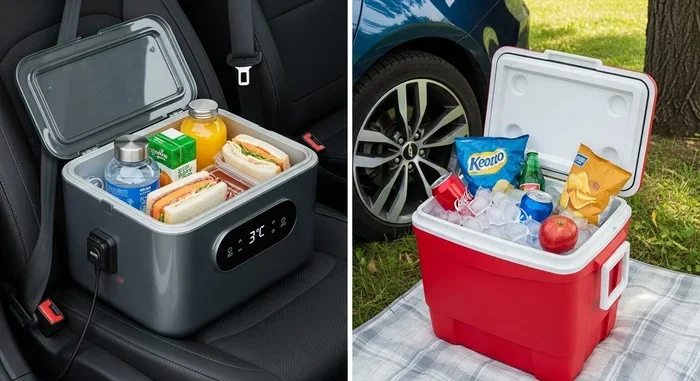
- Car Freezer Compartments: Some vehicles have built-in freezer compartments that work surprisingly well for keeping frozen food in a car at safe temperatures.
- Thermal Bags with Reflective Lining: These add an extra layer of protection and are great for grocery trips.
How Full the Cooler Is
Here is a tip that surprises many people. A full cooler keeps food cold longer than an empty one. Cold air stays packed tightly around items when there is less empty space. If your cooler is half-empty, fill the gaps with extra ice packs, frozen water bottles, or even crumpled newspaper. This simple trick makes a big difference for frozen food storage in your car.
How Often You Open the Car or Cooler
Every time you open your cooler or car door, warm air rushes in. This warm air melts the ice and raises the internal temperature fast. If you are on a road trip and grabbing snacks every 20 minutes, your frozen food in a car will thaw much sooner. Try to plan your access. Open the cooler, grab what you need, and close it quickly. This one habit can extend the life of your frozen food in a car by several hours.
Type of Frozen Food
Not all frozen food is the same when it comes to thawing speed. Dense items like frozen meat and ice blocks take longer to thaw than small items like frozen vegetables or ice cream. Also, food that is packed tightly together retains cold better than loose items scattered around. This is one reason why proper frozen food packaging matters so much.
The Best Ways to Keep Frozen Food Frozen in a Car
Now that you know the factors, let us talk about what you can actually do. These methods will help you keep frozen food in a car safe for longer periods.
Use Dry Ice for Maximum Cold
Dry ice is one of the most powerful tools for keeping frozen food in a car frozen. Dry ice is solid carbon dioxide and stays at an incredibly cold -109°F. Just 5 to 10 pounds of dry ice can keep a standard cooler at freezer temperatures for 24 to 48 hours. However, you need to handle dry ice with care. Always wear insulated gloves when touching it. Never seal dry ice in an airtight container because the gas buildup can cause the cooler to explode. Also, make sure your car is well-ventilated since carbon dioxide gas can build up in enclosed spaces.
Pre-Freeze Your Ice Packs and Water Bottles
Instead of using regular ice cubes, freeze gel ice packs and water bottles the night before your trip. These stay colder much longer than regular ice. Plus, as they melt, you have cold drinking water. This is a win-win for road trip food storage. Place these frozen items around and on top of your frozen food in the cooler. Cold rises, so putting frozen items on top helps keep everything colder for longer.
Use the Right Frozen Food Packaging
How you package frozen food for a car trip matters a lot. Use freezer-grade plastic bags or vacuum-sealed bags. These prevent air exposure and help maintain cold temperatures. For extra protection, wrap items in aluminum foil before placing them in a freezer bag. The foil reflects cold back toward the food and adds another layer of insulation. This is especially helpful for long car trips where frozen food storage is a priority.
Keep the Car Shaded and Crack a Window
Where you park your car makes a big difference. Park in the shade whenever possible. A car parked in direct sunlight can reach interior temperatures of 140°F or more on a hot day. That is terrible news for frozen food in a car. If shade is not available, crack your windows slightly to allow hot air to escape. A sunshade on the windshield also helps keep the interior cooler. These small steps can add hours to the safe storage time of your frozen food.
Layer Your Cooler Properly
The way you arrange items in your cooler affects how long everything stays cold. Start with a layer of frozen items at the bottom. Add a layer of ice packs or frozen water bottles. Then place more frozen food on top. Finish with another layer of ice on the very top. This layering method creates a cold blanket that protects your frozen food in a car from warming up too fast.
The Temperature Danger Zone for Frozen Food in a Car
The USDA defines the temperature danger zone as the range between 40°F and 140°F. In this range, bacteria multiply rapidly and can make food unsafe to eat. Understanding this concept is critical when you are storing frozen food in a car.
When frozen food begins to thaw, the outer layers warm up first. Even if the center is still frozen, the outer portions may already be in the danger zone. This is why the two-hour rule exists. If any part of your frozen food in a car has been above 40°F for more than two hours, it is time to throw it out. On days hotter than 90°F, that window drops to just one hour.
Here are some signs that your frozen food may have entered the danger zone:
- The food feels soft or slushy but not fully frozen.
- You notice liquid pooling at the bottom of the container.
- The outside of packages feel warm to the touch.
- You left the cooler in the car overnight without ice.
When in doubt, throw it out. Food poisoning is not worth the risk. No meal is worth getting sick over. Always prioritize food safety over saving a frozen dinner.
How to Check the Temperature of Your Cooler
A simple refrigerator thermometer can tell you a lot about the safety of your frozen food in a car. Place a thermometer inside your cooler and check it periodically. If the temperature stays below 40°F, your food is still safe. If it climbs above 40°F, you need to add more ice or move the cooler to a cooler location right away.
Common Mistakes People Make When Storing Frozen Food in a Car
Avoiding mistakes can save your frozen food and keep your family safe. Here are the most common errors people make.
Leaving Frozen Food in the Car Overnight
One of the biggest mistakes is leaving frozen food in a car overnight, even in cool weather. Overnight temperatures can drop, but they can also rise, especially in spring and fall. A car left outside is not a freezer. Unless you have a high-end cooler with dry ice, do not trust your car to keep frozen food safe overnight.
Using the Wrong Type of Cooler
A thin plastic bag or a flimsy insulated pouch is not enough for long trips. Many people underestimate how fast regular coolers lose their cold hold. Invest in a quality insulated cooler for any trip longer than a couple of hours. Your frozen food in a car deserves proper protection.
Overpacking the Cooler
Stuffing too much food into a cooler might seem efficient, but it actually hurts performance. When you overpack, items press together and block cold air from circulating. Leave some space for air to flow around the items. This helps maintain a consistent cold temperature throughout the cooler.
Not Pre-Chilling the Cooler
A warm cooler will warm your frozen food fast. Before you load any frozen food in a car, pre-chill the cooler by filling it with ice for 15 to 20 minutes. Dump the melt water and then load your frozen items. This simple step adds hours to your frozen food storage time.
Ignoring the Car Interior Temperature
Many people forget that the car itself gets hot. Even with a good cooler, placing it on the leather seat in direct sunlight will warm the contents faster. Always put your cooler on the floor of the car, preferably in the back seat or trunk where it is shaded and away from direct sun.
Quick Tips for Road Trips with Frozen Food
Planning a long road trip with frozen food in a car? These quick tips will help you keep everything safe and fresh.
- Freeze your meals solid before packing them. The more solidly frozen an item is, the longer it will last in the car.
- Use multiple small coolers instead of one big one. This lets you open one cooler without exposing all your frozen food to warm air.
- Pack frozen food in the car the night before and keep it in the freezer until the last possible moment.
- Bring a thermometer and check the cooler temperature every few hours during long trips.
- Plan your meals in advance so you only open the cooler when you are ready to eat.
- Keep the cooler in the air-conditioned part of the car if possible, rather than in a hot trunk.
- Re-freeze items if needed. If you still have ice crystals in the center of your food, it is safe to re-freeze it. But if the food has fully thawed and been above 40°F for over two hours, do not re-freeze it.
Can You Use Your Car’s Built-In Fridge or Freezer?
Some modern vehicles come with built-in refrigeration systems. These car fridge compartments can be a game-changer for keeping frozen food in a car at safe temperatures. However, they work differently from a home freezer. Most car fridge units can cool items to about 32°F to 36°F, which is refrigerator temperature, not full freezer temperature. If you need true freezer-level cold, you will still need a quality cooler with ice or dry ice.
If your car has this feature, use it wisely. Pre-chill the compartment before loading your frozen food. Do not overload it, and keep the door closed as much as possible. A built-in car fridge can extend the safe storage window for your frozen food in a car, but it is not a replacement for a proper freezer.
How to Tell If Frozen Food Has Gone Bad After Being in a Car
Sometimes you cannot tell just by looking at frozen food whether it is still safe. Here are some guidelines:
- Check for ice crystals. If the food still has visible ice crystals or feels partially frozen, it is likely still safe.
- Look for discoloration. Meat that has turned gray or brown may have been in the danger zone too long.
- Smell the food. Off odors are a clear sign that bacteria have started growing.
- Feel the texture. Slimy or sticky textures on meat or seafood mean the food is no longer safe.
- Check the time. If you know the food was above 40°F for more than two hours, discard it regardless of how it looks or smells.
When it comes to food safety, always trust your instincts. If something seems off, it is better to be safe than sorry.
Expert Insights: What Professionals Say About Frozen Food in Cars
Food safety experts consistently emphasize that the key to safe frozen food in a car is minimizing exposure to warm air. Dr. Benjamin Chapman, a food safety specialist at North Carolina State University, often advises that the number one rule is to keep the cooler closed as much as possible. Every opening is an opportunity for warm air to enter and cold air to escape.
Food safety professionals also recommend using a two-cooler system. One cooler holds items you need right away. The second cooler stays sealed for the duration of the trip. This method keeps your frozen food in a car at stable temperatures for much longer than a single frequently opened cooler.
Professional caterers and food truck operators follow strict cold chain protocols when transporting frozen food. They use calibrated thermometers, pre-chilled containers, and timed checks to ensure food stays safe. You can adopt a simplified version of these practices for your own car trips.
Key Takeaways
- Time Limit: Frozen food in a car can stay frozen for 2 to 48 hours depending on conditions.
- Temperature Matters: Outside temperatures above 90°F dramatically speed up thawing.
- Insulation is Key: Using a high-quality cooler or insulated bag extends frozen food life significantly.
- Dry Ice and Ice Packs: These tools help maintain freezer-level temperatures inside your vehicle.
- Avoid Opening the Car: Every time you open the door, warm air enters and melts ice faster.
- Food Safety First: If frozen food reaches above 40°F for over two hours, it may no longer be safe to eat.
- Plan Ahead: Proper planning makes it easy to keep frozen food safe during any car trip.
Final Thoughts: Keeping Frozen Food Safe in Your Car
So, how long can frozen food stay in a car? The honest answer is that it depends. With the right preparation, a quality cooler, and smart habits, you can keep frozen food safe for a full day or even longer. But without proper care, frozen food in a car can thaw quickly and become a health risk.
The most important thing to remember is that food safety should always come first. No frozen meal or road trip snack is worth the risk of foodborne illness. Follow the tips in this guide, use common sense, and always check your food before eating it.
Whether you are loading up for a weekend camping trip, moving frozen groceries from the store to your home, or planning a long road journey, these strategies will help you keep your frozen food in a car at safe temperatures. Pack smart, stay cool, and enjoy your trip with confidence. Safe travels and happy eating!
Frequently Asked Questions
How long can frozen food stay in a car during summer?
During summer, when temperatures exceed 90°F, frozen food in a car can thaw in as little as 2 to 4 hours. On milder summer days around 80°F, a good insulated cooler can keep frozen food safe for 6 to 12 hours. Always use ice packs or dry ice and keep the cooler in the shade to extend the safe window.
Is it safe to leave frozen food in a car overnight?
Leaving frozen food in a car overnight is generally not recommended. Even on cool nights, temperatures can fluctuate, and your car is not a true freezer. If you must store frozen food overnight, use a high-quality cooler with plenty of ice or dry ice, and check the temperature in the morning before consuming anything.
Can I use regular ice instead of ice packs for frozen food in a car?
Yes, regular ice works, but ice packs are more effective because they stay colder longer and do not create meltwater that can soak into your food packaging. If you use regular ice, place frozen food in waterproof freezer bags to prevent water damage. Frozen water bottles are also a great alternative that doubles as drinking water later.
What happens if frozen food partially thaws in the car?
If frozen food still has visible ice crystals and feels partially frozen, it is generally safe to refreeze. However, if the food has been above 40°F for more than two hours, it should be discarded. The texture and quality may also suffer from repeated thawing and refreezing, even if the food is technically safe to eat.
Does the type of car matter for frozen food storage?
Yes, the type of car can make a difference. Vehicles with insulated trunks or built-in cooling compartments tend to keep frozen food in a car colder longer than sedans with open trunk spaces. Parking in the shade and keeping the car air-conditioned also help significantly regardless of the vehicle type.
How can I check if my frozen food is still safe after a car trip?
Use a refrigerator thermometer to check the internal temperature of your cooler. If it reads below 40°F, the food is still safe. Look for ice crystals in the food, check for off smells or slimy textures, and consider how long the food spent above 40°F. When in doubt, throw it out to be safe.