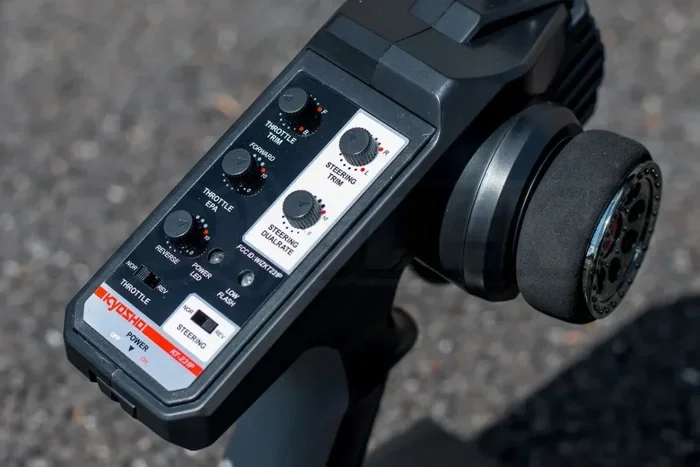
Everything About 24 ghz RC Car Transmitter and Receiver
The 2.4 GHz RC car transmitter and receiver is the core system that lets you control your RC car wirelessly with precision and reliability. This guide covers how the technology works, key features to look for, common problems, and expert tips to help both beginners and experienced hobbyists get the most from their 2.4 GHz RC car transmitter and receiver setup.
If you have ever wondered how your RC car responds instantly when you move the joystick, the answer lies in the 2.4 GHz RC car transmitter and receiver. This radio frequency system is what makes modern RC cars so smooth and enjoyable to drive. Without it, your controller would be just a fancy piece of plastic.
Older RC systems used fixed frequencies, which meant interference was common. Two cars on the same channel would fight for control, and signal dropouts were frustrating. Today, 2.4 GHz technology has changed the game completely. It offers automatic frequency hopping, longer range, and crystal-clear signal transmission.
Whether you are just getting into the radio control hobby or you have been racing for years, understanding your transmitter and receiver pair is essential. This guide breaks down everything you need to know. We will cover how the system works, what features matter, common mistakes to avoid, and how to choose the best hobby RC gear for your needs.
Key Takeaways
- 2.4 GHz technology eliminates frequency interference: Unlike older FM and AM systems, the 2.4 GHz RC car transmitter and receiver uses automatic frequency hopping to deliver a clean, stable signal every time.
- Longer range and faster response: Modern 2.4 GHz radio systems offer signal ranges of 300 to 1000 feet with minimal control latency, making your RC car feel incredibly responsive.
- Binding is simple and automatic: Most hobby-grade transmitter and receiver pairs bind in seconds, and you can run multiple cars on the same frequency without conflicts.
- Check compatibility before buying: Not all RC car controllers work with every receiver. Always confirm RC car compatibility and transmitter channels before making a purchase.
- Proper maintenance extends lifespan: Keeping your RC car antenna intact, using quality batteries, and storing gear properly will keep your radio control hobby gear performing at its best.
📑 Table of Contents
- What Is a 2.4 GHz RC Car Transmitter and Receiver?
- How Does 2.4 GHz Technology Work in RC Cars?
- Key Features to Look For in a 2.4 GHz RC Car System
- Best 2.4 GHz RC Car Transmitter and Receiver Sets
- Common Problems with 2.4 GHz RC Car Systems and How to Fix Them
- Tips for Getting the Most Out of Your 2.4 GHz RC Car System
- Expert Insights on Choosing Your 2.4 GHz RC Car System
- Conclusion
What Is a 2.4 GHz RC Car Transmitter and Receiver?
The 2.4 GHz RC car transmitter and receiver is a wireless communication system that connects your controller to the car. The transmitter sits in your hands. The receiver lives inside the car. Together, they form the link that lets you steer, accelerate, and brake with precision.
Think of it like a walkie-talkie system, but much faster and more reliable. Your transmitter sends radio signals on the 2.4 GHz frequency band. The receiver picks up those signals and translates them into motor and servo movements inside the car.
This RC car electronics setup is what separates modern hobby-grade vehicles from old toy-grade models. Cheap RC cars from the store often use simple infrared or basic FM remotes. A proper 2.4 GHz radio system gives you real control, real range, and real fun.
How the Transmitter Works
The transmitter is the part you hold. It has sticks, buttons, and dials that you move with your hands. Inside, a crystal oscillator generates a stable radio frequency signal. This signal is encoded with your input data and sent out through the RC car antenna on the controller.
Modern transmitters also have screens or displays. These show you battery levels, channel settings, and signal protocol information. Some even let you adjust transmitter channels for different driving modes. The more channels a transmitter has, the more functions you can control at once.
How the Receiver Works
The receiver is a small circuit board inside the RC car. It has its own RC car antenna, usually a thin wire or stub. When the receiver picks up the signal from your transmitter, it decodes the instructions and sends them to the appropriate parts of the car.
For example, when you move the right stick forward, the receiver tells the motor to spin faster. When you turn the left stick, the receiver moves the steering servo. All of this happens in milliseconds, giving you that satisfying, instant RC car responsiveness.
How Does 2.4 GHz Technology Work in RC Cars?
The 2.4 GHz frequency band is a specific range of radio waves used for many wireless devices. Your Wi-Fi router, Bluetooth headphones, and cordless phones all use similar frequencies. But 2.4 GHz RC systems are specially designed to handle the unique demands of remote control vehicles.
One of the biggest advantages of 2.4 GHz technology is automatic frequency hopping. This means the system constantly changes channels thousands of times per second. If one frequency gets blocked or crowded, the system jumps to a clear one instantly. This virtually eliminates frequency interference.
The Binding Process
Before you can drive, your transmitter and receiver pair need to be bound. RC car binding is the process of pairing the two devices so they recognize each other. Most modern systems make this very easy.
Here is how it typically works:
- Plug the receiver into the car and power it on.
- Turn on the transmitter.
- Press the bind button on the transmitter.
- The two devices connect automatically within seconds.
Once bound, that specific transmitter and receiver pair will not interfere with other cars on the track. This is why you can race with ten friends, each on their own 2.4 GHz RC car transmitter and receiver, without any signal conflicts.
Signal Protocol and Latency
Control latency is the tiny delay between your input and the car’s response. In older RC systems, this delay was noticeable. With 2.4 GHz radio systems, latency is almost zero. The signal protocol used in modern systems is incredibly fast.
Most hobby-grade transmitter systems offer a latency of less than 20 milliseconds. To put that in perspective, the human eye takes about 13 milliseconds to process visual information. So the car responds faster than you can even notice the delay. This is what gives RC car control that smooth, natural feel.
Key Features to Look For in a 2.4 GHz RC Car System
Not all 2.4 GHz RC car transmitter and receiver setups are created equal. When shopping for hobby RC gear, there are several important features to consider. Let us break them down.
Range
RC car range refers to how far you can be from the car while still maintaining a strong signal. Basic RC car remote control systems offer around 100 to 300 feet. Quality hobby-grade transmitter systems can reach 500 to 1,000 feet or more.
If you plan to drive in large open fields, go for a longer range. For indoor or small backyard use, a shorter range is fine. Keep in mind that obstacles like walls and trees can reduce your effective RC car range.
Number of Channels
Transmitter channels determine how many functions you can control. A basic 2-channel system handles throttle and steering. A 4-channel system adds extras like lights, flaps, or a camera gimbal.
Here is a quick look at what different channel counts offer:
- 2 channels: Throttle and steering. Perfect for basic cars.
- 3 channels: Adds one extra function like a light or horn.
- 4 channels: Controls throttle, steering, lights, and a special function.
- 6+ channels: For advanced vehicles with multiple features.
Battery Life and Power
Your RC car controller runs on batteries, and so does the receiver inside the car. A good 2.4 GHz RC car transmitter and receiver system should offer long battery life. Look for transmitters with rechargeable battery packs. They save money and reduce waste over time.
For the receiver, a lightweight lithium polymer battery works well. Some advanced systems even draw power directly from the car’s main battery pack, which simplifies wiring and saves weight.
Build Quality and Durability
RC cars take a beating. Crashes, dirt, rain, and dust are all part of the fun. Your transmitter and receiver pair should be built to handle it. Look for receivers with waterproof or water-resistant coatings. Transmitters should feel solid in your hands, not flimsy.
The RC car antenna design also matters. A longer external antenna usually gives better signal strength than a small internal stub. However, external antennas can snap off during crashes. Some systems use flexible antennas that resist damage better.
Best 2.4 GHz RC Car Transmitter and Receiver Sets
The market is full of options, and choosing the right 2.4 GHz RC car transmitter and receiver set can be overwhelming. Here are some of the top choices for different needs and budgets.
Entry-Level Sets for Beginners
If you are just starting out in the radio control hobby, a basic set is all you need. Look for a simple 2-channel transmitter with a matching receiver. These RC car controllers are affordable, easy to use, and perfect for learning the basics.
Popular entry-level brands include Traxxas, Arrma, and Hobbywing. These companies offer reliable 2.4 GHz radio systems that come bundled with their vehicles. The setup is usually plug-and-play, which means less time reading manuals and more time driving.
Mid-Range Sets for Enthusiasts
Once you get hooked on the radio control hobby, you will want more features. Mid-range hobby-grade transmitter systems offer more channels, better displays, and adjustable settings. Brands like Futaba, Spektrum, and FlySky are excellent choices in this category.
These systems give you finer control over RC car responsiveness. You can adjust exponential rates, end points, and dual rates to dial in the perfect driving feel. They also tend to have better build quality and longer RC car range.
High-End Sets for Competitive Racers
Serious racers need the best RC car electronics available. High-end 2.4 GHz RC car transmitter and receiver systems offer ultra-low latency, multiple model memory, and advanced telemetry. Telemetry lets you see real-time data from the car, like battery voltage and motor temperature.
Brands like Spektrum, Futaba, and Sanwa dominate this space. Their systems are used in professional racing leagues worldwide. The price is higher, but the performance and reliability are unmatched.
Comparison Table
| Feature | Entry-Level | Mid-Range | High-End |
|---|---|---|---|
| Price Range | $30 – $80 | $80 – $200 | $200 – $500+ |
| Channels | 2 – 3 | 4 – 6 | 6 – 18 |
| Range | 100 – 300 ft | 300 – 600 ft | 600 – 1000+ ft |
| Battery Life | 20 – 40 hours | 40 – 80 hours | 60 – 100+ hours |
| Telemetry | No | Basic | Full |
| Water Resistance | No | Basic | Full |
| Best For | Beginners | Enthusiasts | Competitive Racers |
Remember, the most expensive set is not always the best choice. Think about what you actually need. A beginner does not need a $500 racing system, and a competitive racer does not want a basic 2-channel setup.
Common Problems with 2.4 GHz RC Car Systems and How to Fix Them
Even the best 2.4 GHz RC car transmitter and receiver systems can run into issues. Most problems are easy to fix once you know what to look for.
Signal Dropouts
If your car suddenly stops responding or starts twitching, you might be experiencing signal dropouts. This can happen for several reasons:
- Low battery voltage: Weak batteries in the transmitter or receiver reduce signal strength. Always use fresh, fully charged batteries.
- Obstructions: Large metal objects, buildings, or even your own body can block the signal. Try moving to a more open area.
- Antenna damage: A bent or broken RC car antenna on either the transmitter or receiver will weaken the connection. Inspect both antennas before every session.
Interference From Other Devices
Although 2.4 GHz technology is designed to avoid interference, crowded environments can still cause problems. Wi-Fi routers, Bluetooth devices, and even other RC cars nearby can sometimes create frequency interference.
Quick Tips to reduce interference:
- Turn off unused Bluetooth devices when driving.
- Keep your transmitter away from your phone or tablet.
- If you are at a club track, space your cars apart during warm-up.
- Avoid driving near large Wi-Fi access points.
Binding Failures
Sometimes the RC car binding process does not work the first time. This is frustrating but usually easy to fix. Try these steps:
- Make sure both devices are powered on.
- Check that the receiver is in bind mode (usually indicated by a blinking LED).
- Press and hold the bind button on the transmitter for at least 3 seconds.
- Wait for the LED on the receiver to stop blinking and stay solid.
If binding still fails, try replacing the batteries. Low voltage is the most common cause of binding problems.
Unresponsive Controls
If your car feels sluggish or unresponsive, the issue might be with control latency or servo settings. Check these things:
- Make sure the transmitter and receiver pair is properly bound.
- Verify that the correct signal protocol is selected on both devices.
- Check the servo linkage for loose connections or bent pushrods.
- Adjust the transmitter channels and endpoints in your settings.
Tips for Getting the Most Out of Your 2.4 GHz RC Car System
Owning a great 2.4 GHz RC car transmitter and receiver setup is only half the battle. Knowing how to use and maintain it makes all the difference.
Always Check Your Batteries
Nothing kills a fun driving session faster than dead batteries. Get into the habit of checking battery levels before every session. For the transmitter, use rechargeable NiMH or lithium packs. For the receiver, make sure the car’s battery is fully charged.
Pro tip: Keep a spare set of transmitter batteries in your bag. You never know when you will need them.
Protect Your Antennas
The RC car antenna is the most vulnerable part of your 2.4 GHz radio system. A damaged antenna means weak signal and poor performance. Always fold or retract your transmitter antenna when carrying it. For the receiver antenna, make sure it is securely attached and not pinched during installation.
Store Your Gear Properly
Dust, moisture, and heat can all damage your RC car electronics. Store your transmitter and receiver pair in a protective case when not in use. Keep everything in a cool, dry place. Avoid leaving gear in a hot car during summer.
Keep Your Firmware Updated
Modern hobby-grade transmitter systems often have updatable firmware. Manufacturers release updates that improve performance, fix bugs, and add new features. Check the manufacturer’s website periodically and update your system when new firmware is available.
Common Mistakes to Avoid
- Skipping the binding process: Never assume the transmitter and receiver are paired. Always confirm binding before driving.
- Using mismatched systems: A Futaba transmitter will not work with a Spektrum receiver without an adapter. Always check RC car compatibility before mixing brands.
- Ignoring signal strength indicators: Many modern transmitters show signal quality on the screen. Watch for weak signal warnings and move closer if needed.
- Overcharging batteries: Overcharging lithium batteries can damage them and create safety hazards. Always use a proper charger with auto-cutoff.
Expert Insights on Choosing Your 2.4 GHz RC Car System
Expert Insight: According to experienced RC racers, the most important factor when choosing a 2.4 GHz RC car transmitter and receiver is not the price tag. It is compatibility and reliability. A mid-range system that works perfectly with your car will outperform an expensive system that causes headaches.
Another key piece of advice from seasoned hobbyists: invest in quality RC car controllers from trusted brands. Cheap off-brand systems might save you money upfront, but they often have poor build quality, weak signals, and limited support. Stick with reputable manufacturers for the best experience.
When building your RC car electronics setup, also consider future upgrades. Choose a transmitter with enough channels to support additional features as you grow in the radio control hobby. This way, you will not need to replace your transmitter every time you want a new function on your car.
Conclusion
The 2.4 GHz RC car transmitter and receiver is one of the most important components in your RC car setup. It is the invisible link between your hands and the machine. Understanding how it works, what features matter, and how to maintain it will make you a better driver and a smarter hobbyist.
From the basics of radio frequency communication to advanced topics like signal protocol and control latency, this guide has covered the essentials. You now know how to choose the right transmitter and receiver pair, how to avoid common problems, and how to get the best performance from your hobby RC gear.
The radio control hobby is a wonderful world of speed, precision, and creativity. With the right 2.4 GHz RC car transmitter and receiver system in your hands, you are ready to take on any track, any field, and any challenge. So go out there, bind your system, and enjoy the ride.
Frequently Asked Questions
What is the difference between 2.4 GHz and older RC frequencies like AM and FM?
2.4 GHz technology uses a much wider frequency band and automatic channel hopping, which eliminates most frequency interference. Older AM and FM systems operated on fixed frequencies, meaning two cars on the same channel would interfere with each other. 2.4 GHz RC car transmitter and receiver systems are faster, more reliable, and support multiple cars running simultaneously without conflicts.
How far can a 2.4 GHz RC car transmitter and receiver system reach?
The range depends on the quality of the system. Entry-level hobby-grade transmitter setups typically reach 100 to 300 feet. Mid-range systems offer 300 to 600 feet, and high-end racing systems can exceed 1,000 feet. Obstacles like buildings, trees, and metal structures can reduce your effective RC car range significantly.
Can I use any transmitter with any receiver for my RC car?
No, RC car compatibility matters. Transmitters and receivers must be from the same brand and protocol to work together. For example, a Spektrum transmitter needs a Spektrum receiver. Always check RC car compatibility before purchasing a transmitter and receiver pair separately.
How long does the binding process take for a 2.4 GHz RC system?
Most modern 2.4 GHz RC car transmitter and receiver systems bind in under 10 seconds. The process typically involves powering on both devices, pressing a bind button on the transmitter, and waiting for the receiver LED to stop blinking. If the process takes longer, check battery levels and make sure both devices are in bind mode.
What should I do if my RC car stops responding while driving?
First, check your transmitter batteries. Low voltage is the most common cause of signal loss. Next, inspect the RC car antenna on both the transmitter and receiver for damage. Move to a more open area if you suspect frequency interference from nearby devices. If the problem persists, try rebinding the transmitter and receiver pair.
Is 2.4 GHz technology safe for RC cars and other devices?
Yes, 2.4 GHz technology is completely safe. It is the same frequency band used by Wi-Fi routers and Bluetooth devices worldwide. 2.4 GHz RC car transmitter and receiver systems are designed with low power output and do not pose health risks. They also do not interfere with other household electronics when used as intended.