How Do I Find the Exact Paint Code for My Car Right Now
Finding your car’s exact paint code is easier than you think and saves you time and money on touch-ups or resprays. This guide walks you through every method to locate your paint code quickly, from door jamb stickers to online lookup tools. Whether you own a sedan, SUV, or truck, you will learn how to decode the color code and get an exact match for your car paint.
Have you ever needed to touch up a scratch on your car and realized you have no idea what color it actually is? Maybe you just bought a used vehicle and the previous owner had a paint job that does not quite match. Or perhaps you are planning a full respray and want to get the exact shade your car came with from the factory.
Whatever your reason, finding the exact paint code for your car is the first and most important step. Without the right paint code, you risk buying the wrong color, wasting money, and ending up with a visible mismatch. The good news is that locating your car paint code is straightforward once you know where to look.
In this guide, I will walk you through every method to find your paint code quickly and accurately. I will show you the physical locations on your vehicle, the best online tools, and how to contact your manufacturer. By the end, you will have the exact color code you need to get a perfect match every time.
Key Takeaways
- Check the driver’s side door jamb sticker first: This is the most common and reliable place to find your paint code.
- Use online paint code lookup tools: Free websites and apps can decode your vehicle identification number to reveal the factory color.
- Contact your dealer with your VIN: They can pull the exact OEM paint code from their system in minutes.
- Look in multiple locations on the car: The color code may also appear under the hood, on the rear bumper, or in the glove box.
- Always verify the code before buying paint: A wrong paint code leads to a mismatched color that is hard to fix.
- Keep your paint code recorded: Save it in your phone or glove box for future touch-ups or insurance claims.
📑 Table of Contents
- What Is a Car Paint Code and Why Does It Matter?
- Where to Find Your Paint Code on the Vehicle
- How to Use Online Paint Code Lookup Tools
- Contacting Your Car Manufacturer or Dealer
- Matching Your Paint Code for Touch-Ups and Repairs
- Common Mistakes to Avoid When Finding Your Paint Code
- Quick Tips for Finding Your Paint Code Fast
- Expert Insights on Paint Code Accuracy
- Key Takeaways
- Conclusion
What Is a Car Paint Code and Why Does It Matter?
A paint code is a unique alphanumeric identifier assigned by your car manufacturer. It tells paint suppliers and body shops exactly which shade and formula to use for your specific vehicle. Every car model, year, and trim level can have a different paint code, even if the color looks the same to the naked eye.
Think of the paint code like a recipe. Two shades of blue might look similar on the shelf, but the formula behind them is completely different. Using the wrong color code means your touch-up paint or respray will not blend properly with the original factory finish.
Why the Paint Code Must Be Exact
Car manufacturers change their paint formulas slightly from year to year. A 2019 model might have a different shade of red than a 2020 model, even if both are called “Cherry Red.” The OEM paint code accounts for these tiny differences. It ensures you get the precise match that blends seamlessly with the existing paint on your car.
Using a generic color name instead of the actual paint code is a common mistake. “Midnight Black” might sound specific, but it could vary between manufacturers. The code removes all guesswork.
Where to Find Your Paint Code on the Vehicle
The fastest way to find your paint code is to look directly on the car. Most manufacturers place a sticker or plate with the color code in one or more standard locations. Here are the places you should check first.
Check the Driver’s Side Door Jamb
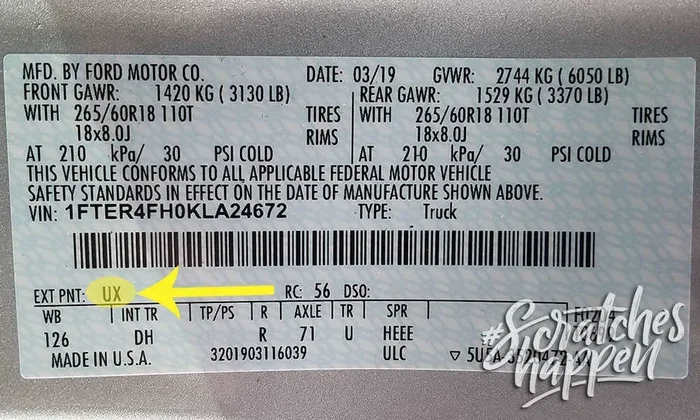
The driver’s side door jamb is the most common location for the paint code sticker. Open the driver’s door and look at the frame or the door itself. You will usually find a small label or sticker that contains a lot of information, including tire pressure, vehicle weight, and the body color code.
The sticker is often called the vehicle information sticker or the certification label. Look for a section labeled “Paint Code,” “Color Code,” or “Exterior Color.” The code is usually a short combination of letters and numbers, like “WA” or “3B4.”
Look Under the Hood
If you do not find the sticker on the door jamb, check under the hood. Many manufacturers place a paint code label on the radiator support bracket, the inner fender, or the firewall. The engine bay is another standard location for the color code sticker.
Pop the hood and look for a small white or silver sticker. It may be tucked behind the hood latch or near the battery. The same paint code you find here should match the one on the door jamb, but it is always good to double-check.
Check the Rear Bumper or Trunk
Some car brands place the paint code on the rear bumper or inside the trunk lid. For certain models, especially trucks and SUVs, the color code sticker may be located on the inside of the tailgate or under the trunk carpet.
If your car has been in an accident and the rear bumper was replaced, the original sticker might be missing. In that case, try another location or use one of the methods I will cover next.
Check the Glove Box or Center Console
A few manufacturers, especially European brands, place the paint code inside the glove box or on a label inside the center console. Open the glove box and look at the underside of the lid or the side walls. You might also check the area around the center console armrest.
Look at the Tire Pressure Label
Here is a tip many people miss. The tire pressure label on the door jamb often contains the paint code right alongside the recommended tire pressure. It is a small sticker, but it packs a lot of useful information. Look for a two-letter or three-character code near the bottom of the label.
How to Use Online Paint Code Lookup Tools
If you cannot find the sticker on your car or the label has faded, do not worry. There are many online tools that can help you find your paint code using your vehicle identification number. This is a great backup method that works for almost any car.
What Is a VIN and How Does It Help?
The VIN is a unique 17-character code assigned to every vehicle. It contains detailed information about your car, including the make, model, year, engine type, and factory paint color. By entering your VIN into a lookup tool, you can retrieve the exact paint code without even touching the car.
You can find your VIN on the dashboard (visible through the windshield on the driver’s side), on the driver’s door jamb sticker, or on your vehicle registration and insurance documents.
Best Free Paint Code Lookup Websites
Several websites allow you to enter your VIN or select your car’s details to find the paint code. Here are some reliable options:
- PaintCodeFinder.com – A free tool that lets you select your car’s make, model, and year to get the color code.
- AutoZone.com – Their paint code lookup tool lets you search by vehicle and provides the OEM code along with touch-up paint options.
- CarEdge.com – Offers a detailed paint code decoder with information about the exact shade for your car.
- Manufacturers’ official websites – Brands like Ford, Toyota, Honda, and Chevrolet have their own paint code lookup tools on their owner portals.
These tools are fast, free, and highly accurate. They are especially helpful when the physical sticker on your car has worn off or been removed.
Using Mobile Apps for Paint Code Lookups
There are also mobile apps available for both iOS and Android that can decode your paint code on the go. Apps like “Automotive Paint Code Finder” and “ColorMunki” let you scan or search for your vehicle’s color code right from your phone. Some apps even show you a color preview so you can confirm you have the right shade before ordering paint.
Contacting Your Car Manufacturer or Dealer
When all else fails, you can always contact your car manufacturer or local dealer. They have access to detailed databases that link your VIN to the exact factory paint code. This method is especially useful for older vehicles or rare colors.
Call or Visit Your Local Dealer
Your local dealership service department can look up the paint code for your car in seconds. All they need is your VIN. You can call them, visit in person, or even use their online service portal if your dealer has one.
Most dealers are happy to help with this request. It is a simple lookup that does not require a service appointment. Just have your VIN ready and ask for the exterior paint code or body color code.
Contact the Manufacturer Directly
You can also reach out to the manufacturer’s customer service team. Brands like Ford, BMW, Toyota, and Honda have dedicated support lines. Provide them with your VIN and model details, and they will give you the exact paint code. Some manufacturers also have online forms or chat support for this purpose.
Matching Your Paint Code for Touch-Ups and Repairs
Once you have your paint code, the next step is to use it to get the right paint. Whether you are doing a small touch-up or a full respray, the code ensures you get the correct formula.
Ordering Touch-Up Paint
Many auto parts stores and online retailers sell touch-up paint matched to your paint code. You simply enter the code, and they ship you a small bottle of paint that matches your car’s factory color. Popular options include brands like Dupli-Color, Automotive Touch Up, and PaintScratch.
Always double-check that the paint code on the product listing matches the one on your car. A single wrong digit or letter can result in a noticeable color difference.
Getting a Professional Paint Match
If you are taking your car to a body shop, give them the OEM paint code directly. A professional shop will use this code to mix the paint using a computerized color matching system. This gives you the best possible match for any repair work.
Some shops also use a paint chip from your car to fine-tune the match. The paint code gets them close, but the physical chip helps them account for fading and weathering that may have occurred over time.
Understanding Paint Code Prefixes and Suffixes
Some paint codes include prefixes or suffixes that indicate the paint type or finish. For example, a code might include “M” for metallic or “P” for pearl. These extra characters are important because metallic and pearl finishes require different paint formulations. Always include the full code when ordering paint or requesting a match.
Common Mistakes to Avoid When Finding Your Paint Code
Finding your paint code is not difficult, but people do make mistakes that lead to wrong matches. Here are the most common errors to avoid.
Relying on the Color Name Alone
Never assume that the color name on your car is the same as someone else’s car with the same name. “Silver” might be a completely different formula between a Honda and a BMW. Always use the actual paint code for an exact match.
Ignoring Faded or Worn Stickers
If the sticker on your door jamb is faded or partially worn, the code might be hard to read. Do not guess at missing characters. Use the VIN lookup method or contact your dealer instead. Guessing can lead to purchasing the wrong paint.
Confusing the Paint Code with the Trim Code
Some vehicles have separate codes for the exterior paint and the interior trim. Make sure you are reading the exterior paint code and not the interior color code. The labels on the sticker can sometimes be confusing, so look carefully for “Exterior Color” or “Body Color.”
Not Saving the Code for Future Use
Once you find your paint code, save it somewhere safe. Take a photo of the sticker with your phone and store it in your notes app. You will be glad you did the next time you need a touch-up or get in a minor accident.
Quick Tips for Finding Your Paint Code Fast
- Start with the driver’s door jamb — it has the sticker in 90% of vehicles.
- Use a flashlight to read faded labels in dark areas like the engine bay or trunk.
- Have your VIN ready before visiting a dealer or using an online lookup tool.
- Write down the full code including any prefixes or suffixes for metallic or pearl finishes.
- Take a photo of the sticker so you always have a backup copy.
- Cross-reference the code with an online database to confirm it is correct.
Expert Insights on Paint Code Accuracy
Professional body shop technicians will tell you that the paint code is only the starting point. Even with the correct OEM code, factors like sun fading, previous repairs, and age can affect how the new paint blends with the existing finish. Experienced painters often use a combination of the paint code, a physical color match, and their own expertise to achieve the best result.
According to industry experts, metallic and tri-coat paint finishes are the most challenging to match. These complex paint formulas have multiple layers that create depth and shimmer. If your car has a metallic or pearl finish, make sure the paint code you use specifies the exact type. A simple solid color code will not work for these finishes.
Another expert tip is to always ask for a spray-out card when ordering touch-up paint. A spray-out card is a small sample of the mixed paint on a test card. You can hold it against your car in natural light to confirm the color is correct before applying it to the actual surface.
Key Takeaways
- Check the driver’s side door jamb sticker first: This is the most common and reliable place to find your paint code.
- Use online paint code lookup tools: Free websites and apps can decode your vehicle identification number to reveal the factory color.
- Contact your dealer with your VIN: They can pull the exact OEM paint code from their system in minutes.
- Look in multiple locations on the car: The color code may also appear under the hood, on the rear bumper, or in the glove box.
- Always verify the code before buying paint: A wrong paint code leads to a mismatched color that is hard to fix.
- Save your paint code for future reference: Take a photo and store it in your phone for quick access.
Conclusion
Finding the exact paint code for your car does not have to be a frustrating experience. With the right approach, you can locate your color code in just a few minutes. Start by checking the driver’s side door jamb, then look under the hood or in the trunk if needed. If the sticker is missing or unreadable, use an online VIN lookup tool or contact your dealer for the OEM paint code.
Once you have the paint code, you are ready to order the right touch-up paint or schedule a professional repair. The code is your guarantee of an exact match that keeps your car looking its best. Save the code somewhere safe, and you will never have to worry about color mismatches again.
Take a few minutes right now to find your paint code. It is one of the simplest and most valuable pieces of information you can have for your vehicle. Whether it is for a small scratch or a full respray, having the right paint code makes all the difference.
Frequently Asked Questions
Can I find my paint code using just the car’s make and model?
You can get close using the make and model, but the exact paint code depends on the year, trim level, and production location. Using your VIN is the most accurate way to find the precise color code for your specific vehicle.
What if the paint code sticker on my car has been removed or damaged?
Do not worry. You can use an online paint code lookup tool with your VIN, or contact your local dealer. They can pull the factory paint code directly from their system using your vehicle identification number.
Is the paint code the same as the interior color code?
No, the exterior paint code and the interior color code are different. Make sure you are looking at the body color code or exterior paint code on the sticker. The interior code is used for upholstery and trim matching.
Can I use the paint code to order touch-up paint online?
Yes, most auto parts retailers and online stores accept the paint code to match and ship the correct touch-up paint. Simply enter the code when ordering, and you will receive paint that matches your car’s factory color.
Do all cars have a paint code sticker?
Nearly all cars manufactured after the 1980s have a paint code sticker or label. However, some older or classic vehicles may not have one. In those cases, a VIN lookup or consultation with a paint specialist is the best alternative.
How do I know if my paint code includes metallic or pearl finishes?
Look at the full paint code on the sticker. Some manufacturers include a letter or suffix that indicates the finish type, such as “M” for metallic or “P” for pearl. When ordering paint, always include the complete code to ensure the correct formula is used.