Can I Charge My Hybrid at Home With a Wall Charger
Yes, you can charge your hybrid at home with a wall charger. Most plug-in hybrids and full hybrids come with a portable charger that plugs into a standard outlet. For faster charging, a Level 2 home charging station is the best upgrade. This guide covers everything you need to know about hybrid vehicle charging at home, including costs, installation, and expert tips.
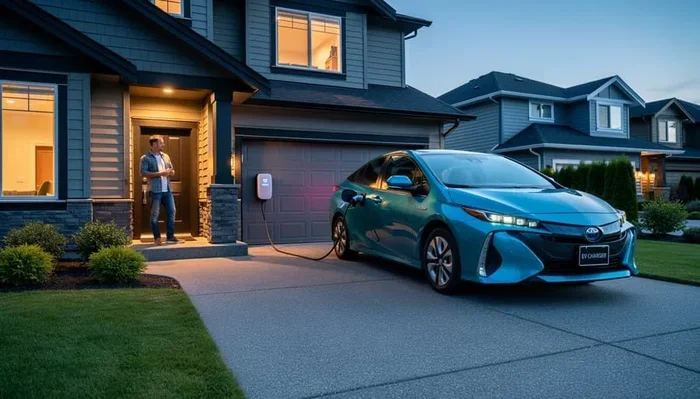
Can I charge my hybrid at home? The short answer is yes. Whether you drive a plug-in hybrid or a traditional hybrid, you have options for hybrid vehicle charging right in your garage or driveway. A wall charger makes the process faster, safer, and more convenient than ever before.
More and more car owners are switching to hybrids. These vehicles offer great fuel economy and lower emissions. But one question keeps coming up: how do you charge them? The good news is that home charging is easier than most people think. You do not need a garage or a fancy setup. A standard outlet can work, and a dedicated home charging station makes it even better.
In this article, we will walk you through everything you need to know. We will cover the types of chargers, installation costs, charging times, and practical tips. By the end, you will know exactly what setup works best for your hybrid car. Let us get started.
Key Takeaways
- Home charging is simple: Most hybrids can plug into a regular wall outlet or a dedicated wall charger.
- Level 2 chargers are faster: A home charging station cuts charging time significantly compared to a standard outlet.
- Installation costs vary: Expect to pay between $200 and $1,000+ for equipment and setup, depending on your electrical panel.
- Overnight charging works great: Plug in when you get home and wake up with a full battery every morning.
- Check your hybrid type: Plug-in hybrids charge externally, while traditional hybrids recharge through regenerative braking.
- Safety first: Always hire a licensed electrician for wall charger installation to avoid electrical hazards.
📑 Table of Contents
- Understanding How Hybrid Charging Works
- Types of Home Chargers for Hybrids
- How to Install a Wall Charger at Home
- Charging Costs and Savings
- Common Mistakes to Avoid
- Expert Tips for Better Hybrid Charging at Home
- How Long Does It Take to Charge a Hybrid at Home?
- Should You Install a Wall Charger? A Quick Decision Guide
- Conclusion
Understanding How Hybrid Charging Works
Before you buy a wall charger, it helps to understand how hybrid vehicle charging actually works. Not all hybrids are the same, and the charging method depends on your vehicle type.
Plug-In Hybrids vs. Traditional Hybrids
Plug-in hybrids, also called PHEVs, have a larger battery pack. You can plug them in to charge from an external power source. These vehicles can run on electricity alone for a set distance, usually 20 to 50 miles. Once the battery depletes, the gas engine kicks in.
Traditional hybrids, on the other hand, do not plug in. They recharge their battery through regenerative braking and the gas engine. You never need to connect them to an outlet. However, some traditional hybrids offer a mild electric boost at low speeds.
If you own a plug-in hybrid, external charging is essential. This is where a home charging station becomes very useful. If you have a traditional hybrid, you do not need to charge at all. But many owners still want a portable charger for convenience or to power accessories.
The Role of the Charging Cable
Every plug-in hybrid comes with a charging cable. This cable usually connects to a standard 120-volt household outlet. It is called a Level 1 charger. The cable is often stored in the trunk or under the floor of the cargo area. You just plug it in and walk away.
The charging cable is slow. It adds about 3 to 5 miles of electric range per hour. That means a full charge can take 12 to 24 hours. For overnight charging, this works fine. But if you need a quick top-up, a wall charger is a better choice.
Types of Home Chargers for Hybrids
Not all wall chargers are the same. There are different levels of charging equipment, and each offers different speeds. Let us break them down.
Level 1 Charging: The Standard Outlet
Level 1 charging uses a regular 120-volt household outlet. This is the charger that comes with your hybrid straight from the dealership. No special equipment is needed. You just plug the charging cable into any standard wall outlet.
The upside is simplicity. You do not need an electrician. You do not need to install anything. The downside is speed. Level 1 charging is very slow. It is fine for plug-in hybrids with small batteries. But if you drive a lot, you may not get enough range by morning.
Here are some quick facts about Level 1 charging:
- Uses a standard 120V household outlet
- Adds 3 to 5 miles of range per hour
- Full charge takes 12 to 24 hours
- No installation cost
- Best for overnight charging
Level 2 Charging: The Wall Charger Upgrade
Level 2 charging is where the magic happens. A Level 2 wall charger uses a 240-volt outlet, similar to what a clothes dryer uses. This setup delivers much faster charging speed.
With a Level 2 home charging station, you can add 20 to 60 miles of range per hour. A plug-in hybrid with a small battery can fully charge in 2 to 4 hours. Even larger batteries get topped up overnight with ease.
Here is what you need to know about Level 2 charging:
- Requires a 240-volt dedicated circuit
- Needs professional installation by a licensed electrician
- Charging speed is 4 to 7 times faster than Level 1
- Equipment costs range from $300 to $800
- Installation adds $200 to $1,000 depending on electrical panel upgrades
Portable vs. Hardwired Chargers
Some wall chargers are portable. They plug into a 240-volt outlet, just like a dryer. These are great if you rent or do not want a permanent installation. You can move them between cars or even take them when you travel.
Other chargers are hardwired. They are mounted to the wall and wired directly into your electrical system. Hardwired units look cleaner and often charge slightly faster. They also save space since there is no bulky plug adapter.
Both options work well. Your choice depends on your living situation and budget. If you own your home and plan to stay, a hardwired home charging station is a solid long-term investment.
How to Install a Wall Charger at Home
Installing a wall charger is not a DIY project. You need a licensed electrician to handle the electrical work. But the process itself is straightforward and usually takes just a few hours.
Step-by-Step Installation Process
Here is what a typical hybrid vehicle charging installation looks like:
- The electrician inspects your electrical panel to check capacity.
- They determine if your panel can support a 240-volt circuit.
- If needed, they upgrade the panel to handle the additional load.
- A dedicated 240-volt circuit is run from the panel to the charging location.
- The wall charger is mounted on the wall near your parking spot.
- The unit is wired in and tested for safety.
- You plug in your hybrid and start charging.
Most installations go smoothly. But older homes may need electrical panel upgrades. This adds to the cost but is worth it for safety and performance.
Where to Place Your Wall Charger
Placement matters. You want the charging station close to where you park. Ideally, it should be within 15 to 20 feet of your charging port. This keeps the charging cable short and tidy.
Consider these placement tips:
- Mount it on a garage wall near the parking spot
- Install it at a height that is easy to plug in
- Keep it away from water sources or direct sunlight
- Make sure the charging cable reaches your vehicle without stretching
If you do not have a garage, you can still install a wall charger outdoors. Make sure you choose a weather-resistant unit rated for outdoor use. Cover it with a simple weatherproof box for extra protection.
Charging Costs and Savings
One of the biggest benefits of home charging is saving money. Charging your hybrid at home costs much less than filling up at the gas pump. Let us look at the numbers.
Electricity rates vary by location. On average, Americans pay about $0.15 per kilowatt-hour. Charging a plug-in hybrid with a 10 kWh battery costs roughly $1.50. That gives you 25 to 50 miles of electric driving. Compare that to gas, and the savings add up fast.
Here is a quick comparison:
- Home charging: About $0.03 to $0.06 per mile on electricity
- Gasoline: Around $0.10 to $0.15 per mile depending on fuel prices
- Annual savings: Can range from $500 to $1,500 per year
Over time, hybrid vehicle charging at home pays for itself. The installation cost of a wall charger usually pays off within 2 to 3 years through fuel savings. And with rising gas prices, those savings keep growing.
Time-of-Use Electricity Plans
Many utility companies offer time-of-use plans. These plans charge less for electricity during off-peak hours, usually at night. If you charge your hybrid overnight, you can save even more.
Some home charging stations come with smart features. They let you schedule charging during the cheapest hours. This is a great way to maximize your savings on hybrid car charging.
Common Mistakes to Avoid
Charging your hybrid at home is simple, but mistakes can happen. Here are some common errors to watch out for.
Using an Unrated Extension Cord
Never use a regular extension cord for hybrid vehicle charging. Extension cords are not designed for the sustained high amperage that chargers draw. They can overheat and cause a fire. Always plug the charger directly into a wall outlet or a dedicated circuit.
Ignoring Electrical Panel Capacity
Older homes often have 100-amp electrical panels. A Level 2 wall charger needs at least a 200-amp panel. If your panel is undersized, the electrician will recommend an upgrade. Do not skip this step. It is essential for safety and to prevent circuit breakers from tripping.
Skipping Professional Installation
Some people try to install a wall charger themselves. This is a bad idea. Electrical work is dangerous and must meet local building codes. A licensed electrician ensures everything is safe, properly grounded, and up to code.
Not Considering Your Daily Driving Habits
Think about how far you drive each day. If your commute is 20 miles, a Level 1 charger might be enough. But if you drive 40 or more miles daily, a Level 2 wall charger is the better choice. Matching your charger to your driving habits saves time and money.
Expert Tips for Better Hybrid Charging at Home
Want to get the most out of your hybrid vehicle charging setup? Here are some expert-backed tips that make a real difference.
Charge Every Night
The best charging habit is to plug in every night. This way, you always start your day with a full battery. Overnight charging is convenient, and it takes advantage of lower off-peak electricity rates.
You do not need to wait until the battery is completely empty. In fact, keeping your hybrid battery between 20% and 80% charged helps extend its lifespan. Most modern hybrid cars have battery management systems that prevent overcharging. But getting in the habit of plugging in regularly is still a smart move.
Invest in a Smart Charger
Modern home charging stations come with smart features. They connect to your phone via an app. You can monitor charging speed, schedule sessions, and track energy usage. Some even adjust charging based on electricity rates throughout the day.
A smart wall charger is a small investment that pays off. It helps you optimize your charging habits and save on electricity costs.
Keep Your Charging Port Clean
Dirt and debris can build up around your charging port. This can affect the connection and slow down charging speed. Wipe the port clean with a dry cloth every few weeks. If you notice any corrosion or damage, have it checked by a mechanic.
Know Your Charging Adapter
Different hybrids use different charging adapters. Some use the J1772 standard, which is the most common for Level 2 charging. Others may use a different connector. Always check your vehicle manual to confirm which adapter you need before buying a wall charger.
Most home charging stations come with a J1772 adapter included. But if you have a foreign hybrid or a less common model, double-check compatibility before making a purchase.
How Long Does It Take to Charge a Hybrid at Home?
Charging time depends on your battery size, charger type, and charging speed. Here is a general breakdown:
- Level 1 (120V standard outlet): 8 to 24 hours for a full charge
- Level 2 (240V wall charger): 2 to 6 hours for a full charge
- Quick top-up (Level 2): 30 minutes to 1 hour for 20 to 60 miles of range
For most plug-in hybrid owners, overnight charging with a Level 2 wall charger is the sweet spot. You plug in when you get home, and by morning, your battery is ready to go. No fuss, no waiting.
Should You Install a Wall Charger? A Quick Decision Guide
Not sure if a wall charger is right for you? Ask yourself these questions:
- Do you drive more than 20 miles on electricity each day?
- Do you want to avoid gas station visits for short trips?
- Do you have access to a garage or covered parking area?
- Are you comfortable with a one-time installation cost of $500 to $1,500?
- Do you want to maximize fuel savings over time?
If you answered yes to most of these, a home charging station is a great investment. It makes hybrid vehicle charging effortless and keeps your hybrid car ready to go every morning.
On the other hand, if you only drive short distances occasionally, a Level 1 charging cable may be all you need. The standard charger that comes with your vehicle works fine for light use. You can always upgrade to a wall charger later if your needs change.
Conclusion
Can I charge my hybrid at home? Absolutely. With a wall charger, home charging is convenient, affordable, and better for the environment. Whether you choose a simple Level 1 setup or invest in a Level 2 home charging station, you will enjoy the benefits of hybrid vehicle charging from the comfort of your own home.
Start with what you have. Use the charging cable that came with your car. If you find yourself wanting more speed and convenience, upgrade to a dedicated wall charger. The savings on fuel, the ease of use, and the peace of mind make it well worth it.
Take the time to understand your options. Choose the right charging speed for your lifestyle. Work with a licensed electrician for safe installation. And make overnight charging a daily habit. Your hybrid car will thank you, and your wallet will too.
The future of driving is electric and hybrid. Setting up home charging today puts you ahead of the curve. So go ahead, plug in, and enjoy the ride.
Frequently Asked Questions
Can any hybrid be charged at home?
Plug-in hybrids can be charged at home using a wall charger or a standard outlet. Traditional hybrids do not need external charging because they recharge through regenerative braking. Always check your vehicle manual to confirm your hybrid type and charging requirements.
How much does it cost to install a wall charger for a hybrid?
The installation cost for a home charging station typically ranges from $500 to $1,500. This includes the charger unit, electrical wiring, and labor from a licensed electrician. Homes with older electrical panels may need upgrades, which can add to the total cost.
Can I use a regular outlet to charge my hybrid?
Yes, you can use a standard 120-volt outlet for Level 1 charging. This is the slowest method and adds about 3 to 5 miles of range per hour. It works well for overnight charging but is not ideal for daily high-mileage driving.
Is it safe to charge my hybrid overnight?
Charging your hybrid overnight is completely safe. Modern hybrid cars have built-in battery management systems that prevent overcharging. For the best results, use a Level 2 wall charger and plug in every night before bed.
How long does a hybrid battery last?
Most hybrid batteries last between 8 and 15 years, depending on driving habits and maintenance. Regular charging habits like keeping the battery between 20% and 80% can help extend its lifespan. Always follow the manufacturer’s recommendations for battery care.
Do I need a special electrical panel for a wall charger?
A Level 2 wall charger requires a 240-volt dedicated circuit and a 200-amp electrical panel. Older homes with 100-amp panels may need an upgrade. A licensed electrician can assess your panel and recommend the right setup for safe hybrid vehicle charging at home.