Are Tire Rotations Worth the Money or a Total Scam
Are tire rotations worth the money? The short answer is yes. Regular tire rotation extends your tire lifespan, improves handling and traction, and keeps you safe on the road. Skipping this simple vehicle maintenance step can lead to uneven tire wear, costly replacements, and poor fuel efficiency. For most drivers, the tire rotation cost is a small price for big savings.
Key Takeaways
- Tire rotations save money long-term by preventing uneven wear and extending tire life.
- Most experts recommend rotating tires every 5,000 to 7,500 miles or with each oil change.
- Skipping rotations can void tire warranties and lead to premature replacements.
- The cost of a tire rotation is typically $20 to $50, far less than new tires.
- Uneven tire wear affects vehicle handling, safety, and fuel economy.
- DIY tire rotations are possible but professional service ensures accuracy.
- Tire rotation patterns vary by vehicle type, drivetrain, and tire style.
📑 Table of Contents
- Are Tire Rotations Worth the Money? The Honest Truth
- How Tire Rotations Work
- The Real Cost of Skipping Tire Rotations
- How Often Should You Rotate Your Tires?
- Can You Rotate Tires Yourself?
- Do Tire Rotations Really Extend Tire Life?
- Comparison Table: With vs Without Tire Rotations
- The Bottom Line on Tire Rotations
Are Tire Rotations Worth the Money? The Honest Truth
Let us get straight to the point. Are tire rotations worth the money? Most car owners wonder about this. You pay for it. You drive away. And then you forget about it. But here is the thing. That small investment does a lot more than you think.
Tire rotations move your tires from one position to another. This simple act balances out wear across all four tires. Without it, your front tires wear faster than your rear ones. Or your left side wears differently than your right. Over time, this creates serious problems. You end up replacing tires way too early. That costs you hundreds of dollars.
The tire rotation cost is usually between $20 and $50. That is less than a dinner out. Yet it can add thousands to your tire lifespan. Think about that the next time you skip this service. Are tire rotations worth the money? For the vast majority of drivers, the answer is a clear yes.
Why Tire Wear Matters More Than You Think
Your tires are the only part of your car that touches the road. Everything depends on them. Braking. Turning. Cornering. Even your fuel economy. When your tires wear unevenly, every single one of those things suffers.
Uneven tire wear patterns tell a story. They show you what is going wrong underneath. Maybe your alignment is off. Maybe you skip rotations. Or maybe you drive habits are wearing them down fast. Either way, ignoring the signs leads to bigger bills later.
Tread depth is the key measure here. New tires typically have 10/32 to 11/32 inches of tread. Once that wears down, your grip suffers. Wet roads become dangerous. Snow and ice become even worse. Keeping your tires evenly worn means keeping your handling and traction at their best.
How Tire Rotations Work
Understanding the process helps you see the value. A tire rotation is not complicated. But the pattern depends on your vehicle. Different setups need different approaches.
Common Tire Rotation Patterns
Not all cars are the same. Your rotation pattern depends on a few factors:
- Front-Wheel Drive (FWD): Front tires move straight back. Rear tires move to the front and switch sides.
- Rear-Wheel Drive (RWD): Rear tires move straight forward. Front tires move to the back and switch sides.
- All-Wheel Drive (AWD): All tires switch sides and positions. This ensures even wear across all four.
- Directional Tires: These can only rotate front-to-back on the same side. They have a specific tread pattern.
- Staggered Setup: Different sized tires front and back. These cannot be crossed. They only move straight forward or back.
Your mechanic will know which pattern applies. But it is good to understand the basics yourself. This way you can ask informed questions at the shop.
The Role of Wheel Alignment and Tire Balance
Here is something many people confuse. Tire rotation is not the same as wheel alignment. They serve different purposes. Rotation changes tire positions. Alignment adjusts the angles of your suspension.
Tire balance is another related service. It ensures even weight distribution around each wheel. When your tires are out of balance, you feel vibrations at highway speeds. You might also notice uneven tire wear on one edge of the tread.
These services work together. A rotation without proper alignment might not solve the problem. And alignment alone does not fix wear differences between front and rear. That is why smart car owners do both when needed.
The Real Cost of Skipping Tire Rotations
Let us talk numbers. What happens when you skip tire rotations? The cost adds up faster than you expect.
Premature Tire Replacement
Uneven wear means some tires die before others. You might replace a full set of tires two years earlier than needed. A new set of tires costs anywhere from $400 to $1,000 or more. That is a big hit to your wallet. One or two tire rotation services would have cost you $40 to $100 total.
The math is simple. Spend a little now. Save a lot later. Are tire rotations worth the money? This alone answers the question.
Reduced Fuel Efficiency
Worn tires create more rolling resistance. Your engine works harder. You burn more fuel. Studies show that unevenly worn tires can reduce fuel efficiency by up to 3 percent. That might not sound like much. But over a year of driving, it adds up. You pay more at the pump for a problem you could have prevented.
Safety Risks on the Road
This is the part nobody wants to talk about. Worn tires are dangerous tires. They take longer to stop. They hydroplane more easily on wet roads. They grip poorly in cold weather. When your tread depth is uneven, your safety is compromised.
Your tires affect every aspect of driving performance. Braking distance increases. Cornering stability decreases. You lose confidence in your vehicle. All because of a maintenance step you skipped.
How Often Should You Rotate Your Tires?
The answer depends on your driving habits and vehicle type. But here are the general guidelines most experts follow.
Standard Recommendations
Most manufacturers suggest rotating your tires every 5,000 to 7,500 miles. For many drivers, this lines up perfectly with an oil change. It makes the process convenient. You do two maintenance tasks in one trip.
Check your owner manual for the specific recommendation. Some vehicles have different needs based on drivetrain and tire type. Following the manufacturer guidelines also helps keep your tire warranty valid.
Driving Habits That Change the Schedule
Not everyone drives the same way. Your habits affect how fast your tires wear:
- City driving: Stop-and-go traffic wears tires faster. You may need rotations more often.
- Highway driving: Constant speeds cause different wear patterns. Rotations still matter.
- Off-road driving: Rough terrain accelerates wear. Check your tires frequently.
- Heavy loads: Towing or carrying heavy cargo puts extra stress on tires.
- Aggressive driving: Hard braking and fast cornering wear tires unevenly.
If any of these describe your driving, consider rotating more often. A tire rotation schedule tailored to your habits pays off big time.
Quick Tips for Remembering Your Rotation Schedule
- Set a reminder on your phone every 5,000 miles.
- Ask your mechanic to check tire wear at every oil change.
- Keep a simple log in your glove box or phone notes.
- Look at your tread wear visually every month.
- Use a tread depth gauge to measure wear differences.
Can You Rotate Tires Yourself?
Some car owners want to save money. They ask, “Can I do this myself?” The answer is yes. But there are trade-offs.
DIY Tire Rotation Pros and Cons
Doing it yourself saves the labor cost. You only pay for the service, not the markup. You also learn more about your vehicle. That knowledge builds confidence.
But there are downsides too. You need a jack, jack stands, and a torque wrench. You must follow the correct pattern. You need to check tire balance and wheel alignment afterward. One mistake can lead to safety issues.
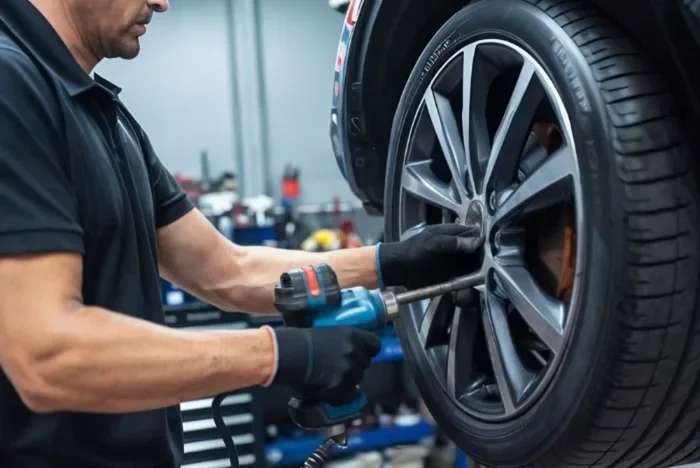
For most people, a professional tire rotation service is the smarter choice. The cost is low. The work is fast. And you get a trained eye checking your tires while you are there.
Expert Insights on DIY vs Professional Rotations
Experienced mechanics say this. A professional rotation includes more than just moving tires. They inspect your brakes. They check for air leaks. They look at suspension components. You get a full assessment for a small fee.
That inspection alone can catch problems early. A small brake issue costs $100 to fix now. Ignore it, and it becomes a $500 problem later. That is the hidden value of professional service.
Do Tire Rotations Really Extend Tire Life?
This is the big question. And the data supports it. Studies and real-world experience show that regular rotations add significant miles to your tires.
A set of tires that lasts 60,000 miles with rotations might only last 40,000 miles without them. That is a 33 percent difference. Over the life of your vehicle, you could replace tires one fewer time. That is real savings.
The Tire Warranty Connection
Many tire manufacturers require proof of regular rotations. They want to see that you maintained your tires properly. Without that proof, they may deny your warranty claim.
This is a huge reason to keep up with rotations. Your tire investment is protected. You get the full lifespan your tires are rated for. Skipping rotations puts that protection at risk.
Common Mistakes That Hurt Your Tires
Even with regular rotations, some mistakes shorten tire life:
- Ignoring alignment issues: A misaligned car wears tires on one side fast.
- Driving on underinflated tires: Low pressure causes excessive shoulder wear.
- Overloading the vehicle: Too much weight stresses tires beyond their limit.
- Hitting potholes and curbs: This damages the tire sidewall and internal structure.
- Neglecting spare tire rotation: Your spare also wears down over time.
Avoid these mistakes and your tires will thank you. Combine them with regular rotations and you get the best results.
Comparison Table: With vs Without Tire Rotations
| Factor | With Rotations | Without Rotations |
|---|---|---|
| Tire Lifespan | 60,000+ miles | 35,000-45,000 miles |
| Replacement Cost (over 120k miles) | $800-$1,200 | $1,200-$1,800 |
| Fuel Efficiency | Optimal | Reduced by 2-3% |
| Handling and Safety | Consistent | Degrades over time |
| Warranty Coverage | Usually maintained | Often voided |
| Rotation Cost (total) | $80-$200 | $0 |
| Net Savings | $400-$800 | $0 |
The table makes the case clear. Regular rotations save you money even when you factor in the service cost. Are tire rotations worth the money? The numbers say yes every single time.
The Bottom Line on Tire Rotations
Let us wrap this up. Are tire rotations worth the money? The evidence is overwhelming. They extend your tire life. They improve safety. They boost fuel economy. And they protect your warranty.
The tire rotation cost is minimal compared to the savings it provides. A $30 to $50 service can prevent hundreds or even thousands of dollars in premature tire replacement. That is one of the best returns on any vehicle maintenance investment you can make.
Do not wait until you see visible wear differences. Do not skip rotations because you are busy. Make it a habit. Pair it with your oil change. Set a reminder. Keep track. Your future self will thank you when your tires last longer and your car drives better.
Simple maintenance done consistently beats expensive repairs done in panic. That is the lesson here. Tire rotations are not a scam. They are one of the smartest things you can do for your car. So the next time someone asks, “Are tire rotations worth the money,” you will have the answer ready.
Frequently Asked Questions
How much does a tire rotation cost?
A standard tire rotation cost ranges from $20 to $50 at most shops. Some dealerships charge more, but many include it free with an oil change. The price is a small fraction of what new tires cost.
Can I rotate my tires too often?
No, rotating more often than recommended will not hurt your tires. It may even help them wear more evenly. But there is no need to do it more frequently than every 3,000 to 5,000 miles unless your mechanic recommends it.
Will tire rotations fix uneven wear already present?
Rotations help prevent future uneven wear. They do not fix wear that has already happened. If your tires are already worn on one side, you likely need a wheel alignment first. After that, regular rotations will keep the problem from getting worse.
How long does a tire rotation take?
A professional tire rotation typically takes 15 to 30 minutes. It is a quick service that fits easily into your schedule. Many shops can do it while you wait or during a routine oil change.
Do all-wheel drive vehicles need tire rotations?
Yes, AWD vehicles actually benefit greatly from regular rotations. All four tires share the driving force, which means they wear together but still at different rates. A tire rotation schedule keeps wear balanced across all four positions.
What happens if I never rotate my tires?
Without rotations, your front or rear tires wear much faster than the others. You will likely need to replace tires in pairs or as a full set much sooner. You also risk reduced traction, poor handling, and a voided tire warranty.
=== CONCLUSION ===
Are tire rotations worth the money? The answer is a resounding yes. This simple, affordable maintenance step protects your investment, keeps you safe, and saves you real cash over time. Do not let anyone convince you it is a scam or unnecessary upsell. The facts speak for themselves. Make tire rotations a regular part of your car maintenance routine and your tires will last longer, perform better, and keep you safer on every drive.