Does Tesla Have a Transmission Heres What You Need to Know
Does Tesla Have a Transmission? The short answer is no — Teslas use a single-speed gearbox instead of a multi-gear transmission. Tesla vehicles rely on an electric motor that delivers power across a wide range of speeds without needing traditional gears. This gearless transmission design simplifies driving, reduces maintenance, and improves the overall EV driving experience. Understanding how the Tesla drivetrain works helps owners appreciate the engineering behind these popular electric vehicles.
If you have ever driven a gas-powered car, you know the feeling of shifting gears. The clutch engages, the gear changes, and your RPMs drop or rise. Now imagine driving a car where none of that happens. You press the accelerator, and the car just goes — smoothly and instantly. That is exactly what happens when you drive a Tesla. So, does Tesla have a transmission? The answer is more interesting than you might think.
Many people assume every car needs a traditional gearbox. But Tesla vehicles are built differently. They use an electric motor and a single-speed gearbox that eliminates the complexity of a multi-gear system. In this article, we will break down everything you need to know about the Tesla drivetrain, how it works, and why the lack of a conventional transmission is actually a big advantage.
Key Takeaways
- No Traditional Transmission: Teslas use a single-speed gearbox, not a multi-gear transmission system like gas cars.
- Electric Motor Simplicity: The electric motor delivers smooth power without the need for gear shifts or a torque converter.
- Fewer Moving Parts: A Tesla drivetrain has far fewer components than a conventional powertrain, which means less maintenance.
- Better Acceleration: Without gear shifts, Tesla vehicles deliver instant torque for quick, seamless acceleration.
- No Transmission Fluid: You never need to check or change transmission fluid in a Tesla.
- Regenerative Braking: Tesla’s system recaptures energy during deceleration, reducing wear on brakes.
- Long-Term Reliability: The simplified EV transmission design contributes to Tesla’s strong long-term reliability record.
📑 Table of Contents
- What Kind of Transmission Does a Tesla Use?
- Why Teslas Do Not Need a Traditional Transmission
- How the Tesla Drivetrain Works
- Tesla Transmission vs. Traditional Car Transmission
- Common Myths About Tesla Transmission
- Transmission Maintenance and Long-Term Reliability
- The Future of EV Transmissions
- Conclusion
What Kind of Transmission Does a Tesla Use?
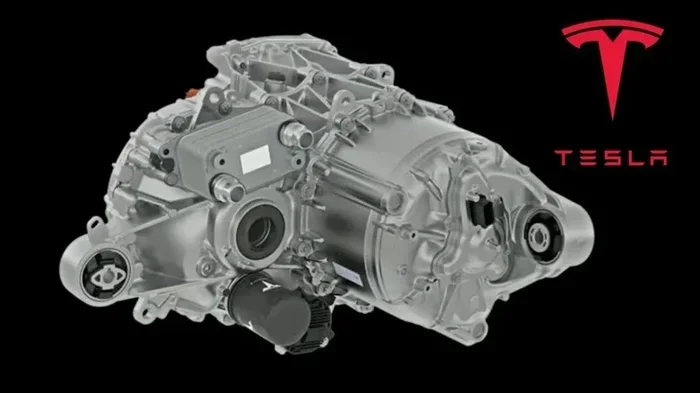
When people ask, “does Tesla have a transmission,” they usually mean a traditional multi-gear gearbox with a clutch and gear selector. Tesla does not use that type of system. Instead, every Tesla model comes with a single-speed reduction gear. This is sometimes called a single-speed gearbox or a gearless transmission. It connects the electric motor directly to the wheels through a simple set of gears.
Here is what you need to know about the Tesla transmission setup:
- Single-Speed Gearbox: Tesla vehicles have one fixed gear ratio. There is no need to shift between gears while driving.
- No Clutch Pedal: There is no clutch in a Tesla. The car operates fully automatically without any driver input for gear changes.
- No Gear Selector: Instead of P-R-N-D, Tesla uses a simple drive system controlled through the touchscreen or steering wheel paddles.
- No Torque Converter: Traditional automatic transmissions use a torque converter. Teslas do not have this component at all.
The Tesla Model S, Model 3, Model X, and Model Y all share this same basic approach. Whether you are driving a compact sedan or a large SUV, the electric vehicle transmission system works the same way. This simplicity is one of the biggest reasons Tesla owners love their cars.
Why a Single-Speed Gearbox Works So Well
You might wonder why a single gear is enough. In a gas-powered car, the engine needs different gear ratios to operate efficiently at different speeds. At low speeds, you need a lower gear for more torque. At high speeds, you need a higher gear to keep the engine from over-revving. An electric motor does not have this problem. It can deliver strong torque from zero RPM and still perform well at highway speeds. This is why a single-speed gearbox is all that is needed.
Why Teslas Do Not Need a Traditional Transmission
The reason Teslas skip a traditional multi-speed transmission comes down to how electric motors work. A gas engine has a narrow power band. It needs gears to stay within its efficient operating range. An electric motor, on the other hand, has a very wide power band. It can spin efficiently across a huge range of speeds.
Here are the key reasons Tesla does not need a conventional transmission:
- Instant Torque Delivery: Electric motors deliver maximum torque the moment you press the pedal. There is no waiting for the engine to rev up.
- Wide Operating Range: An electric motor can handle everything from a standstill to 120 mph without needing a gear change.
- Smoother Driving Experience: No gear shifts mean no jerky transitions. The acceleration feels seamless and linear.
- Less Complexity: Fewer parts mean fewer things that can break. This is great news for transmission maintenance costs.
- Better Efficiency: Without the energy losses from shifting gears, the Tesla powertrain operates more efficiently overall.
Think of it this way. A gas engine is like a runner who can only sprint at certain speeds and needs to switch running styles. An electric motor is like a runner who can sprint, jog, and run at full speed all at once. The electric motor simply does not need the gear system that a gas engine relies on.
The Role of the Reduction Gear
Even though Teslas do not have a traditional transmission, they do have a reduction gear. This gear reduces the high rotational speed of the electric motor to a level that works well for the wheels. It is a simple mechanical component that does the job of a multi-gear system in a single step. The reduction gear is part of what makes the Tesla drivetrain so compact and efficient.
How the Tesla Drivetrain Works
Understanding the Tesla drivetrain helps you see why the gearless transmission design is so effective. The system is built around three main components: the electric motor, the reduction gear, and the differential. Together, these parts deliver power to the wheels with incredible efficiency.
Here is how the system works step by step:
- The Electric Motor Spins: When you press the accelerator, the electric motor starts spinning immediately. There is no warm-up period and no lag.
- The Reduction Gear Steps Down Speed: The motor spins very fast, but the wheels need to spin slower. The reduction gear handles this conversion.
- The Differential Distributes Power: The differential sends power to the wheels, allowing them to spin at different speeds during turns.
- The Wheels Move: Power reaches the wheels smoothly and instantly, giving you that signature Tesla acceleration.
For all-wheel-drive Teslas, the system includes a front motor and a rear motor. Each motor connects to its own set of wheels through its own reduction gear. This setup gives Tesla incredible control over traction and handling. The dual motor drivetrain is one of the reasons Tesla vehicles perform so well in all weather conditions.
Regenerative Braking and the Drivetrain
One unique feature of the Tesla drivetrain is regenerative braking. When you take your foot off the accelerator, the electric motor works in reverse. It becomes a generator, capturing energy that would normally be lost during braking. This energy gets sent back to the battery. Regenerative braking reduces wear on the actual brake pads and helps extend your driving range. It is a brilliant use of the electric motor that has nothing to do with a traditional car transmission but works hand-in-hand with the drivetrain design.
Tesla Transmission vs. Traditional Car Transmission
To really understand what makes the Tesla system special, it helps to compare it directly with a traditional automatic transmission. The differences are significant, and they affect everything from driving feel to long-term ownership costs.
| Feature | Tesla (Single-Speed Gearbox) | Traditional Automatic Transmission |
|---|---|---|
| Number of Gears | 1 (single-speed reduction gear) | 6 to 10 gears |
| Gear Shifting | None — seamless power delivery | Automatic shifts between gears |
| Clutch | No clutch | Torque converter or clutch pack |
| Transmission Fluid | Not required | Requires regular fluid changes |
| Moving Parts | Very few | Hundreds of moving parts |
| Maintenance Needs | Minimal | Regular fluid and filter changes |
| Acceleration Feel | Instant and smooth | Can have shift lag or jerkiness |
| Complexity | Low | High |
| Typical Lifespan | Matches vehicle life | May need rebuild at 100k-150k miles |
The comparison table above shows why so many people are switching to electric vehicles. The Tesla powertrain is simply more refined and requires far less upkeep. When you combine the gearless transmission with fewer brake replacements (thanks to regenerative braking), the ownership experience becomes much more convenient.
What About the Tesla Model S Plaid?
The Tesla Model S Plaid is one of the fastest production cars on the road. It uses a three-motor setup with a unique reduction gear system for the front motor. This is a special case, but it still does not use a traditional multi-gear transmission. Even in its most extreme form, Tesla sticks with the single-speed EV transmission philosophy. The Plaid can go from 0 to 60 mph in under 2 seconds, and it does it without ever shifting gears.
Common Myths About Tesla Transmission
There are a lot of misconceptions floating around about Tesla drivetrains. Let’s clear up some of the most common ones.
Myth 1: Teslas Have No Gears at All. This is not entirely true. Teslas do have gears — just one gear in a reduction gearbox. The motor connects to the wheels through a single set of gears that handle the speed and torque conversion.
Myth 2: Teslas Need Special Transmission Maintenance. False. Because there is no traditional transmission fluid, no filter, and no clutch to replace, the maintenance requirements are minimal. You do not need to schedule transmission service appointments.
Myth 3: A Single Gear Means Poor Performance. This could not be further from the truth. Tesla vehicles are some of the fastest accelerating cars available. The single-gear setup delivers instant torque without any delay, which is why Teslas feel so responsive.
Myth 4: Electric Cars Cannot Have Manual Transmissions. While it is technically possible to build an electric car with a manual gearbox, no Tesla model offers one. The single-speed setup is far more efficient and practical for electric powertrains.
Quick Tips for Tesla Owners
- Use Regenerative Braking Settings: Adjust your regenerative braking level in the Tesla app or settings menu to maximize energy recovery.
- Avoid Aggressive Launch Control Daily: While the Tesla acceleration is thrilling, frequent hard launches can drain your battery faster.
- Keep Tires Properly Inflated: Since the drivetrain is so efficient, tire pressure has a bigger impact on range than in gas cars.
- Schedule Regular Service: Even though transmission maintenance is not needed, regular checkups keep your Tesla running at its best.
Transmission Maintenance and Long-Term Reliability
One of the biggest selling points of owning a Tesla is the low maintenance burden. The electric motor and single-speed gearbox simply do not have the same wear-and-tear issues as a conventional car transmission. There is no transmission fluid to degrade, no clutch to wear out, and no gear synchronizers to fail.
Here is what Tesla owners can expect when it comes to drivetrain longevity:
- No Transmission Fluid Changes: You never need to drain and refill transmission fluid. This saves both time and money over the life of the vehicle.
- Minimal Brake Maintenance: Regenerative braking handles most of the deceleration, so brake pads and rotors last significantly longer.
- Reduced Wear on Drivetrain Components: With fewer moving parts, there is less to break or wear down over time.
- Software Updates Improve Performance: Tesla often releases over-the-air updates that optimize motor and drivetrain performance.
Many Tesla owners report driving their vehicles for hundreds of thousands of miles with very few drivetrain issues. The Tesla drivetrain is designed for longevity, and the simplified EV transmission plays a big role in that durability. If you are tired of worrying about transmission repairs and fluid changes, a Tesla offers real peace of mind.
What If Something Goes Wrong?
Even with a simple drivetrain, problems can occasionally occur. The most common issues include unusual noises from the reduction gear or motor bearings. If you hear grinding, whining, or clicking sounds, it is important to get your Tesla inspected right away. Tesla service centers can diagnose drivetrain issues using advanced diagnostic tools. In most cases, the Tesla powertrain warranty covers repairs, giving you added protection.
The Future of EV Transmissions
Tesla is not the only automaker moving toward simpler drivetrain designs. The entire electric vehicle industry is trending toward single-speed gearboxes. As more automakers develop EV transmission systems, the traditional multi-gear gearbox will become increasingly rare on new vehicles. This shift benefits drivers through lower maintenance costs, better efficiency, and a more enjoyable driving experience.
Some manufacturers are even experimenting with two-speed gearboxes for high-performance electric cars. However, for most daily driving, a single-speed setup works perfectly. Tesla has proven that the gearless transmission approach is not just viable — it is superior for most use cases.
Why This Matters for Car Buyers
If you are considering buying a Tesla or any electric vehicle, understanding the drivetrain helps you make an informed decision. The lack of a traditional transmission means simpler ownership, lower costs, and a more refined driving experience. When people ask “does Tesla have a transmission,” the answer opens up a bigger conversation about how electric vehicles are reshaping the automotive industry.
The Tesla drivetrain is a perfect example of how electric motors unlock new engineering possibilities. Without the constraints of a combustion engine, Tesla engineers designed a system that is elegant, efficient, and incredibly reliable. Whether you are a tech enthusiast, a daily commuter, or a performance car lover, the Tesla drivetrain delivers.
Conclusion
So, does Tesla have a transmission? Yes and no. Teslas do not have a traditional multi-gear automatic transmission with a torque converter and clutch. Instead, they use a single-speed gearbox that works hand-in-hand with the electric motor to deliver smooth, instant power. This gearless transmission design is one of the smartest engineering choices Tesla has made. It simplifies driving, reduces maintenance, and makes every trip more enjoyable.
The Tesla drivetrain is a testament to how electric vehicles can outperform and outlast their gas-powered counterparts. With fewer moving parts, no transmission fluid changes, and the added benefit of regenerative braking, owning a Tesla means spending less time in the shop and more time on the road. Whether you drive a Model 3, Model Y, Model S, or Model X, you are experiencing the future of automotive engineering.
If you have been curious about how Teslas work under the hood, we hope this article has given you a clear picture. The next time someone asks you, “does Tesla have a transmission,” you can confidently explain the innovative single-speed gearbox system that makes these electric vehicles so special. Embrace the simplicity, enjoy the performance, and drive the future.
Frequently Asked Questions
Do Teslas have a traditional multi-speed transmission?
No, Teslas do not have a traditional multi-speed transmission. They use a single-speed reduction gear that connects the electric motor to the wheels. This gearless transmission design eliminates the need for gear shifting and makes driving smoother and simpler.
Do I need to change transmission fluid in a Tesla?
You do not need to change transmission fluid in a Tesla. The single-speed gearbox does not use traditional transmission fluid. This is one of the biggest maintenance advantages of the Tesla drivetrain compared to gas-powered vehicles.
Can a Tesla transmission break down?
The Tesla EV transmission is extremely reliable because it has very few moving parts. While it is technically possible for the reduction gear or motor bearings to wear over time, breakdowns are rare. Most Tesla owners experience a long-lasting drivetrain with minimal issues.
Why does a Tesla not need a clutch or torque converter?
A Tesla does not need a clutch or torque converter because the electric motor delivers power smoothly across all speeds. Electric motors have a wide operating range and do not need gear shifts to maintain efficiency, which removes the need for these traditional components.
Is the Tesla drivetrain better than a traditional automatic transmission?
For most drivers, yes. The Tesla drivetrain offers smoother acceleration, lower maintenance costs, and better efficiency. The simplified single-speed gearbox means fewer things can go wrong, which translates to a better ownership experience over time.
Do all Tesla models use the same transmission setup?
Yes, all Tesla models use a single-speed reduction gear system. Whether you are driving the Model 3, Model Y, Model S, or Model X, the basic drivetrain philosophy remains the same. Some performance variants like the Plaid use additional motors but still rely on the same single-speed gearbox approach.