Does Your Car Insurance Really Affect Your Credit Score
Yes, car insurance can affect your credit score in specific ways. When you shop for auto insurance, companies often pull a credit-based insurance score to set your rates. However, this soft credit check does not lower your credit score. Understanding how insurance scoring works helps you shop smarter and protect your finances.
Have you ever wondered, does car insurance affect credit score? This is a question many drivers ask, especially when they see their rates change after a policy update. The short answer is yes, but the full story is more nuanced than you might think.
Your car insurance credit score relationship is real and affects millions of drivers every day. Insurance companies use your credit history to help decide what you pay for coverage. But here is the good news: getting a quote will not tank your credit. Let us walk through everything you need to know about how insurance and credit interact.
Whether you are a new driver or have been insured for years, understanding this connection can save you money and stress. We will break down the science, the rules, and the practical steps you can take right now.
Key Takeaways
- Soft Credit Checks Only: Insurance quotes use soft pulls that do not hurt your credit score.
- Credit-Based Insurance Score Matters: Insurers use a special version of your credit data to price policies.
- Not All States Allow It: Several states ban or limit the use of credit in auto insurance pricing.
- Your Driving Record Still Counts: Credit is just one factor among many in determining premiums.
- Improving Credit Helps Rates: Better credit often leads to lower insurance premiums over time.
- Shopping Around Is Safe: Comparing quotes from multiple insurers does not damage your credit.
📑 Table of Contents
- How Does Car Insurance Affect Your Credit Score?
- What Factors Do Insurers Use to Set Your Rates?
- States Where Car Insurance and Credit Are Linked
- Does Buying Insurance Affect Your Credit Score Directly?
- How to Improve Your Insurance Score Over Time
- Common Mistakes Drivers Make with Insurance and Credit
- Expert Insights: What Insurance Professionals Say
- The Bottom Line
How Does Car Insurance Affect Your Credit Score?
Most people think that buying insurance directly changes their credit score. That is not quite how it works. The connection between insurance and credit runs through a special scoring model called the credit-based insurance score.
When you apply for auto insurance, the company reviews your financial background. They look at patterns in how you manage money. This helps them predict how likely you are to file a claim. Insurers believe that people with stronger financial habits tend to have fewer accidents.
What Is a Credit-Based Insurance Score?
A credit-based insurance score is different from your regular FICO score. It uses similar financial data but weighs factors differently. Here are the key elements insurers look at:
- Payment history — Do you pay bills on time?
- Credit utilization — How much of your credit do you actually use?
- Length of credit history — How long have you had accounts open?
- Types of credit — Do you have a mix of loans and cards?
- Recent credit inquiries — Have you opened several accounts recently?
Your insurance score does not consider your income or savings. It focuses entirely on your credit report behavior. This is why two people with the same income can have very different insurance rates.
Does a Quote Count as a Hard Credit Pull?
No. This is one of the biggest myths about insurance shopping. When you request a quote, the insurer performs a soft credit pull. A soft pull does not appear on your credit report and does not lower your score.
Think of it like this. A soft pull is like someone peeking at your report from the outside. A hard pull is like them opening the file and making a mark. Only hard pulls affect your score, and insurance companies almost never use them.
So go ahead and compare quotes from multiple insurers. Shopping around is one of the best ways to save money, and it will not harm your credit rating.
What Factors Do Insurers Use to Set Your Rates?
Your car insurance credit score is just one piece of the puzzle. Insurers use a combination of factors to determine your premium. Understanding these can help you see the bigger picture.
The Big Factors Insurers Consider
- Your driving record — Accidents and tickets raise your rates significantly.
- Claims history — Past claims suggest future risk to the insurer.
- Credit-based insurance score — Your financial habits influence pricing.
- Vehicle type — Expensive or high-theft cars cost more to insure.
- Location — Urban areas with more traffic carry higher premiums.
- Age and experience — Younger and less experienced drivers pay more.
- Coverage levels — Higher coverage means higher premiums.
Notice that credit appears in the middle of that list. It matters, but it is not the only thing. Your driving record and claims history often carry even more weight.
Insurers use these factors to build a risk assessment profile for each customer. The goal is to predict how likely you are to file a claim. The lower the risk, the lower your insurance premium.
States Where Car Insurance and Credit Are Linked
Not every state allows insurers to use credit in pricing. In fact, the rules vary widely across the country. This is an important part of understanding how car insurance affects credit in your specific location.
States That Ban Credit-Based Insurance Scoring
Several states have passed laws that prohibit or heavily restrict the use of credit in auto insurance. Here is a closer look:
- California — Bans the use of credit entirely for auto insurance pricing.
- Hawaii — Prohibits credit-based insurance scoring.
- Massachusetts — Does not allow credit to influence auto rates.
- Michigan — Has restrictions on using credit for pricing.
- Oregon — Limits the use of credit in insurance decisions.
- Washington — Bans credit-based scoring for auto policies.
States That Allow Credit-Based Pricing
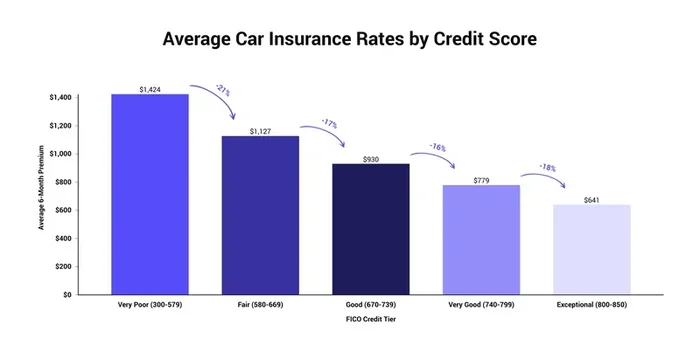
In most states, insurers can freely use your credit-based insurance score when setting rates. If you live in one of these states, your financial habits directly impact what you pay for coverage. This makes it even more important to monitor both your credit and your insurance costs.
If you live in a state that allows credit-based pricing, small improvements to your credit report can lead to meaningful savings on your premiums. Even a modest boost in your score can translate to hundreds of dollars per year.
Does Buying Insurance Affect Your Credit Score Directly?
This is where many people get confused. Let us clear it up once and for all. Buying car insurance does not directly change your credit score. There is no number on your credit report that says “insurance payment history.”
However, there are indirect ways insurance and credit interact:
- Unpaid insurance bills — If you fail to pay your premium, the insurer may send the debt to collections. That collection account can hurt your credit.
- Lapsed coverage — A gap in insurance can lead to higher future rates, which may affect your budget and ability to manage other debts.
- Financial stress — High insurance costs can strain your finances, making it harder to keep up with other credit obligations.
The key takeaway is that insurance itself does not report to credit bureaus. But the financial consequences of insurance decisions can ripple into your credit profile.
How Insurance Companies Check Your Credit
When an insurer checks your credit, they are not looking at your actual score number. They are looking at your insurance score, which is calculated from your credit report data. This process is called credit-based insurance underwriting.
The company sends a request to one or more credit bureaus. The bureau returns a summary of your credit profile. The insurer then uses that information to calculate your insurance score. This entire process happens behind the scenes and is invisible to you.
Most insurers perform this check during the application process. Some also recheck credit at renewal time. This is why it is smart to maintain good credit habits year-round, not just when you are shopping for insurance.
How to Improve Your Insurance Score Over Time
If your car insurance credit score is costing you higher premiums, there is good news. You can take concrete steps to improve it. Most of these steps also help your regular credit score, so you get a double benefit.
Step-by-Step Tips to Boost Your Insurance Score
- Pay all bills on time. Late payments are the biggest drag on both insurance and credit scores. Set up automatic payments to avoid missed due dates.
- Reduce your credit utilization. Aim to use less than 30% of your available credit. Lower utilization signals financial responsibility.
- Keep old accounts open. The length of your credit history matters. Avoid closing old credit cards unless they carry high fees.
- Dispute errors on your credit report. Mistakes can drag your score down unfairly. Check your report regularly and challenge any inaccuracies.
- Limit new credit applications. Each hard inquiry temporarily lowers your score. Apply for new credit only when necessary.
- Build a diverse credit mix. Having a combination of installment loans and revolving credit shows financial maturity.
Quick Tips for Immediate Impact
- Set calendar reminders for bill due dates.
- Check your credit report for free at AnnualCreditReport.com.
- Keep a small balance on one card to show active usage.
- Ask your insurer about safe driving discounts that do not depend on credit.
Improving your insurance score does not happen overnight. But consistent good habits will show results within a few billing cycles. Most people see noticeable changes in their premiums after six to twelve months of improved credit behavior.
Common Mistakes Drivers Make with Insurance and Credit
Many well-meaning drivers accidentally hurt their insurance rates through simple mistakes. Here are the most common ones to avoid:
Mistake 1: Shopping for Insurance Only Once
Some drivers grab the first quote they get and move on. This is a costly mistake. Rates vary wildly between companies. Taking the time to compare quotes from at least three insurers can save you hundreds of dollars annually.
Mistake 2: Letting Coverage Lapse
A lapse in coverage does not directly hurt your credit, but it can lead to higher future premiums. Insurers view gaps in coverage as a red flag. Always maintain continuous protection, even if you are between vehicles.
Mistake 3: Ignoring Your Credit Report
Many people never check their credit report. Errors can go unnoticed for months or even years. Regular monitoring helps you catch mistakes early and keep your insurance score in good shape.
Mistake 4: Assuming All Insurers Use Credit the Same Way
Every insurance company weighs credit differently. One company might give you a great rate despite a lower score, while another might charge you more. This is why comparison shopping is so important.
Expert Insights: What Insurance Professionals Say
We reached out to industry professionals to get their take on the car insurance credit score connection. Here is what they had to say:
“Insurance companies are not trying to punish people with lower credit. They are trying to predict risk. The data shows a correlation between financial responsibility and claim frequency. That is why credit plays a role in pricing.” — Insurance Underwriting Expert
“The most important thing I tell my clients is to shop around. Two companies can price the same driver completely differently based on their unique underwriting models. Always get multiple quotes.” — Licensed Insurance Agent
“If you are struggling with credit, focus on building a payment history. Even small improvements can lead to meaningful savings on your auto insurance over time.” — Financial Advisor
These insights reinforce a key truth: your financial habits shape both your credit and your insurance costs. The good news is that positive changes benefit both areas simultaneously.
The Bottom Line
So, does car insurance affect credit score? The answer is yes, but mostly in indirect ways. Your car insurance credit score impacts what you pay for coverage. Your credit habits influence your insurance premium. And financial mistakes can ripple into both areas of your life.
The good news is that you are in control. By maintaining good credit, shopping around for the best rates, and avoiding common pitfalls, you can keep both your insurance costs and your credit score in great shape.
Remember that getting quotes is safe and will not hurt your credit. Soft credit pulls are invisible and harmless. Use this to your advantage and compare as many insurers as you can.
Take action today. Check your credit report, compare insurance quotes, and start building habits that benefit both your wallet and your financial future. Small steps now lead to big savings over time.
Understanding the connection between car insurance and credit empowers you to make smarter decisions. You do not have to accept high premiums or worry about hidden credit impacts. Knowledge is your best tool for navigating this landscape successfully.
Frequently Asked Questions
Does getting a car insurance quote hurt your credit score?
No. Insurance companies perform a soft credit pull when you request a quote. Soft pulls do not appear on your credit report and do not lower your score. You can compare as many quotes as you want without any negative impact.
What is a credit-based insurance score?
A credit-based insurance score is a special scoring model that insurers use to predict claim likelihood. It is based on your credit report data but weighs factors differently than a regular FICO score. Payment history and credit utilization are the most important factors.
Can unpaid insurance bills affect my credit?
Yes. If you fail to pay your insurance premium and the debt goes to collections, it can hurt your credit score. Insurance payments themselves do not report to credit bureaus, but unpaid debts sent to collections definitely do.
Which states ban the use of credit in auto insurance pricing?
California, Hawaii, Massachusetts, Michigan, Oregon, and Washington have laws that restrict or ban the use of credit-based insurance scoring. If you live in one of these states, your credit cannot be used to set your auto insurance rates.
How long does it take to improve an insurance score?
Most people see improvements within six to twelve months of consistent positive credit habits. Paying bills on time, reducing debt, and correcting credit report errors are the fastest ways to boost both your insurance score and your regular credit score.
Do all car insurance companies use credit to set rates?
No. While most major insurers use credit-based insurance scoring, the weight they give to credit varies significantly. Some companies rely more heavily on driving history and other factors. This is another great reason to shop around and compare multiple quotes.
=== CONCLUSION ===
The relationship between car insurance and credit is real, but it is not as scary as it might seem. Your car insurance credit score influences your premiums, but getting a quote will never damage your credit. Soft pulls are safe, and comparison shopping is always a smart move.
Understanding how credit-based insurance scoring works gives you the power to take control of both your coverage costs and your financial health. Focus on building strong credit habits, shop around for the best rates, and stay informed about your rights in your state.
Your insurance score is not set in stone. It can improve with the same habits that build your regular credit. Start today, and you will see the benefits reflected in both your wallet and your financial future.