Are Any Toyotas Flat Towable Heres What You Need To Know
Yes, some Toyota models are flat towable, but it depends heavily on the drivetrain and transmission type. Not every Toyota can be safely towed with all four wheels on the ground. Understanding your specific model and following manufacturer guidelines is critical to prevent expensive transmission damage.
Key Takeaways
- Not all Toyotas are flat towable: Drivetrain and transmission type determine if a model can be towed four wheels down.
- Two-wheel drive models are generally the best candidates: Models like the Toyota Tacoma and 4Runner often qualify for flat towing.
- Always check your owner’s manual: The manufacturer provides the definitive answer on flat towability for each model and year.
- You need the right equipment: A base plate, tow bar, supplemental braking system, and auxiliary lighting are essential.
- Flat towing incorrectly can cause serious damage: Ignoring transmission requirements leads to costly repairs that are often not covered by warranty.
- Newer Toyota models have more restrictions: Always verify flat tow status for the specific model year you own or plan to buy.
📑 Table of Contents
- Are Any Toyotas Flat Towable? The Definitive Guide
- What Does Flat Towable Actually Mean?
- Which Toyota Models Can Be Flat Towable?
- Why Drivetrain and Transmission Matter So Much
- Equipment You Need for Flat Towing a Toyota
- Common Mistakes People Make When Flat Towing a Toyota
- Expert Tips for Safe Flat Towing
- What to Do If Your Toyota Cannot Be Flat Towable
- Frequently Asked Questions
- Final Thoughts
Are Any Toyotas Flat Towable? The Definitive Guide
If you own a Toyota and love road trips in your RV, you have probably asked yourself one important question: are any Toyotas flat towable? The answer is not a simple yes or no. It depends on your specific model, year, drivetrain, and transmission type.
Flat towing, also called “dinghy towing” or “toading,” means pulling a car behind an RV with all four wheels on the ground. It is incredibly convenient. You do not need a trailer, and you save fuel. But doing it wrong can destroy your vehicle’s transmission in a heartbeat.
This guide covers everything you need to know about flat towing a Toyota. We will look at which models work, which do not, what equipment you need, and the common mistakes people make. By the end, you will know exactly whether your Toyota can go flat towing.
The short answer is yes, several Toyota models can be flat towed. But the details matter a lot. Let us dive in.
What Does Flat Towable Actually Mean?
Before we look at specific Toyota models, let us clarify what flat towing means. Flat towing is when a vehicle is pulled behind another vehicle with all four wheels touching the road. No trailer. No dolly. Just a tow bar connecting the vehicles.
This method is popular among RV owners. It lets you drive around at your campsite without unpacking everything. You can run quick errands. You can explore nearby trails. But flat towing puts unique stress on a vehicle.
How Flat Towing Works
When a car is flat towed, the rear wheels spin the driveshaft. In a rear-wheel drive vehicle, this is usually fine. In a front-wheel drive vehicle, the situation is different. And for all-wheel drive and four-wheel drive vehicles, it gets even more complicated.
The biggest concern is the transmission. When the engine is off and the wheels are turning, the transmission still needs lubrication. Some vehicles cannot handle this. Others can, as long as you follow specific procedures like putting the transmission in neutral.
Key Terms to Know
- Flat tow: Towing with all four wheels on the ground.
- Toad: Slang for the vehicle being towed behind an RV.
- Base plate: A mounting plate attached to the front of the towed vehicle.
- Tow bar: The device that connects the toad to the RV.
- Supplemental braking system: A separate brake system for the towed vehicle.
- Neutral tow: Towing with the transmission in neutral position.
Which Toyota Models Can Be Flat Towable?
Now for the part you really want to know about. Which Toyotas can actually be flat towed? The answer varies by model and year. Let us go through the most popular options.
Toyota 4Runner
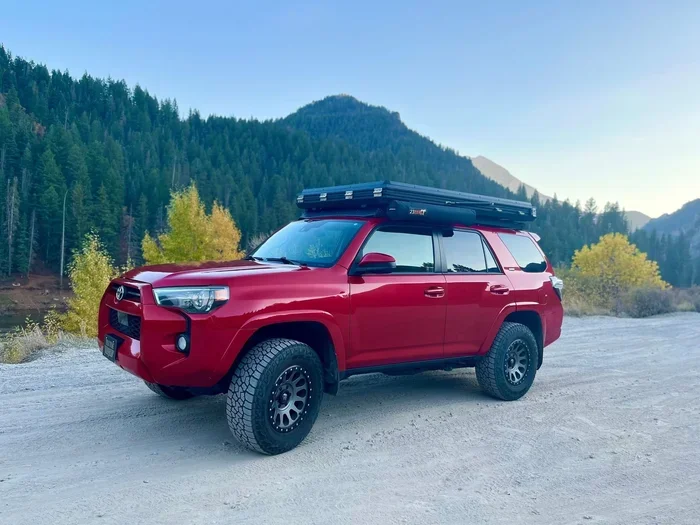
The Toyota 4Runner is one of the most popular flat towable vehicles on the market. Many years of the 4Runner can be flat towed with all four wheels down. However, the rules change depending on the drivetrain.
Most rear-wheel drive 4Runners with manual transmissions are flat towable. Some automatic transmission models can be flat towed too, but you must check the specific year. Always confirm with your owner’s manual before towing.
Toyota Tacoma
The Toyota Tacoma is another strong candidate for flat towing. Many Tacoma models can be towed four wheels down. The Tacoma has a solid reputation for durability, and that extends to its towing capabilities.
Again, drivetrain and transmission matter. Two-wheel drive Tacomas with automatic transmissions are often flat towable. Four-wheel drive models require more careful verification. Some 4WD Tacomas can be flat towed in neutral, while others cannot.
Toyota Tundra
The Toyota Tundra is a full-size pickup truck. Flat towing a Tundra is possible on certain models and years. The Tundra has been around since 2000, and flat towability has changed across generations.
Older Tundra models with two-wheel drive tend to be more straightforward for flat towing. Newer models may have additional restrictions. Always verify before you hit the road.
Toyota RAV4
The Toyota RAV4 is a popular compact SUV. Unfortunately, most RAV4 models cannot be flat towed. The RAV4 comes standard with all-wheel drive, and many years have automatic transmissions that do not support flat towing.
There may be exceptions for specific years and drivetrain configurations. But as a general rule, the RAV4 is not a good flat towing candidate. You would need to use a trailer or dolly instead.
Toyota Highlander
Similar to the RAV4, the Toyota Highlander is mostly not flat towable. The AWD drivetrain and automatic transmission create problems for flat towing. Check your specific model year to be sure, but do not assume the Highlander can go flat towed.
Why Drivetrain and Transmission Matter So Much
This is the most important part of the entire discussion. Not every Toyota can be flat towed, and the reason comes down to two things: the drivetrain and the transmission.
Two-Wheel Drive vs Four-Wheel Drive
Two-wheel drive vehicles are generally the easiest to flat tow. The driveshaft only connects to two wheels, which simplifies the towing dynamics. Four-wheel drive vehicles have a transfer case that connects power to all four wheels, and this creates complications when the engine is off.
Some 4WD Toyotas can be flat towed if you put the transfer case in neutral. But not all of them. The specific procedure varies by model and year.
Automatic vs Manual Transmission
Manual transmissions are generally more forgiving when it comes to flat towing. The gears are mechanically engaged, and putting the car in neutral is straightforward. Automatic transmissions are more complex.
Many modern automatic transmissions rely on engine-driven pumps for lubrication. When the engine is off and the wheels are turning, the transmission may not get enough lubrication. This can cause severe internal damage.
Drivetrain-Specific Flat Towing Rules
Here is a quick breakdown of how different drivetrains handle flat towing:
- Rear-wheel drive manual: Usually flat towable with no issues.
- Rear-wheel drive automatic: Often flat towable, but check the manual for specific procedures.
- Front-wheel drive manual: Can be flat towed, but watch for axle damage if the front wheels are the drive wheels.
- Front-wheel drive automatic: Often cannot be flat towed due to transmission lubrication concerns.
- All-wheel drive: Most AWD vehicles cannot be flat towed. The transfer case and center differential create problems.
- Four-wheel drive: Some 4WD vehicles can be flat towed in neutral with the transfer case in neutral. Verify for your specific model.
Equipment You Need for Flat Towing a Toyota
If your Toyota can be flat towed, you need the right equipment. Do not skip this step. Using the wrong gear can damage your vehicle or create dangerous situations on the road.
Tow Bar
A tow bar is the main piece of equipment. It connects the front of your Toyota to the rear of your RV. There are many brands available. Look for a tow bar rated for your vehicle’s weight. Popular brands include Blue Ox, Roadmaster, and Demco.
Make sure the tow bar is compatible with your Toyota model. Some bars come with specific adapter kits for different vehicles. A proper fit is essential for safety.
Base Plate
A base plate is a custom-mounted plate attached to the front bumper of your Toyota. The tow bar clips into the base plate. This provides a secure connection point.
Base plates are vehicle-specific. You need one designed for your exact Toyota model and year. Many manufacturers sell pre-designed base plate kits. Installation usually requires drilling into the bumper, so professional installation is recommended.
Supplemental Braking System
This is non-negotiable. When your Toyota is being towed, its brakes do not work. A supplemental braking system applies the towed vehicle’s brakes independently. This shortens stopping distance and protects your RV’s brakes.
Most states and provinces require a supplemental braking system if the towed vehicle exceeds a certain weight. Check your local laws. Popular options include the Demco Stay-In-Play and the Roadmaster Active Brake Pro.
Auxiliary Lighting
Your Toyota’s lights need to work while being towed. A supplemental lighting kit connects to the RV’s wiring system. This ensures your brake lights and turn signals are visible to other drivers.
Safety Cables
Always use safety cables as a backup connection between the Toyota and the RV. If the tow bar fails, the cables prevent the toad from separating from the RV.
Common Mistakes People Make When Flat Towing a Toyota
Flat towing seems simple, but mistakes happen. Here are the most common errors and how to avoid them.
Assuming Your Model Is Flat Towable
This is the number one mistake. Do not assume your Toyota can be flat towed just because a friend’s Toyota can. Different model years have different rules. Always check your owner’s manual or contact a Toyota dealer.
Forgetting to Put the Transmission in Neutral
If your Toyota requires neutral towing, always remember to shift into neutral before you start driving. Forgetting this step can cause catastrophic transmission damage within miles.
Skipping the Supplemental Braking System
Some people skip the braking system to save money. This is a dangerous decision. Without it, your stopping distance increases dramatically. It is also illegal in many places.
Not Checking the Steering Lock
When the engine is off, the steering wheel locks. This can cause damage to the steering column during flat towing. Use a steering rod or pin to keep the wheels aligned.
Ignoring Odometer and Speedometer Limitations
Some vehicles have speed and distance limits when flat towed. Exceeding these limits can void your warranty or cause damage. Check your manual for these numbers.
Expert Tips for Safe Flat Towing
Flat towing a Toyota can be a great experience when done right. Here are some expert tips to keep everything running smoothly.
Read the Owner’s Manual Cover to Cover
Your owner’s manual is your best resource. It contains the manufacturer’s official towing guidelines. Look for sections on flat towing, dinghy towing, or recreational vehicle towing. Follow every instruction exactly.
Get a Pre-Trip Inspection
Before every trip, inspect your tow bar, base plate, and all connections. Make sure everything is tight and secure. A quick inspection takes five minutes but can prevent major problems.
Practice in a Safe Area
If you are new to flat towing, practice in an empty parking lot. Get a feel for how the towed vehicle responds to turning and braking. This builds confidence before you hit the open road.
Keep a Towing Log
Track your flat towing miles and any issues you encounter. This helps you stay on top of maintenance and catch potential problems early.
Join Online Communities
There are many online forums and groups for RV owners who flat tow. These communities are full of real-world advice. You can learn from other Toyota owners who have been flat towing for years.
What to Do If Your Toyota Cannot Be Flat Towable
If your Toyota is not flat towable, do not panic. You still have options for bringing your car along on RV trips.
Use a Trailer
A flatbed trailer lets you tow any vehicle behind an RV. All four wheels are off the ground. This is the safest option for vehicles that cannot be flat towed. The downside is the extra weight and reduced fuel efficiency.
Use a Tow Dolly
A tow dollies lifts the front wheels off the ground while the rear wheels stay on the road. This works for many front-wheel drive vehicles. It is lighter and cheaper than a full trailer.
Consider a Different Vehicle
If flat towing is important to you, consider buying a Toyota model that supports it. The 4Runner and Tacoma are excellent choices. Do your research before purchasing.
Frequently Asked Questions
Can I flat tow a Toyota 4Runner with automatic transmission?
It depends on the model year and drivetrain. Many 4Runner models with automatic transmissions can be flat towed, but you must follow specific procedures outlined in the owner’s manual. Always verify for your exact year before towing.
Is flat towing a Toyota bad for the transmission?
Flat towing can damage the transmission if the vehicle is not designed for it. Vehicles that support flat towing have specific lubrication and cooling systems that handle the stress. Never flat tow a vehicle that the manufacturer says is not flat towable.
Do I need special insurance for flat towing a Toyota?
Check with your insurance provider. Some policies cover flat towing as part of standard coverage, while others require an add-on. It is always best to confirm before your trip so you are fully protected.
What speed can I drive when flat towing a Toyota?
Most manufacturers recommend staying under 55 miles per hour when flat towing. Check your Toyota owner’s manual for the specific speed limit. Driving too fast can cause excessive wear on the towed vehicle.
Can I flat tow a Toyota RAV4?
Most Toyota RAV4 models cannot be flat towed due to their all-wheel drive system and automatic transmission. Always check your specific model year, but the RAV4 is generally not recommended for flat towing.
How do I know if my Toyota is flat towable?
The fastest way is to check the owner’s manual or contact a Toyota dealer directly. They can confirm whether your specific model, year, and drivetrain combination supports flat towing with all four wheels on the ground.
Final Thoughts
So, are any Toyotas flat towable? The answer is yes. Several Toyota models, including the 4Runner and Tacoma, can be flat towed safely. But the key is knowing your specific vehicle and following the manufacturer’s guidelines to the letter.
Flat towing a Toyota is incredibly rewarding when done correctly. It gives you the freedom to explore without leaving your car behind. You can run errands, visit trailheads, and enjoy the full flexibility of having two vehicles at your destination.
Do not cut corners. Get the right equipment. Read your manual. Follow every procedure. The few hours of preparation will save you thousands of dollars in potential repairs and give you peace of mind on every trip.
Now that you know the answer to “are any Toyotas flat towable,” you can plan your next adventure with confidence. Happy trails and safe travels!