Can You Put A Tow Bar On A Hybrid Car Or Is It Possible
Yes, you can put a tow bar on a hybrid car in most cases. Many hybrid vehicles are compatible with tow bar installation, but your specific model, year, and hybrid system matter a lot. Hybrid towing capacity varies by manufacturer, so always check your owner’s manual before buying a tow bar kit. This guide covers everything you need to know about hybrid vehicle towing, including safety, wiring, and warranty considerations.
So, can you put a tow bar on a hybrid? The short answer is yes. But the real answer is a bit more nuanced than that. Whether you own a Toyota Prius, a Ford Escape Hybrid, or a Honda CR-V Hybrid, the question of hybrid towing compatibility depends on several factors. Your specific model, the year it was made, and the type of hybrid system all play a role.
This guide breaks down everything you need to know about tow bar installation on hybrid cars. We will cover towing capacity, safety concerns, wiring requirements, and what to watch out for. By the end, you will have a clear picture of whether your hybrid can handle a tow bar setup.
Key Takeaways
- Most hybrid cars can accept a tow bar: Popular models from Toyota, Honda, Ford, and others support aftermarket or factory tow hitch installation.
- Check your hybrid towing capacity: Every hybrid has a specific weight limit. Exceeding it can damage the powertrain or void your warranty.
- Factory tow bars are best: They integrate seamlessly with your hybrid’s electrical and braking systems.
- Regenerative braking can be affected: Towing may change how your hybrid recaptures energy during deceleration.
- Wiring and lighting are essential: Proper tow bar wiring ensures your trailer lights work safely with your hybrid.
- Warranty implications exist: Some manufacturers may limit coverage if towing exceeds recommended limits.
- Professional installation is recommended: A certified installer ensures the tow bar is fitted safely and correctly.
📑 Table of Contents
- Understanding Hybrid Cars and Towing Basics
- Can You Put A Tow Bar On A Hybrid? The Short Answer
- Tow Bar Installation On Hybrid Vehicles
- Hybrid Towing Capacity And Weight Limits
- Safety Considerations When Towing With A Hybrid
- Warranty And Towing: What Hybrid Owners Need To Know
- Expert Tips For Hybrid Tow Bar Owners
- Common Mistakes Hybrid Owners Make When Towing
- Conclusion
Understanding Hybrid Cars and Towing Basics
Before we dive into the details, let us cover the basics. A hybrid car uses two power sources: a gasoline engine and an electric motor. This hybrid powertrain delivers excellent fuel economy but also adds complexity when it comes to towing. The electric motor, battery pack, and regenerative braking system all need to be considered.
Not every hybrid is built for towing. Some are designed purely for efficiency and city driving. Others, especially hybrid SUVs and trucks, come with robust towing capabilities right from the factory. Understanding where your hybrid falls on this spectrum is the first step.
How Hybrid Towing Works Differently
When you tow with a conventional car, the gasoline engine handles the extra load. With a hybrid car towing setup, things work a little differently. The electric motor assists during acceleration, and the gasoline engine kicks in for highway speeds and heavy loads.
Here is what happens under the hood when a hybrid tows:
- The electric motor provides instant torque for smooth starts.
- The gasoline engine takes over at higher speeds and under heavy load.
- The battery pack supplies energy but also gets drained faster.
- Regenerative braking works harder to recapture energy during deceleration.
This dual-power setup can actually be an advantage when towing. But it also means you need to be more mindful of your hybrid towing limits.
Can You Put A Tow Bar On A Hybrid? The Short Answer
So, can you put a tow bar on a hybrid? In most cases, absolutely. The majority of modern hybrid cars can be fitted with a tow bar or tow hitch. Whether it is a factory tow bar hybrid setup or an aftermarket tow bar, the options are available for many popular models.
However, not all hybrids are created equal. Some manufacturers explicitly approve towing for their hybrid models, while others advise against it entirely. The key is knowing your specific vehicle and its rated towing capacity.
Hybrid Models That Support Towing
Many popular hybrid vehicles are tow-ready. Here are some common examples:
- Toyota RAV4 Hybrid: Towing capacity up to 1,750 pounds.
- Ford Escape Hybrid: Can tow up to 1,500 pounds when properly equipped.
- Ford Explorer Hybrid: Strong towing capacity of up to 5,000 pounds.
- Honda CR-V Hybrid: Limited towing capacity, around 1,500 pounds.
- Toyota Highlander Hybrid: Towing capacity up to 3,500 pounds.
- Ford F-150 PowerBoost Hybrid: One of the strongest hybrid towing options at up to 12,750 pounds.
These numbers show that hybrid vehicle towing is not only possible but can be quite capable. The F-150 PowerBoost, for instance, proves that hybrid trucks can tow heavy loads effectively.
Tow Bar Installation On Hybrid Vehicles
Installing a tow bar on a hybrid follows the same basic process as a conventional vehicle. But there are a few hybrid-specific considerations that can make the job easier or more complex depending on your model.
Factory vs. Aftermarket Tow Bars
When it comes to tow bar installation, you have two main paths: factory-installed or aftermarket.
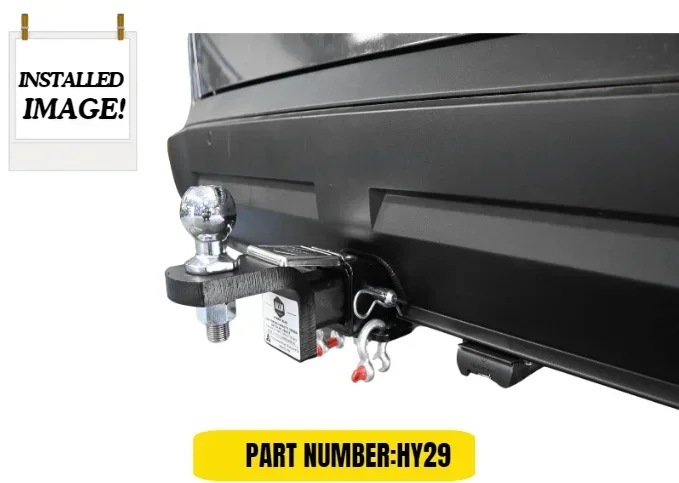
Factory tow bars come pre-installed at the dealership. They are designed specifically for your hybrid model and integrate seamlessly with the vehicle’s electrical system, braking system, and frame. Factory options also tend to preserve your warranty and offer the best hybrid towing compatibility.
Aftermarket tow bars are added later by a third-party installer. They are more affordable and offer a wider selection of styles and brands. However, they require careful installation to ensure they do not interfere with your hybrid’s sensors, battery cooling systems, or regenerative braking components.
Steps for Tow Bar Installation
Here is a general overview of what the tow bar installation process looks like:
- Verify your hybrid’s towing capacity and compatibility.
- Choose a tow bar kit rated for your hybrid’s weight class.
- Mount the tow hitch to the vehicle’s frame or designated tow points.
- Install the tow bar base plate onto the front of the vehicle.
- Connect the tow bar to the base plate and secure all bolts.
- Wire up the towing harness for trailer lights and braking signals.
- Test all connections before hitting the road.
Always follow the manufacturer’s instructions for both the tow bar kit and your hybrid vehicle. Rushing through any step can lead to safety issues on the road.
Hybrid Towing Capacity And Weight Limits
Every hybrid vehicle has a specific hybrid car towing capacity that you must respect. This number is determined by the manufacturer based on the vehicle’s frame strength, braking system, suspension, and powertrain capabilities.
Exceeding your towing limit is one of the fastest ways to damage your hybrid or create dangerous driving conditions. Here are some key weight terms to understand:
- Gross Vehicle Weight Rating (GVWR): The maximum weight your hybrid can carry, including passengers and cargo.
- Gross Combined Weight Rating (GCWR): The maximum weight of your hybrid plus the trailer and its contents.
- Tongue Weight: The downward force the trailer exerts on the tow hitch. This should be about 10-15% of the total trailer weight.
- Curb Weight: The weight of your hybrid without passengers or cargo.
When you are calculating your towing setup, always factor in the weight of the tow bar itself, any accessories, and the cargo inside your hybrid. These numbers add up quickly and can push you over your limit if you are not careful.
Quick Tips For Staying Within Towing Limits
Staying within your hybrid towing limits is simple with a little planning:
- Weigh your trailer and cargo before each trip.
- Use a public scale at truck stops or weigh stations.
- Keep a margin of safety below your maximum capacity.
- Distribute weight evenly in the trailer to avoid swaying.
- Check tire pressure on both your hybrid and the trailer.
Safety Considerations When Towing With A Hybrid
Safety should always come first when you are towing a trailer with hybrid technology. Hybrid vehicles handle differently than conventional cars when pulling a load, and understanding these differences is critical.
How Towing Affects Your Hybrid System
Towing places extra demands on every system in your hybrid. Here is what you need to know:
Battery Drain: The electric motor works harder when towing, which drains the hybrid battery faster. On long inclines or when carrying heavy loads, you may notice the battery depleting more quickly than usual.
Regenerative Braiding Impact: Hybrids use regenerative braking to recapture energy during deceleration. When towing, the extra weight changes how the brakes perform. Your regenerative braking may feel different, and the system may not recover as much energy as it normally would.
Engine Cooling: Towing generates more heat. Hybrid cooling systems are designed for normal driving loads, so sustained towing in hot weather can push the thermal limits of your powertrain.
Essential Safety Equipment
Before you tow with your hybrid, make sure you have the right equipment:
- A properly rated tow bar with all mounting hardware.
- A towing wiring harness compatible with your hybrid’s electrical system.
- Trailer brakes if your trailer exceeds a certain weight threshold.
- Side mirrors that provide clear visibility of the trailer.
- A weight distribution hitch for heavier loads.
Skimping on safety equipment is never worth the risk. A quality tow bar kit with proper wiring will keep you and others safe on the road.
Warranty And Towing: What Hybrid Owners Need To Know
One of the most common concerns among hybrid owners is whether towing will void the warranty. The answer depends on your manufacturer and how you tow.
Manufacturer Towing Policies
Most major hybrid manufacturers have clear guidelines about towing. Toyota, for example, provides specific towing instructions for each hybrid model in the owner’s manual. Ford does the same for its hybrid lineup, including the F-150 PowerBoost and Explorer Hybrid.
Here is what you need to watch for:
- Approved towing capacity: Towing within the manufacturer’s rated limit is generally covered under warranty.
- Exceeding limits: If damage occurs from towing beyond the rated capacity, the manufacturer may deny the warranty claim.
- Proper installation: Using an approved tow bar kit and following installation guidelines helps protect your warranty.
- Maintenance schedule: Towing may require more frequent maintenance, such as checking the transmission fluid and brakes.
Always read your warranty documents carefully and ask your dealer about towing before you install a tow bar. This simple step can save you from costly repairs down the road.
Hybrid Towing Impact On Long-Term Reliability
Towing regularly with a hybrid can affect long-term reliability if not managed properly. The added stress on the braking system, transmission, and battery can lead to faster wear. However, many hybrid owners tow for years without issues when they follow the manufacturer’s guidelines and stay within the rated capacity.
The key is proactive maintenance. Check your brakes, transmission fluid, and cooling system more frequently if you tow regularly. This small effort goes a long way toward keeping your hybrid running smoothly.
Expert Tips For Hybrid Tow Bar Owners
Whether you are new to towing or an experienced hybrid owner, these expert tips will help you get the most out of your setup:
Get The Right Wiring Harness
Not all tow bar wiring harnesses are the same. Hybrid vehicles have complex electrical systems that include the high-voltage battery, regenerative braking sensors, and advanced driver-assistance features. Using a generic wiring harness can cause electrical issues or interfere with these systems.
Always choose a tow bar wiring hybrid harness that is specifically designed for your hybrid model. Many manufacturers offer plug-and-play kits that match your vehicle’s wiring exactly.
Monitor Your Battery While Towing
Keep an eye on your hybrid battery level during long towing trips. If the battery drops too low, the gasoline engine will work harder to compensate, which reduces fuel efficiency and increases wear on the engine.
Some hybrid models have a towing mode or setting that optimizes the powertrain for towing. Check your owner’s manual to see if your vehicle has this feature.
Practice Safe Driving Habits
Towing changes how your hybrid handles on the road. Allow more stopping distance, take turns more slowly, and avoid sudden braking. These simple adjustments make a big difference in safety and control.
Common Mistakes Hybrid Owners Make When Towing
Even experienced drivers can make mistakes when setting up a tow bar on a hybrid. Here are the most common errors to avoid:
- Ignoring the owner’s manual: Every hybrid has specific towing instructions. Skipping this step is the number one mistake owners make.
- Overloading the trailer: It is tempting to pack everything you own into a trailer. But exceeding your hybrid towing capacity is dangerous and can cause damage.
- Using an incompatible tow bar: Not every tow bar fits every hybrid. Make sure the kit you choose is compatible with your specific model and year.
- Neglecting wiring: Faulty or incomplete wiring is a leading cause of trailer accidents. Always double-check all electrical connections.
- Skipping professional installation: While some owners install tow bars themselves, professional installation ensures everything is done safely and correctly.
Avoiding these mistakes will keep your hybrid safe and your towing experience stress-free.
Conclusion
So, can you put a tow bar on a hybrid? The answer is a clear yes for most hybrid vehicles. Whether you own a compact hybrid sedan or a full-size hybrid truck, there are tow bar options available to suit your needs.
The key is doing your homework before you buy. Check your hybrid’s towing capacity, choose the right tow bar kit, and follow the manufacturer’s installation guidelines. Pay attention to safety equipment, wiring, and warranty implications. With the right approach, hybrid vehicle towing is not only possible but can be a convenient and practical solution for your lifestyle.
Start by consulting your owner’s manual, talking to your dealer, and choosing a quality tow bar setup. You will be on the road with confidence in no time.
Frequently Asked Questions
Can all hybrid cars have a tow bar installed?
No, not all hybrid cars are designed for towing. Some models, especially compact hybrids focused on fuel efficiency, may not have a towing capacity or recommended tow points. Always check your owner’s manual or consult your dealer to confirm your specific hybrid model supports a tow bar.
Does towing with a hybrid reduce fuel economy?
Yes, towing with a hybrid will reduce fuel economy. The extra weight of the trailer forces both the gasoline engine and electric motor to work harder. You can expect a noticeable drop in miles per gallon, especially on hills or during long trips.
Is it safe to tow a trailer with a hybrid car?
It is safe as long as you stay within the manufacturer’s rated towing capacity and use proper equipment. Follow all installation guidelines, use the correct wiring harness, and practice safe driving habits. Never exceed your hybrid’s towing limits.
Will towing void my hybrid warranty?
Towing within your manufacturer’s recommended limits generally does not void the warranty. However, if damage occurs from exceeding towing limits or using improper equipment, the warranty claim may be denied. Always check your warranty documents for towing-related terms.
Do I need a special wiring harness for a hybrid tow bar?
Yes, you need a wiring harness that is compatible with your hybrid’s electrical system. Hybrid vehicles have unique electrical components, including high-voltage batteries and regenerative braking sensors. Using a generic harness can cause electrical problems or interfere with safety systems.
What is the best tow bar for a hybrid car?
The best tow bar depends on your specific hybrid model and towing needs. Factory-installed tow bars offer the best integration and warranty protection. Aftermarket options from reputable brands like Roadmaster, Draw-Tite, and Curt provide solid alternatives for most hybrid vehicles.