Can Low Coolant Cause Your Car to Shake and Vibrate
Can low coolant cause a car to shake? Yes, when your coolant level drops too low, your engine can overheat and start vibrating. A low coolant car shake is a warning sign that your cooling system needs attention right away. Ignoring it can lead to serious engine damage and expensive repairs.
Have you ever turned the key and felt your car shudder before you even pull out of the driveway? It is a scary moment, and your mind immediately starts racing through every possible cause. One question that comes up a lot is whether low coolant can make your car shake. The short answer is yes. When your coolant level drops too low, it can trigger a chain of problems that lead to engine vibrations, rough idling, and even shaking while driving.
Understanding the connection between your coolant and engine performance is important for every car owner. A low coolant car shake is not just an annoyance. It is your vehicle telling you something is wrong. In this article, we will walk through exactly why low coolant causes shaking, what other symptoms to watch for, and how to fix the problem before it turns into a costly repair.
We will also cover prevention tips so you can keep your car running smoothly. Whether you are dealing with a shaking engine right now or just want to be prepared, this guide has you covered. Let us dive in.
Key Takeaways
- Low coolant can absolutely cause your car to shake: When coolant drops, the engine overheats and vibrations follow.
- Early warning signs matter: A rising temperature gauge, steam from the hood, and rough idling are red flags you should never ignore.
- DIY refill is possible but must be done correctly: Always let the engine cool, use the right coolant type, and check for leaks.
- Prevention saves money: Regular coolant checks and flushes can prevent most low coolant problems before they start.
- Persistent shaking needs professional help: If the problem continues after refilling, you may have a head gasket or water pump issue.
- Never ignore a low coolant car shake: Driving with low coolant can cause catastrophic engine failure.
- Know your coolant type: Using the wrong coolant can cause corrosion and worsen the problem.
📑 Table of Contents
What Happens When Coolant Drops Below Safe Levels
Your car’s cooling system is designed to keep the engine at a steady temperature. Coolant flows through the engine block, absorbs heat, and carries it to the radiator where it cools down. When the coolant level drops, this whole process breaks down. The engine starts to run hot, and that heat buildup causes a range of problems, including the dreaded low coolant car shake.
The Role of Coolant in Your Engine
Coolant does more than just keep your engine from overheating. It also helps transfer heat evenly across the engine block. When the system is full and working right, your engine runs at a steady temperature, usually between 195 and 220 degrees Fahrenheit. But when the coolant level drops, hot spots develop inside the engine. These uneven temperatures cause metal parts to expand at different rates, which leads to vibrations and shaking.
Think of it like a pot of water on the stove. If the heat is too high in one spot, the water boils unevenly. Your engine works the same way. Without enough coolant to distribute heat evenly, things start to shake.
Quick Tips to Check Your Coolant Level
- Always check coolant when the engine is cold. Never open the radiator cap on a hot engine.
- Locate the coolant reservoir and look for the minimum and maximum markings.
- If the level is below the minimum mark, top it off with the recommended coolant type.
- Check for leaks around the radiator, hoses, and water pump if you notice the level dropping often.
- Keep a bottle of the right coolant in your trunk for emergencies.
How a Low Coolant Car Shake Actually Starts
Now that you understand the basics, let us look at exactly how low coolant leads to engine shaking. The process happens in stages, and catching it early can save you a lot of trouble.
The Overheating Chain Reaction
When coolant drops below the safe level, the engine begins to overheat. The temperature gauge on your dashboard starts to climb. As the engine gets hotter, the metal parts expand. Pistons, cylinders, and other components start to swell and rub against each other in ways they were never designed to. This creates friction, uneven movement, and eventually, the shaking you feel in the cabin.
This is why a low coolant car shake often comes with a hot engine. The heat is the root cause, and the shaking is the symptom. If you notice both happening at the same time, pull over safely and turn off the engine.
Why Your Engine Starts to Vibrate
There are a few specific reasons your engine vibrates when coolant is low. First, the thermostat may stick open or closed because of the heat, disrupting the flow of coolant even more. Second, the water pump struggles to circulate what little coolant remains, creating air pockets in the system. These air pockets cause cavitation, which is a tiny but rapid collapsing of bubbles that creates vibration.
Third, if the engine gets hot enough, the combustion process itself becomes uneven. The fuel does not burn the same way in every cylinder, which leads to what mechanics call an engine misfire. A misfiring engine shakes a lot, and that shaking gets worse the longer you drive.
Common Mistakes People Make When They Notice Shaking
- Ignoring the shaking and keeping driving: This is the biggest mistake. Continuing to drive on a low coolant engine can warp the cylinder head or crack the engine block.
- Topping off with water instead of coolant: Water works in a pinch, but it does not have the same heat protection as proper coolant. It also promotes rust inside the cooling system.
- Opening the radiator cap while the engine is hot: This can cause scalding coolant to spray out and burn you. Always wait for the engine to cool.
- Assuming the problem is fixed after adding coolant: If your coolant keeps dropping, there is a leak somewhere that needs professional attention.
Warning Signs Your Engine Is Shaking From Low Coolant
Your car gives you plenty of warning before a low coolant car shake turns into a serious problem. Learning to recognize these signs early can save you from a breakdown on the side of the road.
The Temperature Gauge Tells a Story
Your temperature gauge is one of the most important tools in your car. If you notice it creeping above the normal range, that is a clear sign your coolant is not doing its job. A normal temperature gauge should sit in the middle of the dial. If it starts moving toward the hot side, check your coolant level right away.
Some modern cars also have a red warning light shaped like a thermometer. If that light comes on, do not keep driving. Pull over safely and investigate the coolant level.
Other Symptoms That Point to Low Coolant
The low coolant car shake rarely comes alone. Here are other symptoms that often appear together:
- Steam or smoke from under the hood: This is a sign that coolant is leaking onto hot engine parts and boiling off.
- Sweet smell inside the car: Coolant has a slightly sweet smell. If you notice it inside your cabin, the heater core may be leaking.
- Heater not working properly: If your heater blows cold air even when set to hot, the coolant level may be too low to reach the heater core.
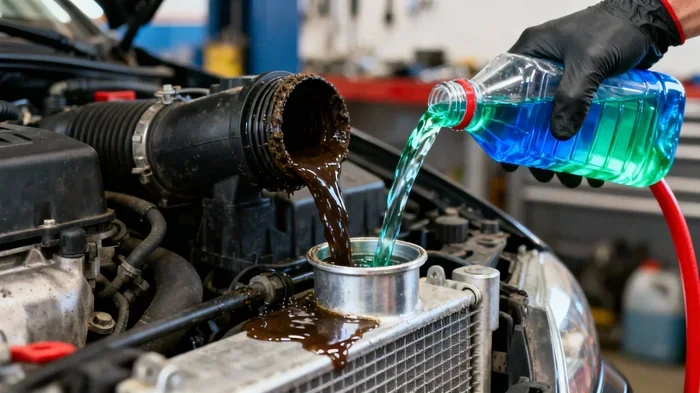
- Rusty or discolored coolant: Healthy coolant is bright green, orange, or pink. If it looks brown or rusty, it is old and needs to be flushed.
- Puddles under your car: Coolant leaks often leave bright colored puddles on your driveway or parking spot.
Expert Insight: Reading Your Car’s Warning Signals
Experienced mechanics often say that cars talk to you if you listen. A low coolant car shake is like your car raising its hand and saying, “Hey, something needs attention.” The key is to respond quickly. Many drivers ignore the early signs because the shaking seems minor at first. But small problems become big problems fast when it comes to engine cooling.
If you notice any combination of the symptoms listed above, take your car to a trusted mechanic as soon as possible. A quick inspection can catch a small leak before it turns into a blown head gasket or a cracked engine block.
Quick Tip: Keep a coolant test strip in your glove box. These inexpensive strips let you check the coolant’s pH and strength at home. If the coolant is weak or contaminated, a coolant flush can prevent many cooling system problems.
Quick Steps to Fix a Low Coolant Car Shake
If you have already confirmed that low coolant is causing your car to shake, the good news is that fixing it is often straightforward. Here is a step-by-step guide to get you back on the road safely.
Step-by-Step Coolant Refill Guide
- Park on a flat surface and turn off the engine: Let the car cool completely. This usually takes at least 30 minutes.
- Locate the coolant reservoir: This is a translucent plastic tank near the radiator. It has clear minimum and maximum lines on the side.
- Check for visible leaks: Look around the radiator, hoses, and water pump for any wet spots or drips.
- Open the reservoir cap slowly: Even on a cool engine, there may be some residual pressure. Twist the cap counterclockwise slowly to release it safely.
- Add the correct coolant: Pour a 50/50 mix of coolant and distilled water into the reservoir until it reaches the maximum line. Never use plain tap water.
- Start the engine and let it idle: Watch the temperature gauge. Make sure it stays in the normal range.
- Check for leaks again after driving: Take a short drive and then park. Look under the car for any new puddles or drips.
When to Call a Mechanic Instead of DIY
While topping off coolant is something most car owners can do themselves, there are times when you need professional help. If you notice any of the following, it is time to see a mechanic:
- The coolant level drops again shortly after refilling. This suggests a leak in the system.
- You see white smoke coming from the exhaust. This could mean coolant is leaking into the combustion chamber.
- The engine temperature stays high even after refilling the coolant.
- You notice a milky brown substance under the oil cap. This could indicate a head gasket leak.
- The low coolant car shake continues even after you have refilled the system.
Common Mistakes to Avoid When Topping Off Coolant
- Mixing different coolant types: Different coolants use different chemical compounds. Mixing them can cause a chemical reaction that creates sludge and clogs the cooling system.
- Overfilling the reservoir: Coolant expands when it heats up. Overfilling can cause pressure buildup and leaks.
- Driving immediately after refilling:Give the engine a few minutes to circulate the new coolant and reach a stable temperature.
- Ignoring the root cause: Topping off without finding the leak is like putting a bandage on a wound that needs stitches.
Preventing Low Coolant Problems Before They Start
The best way to deal with a low coolant car shake is to prevent it from happening in the first place. A little regular maintenance goes a long way toward keeping your cooling system in top shape.
Regular Maintenance Checks That Make a Difference
Make it a habit to check your coolant level once a month. It only takes a couple of minutes and can catch small problems before they grow. Here is what to do:
- Open the hood and locate the coolant reservoir.
- Look at the level against the markings on the side.
- Check the color and clarity of the coolant. It should be bright and free of debris.
- Inspect the hoses and connections for any signs of cracks, swelling, or wetness.
- Make sure the radiator cap seals properly. A loose cap can cause coolant to evaporate faster.
How Often Should You Flush Your Coolant?
Most car manufacturers recommend a coolant flush every 30,000 miles or every two to three years. However, this can vary depending on your vehicle and the type of coolant you use. Check your owner’s manual for the specific recommendation for your car.
A coolant flush removes old, contaminated fluid and replaces it with fresh coolant. This helps prevent corrosion, keeps the cooling system clean, and ensures the coolant can absorb heat effectively. If you have an older vehicle, you may need to flush more frequently.
Quick Tips for Long-Term Coolant Health
- Use distilled water when mixing coolant. Tap water contains minerals that can build up in the system over time.
- Keep a spare bottle of coolant in your trunk, especially during hot summer months.
- Watch for any puddles under your car after it has been parked overnight.
- Have a professional inspect your cooling system during every oil change.
- Replace the radiator cap every few years. A worn cap can cause pressure loss and coolant evaporation.
Expert Insight: Many mechanics say that coolant neglect is one of the top reasons for cooling system failures. A simple monthly check can add years to the life of your engine. It is one of the easiest and cheapest maintenance tasks you can do, and it pays off big time.
When a Low Coolant Car Shake Means Big Trouble
Sometimes, a low coolant car shake is more than just a low fluid problem. If left unchecked, low coolant can cause serious engine damage that costs thousands of dollars to repair. Understanding the potential consequences helps you appreciate why quick action matters so much.
Head Gasket Failure and Engine Damage
The head gasket sits between the engine block and the cylinder head. It keeps coolant, oil, and combustion gases in their proper places. When the engine overheats from low coolant, the head gasket can fail. A blown head gasket is one of the most expensive repairs a car owner can face.
Signs of a blown head gasket include white smoke from the exhaust, a milky substance in the oil, coolant loss with no visible leak, and persistent engine shaking. If you notice these symptoms, stop driving and get your car towed to a repair shop immediately.
Comparison Table: Low Coolant Shake vs Other Common Causes of Car Vibration
| Cause | Shaking Behavior | Other Symptoms | Severity |
|---|---|---|---|
| Low Coolant | Vibration at idle, worsens with driving | Rising temperature gauge, steam, sweet smell | High if ignored |
| Worn Motor Mounts | Shaking when accelerating or stopping | Engine movement visible, rubber cracks | Moderate |
| Spark Plug Issues | Rough idle, misfiring | Check engine light, poor fuel economy | Low to Moderate |
| Fuel Injector Problems | Shaking during acceleration | Hesitation, poor fuel economy | Moderate |
| Wheel Balance Issues | Vibration in the steering wheel at high speeds | Uneven tire wear | Low |
| Broken Driveshaft | Intense shaking under the car | Clunking noise, difficulty turning | High |
This comparison table shows that a low coolant car shake is different from other causes of engine vibration. The key distinguishing factor is the combination of shaking with overheating symptoms like a rising temperature gauge or steam from the hood. If you see both, coolant is likely the culprit.
Key Takeaways for Protecting Your Engine
- A low coolant car shake should never be ignored. It is a clear signal from your engine.
- Check your coolant level regularly, at least once a month.
- Address any leaks immediately. Small drips become big problems fast.
- Use the correct coolant type for your vehicle.
- If the shaking continues after refilling coolant, see a mechanic right away.
- Prevention through regular maintenance is far cheaper than repair after damage occurs.
Conclusion
A low coolant car shake is your car’s way of telling you that something needs attention. Whether it is a simple top-off or a sign of a deeper problem like a head gasket failure, the key is to respond quickly. Ignoring the shaking can lead to engine overheating, which can cause damage that costs thousands of dollars to fix.
The good news is that most low coolant problems are easy to prevent and fix. Regular checks, proper coolant type, and timely flushes keep your cooling system working the way it should. And if you ever notice the shaking along with a hot engine, steam, or a sweet smell, do not wait. Take action right away.
Your car works hard for you every day. Taking care of the cooling system is one of the simplest and most effective ways to keep it running strong for years to come. Stay on top of your coolant levels, listen to what your car is telling you, and you will avoid the worst that a low coolant car shake has to offer.
Frequently Asked Questions
Can low coolant cause a car to shake at idle?
Yes, absolutely. When coolant is low, the engine can overheat and run unevenly, which causes shaking at idle. The vibrations are often most noticeable when the car is stopped at a red light or in traffic. If you feel shaking at idle along with a rising temperature gauge, check your coolant level immediately.
How do I know if my car shake is from low coolant or something else?
The key is to look for additional symptoms. A low coolant car shake usually comes with a hot engine, steam from the hood, a sweet smell, or a temperature gauge in the red zone. If the shaking happens without any heat-related symptoms, it could be caused by worn motor mounts, spark plugs, or wheel balance issues. A mechanic can help you diagnose the exact cause.
Is it safe to drive with a low coolant car shake?
No, it is not safe. Driving with low coolant can cause the engine to overheat, which can lead to a blown head gasket, cracked engine block, or other serious damage. If you notice shaking from low coolant, pull over safely, turn off the engine, and let it cool down before checking the coolant level.
How quickly should I address a low coolant car shake?
You should address it as soon as possible. Even a short drive with low coolant can cause overheating and permanent engine damage. If you are near a safe location, pull over and check the coolant. If you cannot safely reach a repair shop, call for a tow. It is always better to be safe than sorry.
Can I use water instead of coolant to fix a low coolant car shake?
Water works in an emergency to get you to a safe location or repair shop, but it is not a long-term solution. Water does not have the same heat protection as coolant, and it can cause rust and corrosion inside the cooling system. Always use the proper coolant type recommended for your vehicle.
How often should I check my coolant level to prevent a low coolant car shake?
You should check your coolant level at least once a month. This simple habit takes just a few minutes and can catch small leaks or evaporation problems before they turn into a shaking engine. Make it part of your regular car maintenance routine, especially before long road trips or during hot weather months.