Can I Replace My Windshield Wipers Myself Right Now
Can I Replace My Windshield Wipers Myself? Yes, you absolutely can, and it is one of the easiest car maintenance tasks you will ever do. Replacing your own wiper blades takes just minutes, costs very little, and requires no special skills or tools. This guide walks you through every step, from picking the right blades to testing them on your windshield. You will learn how to save money, boost your driving safety, and keep your car in great shape all on your own.
Driving in the rain is stressful enough without your wipers leaving streaks or skipping across the glass. If you have ever squinted through a downpour hoping your wipers would do their job, you know how important it is to keep them in top shape. The good news is that Can I Replace My Windshield Wipers Myself is a question with a very simple answer: yes, you can. Thousands of drivers handle this task every weekend, and you can too. It does not matter if you are a complete beginner or a seasoned DIYer. This guide will show you exactly how to do it safely and quickly.
Replacing your own wiper blades is one of the easiest forms of car maintenance you can do at home. You do not need a mechanic, you do not need to wait for an appointment, and you do not need to spend a fortune. A new set of wiper blades costs between $15 and $50 for most vehicles. A shop might charge you double or more just for the labor. By learning how to replace them yourself, you take control of your vehicle care and save money at the same time. Let us walk through everything you need to know.
Key Takeaways
- It is simple and fast: Most people can swap out wiper blades in under 15 minutes per blade.
- You save real money: DIY replacement costs a fraction of what a shop charges.
- No special tools needed: Just your hands and the right replacement blades.
- Safety improves right away: Fresh wipers give you clear visibility in rain and snow.
- Know your blade type: Conventional, beam, and hybrid wipers each have their own attachment method.
- Avoid common mistakes: Wrong size blades and forcing connectors are the top DIY errors.
- Replace wipers regularly: Every 6 to 12 months keeps your windshield cleaning performance at its best.
📑 Table of Contents
Why You Should Replace Your Windshield Wipers Yourself
Understanding How Wiper Blades Work
Before you grab a new set of blades, it helps to understand what you are working with. Your windshield wipers are made up of a few simple parts. There is the rubber squeegee, which is the strip that actually touches the glass. There is the metal frame, which holds the rubber in place. And there is the connector, which attaches the blade to the wiper arm coming from your car.
Over time, the rubber squeegee wears out. Sun, rain, dirt, and cold temperatures all break down the rubber. When this happens, your wipers start to streak, skip, or chatter across the glass. This reduces your visibility, which is a serious safety issue. Replacing the entire blade is the fix. The good news is that the process is straightforward for almost every vehicle on the road today.
DIY auto repair like this is a great way to build confidence with your car. Once you have replaced your wipers a couple of times, you will wonder why you ever paid someone else to do it. It is a small win that reminds you that you can handle basic vehicle care on your own.
Signs Your Wipers Need Replacement
How do you know it is time to replace your wipers? Look for these clear signs:
- Streaking: Your wipers leave lines or smears on the windshield after each pass.
- Skipping: The blade lifts off the glass in certain spots and fails to make full contact.
- Squeaking: You hear a rough or squeaky sound when the wipers move.
- Splitting: You can see cracks or tears in the rubber edge of the blade.
- Chattering: The blade vibrates or bounces across the glass instead of gliding smoothly.
- Poor visibility: You struggle to see clearly during rain or when washing your windshield.
If you notice any of these issues, do not wait. Bad wipers are a driving safety hazard. They make it harder to see the road, other cars, and pedestrians. Replacing them promptly is one of the simplest ways to improve your driving safety every time you get behind the wheel.
What You Need Before You Start
Choosing the Right Wiper Blades
Not all wiper blades are the same. Before you buy replacements, you need to know the right wiper blade size for your vehicle. Most cars have different sizes for the driver side and passenger side. Some vehicles also have a smaller rear windshield wiper that needs its own replacement.
Here is how to find the correct size:
- Check your owner’s manual: It lists the exact wiper blade sizes for your vehicle.
- Measure the existing blades: Use a ruler or tape measure from the base to the tip of each blade.
- Use an online size finder: Many auto parts stores have tools on their websites where you enter your vehicle make, model, and year.
- Check the packaging: Wiper blade boxes always list compatible vehicle models.
There are three main types of wiper blades you will encounter:
- Conventional wipers: These have a visible metal frame with multiple pressure points. They are the most common and affordable type.
- Beam blade wipers: These have a sleek, frameless design that contours to the windshield curve. They provide even pressure and cleaner wipes.
- Hybrid wipers: These combine elements of both conventional and beam designs for durability and performance.
You can choose any of these types for your wiper installation. Beam blades are popular because they look clean and perform well in most conditions. OEM wiper blades (original equipment manufacturer) are another option. These are made by the same company that supplied the blades when your car was new. They fit perfectly and match the quality of your original equipment.
Tools and Materials You Will Need
The great thing about replacing wipers yourself is that you need very little. Here is your short list:
- New wiper blades (correct size for your vehicle)
- A clean cloth or microfiber towel
- Windshield washer fluid (optional, but handy)
- Gloves (optional, for keeping your hands clean)
That is it. You do not need any special tools, no screwdrivers, no pliers. Your hands are all you need. Some people like to wear gloves to keep their hands clean, but it is entirely optional.
Step-by-Step Guide to Replacing Windshield Wipers
Removing the Old Wiper Blades
Now let us get into the actual process. Follow these steps carefully, and you will have your old blades off in no time.
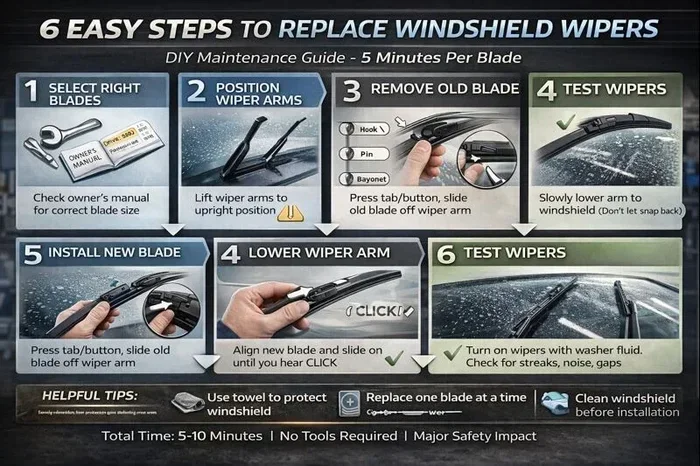
- Lift the wiper arm: Gently lift the wiper arm away from the windshield until it stands upright. Be careful not to let it snap back onto the glass, as this can crack the windshield.
- Locate the connector: Look at the point where the wiper blade attaches to the wiper arm. You will see a small tab, button, or latch holding it in place.
- Release the connector: Press or slide the tab or button to unlock the blade. Different connectors work differently, so check the instructions that come with your new blades.
- Slide the old blade off: Once the connector is released, slide the old blade down the wiper arm and away from the vehicle.
- Repeat for the other blade: Follow the same steps for the second wiper.
The blade connector is the key part here. It is the mechanism that locks the blade onto the arm. There are several common connector types, including side-lock, bayonet, and hook-style. Most replacement blades come with adapters that fit all major connector types, so you do not need to worry about compatibility.
Installing the New Wipers
With the old blades removed, you are ready to put the new ones on. This part is just as easy.
- Align the new blade: Hold the new wiper blade so that the connector matches the wiper arm.
- Slide it onto the arm: Push the blade up the wiper arm until you hear or feel it click into place.
- Confirm the lock: Gently tug on the blade to make sure it is securely attached. It should not wiggle or slide off.
- Repeat for the other blade: Install the second new wiper the same way.
- Lower the arms gently: Carefully lower both wiper arms back down onto the windshield.
One important tip: do not let the wiper arm snap back onto the windshield on its own. The spring tension on the arm is strong, and a sudden impact can chip or crack your windshield. Always guide it down gently by hand.
Testing Your New Wipers
Once both new blades are installed, it is time to test them. Turn on your vehicle and activate the wipers. Use your windshield washer fluid to spray the glass. Watch how the new blades move across the windshield.
You should see smooth, even wipes with no streaks or skipping. If everything looks good, you are done. You just replaced your windshield wipers yourself, and it probably took less time than you expected.
If you notice any issues, double-check that the blades are fully seated on the connector. Sometimes a blade just needs a slight adjustment to lock in properly.
Common Mistakes to Avoid
Even though this is a simple task, there are a few mistakes that people commonly make. Avoiding these will save you time and frustration.
- Buying the wrong size: Always double-check the size before you buy. Even one inch off can cause the blade to not cover the full windshield properly.
- Forcing the connector: If the blade does not click into place easily, do not force it. Check that you have the correct adapter for your wiper arm type.
- Letting the arm snap back: As mentioned above, this can damage your windshield. Always lower the arm by hand.
- Forgetting the rear wiper: If your vehicle has a rear windshield wiper, do not forget to replace it too. It gets worn out just as fast.
- Touching the rubber squeegee: The oils from your fingers can shorten the life of the rubber. Handle the blade by the frame whenever possible.
- Waiting too long to replace: Do not wait until your wipers are completely falling apart. Replace them at the first sign of streaking or poor performance.
These common mistakes are easy to avoid when you know what to look for. Taking a few extra seconds to check your work makes a big difference in how well your new wipers perform.
How Often Should You Replace Your Wiper Blades
A good rule of thumb is to replace your wiper blades every 6 to 12 months. However, this depends on several factors.
If you live in a harsh climate with lots of sun, rain, snow, or ice, your wipers will wear out faster. The UV rays from the sun break down the rubber over time. Cold temperatures make the rubber brittle, and heavy rain or snow puts extra demand on the blades. If you notice your wipers struggling after just a few months, do not hesitate to replace them sooner.
Even if your wipers look fine, it is a good idea to inspect them every few months. Run your finger along the rubber edge. If you feel any roughness, cracks, or missing chunks, it is time for a replacement. Staying on top of this simple maintenance task keeps your windshield cleaning performance reliable all year round.
Many drivers replace their wipers twice a year, once before the rainy season and once before winter. This is a smart routine that ensures you always have clear visibility when you need it most.
When to Call a Professional Instead
Replacing wiper blades is a straightforward DIY job for most vehicles. But there are situations where it makes sense to seek professional help.
If your wiper arms are bent, broken, or not returning to the windshield properly, a mechanic can address those issues. If you have a vehicle with a complicated wiper system, such as a luxury model with hidden wipers or special mounting mechanisms, a professional can handle the job quickly and safely.
Also, if you are uncomfortable working around your windshield, there is no shame in letting a professional do it. Many quick-lube shops and dealerships offer wiper replacement for a small fee. The wiper replacement cost for labor is usually between $10 and $20, which is still much cheaper than having a mechanic handle other repairs.
But for the vast majority of vehicles, Can I Replace My Windshield Wipers Myself is a resounding yes. You have the skills, the tools, and the ability to do it right now.
Quick Tips for the Best Results
- Clean your windshield when you replace your wipers. Fresh blades on a dirty glass still leave streaks.
- Lift the wiper arm away from the windshield during winter months. This prevents the rubber from freezing to the glass.
- Wipe the rubber squeegee with a damp cloth occasionally to remove built-up grime and extend blade life.
- Keep spare wiper blades in your garage or trunk so you are always ready for a quick swap.
- Use windshield washer fluid regularly. Clean fluid helps the blades glide smoothly and keeps the glass free of debris.
These small habits go a long way. They keep your wipers performing at their best and help you get the most miles out of every replacement.
Conclusion
Can I Replace My Windshield Wipers Myself? The answer is a clear and confident yes. This is one of the simplest, most rewarding pieces of car maintenance you can do on your own. It takes just a few minutes, costs very little, and immediately improves your visibility and safety on the road.
You now know how to choose the right blades, remove the old ones, install the new ones, and avoid common mistakes. You understand how often to replace them and when to seek professional help if needed. With this knowledge, you are fully equipped to handle this task yourself, right now.
Do not let worn-out wipers compromise your driving experience. Grab a new set of blades, follow the steps in this guide, and enjoy clear, streak-free visibility the next time the rain starts to fall. Your windshield and your wallet will thank you.
Frequently Asked Questions
Do I need any special tools to replace my windshield wipers myself?
No special tools are needed at all. You only need your hands and the correct replacement wiper blades. The entire process is done by hand, making it one of the easiest DIY car maintenance tasks you can tackle.
How long does it take to replace windshield wipers yourself?
Most drivers complete the replacement in under 10 minutes for both blades. Once you have done it a couple of times, you will likely finish even faster. It is a quick and satisfying task that delivers immediate results.
Can I mix different types of wiper blades on my car?
Yes, you can use different blade types on the driver and passenger sides if they fit correctly. For example, you might use a beam blade on one side and a conventional blade on the other. Just make sure the size and connector type match for each position.
What is the average wiper replacement cost for DIY?
A pair of wiper blades typically costs between $15 and $50, depending on the brand and type. This is far less than what a shop would charge for the same service. You also save on labor, which makes DIY replacement a smart financial choice.
How do I know which wiper blade connector my car uses?
Your vehicle owner’s manual lists the connector type. You can also look at the existing blade to see how it attaches to the wiper arm. Most replacement blades come with universal adapters that fit all major connector styles, so compatibility is rarely an issue.
Is it safe to replace windshield wipers on a parked car?
Yes, it is perfectly safe as long as the car is parked on a flat surface and the engine is off. Make sure the wiper arms are lifted gently and never let them snap back onto the windshield. This prevents any risk of damaging the glass or the wiper mechanism.