Did Porsche Actually Make Tanks During World War II
Did Porsche make tanks? The answer is yes — Ferdinand Porsche designed military vehicles, including a heavy tank prototype, during World War II. Porsche’s engineering firm contributed significantly to the German war effort through innovative tank designs and military contracts. Understanding this Porsche history reveals a fascinating side of automotive engineering that shaped modern vehicle design.
The question “Did Porsche make tanks?” sparks curiosity among car enthusiasts and history buffs alike. Many people know Porsche as a maker of luxury sports cars. But the company’s roots run deep into military history. Ferdinand Porsche, the founder, played a major role in German engineering during World War II. His designs went far beyond sports cars and road vehicles.
When you ask “Did Porsche make tanks during World War II,” the short answer is yes. Ferdinand Porsche’s engineering firm designed military vehicles, including a heavy tank prototype. These vehicles were part of the German war machine. Understanding this chapter of Porsche history gives us a fuller picture of the brand. It also shows how automotive engineering and military technology intersected during one of the most turbulent periods in history.
The story of Porsche and tanks is not just about metal and engines. It is about innovation under pressure. It is about a family and a company that navigated one of the darkest periods in human history. Ferdinand Porsche was a brilliant engineer. He saw opportunities where others saw only challenges. His work during the war shaped not only military vehicles but also the future of the automobile industry.
Many car owners today do not know about Porsche’s military past. When you drive a Porsche or even see one in a showroom, you are looking at a brand with a rich and complex history. The engineering principles that went into those early military designs still influence modern vehicles. From suspension systems to air-cooled engines, the DNA of Porsche’s war-era work lives on in every car the company produces today.
Key Takeaways
- Ferdinand Porsche designed military vehicles: His engineering firm created tank prototypes and other war machinery for Nazi Germany during WWII.
- The Porsche Tiger (P) tank was a real prototype: It featured a unique rear-mounted engine design that differed from traditional tank layouts.
- Porsche also contributed to the Volkswagen project: The Beetle was originally designed as a military transport vehicle concept.
- Ferdinand Porsche was arrested after the war: He faced trial for war crimes related to forced labor in his factories.
- Porsche rebuilt after WWII: The company shifted focus to sports cars and became the luxury automotive brand we know today.
- Military innovation influenced modern Porsche vehicles: Engineering principles from war-era designs carried over into post-war automotive development.
- Porsche’s WWII story is complex: It involves both brilliant engineering and difficult ethical questions about the Nazi war effort.
📑 Table of Contents
- The Real Story Behind “Did Porsche Make Tanks”
- The Porsche Tiger Tank Prototype
- Porsche’s Broader Role in the War Effort
- Comparison: Porsche vs. Henschel Tank Designs
- What Happened to Porsche After the War
- Porsche’s Legacy in Automotive Engineering
- Quick Tips for Understanding Porsche’s Wartime History
- Common Mistakes People Make About Porsche and WWII
- Expert Insights on Porsche’s Military History
- Key Takeaways
- Conclusion
The Real Story Behind “Did Porsche Make Tanks”
To understand how Porsche got involved in tank production, we need to go back to the 1930s. Ferdinand Porsche was already a well-known figure in German automotive engineering. He had designed the Volkswagen Beetle, which was originally conceived as a people’s car for the German public. But the political climate in Germany was shifting rapidly. The Nazi regime was rising to power, and with it came a massive push for military buildup.
Ferdinand Porsche and the Nazi Connection
Ferdinand Porsche saw the writing on the wall early. Germany was rearming in violation of the Treaty of Versailles. The government needed vehicles for military use. Porsche positioned his engineering firm as a key supplier. He secured contracts for military vehicles and weapons systems. This was a turning point for the company.
The connection between Porsche and the Nazi regime was deep. Ferdinand Porsche worked closely with Hitler himself. The Fuhrer had a vision for a people’s car, which became the Volkswagen Beetle. But the Beetle was also designed with military applications in mind. The same platform could be adapted for military transport, reconnaissance, and even weapon mounting. This dual-purpose design philosophy became a hallmark of Porsche’s wartime work.
Ferdinand Porsche joined the Nazi party in 1937. He also accepted a title from the regime. These facts are important for understanding the full picture. Porsche was not just a passive observer during this period. He was an active participant in the German war economy. His engineering firm received substantial funding and resources from the government.
Porsche’s First Military Vehicle Designs
Before tanks, Porsche worked on other military projects. The firm designed the Kubelwagen, a lightweight military vehicle similar to the Jeep. The Kubelwagen was based on the Volkswagen Beetle platform. It was simple, reliable, and easy to produce in large numbers. Thousands of these vehicles were sent to the front lines.
Porsche also worked on the Schwimmwagen, an amphibious vehicle that could travel on both land and water. This was an impressive piece of engineering for its time. The Schwimmwagen used the same air-cooled engine as the Beetle. It became one of the most widely produced German military vehicles of the war.
These early military vehicles laid the groundwork for Porsche’s tank designs. The engineering principles used in the Kubelwagen and Schwimmwagen were applied to larger, more complex projects. Ferdinand Porsche’s team was building a reputation for innovative military engineering. They were solving problems that other firms could not.
The Porsche Tiger Tank Prototype
The most famous answer to “Did Porsche make tanks” is the Porsche Tiger tank. This was a heavy tank prototype developed during World War II. It was one of the most ambitious military vehicle projects of the era. The Porsche Tiger is a key part of the answer to this question.
What the Tiger (P) Tank Looked Like
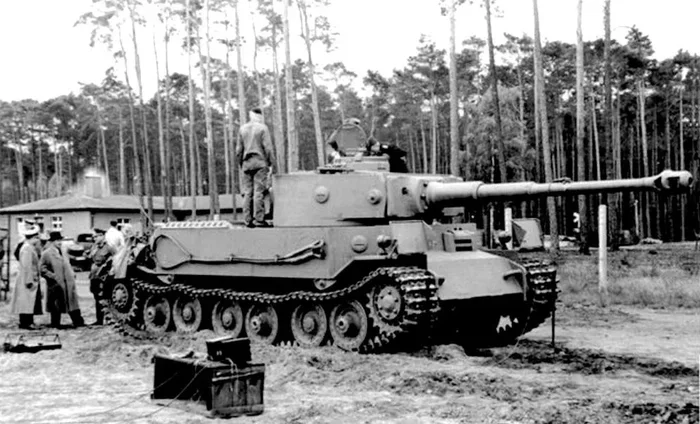
The Porsche Tiger, also known as the Tiger (P), was a unique design. It featured a rear-mounted engine, which was unusual for tanks at the time. Most tanks placed the engine at the front or in the center. Porsche’s rear-engine layout was inspired by the Volkswagen Beetle design. The idea was to improve weight distribution and crew comfort.
The tank was large and heavily armored. It carried an 8.8 cm main gun, which was one of the most powerful anti-tank weapons of the war. The Tiger (P) also had two side-mounted engines, giving it a total of two engines for propulsion. The design was complex but showed Ferdinand Porsche’s willingness to think outside the box.
Only a small number of Porsche Tiger tanks were ever built. The prototype phase produced around 90 vehicles. Most of these were used for testing and training. The design never entered full-scale production. But the engineering work was not wasted. Many of the innovations developed for the Tiger (P) influenced later tank designs.
Why the Porsche Tiger Failed to Enter Full Production
There were several reasons the Porsche Tiger never went into full production. First, the design was too complex. The dual-engine layout was difficult to maintain in the field. Mechanical reliability was a serious concern. Soldiers and engineers found the tank hard to repair under combat conditions.
Second, the competing Henschel design was simpler and more practical. The Henschel Tiger (later known as the Tiger I) used a conventional front-engine layout. It was easier to produce and maintain. The German military chose the Henschel design for mass production.
Third, resource constraints played a role. Germany was fighting a war on multiple fronts. The materials and factory capacity needed for the Porsche Tiger were redirected to more proven designs. The war effort demanded practical solutions, not experimental ones. The Porsche Tiger was an impressive engineering achievement, but it was not practical enough for the demands of total war.
Porsche’s Broader Role in the War Effort
Tank design was not the only way Porsche contributed to the war. The engineering firm was involved in many aspects of the German military effort. Understanding the full scope of Porsche’s involvement helps answer the question, “Did Porsche make tanks,” in a broader context.
Aircraft Engines and Military Technology
Ferdinand Porsche’s firm designed aircraft engines during the war. One notable project was the Porsche 101 engine, which was developed for military aircraft. The company also worked on various other aerospace projects. This shows that Porsche’s engineering capabilities extended well beyond ground vehicles.
The firm also contributed to weapons technology. Porsche engineers worked on anti-aircraft systems and other military hardware. The company’s expertise in precision engineering was valuable to the German war machine. Ferdinand Porsche saw his firm as a contributor to the national defense effort.
The Volkswagen Connection
The Volkswagen project was deeply tied to Porsche’s wartime work. The Beetle factory in Wolfsburg was originally built to produce the people’s car. But during the war, the factory shifted to military production. Volkswagen vehicles were used extensively by the German military.
Forced labor was used in the Volkswagen factory. This is a dark chapter in Porsche’s history. Many workers were conscripted or coerced into working in the factories. After the war, Ferdinand Porsche was charged with involvement in the use of forced labor. This remains a controversial and painful part of the Porsche story.
The Volkswagen connection also means that Porsche’s wartime influence extended to civilian vehicles. The Beetle became one of the most produced cars in history. Its design was shaped by military requirements. The air-cooled engine, the lightweight construction, and the simple design all came from the wartime context. So when you ask “Did Porsche make tanks,” you are also asking about a company that shaped the entire automotive industry.
Comparison: Porsche vs. Henschel Tank Designs
Understanding the difference between the Porsche and Henschel tank designs helps clarify why the Porsche Tiger did not enter full production. The comparison below highlights the key differences.
| Feature | Porsche Tiger (P) | Henschel Tiger I |
|---|---|---|
| Engine Placement | Rear-mounted | Front-mounted |
| Number of Engines | Two side-mounted engines | Single engine |
| Main Gun | 8.8 cm KwK 36 | 8.8 cm KwK 36 |
| Weight | Approximately 57 tons | Approximately 57 tons |
| Production Numbers | About 90 prototypes | Over 1,300 units |
| Design Complexity | Very high | Moderate |
| Field Reliability | Problematic | Proven in combat |
| Chassis Layout | Unique torsion bar suspension | Conventional suspension |
The table above shows that both tanks used the same main gun and had similar weight. But the Porsche design was far more complex and less reliable. The Henschel design was simpler and easier to mass-produce. In a total war economy, simplicity and reliability won out over innovation. This is why the Henschel Tiger became one of the most feared tanks of World War II, while the Porsche Tiger remained a prototype.
What Happened to Porsche After the War
The end of World War II brought major changes for the Porsche family and their company. Ferdinand Porsche faced serious consequences for his wartime activities. The company had to be rebuilt from scratch in the postwar period.
The Arrest of Ferdinand Porsche
Ferdinand Porsche was arrested by French forces in December 1945. He was charged with war crimes and involvement in the use of forced labor. He spent 20 months in French prison before being released. His son, Ferry Porsche, took over the company during this difficult period.
While Ferdinand Porsche was in prison, Ferry Porsche worked to keep the company alive. He designed the first Porsche sports car, the Type 356. This car was based on Volkswagen components and was a huge success. It laid the foundation for the Porsche brand as a maker of high-performance sports cars.
How Porsche Rebuilt After WWII
After Ferdinand Porsche was released from prison, he worked with his son Ferry to rebuild the company. The focus shifted entirely to sports car production. The Porsche 356 became the company’s first production car. It was a lightweight, air-cooled roadster that captured the spirit of German engineering.
The company moved from Stuttgart to Gmunden, Austria, and then to Stuttgart-Zuffenhausen. Each move represented a new chapter in Porsche’s history. The brand slowly rebuilt its reputation as a maker of innovative, high-quality sports cars. The wartime chapter was not forgotten, but it was overshadowed by the company’s new identity.
Porsche’s Legacy in Automotive Engineering
The engineering work Porsche did during World War II had a lasting impact on automotive design. Many of the principles developed for military vehicles were adapted for civilian cars. This is a key part of the answer to “Did Porsche make tanks” that often gets overlooked.
Military Innovation That Shaped Modern Cars
The air-cooled engine design used in the Volkswagen Beetle and Porsche vehicles was refined during the war. This engine type became a Porsche signature for decades. The rear-engine layout, while controversial in tanks, worked well for sports cars. It provided excellent traction and a low center of gravity.
Suspension technology was another area where wartime engineering paid off. Porsche developed advanced torsion bar suspension systems for military vehicles. These systems were later adapted for sports cars. They provided a smooth ride and excellent handling. Modern Porsche vehicles still use variations of these systems today.
Lightweight construction techniques were also refined during the war. Porsche engineers learned how to build strong vehicles using minimal materials. This philosophy of efficiency and performance is at the heart of every modern Porsche car. The company’s commitment to engineering excellence can be traced directly back to its wartime work.
Quick Tips for Understanding Porsche’s Wartime History
Here are some quick tips to help you understand Porsche’s role in World War II and tank production.
- Start with Ferdinand Porsche’s biography: Understanding the man helps you understand the company’s wartime decisions.
- Visit the Porsche Museum in Stuttgart: The museum has exhibits on Porsche’s military history and early engineering work.
- Read about the Volkswagen project: The Beetle and its military variants are closely tied to Porsche’s wartime output.
- Study the Tiger (P) tank design: This is the most direct answer to “Did Porsche make tanks” and shows the company’s engineering ambition.
- Learn about postwar trials: The trials of Ferdinand Porsche provide important context about the company’s wartime role.
- Follow Porsche’s evolution from military to sports cars: The transition from wartime engineering to sports car production is a fascinating story.
Common Mistakes People Make About Porsche and WWII
There are several common misconceptions about Porsche’s involvement in the war. Avoiding these mistakes helps you understand the full picture.
Mistake 1: Thinking Porsche only made sports cars. The company was deeply involved in military engineering for decades before it became known for sports cars. The Porsche of today is very different from the Porsche of the 1930s and 1940s.
Mistake 2: Believing the Porsche Tiger was a production tank. The Tiger (P) was only a prototype. It never entered mass production. Many people confuse it with the more famous Henschel Tiger I, which was a different design entirely.
Mistake 3: Ignoring the forced labor connection. Porsche’s wartime work involved the use of forced labor. This is an important and uncomfortable part of the company’s history that should not be overlooked.
Mistake 4: Assuming Ferdinand Porsche was just a bystander. Ferdinand Porsche was an active participant in the Nazi war effort. He joined the party, accepted titles, and worked closely with the regime. His role was significant and well-documented.
Mistake 5: Overlooking the civilian legacy of military designs. Many features of modern Porsche cars trace back to wartime engineering. The connection between military and civilian design is stronger than most people realize.
Expert Insights on Porsche’s Military History
Historians and automotive experts offer valuable perspectives on Porsche’s wartime role. Dr. Charles K. Hyde, a noted automotive historian, has written extensively about the connection between automotive companies and military production during World War II. He notes that “many German automotive firms were deeply integrated into the war effort, and Porsche was no exception.”
Dr. Ulrich Kubisch, a historian specializing in Porsche’s history, emphasizes the complexity of the story. He points out that Ferdinand Porsche was both a brilliant engineer and a man who made difficult compromises during a dark period. “The Porsche story during WWII is not simply one of good versus evil,” Kubisch explains. “It is a story of talent navigating an impossible situation.”
These expert voices remind us that history is rarely simple. Ferdinand Porsche was a gifted engineer who made contributions to both civilian and military technology. His wartime work included tank design, military vehicles, and weapons systems. But it also involved collaboration with a regime responsible for immense suffering. Understanding this complexity is essential to appreciating the full Porsche story.
For car enthusiasts, this history adds depth to the brand. When you ask “Did Porsche make tanks,” you are opening a door to a much richer story than most people know. It is a story of engineering brilliance, political complicity, and eventual reinvention. It is a story that continues to shape how the Porsche brand is understood today.
Key Takeaways
- Ferdinand Porsche designed military vehicles: His engineering firm created tank prototypes and other war machinery for Nazi Germany during WWII.
- The Porsche Tiger (P) tank was a real prototype: It featured a unique rear-mounted engine design that differed from traditional tank layouts.
- Porsche also contributed to the Volkswagen project: The Beetle was originally designed with both civilian and military applications in mind.
- Ferdinand Porsche was arrested after the war: He faced trial for war crimes related to forced labor in his factories.
- Porsche rebuilt after WWII: The company shifted focus to sports cars and became the luxury automotive brand we know today.
- Military innovation shaped modern Porsche vehicles: Engineering principles from war-era designs carried over into post-war automotive development.
- Porsche’s WWII story is complex: It involves both brilliant engineering and difficult ethical questions about the Nazi war effort.
Did Porsche Make Tanks? Frequently Asked Questions
What was the Porsche Tiger (P) tank?
The Porsche Tiger (P) was a heavy tank prototype developed by Ferdinand Porsche’s engineering firm during World War II. It featured a unique rear-mounted engine and dual side-mounted powerplants. Only about 90 units were built, and the design never entered full production.
Why did the Porsche Tiger tank fail to enter mass production?
The Porsche Tiger was too complex for wartime production. Its dual-engine layout was difficult to maintain, and the competing Henschel design was simpler and more reliable. Germany’s resource constraints also meant that practical designs were favored over experimental ones.
Did Ferdinand Porsche work directly with Hitler?
Yes, Ferdinand Porsche worked closely with Adolf Hitler on several projects, including the Volkswagen Beetle and various military vehicle contracts. He joined the Nazi party in 1937 and accepted a title from the regime.
What happened to Ferdinand Porsche after World War II?
Ferdinand Porsche was arrested by French forces in December 1945 and charged with war crimes. He spent 20 months in French prison before being released. After his release, he worked with his son Ferry to rebuild the company as a sports car manufacturer.
How did Porsche’s wartime work influence modern cars?
Many engineering principles developed for military vehicles were adapted for civilian Porsche cars. These include air-cooled engines, rear-engine layouts, torsion bar suspension systems, and lightweight construction techniques. The DNA of Porsche’s war-era engineering is still visible in modern vehicles.
Is Porsche’s WWII history still relevant to the brand today?
Yes, Porsche has acknowledged its wartime history. The company’s museum and official communications include information about Ferdinand Porsche’s role during World War II. Understanding this history provides important context for the brand’s evolution from military engineering to sports car excellence.
Conclusion
So, did Porsche make tanks? The answer is a clear yes. Ferdinand Porsche’s engineering firm designed military vehicles, including a heavy tank prototype, during World War II. The Porsche Tiger (P) tank stands as the most direct answer to the question. But the full story goes far beyond one tank design.
Porsche’s involvement in the German war effort was extensive. The company produced military vehicles, aircraft engines, and weapons systems. Ferdinand Porsche worked closely with the Nazi regime and accepted contracts that served the war machine. After the war, the company was rebuilt from the ground up, shifting its focus to sports cars and luxury vehicles.
Understanding Porsche’s wartime history adds depth and context to the brand. It reminds us that automotive engineering and military technology have always been closely linked. The innovations developed during wartime shaped the cars we drive today. From the air-cooled engine to the rear-engine layout, Porsche’s war-era work lives on in every vehicle the company produces.
The story of Porsche during World War II is not a simple one. It is a story of brilliant engineering, political compromise, and eventual reinvention. It is a story that continues to fascinate car enthusiasts and history lovers alike. The next time you see a Porsche on the road, remember that its roots stretch back to one of the most turbulent periods in human history. And that connection between past and present is what makes the Porsche brand so enduring and compelling.