Can You Jump a Motorcycle With a Car Without Damage
Yes, you can jump a motorcycle with a car, but you must do it the right way to avoid costly damage. The key difference lies in the battery size and electrical systems. A motorcycle battery is much smaller than a car battery, and connecting them incorrectly can fry the bike’s electrical components. This guide walks you through every step safely, so you can get back on the road without worry.
There is nothing worse than turning the key on your motorcycle and hearing nothing but silence. You are standing in the driveway, late for work, with a dead battery and no clue what to do. Your car is right there. So the question hits you fast: can you jump a motorcycle with a car without damage?
The short answer is yes. But the longer answer comes with a few important warnings. Jump-starting a motorcycle with a car is not the same as jump-starting a car with another car. The electrical systems are different, and the stakes are higher for your bike. One wrong move and you could fry the circuit board, fry the regulator rectifier, or even destroy the battery entirely.
This article breaks down everything you need to know. We will cover how the process works, the risks involved, step-by-step instructions, common mistakes to avoid, and better alternatives you can use instead. Whether you are a new rider or a seasoned veteran, this guide will help you handle a dead motorcycle battery safely and confidently.
Key Takeaways
- It is possible: You can jump-start a motorcycle using a car, but the process requires extra care due to voltage and amperage differences.
- Turn off the car engine: Running car engines create a higher voltage output that can damage a motorcycle’s delicate electrical system.
- Connect cables in the right order: Positive to positive, negative to a metal ground on the motorcycle, not the battery terminal.
- Avoid common mistakes: Reverse polarity, leaving the car running, and ignoring battery condition are the top causes of damage.
- Better alternatives exist: Portable jump starters and battery chargers are safer, more convenient options for motorcycle owners.
- Cold weather matters: Low temperatures weaken motorcycle batteries faster, making jump-starts more common in winter months.
- Know when not to jump: Damaged batteries, leaking fluids, or old batteries should be replaced, not jump-started.
📑 Table of Contents
- Understanding How Jump-Starting Works
- Can You Jump a Motorcycle With a Car Without Damage?
- Step-by-Step Guide to Jump-Starting a Motorcycle With a Car
- Common Mistakes That Cause Damage
- When You Should NOT Use a Car to Jump a Motorcycle
- Better Alternatives to Jump-Starting With a Car
- Preventing Dead Motorcycle Batteries
- Key Takeaways
Understanding How Jump-Starting Works
What Is Jump-Starting, Exactly?
Jump-starting means using an external power source to crank your engine when your battery is too weak to do it alone. The external source sends a burst of energy through the cables to your dead battery. That burst is enough to turn the starter motor and fire up the engine. Once the engine is running, the alternator takes over and recharges the battery.
For motorcycles, this process works the same way in principle. But the devil is in the details. Motorcycles use much smaller batteries than cars. A typical motorcycle battery is 12 volts but has a lower cold cranking amp (CCA) rating. A car battery, on the other hand, is also 12 volts but delivers far more amps. That difference is where the risk comes in.
How Car and Motorcycle Batteries Differ
Here is a quick look at the key differences between car batteries and motorcycle batteries:
- Size: Car batteries are physically much larger than motorcycle batteries. A car battery can weigh 40 pounds or more, while a motorcycle battery might weigh 3 to 10 pounds.
- Amperage: Car batteries deliver 400 to 600 amps during a jump-start. Motorcycle batteries need only 100 to 200 amps. That is a huge gap.
- Chemistry: Many motorcycles use AGM (absorbed glass mat) batteries, while cars typically use standard lead-acid batteries. Some modern motorcycles use lithium-ion batteries, which are even more sensitive.
- Electrical Load: A motorcycle has fewer electrical components, but the ones it has are more sensitive to voltage spikes.
These differences mean you cannot treat a motorcycle jump-start the same way you would a car jump-start. The car battery has much more power than the motorcycle needs, and that extra power can cause problems if you are not careful.
Can You Jump a Motorcycle With a Car Without Damage?
The Voltage Difference Problem
Here is the core issue. Both car batteries and motorcycle batteries are rated at 12 volts. But the voltage output from a running car alternator can spike above 14 volts. When you connect a running car to a motorcycle, that spike can push more voltage into the bike’s electrical system than it was designed to handle.
Motorcycle regulators and rectifiers are built to manage a specific range of voltage. When that range is exceeded, these components can fail. A failed regulator rectifier means a failed charging system. And a failed charging system means your motorcycle will not stay running.
So can you jump a motorcycle with a car without damage? Yes, but only if you follow the right precautions. The most important one is turning the car engine off before connecting the cables.
When It Is Safe to Use a Car
Using a car to jump-start a motorcycle is safe when you do it correctly. Here are the conditions where it works well:
- The car battery is in good condition and fully charged.
- The motorcycle battery is 12 volts and in decent shape (not cracked, leaking, or bulging).
- Both vehicles are turned off before connecting cables.
- You follow the correct cable connection order.
- The motorcycle is in neutral with the kill switch off.
Under these conditions, the jump-start process is straightforward and low-risk. The key is discipline. Do not rush. Do not skip steps. And never let the car engine run while the cables are connected to the motorcycle.
Step-by-Step Guide to Jump-Starting a Motorcycle With a Car
Follow these steps carefully every time. Do not improvise. The order matters, and skipping a step can cause real damage to your motorcycle.
Step 1: Position the Vehicles
Park the car and motorcycle close enough that the jumper cables can reach both batteries. But do not let the two vehicles touch each other. Turn both engines off. Put the car in park and the motorcycle in neutral.
Step 2: Identify the Terminals
Look at both batteries. You need to find the positive terminal (marked with a + or red) and the negative terminal (marked with a – or black). On some motorcycles, the battery is hidden under a seat or side panel. You may need to remove a cover to access it.
Step 3: Connect the Red Cable to the Motorcycle
Attach the red jumper cable clamp to the motorcycle battery positive terminal. Make sure the clamp grips the metal post firmly. No loose connections.
Step 4: Connect the Red Cable to the Car
Attach the other red clamp to the car battery positive terminal. Again, make sure it is tight and secure.
Step 5: Connect the Black Cable to the Car
Attach the black clamp to the car battery negative terminal.
Step 6: Connect the Black Cable to the Motorcycle
Here is where most people make a mistake. Do not attach the black clamp directly to the motorcycle battery negative terminal. Instead, clamp it to an unpainted metal part of the motorcycle engine or frame. This is called grounding. It reduces the risk of sparking near the battery, which could ignite hydrogen gas.
Step 7: Start the Car
Turn the car key to the on position. Do not start the car engine yet. Wait 30 to 60 seconds. This gives the motorcycle battery a chance to absorb some charge from the car battery.
Step 8: Start the Motorcycle
Now try starting the motorcycle. If it turns over and fires up, great. Let it idle for a few minutes. If it does not start, wait another minute and try again. Do not keep cranking for more than 5 to 10 seconds at a time. Overcranking can drain the car battery and stress the motorcycle starter.
Step 9: Disconnect the Cables in Reverse Order
Once the motorcycle is running, remove the cables in the reverse order you put them on:
- Black clamp from the motorcycle frame
- Black clamp from the car battery
- Red clamp from the car battery
- Red clamp from the motorcycle battery
Let the motorcycle run for at least 15 to 20 minutes after the jump. This allows the alternator to recharge the battery. If the battery was completely dead, you may need to ride the motorcycle for a while to fully recharge it.
Quick Tip: Keep a pair of jumper cables in your motorcycle saddlebag at all times. Even if you never need to jump-start with a car, having cables means you can accept a jump from another rider or a good Samaritan on the road.
Common Mistakes That Cause Damage
Most damage from jump-starting a motorcycle with a car comes from simple, avoidable errors. Here are the mistakes to watch out for:
Mistake 1: Leaving the Car Engine Running
This is the number one cause of motorcycle damage during a jump-start. A running car alternator produces more than 12 volts. That excess voltage flows through the cables into the motorcycle. The regulator rectifier on the motorcycle is not designed to handle that much input. It can burn out, and replacing it is expensive.
Mistake 2: Reverse Polarity
Connecting the red cable to the negative terminal and the black cable to the positive terminal is a surefire way to cause a short circuit. This can blow fuses, damage the CDI box (capacitor discharge ignition), and in worst cases, start a fire. Always double-check your connections before making any contact.
Mistake 3: Connecting the Black Cable to the Motorcycle Battery Terminal
As mentioned earlier, always ground the black cable to the motorcycle frame or engine block, not the battery terminal. Sparking near the battery can ignite gas fumes, especially if the battery is old or damaged.
Mistake 4: Cranking the Motorcycle for Too Long
If the motorcycle does not start after two attempts, stop. Let the battery rest for a few minutes before trying again. Constant cranking drains both batteries and can overheat the starter motor.
Mistake 5: Ignoring a Damaged Battery
If the motorcycle battery is cracked, leaking, or swollen, do not attempt a jump-start. A damaged battery can explode when subjected to a charge. Replace the battery first, then start the motorcycle.
Expert Insight: According to motorcycle mechanics, the most common electrical failure after a car jump-start is a blown regulator rectifier. This happens because the car was left running during the process. Always turn the car completely off before connecting cables to a motorcycle.
When You Should NOT Use a Car to Jump a Motorcycle
Not every situation calls for a car jump-start. In some cases, it is better to skip the process entirely and find a safer solution. Here are the times you should not use a car to jump your motorcycle:
- The motorcycle battery is more than 3 years old: Old batteries are more likely to fail and may not hold a charge even after a jump. Replace it instead.
- The battery is visibly damaged: Cracks, leaks, or bulging mean the battery needs to be replaced. A jump-start could cause it to rupture.
- The motorcycle has a lithium-ion battery: Lithium batteries are sensitive to overcharging and high current. A car battery can deliver too much power too quickly. Use a dedicated lithium battery charger instead.
- You are in wet or rainy conditions: Water and electricity are a dangerous combination. Wait for conditions to improve or find a covered area before jump-starting.
- The motorcycle has a complex electrical system: Modern motorcycles with advanced fuel injection, ABS, and digital displays are more vulnerable to voltage spikes. Use a portable jump starter instead.
Better Alternatives to Jump-Starting With a Car
If you own a motorcycle, there are safer and more convenient options than relying on a car for jump-starts. These tools are compact, affordable, and designed specifically for motorcycles.
Portable Jump Starters
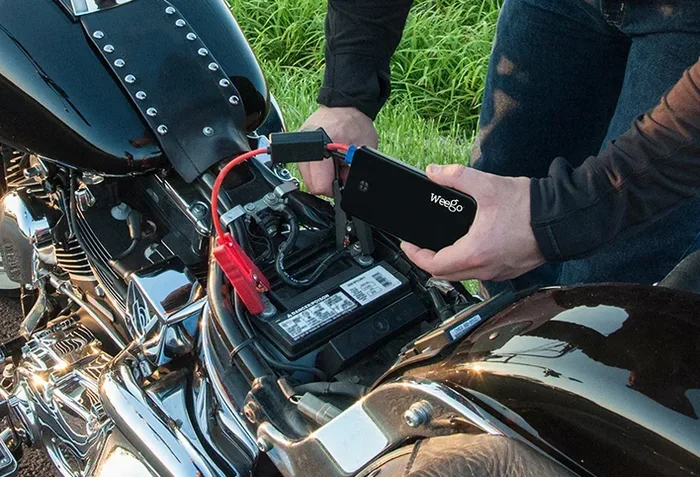
A portable jump starter is a small battery pack that fits in your saddlebag or tail pocket. You connect it directly to your motorcycle battery, and it provides the exact amount of power your bike needs. No car required. No risk of overvoltage.
Most portable jump starters for motorcycles cost between $30 and $80. They are lightweight, rechargeable, and many of them can jump-start a car in an emergency too. Brands like NOCO, DBPOWER, and Tacklife make excellent models that are popular among riders.
Battery Chargers and Maintainers
If your motorcycle sits unused for long periods, a battery charger or maintainer is a game-changer. These devices plug into a wall outlet and connect to your motorcycle battery. They keep the battery at full charge and prevent it from draining during storage.
Trickle chargers and smart chargers are especially useful for seasonal riders. You plug the charger in during the off-season, and your battery is ready to go when spring arrives. Some smart chargers, like the Battery Tender, can even repair slightly sulfated batteries over time.
Push Start (Bump Start)
For motorcycles with manual transmissions, a push start is a classic fallback method. You need a friend or a downhill slope to get the bike moving. Put the motorcycle in second gear, hold the clutch in, and have someone push you. Once you reach walking speed, release the clutch quickly. The engine should fire.
Push starting does not work on motorcycles with automatic or CVT transmissions. It also does not recharge a dead battery. So after a successful push start, ride the motorcycle immediately to a safe location and use a charger or jump starter to get the battery back to full.
Comparison: Car Jump-Start vs. Portable Jump Starter vs. Battery Charger
| Feature | Car Jump-Start | Portable Jump Starter | Battery Charger |
|---|---|---|---|
| Safety for motorcycle | Moderate (requires care) | High | Very High |
| Convenience | Requires a car nearby | Carry it anywhere | Needs outlet access |
| Cost | Free (if you have a car) | $30 to $80 | $20 to $50 |
| Risk of damage | Moderate to high | Low | Very low |
| Best for | Emergency roadside use | On-the-go emergencies | Storage and maintenance |
Preventing Dead Motorcycle Batteries
The best way to deal with a dead battery is to never have one in the first place. Here are some simple habits that keep your motorcycle battery healthy and strong:
- Ride regularly: The alternator charges the battery while you ride. If you only take short trips, the battery may not fully recharge. Take longer rides when possible.
- Use a battery maintainer: If you store your motorcycle for weeks or months, plug in a maintainer. It keeps the battery topped off without overcharging.
- Check battery terminals: Corroded terminals reduce electrical flow. Clean them with a wire brush and apply dielectric grease to prevent future corrosion.
- Turn off all electronics when parked: Lights, GPS, phone chargers, and heated grips drain the battery. Turn everything off before parking.
- Replace old batteries: Most motorcycle batteries last 3 to 5 years. If your battery is older than that, consider replacing it proactively rather than waiting for it to die.
- Keep the battery charged in winter: Cold weather kills motorcycle batteries faster. A maintainer during winter storage is one of the best investments you can make.
Key Takeaways
- It is possible: You can jump-start a motorcycle using a car, but the process requires extra care due to voltage and amperage differences.
- Turn off the car engine: Running car engines create a higher voltage output that can damage a motorcycle’s delicate electrical system.
- Connect cables in the right order: Positive to positive, negative to a metal ground on the motorcycle, not the battery terminal.
- Avoid common mistakes: Reverse polarity, leaving the car running, and ignoring battery condition are the top causes of damage.
- Better alternatives exist: Portable jump starters and battery chargers are safer, more convenient options for motorcycle owners.
- Cold weather matters: Low temperatures weaken motorcycle batteries faster, making jump-starts more common in winter months.
- Know when not to jump: Damaged batteries, leaking fluids, or old batteries should be replaced, not jump-started.
Frequently Asked Questions
Can jumping a motorcycle with a car damage the motorcycle’s electrical system?
Yes, it can if you are not careful. The biggest risk comes from leaving the car engine running while the cables are connected. The car alternator produces more voltage than a motorcycle electrical system can handle, which can burn out the regulator rectifier and other sensitive components. Always turn the car off before connecting cables and follow the correct connection order.
How long should I let my motorcycle run after a jump-start from a car?
Let the motorcycle idle for at least 15 to 20 minutes after a jump-start. This gives the alternator time to recharge the battery. For a fully dead battery, you may need to ride the motorcycle for 30 minutes or more to restore a full charge. If the battery is old or weak, it may not hold a charge even after extended riding.
Is it better to use a portable jump starter instead of a car?
Yes, a portable jump starter is the safer option for motorcycles. These devices deliver the right amount of power without the risk of overvoltage. They are compact, rechargeable, and designed to work with small batteries. Many riders consider a portable jump starter an essential piece of motorcycle gear.
What should I do if the motorcycle battery leaks during a jump-start?
Stop immediately. Do not attempt to jump-start a leaking battery. Battery acid is corrosive and can cause burns. Disconnect the cables carefully and move away from the area. Replace the battery with a new one. A leaking battery cannot be safely recharged and poses a serious safety hazard.
Can I jump-start a motorcycle with a car battery in cold weather?
You can, but cold weather makes the process riskier. Cold temperatures reduce battery performance, and a car battery may deliver a higher surge of current in response. Make sure both batteries are in good condition before attempting a jump-start in cold weather. Ideally, use a portable jump starter designed for cold-weather use.
How often can I safely jump-start my motorcycle with a car?
You should avoid using a car to jump-start your motorcycle whenever possible. Each jump-start puts stress on both batteries and the motorcycle’s electrical system. If you find yourself needing jump-starts frequently, your motorcycle battery is likely failing and needs to be replaced. Frequent jump-starts are a sign of an underlying battery problem, not a normal maintenance routine.
=== CONCLUSION ===
Can you jump a motorcycle with a car without damage? Absolutely, as long as you follow the right process and take the necessary precautions. The key is to keep the car engine off, connect cables in the correct order, and never rush the process. A wrong move can damage the motorcycle’s electrical system, but a careful jump-start gets you back on the road safely.
That said, relying on a car for jump-starts should not be your long-term plan. Invest in a portable jump starter or a battery maintainer. These tools are affordable, compact, and designed with motorcycle batteries in mind. They eliminate the risks entirely and give you peace of mind every time you ride.
Take care of your battery, ride regularly, and keep your electrical system in good shape. A little prevention goes a long way toward avoiding the frustration of a dead battery on the side of the road. Stay safe, stay prepared, and keep riding.