Does Push Starting a Car Work Heres What You Should Know
Yes, push starting a car works — but only if you have a manual transmission and a flat battery. This method uses the car’s momentum to turn the engine over and fire it up again. It is a handy trick for dead battery emergencies, but it comes with important limits and safety steps you must follow.
There is nothing worse than turning your key and hearing nothing but silence. You are standing in the parking lot, late for work, and your car battery is dead. You look around and spot a friend willing to push your car. But wait — does push starting a car actually work? The short answer is yes, it does. But there is a lot more to it than just having someone shove your vehicle down the road.
Push starting, also called a running start or bump start, is a well-known trick for getting a car going with a dead battery. It works on manual transmission vehicles by using the wheels to turn the engine. However, it is not magic. There are rules, risks, and limits you need to understand before you try it. This guide covers everything you need to know about push starting a car, from the basic science to step-by-step instructions and common mistakes.
Whether you are dealing with a drained battery after leaving your lights on or you are stranded in a remote area, knowing how to push start a car can be a real lifesaver. Let us dive into how it works, when it works, and how to do it safely.
Key Takeaways
- Push starting works on manual transmission cars: It relies on momentum to crank the engine when the battery is dead.
- Automatic cars cannot be push started: The internal transmission can suffer severe damage if you try.
- You need at least two people or a downhill slope: One person drives, another releases the clutch at the right moment.
- Safety comes first: Always use hazard lights, clear the area, and follow each step carefully.
- Push starting is a temporary fix: You still need to recharge or replace the battery and check the charging system.
- Common mistakes can damage your car: Releasing the clutch too slowly or ignoring warning signs can cause problems.
- Jump starting is often safer: If you have jumper cables, a jump start is usually the better first option.
📑 Table of Contents
- What Is Push Starting a Car?
- How Does Push Starting Actually Work?
- Can You Push Start an Automatic Car?
- Step-by-Step: How to Push Start a Car Safely
- When Push Starting Won’t Work
- Push Starting vs Jump Starting: Which Is Better?
- Common Mistakes People Make When Push Starting
- Expert Insights on Push Starting
- Key Takeaways
- Conclusion
What Is Push Starting a Car?
Push starting a car means using external force — usually another vehicle or human effort — to roll your car forward. Once you reach a certain speed, you release the clutch, and the engine turns over and starts. The starter motor is not doing the work here. Instead, the spinning wheels are forcing the crankshaft to rotate, which fires the engine.
This method has been around for decades. Before electric starters became standard, drivers used hand cranks or rolled cars down hills to get them going. Today, push starting is mostly a backup plan for when your car battery dies unexpectedly. It is especially useful in rural areas or cold mornings when jump cables are not available.
The key thing to remember is that push starting only works on manual transmission vehicles. If your car has an automatic gearbox, this method will not work and can cause serious damage. We will cover why in a later section.
Why Does a Dead Battery Prevent Normal Starting?
Your car battery powers the ignition system, the starter motor, and the fuel pump. When the battery is dead, none of these components get the electricity they need. The engine cannot crank, and the car will not start. Push starting bypasses the electrical system entirely by using mechanical force to spin the engine directly.
Once the engine is running, the alternator takes over and begins recharging the battery. This is why a running start can get you back on the road temporarily. However, the battery still needs proper charging or replacement to keep the car running in the future.
How Does Push Starting Actually Work?
The science behind push starting a car is simpler than it sounds. When you push the car to a certain speed, the wheels spin the transmission output shaft. In a manual car, the clutch connects the engine to the transmission. When you release the clutch at the right speed, the engine is forced to rotate along with the wheels.
Once the engine turns fast enough, the spark plugs fire, the fuel injectors spray gasoline, and the engine catches. At that point, you press the clutch back in to disconnect the wheels from the engine and let the idle take over. The alternator then starts generating electricity to recharge the battery and power the car’s electrical systems.
Here is what makes this process work:
- Momentum: The car must be moving fast enough — usually above 10 mph — to generate sufficient rotational force.
- Clutch engagement: Releasing the clutch too slowly can stall the engine or wear out the clutch disc.
- Fuel and air: The engine still needs fuel and air to run. A dead battery can sometimes affect the fuel pump, which may cause issues.
- Spark: The ignition coil and spark plugs must still be functional. Push starting will not fix a faulty ignition system.
The entire process depends on the mechanical connection between the wheels and the engine. This is why it only works with a manual transmission. Automatic transmissions use a torque converter and internal fluid coupling that cannot handle the force of being pushed.
The Role of the Clutch in Push Starting
The clutch is the most important component when push starting a car. It acts as a bridge between the engine and the wheels. When the clutch is pressed in, the engine and wheels are disconnected. When you release it, they connect — and that is where the magic happens.
Timing is everything. If you release the clutch too early, the car will stall. If you release it too late, the engine may not catch at all. The goal is to release the clutch smoothly at a speed where the wheels can turn the engine fast enough to fire. This takes a little practice, but it is very doable with a bit of coordination.
Can You Push Start an Automatic Car?
The short and firm answer is no. You cannot safely push start an automatic car. The internal components of an automatic transmission are designed to operate with fluid pressure and controlled input from the torque converter. When you push an automatic car and try to engage a gear, you risk damaging the transmission internals, including the planetary gears and clutch packs.
Some people claim they have successfully push started automatics, but this is rare and not recommended. The potential repair costs far outweigh any benefit. If you drive an automatic and your car battery is dead, your best options are:
- Jump starting with jumper cables and another vehicle
- Using a portable jump starter or booster pack
- Calling roadside assistance for professional help
- Replacing the battery if it is old or damaged
Some newer automatic cars have a start-stop button that allows a limited push-start procedure, but these systems are designed by the manufacturer and are very different from the traditional manual push start. Never try to force an automatic transmission into gear by pushing the car.
What About Manual Transmissions With Dead Batteries?
If you have a manual transmission and a dead battery, you are in luck. Push starting a manual car is a proven and reliable method. It has been used by drivers for generations and works in almost all conditions — on flat roads, downhill slopes, and even on slight inclines with enough helpers.
The key is to make sure the ignition switch is in the on position before you start pushing. This energizes the fuel pump and the ignition system, so the engine is ready to fire the moment it starts turning over.
Step-by-Step: How to Push Start a Car Safely
Now that you know the basics, let us walk through the actual process of push starting a car step by step. Follow these instructions carefully to avoid injury or damage to your vehicle.
Step 1: Find a Safe Location
Before you do anything, make sure you are in a safe spot. Choose a flat, open area away from traffic. Turn on your hazard lights to alert other drivers. If you are on a road, make sure you have enough clear space ahead of you. Pushing a car on a busy highway is extremely dangerous.
If possible, find a slight downhill slope. Gravity will help you build the speed you need to start the engine. But never push a car downhill on a steep or dangerous road.
Step 2: Prepare the Car
Sit in the driver’s seat and do the following:
- Turn the ignition key to the “on” or “run” position. Do not start the engine — just power up the electrical systems.
- Press the clutch pedal all the way down.
- Shift the gear selector into second gear. Second gear is ideal because it provides a good balance of speed and torque for push starting.
- Make sure the parking brake is released.
Keep the clutch pressed down at all times until you are ready to release it. This prevents the car from lurching forward unexpectedly.
Step 3: Get the Car Moving
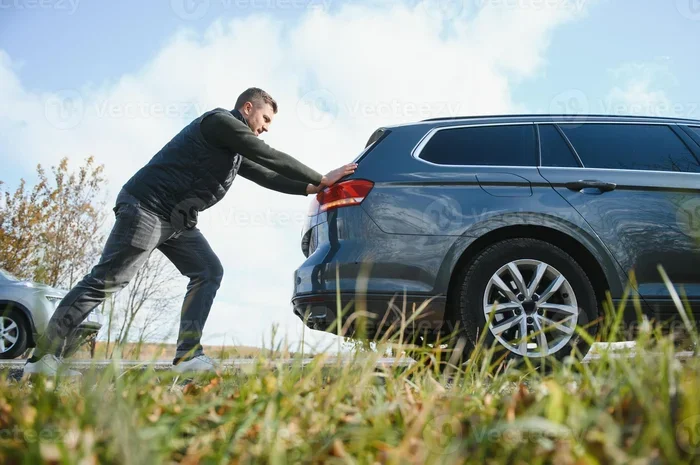
This is where you need help. Ask your friends or passerby to push the car from behind. Alternatively, you can let the car roll down a gentle slope.
Once the car is moving at a walking pace or faster — around 10 to 15 mph — it is time to engage the engine. Here is the critical moment:
- Release the clutch pedal smoothly and quickly.
- At the same time, give the accelerator a light tap.
- The engine should catch and start running.
- If it does not start, press the clutch back in immediately and try again.
Do not release the clutch too slowly. This will stall the engine and can cause excessive wear on the clutch disc. A quick, smooth release is the key to success.
Step 4: Get the Car Underway
Once the engine starts, press the clutch back in right away. This disconnects the engine from the wheels and prevents the car from stalling. Keep the engine running and drive to a safe location.
Now you need to recharge the battery. Drive the car for at least 20 to 30 minutes without turning it off. The alternator will generate electricity and recharge the car battery. If the battery was completely drained, it may take longer to charge fully.
Do not turn off the engine until you have reached a destination where you can properly address the battery issue.
Quick Tips for a Successful Push Start
- Have at least two or three people pushing for the best results.
- Use second gear — it is the easiest gear for push starting.
- Keep the clutch release quick and smooth.
- Give a small amount of gas as you release the clutch.
- If the engine does not catch after a few tries, stop and check for other issues.
- Always use hazard lights and stay visible to other drivers.
When Push Starting Won’t Work
Even when done correctly, push starting a car will not work in every situation. Understanding when it will fail can save you time, effort, and potential damage to your vehicle.
Here are the most common reasons why push starting might not work:
- Automatic transmission: As mentioned, this method simply does not work on automatic cars.
- Dead or faulty ignition switch: If the ignition switch itself is broken, pushing the car will not power up the electrical system.
- Clogged fuel filter or failed fuel pump: The engine needs fuel to run. If the fuel system is compromised, push starting will not help.
- Bad spark plugs or ignition coil: Without a proper spark, the engine cannot ignite the fuel-air mixture.
- Seized engine: If the engine has seized due to lack of oil or overheating, no amount of pushing will turn it over.
- Broken timing belt or chain: This prevents the engine from rotating internally, making push starting impossible.
- Low engine speed: If the car is not moving fast enough when you release the clutch, the engine will not turn over.
If you have tried push starting multiple times and the engine still will not start, there is likely a deeper mechanical issue at play. In that case, it is best to call a professional mechanic or roadside assistance service.
Push Starting in Cold Weather
Cold weather can make push starting more difficult. Low temperatures thicken the engine oil, making it harder for the engine to turn over. The battery also performs poorly in cold conditions, which is why batteries die more often in winter. If you need to push start a car in cold weather, try these tips:
- Warm up the engine bay slightly before attempting, if possible.
- Make sure the car is moving at a higher speed before releasing the clutch.
- Use a slightly higher gear, like third, if second gear does not work.
- Keep the battery terminals clean and free of corrosion.
Push Starting vs Jump Starting: Which Is Better?
When your car will not start, you usually have two options: push starting or jump starting. Both methods can get your engine running again, but they work in very different ways and have different limitations.
Jump starting uses another vehicle’s battery or a portable booster pack to supply electrical power to your dead battery. The starter motor then cranks the engine normally. This method works on both manual and automatic cars and is generally safer and more reliable.
Push starting, on the other hand, uses mechanical force to turn the engine. It only works on manual transmissions and requires enough space and helpers to roll the car.
Here is a quick comparison:
| Feature | Push Starting | Jump Starting |
|---|---|---|
| Works on manual cars | Yes | Yes |
| Works on automatic cars | No | Yes |
| Requires another vehicle | No (just helpers) | Yes (or a booster pack) |
| Risk of damage | Moderate (clutch wear) | Low |
| Works in tight spaces | No | Yes |
| Temporary fix | Yes | Yes |
| Requires electrical components | No | Yes (jumper cables) |
In most situations, jump starting is the safer and more versatile option. However, if you do not have jumper cables and are stuck with a manual car, push starting is a perfectly valid alternative. The best approach is to carry a portable jump starter in your trunk. These small devices are compact, affordable, and can start your car without needing another vehicle or a group of helpers.
After either method, make sure to drive the car long enough to recharge the battery. If your battery is old or frequently dies, consider replacing it with a new one. A healthy car battery is essential for reliable starting, powering the lights, and running all the electrical accessories in your vehicle.
Common Mistakes People Make When Push Starting
Even though push starting is straightforward, people make mistakes that can lead to problems. Here are the most common errors and how to avoid them:
Releasing the clutch too slowly. This is the number one mistake. A slow release will stall the engine and can cause excessive friction on the clutch disc. Release the clutch quickly and smoothly.
Using the wrong gear. First gear is too low for push starting. It can cause a jerky engagement and may stall the engine. Always use second gear for the smoothest result.
Not pressing the clutch all the way down. If the clutch is only partially pressed, the engine and wheels are partially connected. This can cause grinding and damage to the transmission.
Ignoring warning signs. If the engine makes unusual noises during a push start — such as knocking, grinding, or clicking — stop immediately. These sounds can indicate serious mechanical problems that push starting will not fix.
Trying it on an automatic car. We cannot stress this enough. Do not attempt to push start an automatic transmission vehicle. The risk of transmission damage is very real and very expensive.
Forgetting to turn the ignition on. If the ignition is in the “off” position, the fuel pump and ignition system will not activate. Always make sure the key is in the “run” position before you start pushing.
Not recharging the battery afterward. Push starting is a temporary fix. If you turn the car off and try to start it again, the dead battery will prevent normal starting. Drive the car for a sufficient amount of time or use a battery charger to fully recharge it.
Expert Insights on Push Starting
We asked experienced mechanics about their thoughts on push starting a car. Here is what they had to say:
“Push starting is a great emergency technique, but it should never become a habit,” says Mark D., a certified automotive technician with over 20 years of experience. “Every time you push start, you put extra wear on the clutch. If you find yourself needing push starts regularly, your battery or charging system has a problem that needs professional attention.”
Another mechanic, Sarah T., adds: “The most common issue I see after a push start is a worn clutch disc. People release the clutch too slowly, and it causes slipping and heat damage. If you push start, make it quick and clean.”
Both experts agree that the best long-term solution is to maintain your car battery properly. Keep the terminals clean, check the voltage regularly, and replace the battery every 3 to 5 years. A well-maintained battery rarely dies unexpectedly, which means you will rarely need to push start in the first place.
They also recommend keeping a portable jump starter in your vehicle. These devices are small enough to fit in the trunk and powerful enough to start most cars in seconds. They are especially useful in winter or in areas where roadside assistance may take a long time to arrive.
Key Takeaways
- Push starting works on manual transmission cars only: It uses momentum to turn the engine when the battery is dead.
- Automatic cars cannot be push started: Attempting to do so can cause severe and expensive transmission damage.
- You need speed, coordination, and at least one helper: Push the car to 10-15 mph, release the clutch quickly in second gear, and the engine should catch.
- Safety is critical: Use hazard lights, clear the area of traffic, and never push start on a busy road or steep hill.
- Push starting is a temporary fix: Always drive long enough to recharge the battery or use a charger to restore full power.
- Avoid common mistakes: Release the clutch quickly, use second gear, and never try this on an automatic car.
- Jump starting is usually the safer option: If you have jumper cables or a portable booster, use those first.
Conclusion
So, does push starting a car work? Absolutely — as long as you have a manual transmission and follow the proper steps. It is a proven method that has helped drivers for decades get back on the road when their car battery dies unexpectedly. Whether you are dealing with a drained battery from leaving the lights on or you are stranded in a remote area, knowing how to push start a car is a valuable skill every driver should have.
But push starting is not a permanent solution. It is a temporary fix that gets you to a safe location where you can properly address the battery issue. Always recharge or replace the battery afterward, and have the charging system checked by a professional if you find yourself dealing with dead batteries frequently.
Remember to stay safe, follow each step carefully, and never attempt to push start an automatic car. With the right knowledge and a little preparation, you can handle a dead battery situation with confidence and get back on your way.
Keep a set of jumper cables or a portable jump starter in your vehicle at all times. These tools are inexpensive, easy to store, and can save you from a long walk home or an expensive tow truck bill. Being prepared is the best way to handle any car battery emergency that comes your way.
Frequently Asked Questions
Can you push start a car with a completely dead battery?
Yes, you can push start a car with a completely dead battery as long as it has a manual transmission. The momentum from pushing turns the engine mechanically, bypassing the need for electrical power from the battery. Once the engine starts, the alternator will begin recharging the battery so you can drive normally.
How fast do you need to go to push start a car?
You typically need to reach about 10 to 15 mph before releasing the clutch. This speed gives the wheels enough rotational force to turn the engine over and start it. On a downhill slope, gravity can help you reach this speed more easily with less effort from your helpers.
Is push starting bad for your car?
Push starting is not inherently bad, but it does put extra wear on the clutch if done incorrectly. Releasing the clutch too slowly can cause friction damage to the clutch disc. When done properly with a quick, smooth clutch release, push starting is safe and will not harm your vehicle.
Can you push start a car with power steering?
Yes, you can push start a car with power steering. However, with a dead battery, the power steering pump will not be energized, making the steering wheel much harder to turn. Be prepared for heavy steering, especially at low speeds, and steer carefully while pushing the car.
How long should you drive after push starting to recharge the battery?
You should drive for at least 20 to 30 minutes after a push start to allow the alternator to recharge the battery. If the battery was completely drained, it may take longer. Avoid turning off the engine during this time, or you may not be able to start the car again.
What gear should you use to push start a car?
Second gear is the best gear for push starting a car. It provides the right balance of speed and engine resistance for a smooth engagement. First gear is too low and can cause a harsh lurch, while third gear may require too much speed to get the engine to turn over.