Can You Jump a Dead Battery With a Prius and Survive
Yes, you can jump a dead battery with a Prius, but the process is different from a regular gas car. The Prius uses a 12-volt auxiliary battery and a hybrid battery system that work together. Knowing the right steps keeps your car safe and gets you rolling again quickly.
Key Takeaways
- You can jump-start a Prius using jumper cables and another vehicle or a portable jump starter.
- The 12-volt auxiliary battery is the one you jump, not the hybrid battery pack.
- Never attempt to jump the hybrid battery directly — it operates at a much higher voltage.
- Common mistakes include connecting cables to the wrong terminals and ignoring hybrid system warnings.
- Pushing the Prius to start (called a roll-start) is possible but only in certain models.
- Regular maintenance of the 12V battery prevents most dead battery situations.
- Toyota roadside assistance can help if you are stranded and unsure about the process.
📑 Table of Contents
What Happens When Your Prius Battery Dies
You turn the key. Nothing happens. The dashboard stays dark. This is every Prius owner’s nightmare. But before you panic, take a breath. Can you jump a dead battery with a Prius? Yes, you can. But the process is not the same as a regular car.
The Toyota Prius has two battery systems. One is a small 12-volt auxiliary battery. The other is the high-voltage hybrid battery pack. When people say their Prius battery is dead, they usually mean the 12-volt battery. That is the one you jump.
The hybrid battery pack powers the electric motor. It is a completely different animal. You should never try to jump that one directly. Doing so can cause serious damage or injury. So always focus on the 12-volt auxiliary battery first.
Signs Your Prius 12V Battery Is Dead
How do you know it is the 12-volt battery and not something else? Watch for these signs:
- The dashboard lights do not turn on when you press the power button.
- The hybrid battery warning light flashes on the display.
- The car will not start at all, even with the push-button start.
- The headlights are dim or do not work.
- You hear a clicking sound when you turn the key.
- The accessory power mode does not activate.
If you notice any of these, your 12-volt auxiliary battery may be the culprit. A jump start can often fix the problem quickly.
How to Jump Start a Prius Safely
Jumping a Prius is straightforward once you know the steps. The process is similar to a gas car, but there are a few key differences. Follow these steps carefully to stay safe.
Step-by-Step Jump Start Process
Here is exactly what to do when you need to jump a dead battery with a Prius:
- Turn off both vehicles. Make sure the Prius is in park and the other car is off.
- Open the hood and locate the 12-volt auxiliary battery. In most Prius models, it is under the hood on the back passenger side.
- Attach the red jumper cable to the positive terminal on the dead Prius battery.
- Attach the other red clamp to the positive terminal on the working vehicle’s battery.
- Connect the black cable to the negative terminal on the working vehicle’s battery.
- Attach the other black clamp to an unpainted metal surface on the Prius frame. This is called grounding. Do not connect it directly to the dead battery terminal.
- Start the working vehicle and let it run for a few minutes.
- Try starting the Prius. Press the power button and let the hybrid system do its thing.
- Once the Prius starts, remove the cables in reverse order.
- Drive the Prius for at least 20 minutes to recharge the 12-volt battery.
Where to Find the Jump Terminal on a Prius
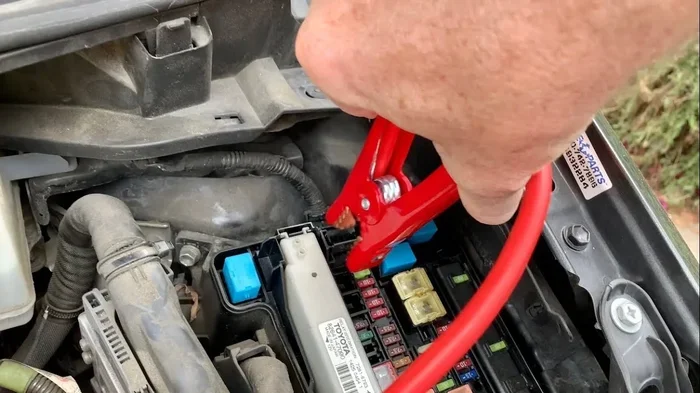
Not all Prius models have exposed battery terminals. Some models have a jump start terminal under a cover near the fuse box. Check your owner’s manual to find the exact location. The terminal is usually labeled with a positive and negative symbol.
Using the designated jump terminal is safer than connecting cables directly to the battery posts. It reduces the risk of sparks near the battery. This is especially important because batteries can release flammable gases.
Quick Tips for a Safe Jump Start
- Always check the jumper cable quality before use. Cheap cables can overheat.
- Never let the cable clamps touch each other once connected.
- Make sure both vehicles are on level ground.
- Wear gloves and safety glasses if possible.
- Do not smoke or create sparks near the battery area.
- If the Prius does not start after two attempts, wait five minutes before trying again.
The Prius Hybrid System Explained
To understand why jumping a Prius is different, you need to understand how the system works. The Toyota Prius is a hybrid vehicle. It uses two power sources: a gasoline engine and an electric motor.
The hybrid battery is a large pack that stores energy for the electric motor. It operates at a high voltage, usually around 200 to 270 volts depending on the model. This is why you should never touch or attempt to jump the hybrid battery directly.
The 12-volt auxiliary battery is a much smaller battery. It powers the car’s computer systems, lights, and accessories. It also tells the hybrid system to wake up. When the 12-volt battery dies, the hybrid system cannot start, even if the hybrid battery is fully charged.
How the Two Batteries Work Together
Here is a simple way to think about it:
- The 12V battery is like the key that turns on the car’s brain.
- The hybrid battery is like the fuel tank that powers the electric motor.
- When you turn the key or press the power button, the 12V battery wakes up the computer.
- The computer then checks the hybrid battery and prepares the system to drive.
If the 12V battery is dead, the computer never wakes up. The car stays silent. This is why a simple jump start of the 12V battery can bring your Prius back to life.
Regenerative Braking and Battery Health
One unique feature of the Prius is regenerative braking. This system captures energy when you slow down and sends it back to the hybrid battery. It helps keep the hybrid battery charged during normal driving.
However, regenerative braking does not directly charge the 12V auxiliary battery. The 12V battery gets charged through the car’s internal DC-to-DC converter. This converter draws power from the hybrid battery and converts it to 12 volts. If the hybrid battery is low, the 12V battery may not charge properly either.
Common Mistakes When Jumping a Prius
Even experienced car owners make mistakes when jumping a hybrid vehicle. Here are the most common errors and how to avoid them.
Mistake 1: Connecting Cables to the Wrong Terminals
This is the number one mistake people make. Connecting the red cable to the negative terminal or the black cable to the positive terminal can cause a short circuit. Always double-check the terminal labels before connecting anything.
Remember the rule: Red to positive, black to negative or ground. Never switch these around.
Mistake 2: Ignoring the Hybrid Warning Light
If you see a red hybrid system warning light on the dashboard, stop immediately. This could indicate a deeper problem with the hybrid battery or the car’s electrical system. Jumping the 12V battery will not fix a hybrid battery failure.
Mistake 3: Using the Wrong Jumper Cables
Not all jumper cables are created equal. Thin cables cannot handle the current needed to start a hybrid vehicle. Use heavy-duty cables rated for at least 400 amps. This ensures a reliable connection and reduces the risk of overheating.
Mistake 4: Leaving Cables Connected Too Long
Some people leave the cables connected for too long, hoping the dead battery will charge faster. This is risky. The working vehicle’s alternator can send too much current through the dead battery, potentially damaging the Prius’s electrical system.
Keep the cables connected for no more than five minutes at a time. Then try starting the Prius.
Common Mistakes at a Glance
| Mistake | Why It Is Bad | How to Avoid It |
|---|---|---|
| Wrong cable connections | Short circuit or blown fuse | Double-check red to positive, black to ground |
| Ignoring warning lights | Underlying problem goes undetected | Stop and inspect if warning lights appear |
| Using thin cables | Overheating and unreliable start | Use cables rated for 400 amps or higher |
| Leaving cables on too long | Electrical system damage | Limit connection time to 5 minutes per attempt |
| Jumping the hybrid battery | Serious injury or car damage | Only jump the 12V auxiliary battery |
Preventing a Dead Battery in Your Prius
The best way to deal with a dead battery is to prevent it from happening in the first place. A few simple habits can keep your 12-volt auxiliary battery healthy for years.
Tips to Keep Your Prius Battery Strong
- Drive your Prius regularly. The DC-to-DC converter charges the 12V battery while you drive. If the car sits for weeks, the battery can drain.
- Turn off all accessories before shutting down. Lights, the radio, and USB chargers draw power even when the car is off.
- Check the battery terminals for corrosion. White or green buildup on the terminals can block the electrical connection. Clean them with a baking soda and water solution.
- Replace the 12V battery every 3 to 5 years. Even if it seems fine, age weakens the battery. A proactive replacement saves you from unexpected breakdowns.
- Use a battery maintainer if the car sits for long periods. A trickle charger keeps the 12V battery at full charge during storage.
- Check the hybrid battery health regularly. A weak hybrid battery can put extra strain on the 12V system.
When to Replace the 12V Battery
Your Prius will give you warning signs before the 12V battery fails completely. Watch for slow cranking, dim lights, or the car taking longer to start. If you notice these signs, get the battery tested at a Toyota dealer or auto parts store. Most stores offer free battery testing.
When to Seek Professional Help
Sometimes a jump start is not enough. If you have tried everything and the Prius still will not start, it is time to call in the experts.
Signs You Need Professional Help
- The Prius starts but shuts off immediately after.
- The hybrid battery warning light stays on after a successful jump.
- The car makes unusual grinding or whirring noises.
- The 12V battery dies again within a day or two of being jumped.
- You smell sulfur or rotten eggs near the battery area.
- The dashboard displays error codes related to the hybrid system.
These symptoms could point to a failing hybrid battery, a damaged DC-to-DC converter, or a deeper electrical problem. A certified Toyota technician can diagnose the issue properly.
Toyota Roadside Assistance
If your Prius is still under warranty, Toyota offers roadside assistance in many cases. They can send a tow truck or a mobile jump service to your location. This is a great safety net, especially if you are far from home.
Even if your warranty has expired, many Toyota dealerships offer paid roadside assistance programs. It is worth checking with your local dealer before you find yourself stranded.
Alternative Ways to Start a Prius With a Dead Battery
If you do not have access to another vehicle, there are a few alternatives:
- Portable jump starter: A compact jump pack works just like jumper cables but does not need another car. Keep one in your trunk for emergencies.
- Push start (roll start): Some older Prius models can be push-started. Put the car in neutral, get it rolling, and press the power button. This method works better on manual transmission models but can work on some automatic hybrids too.
- Call a tow truck: If nothing else works, a tow truck can take your Prius to a nearby shop or dealer for a new battery or diagnostics.
Key Takeaways
- You can jump a dead battery with a Prius by connecting jumper cables to the 12-volt auxiliary battery, not the hybrid battery pack.
- Always follow the correct cable connection order: red to positive, black to ground on the Prius frame.
- Never attempt to jump the high-voltage hybrid battery. It operates at 200+ volts and can be extremely dangerous.
- Common mistakes include wrong cable connections, ignoring warning lights, and using inadequate cables.
- Prevention is the best strategy. Drive regularly, check terminals, and replace the 12V battery every 3 to 5 years.
- Toyota roadside assistance is a reliable backup if you are unsure or unable to jump-start the car yourself.
- Portable jump starters are a convenient alternative that every Prius owner should consider keeping in the trunk.
Final Thoughts on Jumping a Dead Prius Battery
So, can you jump a dead battery with a Prius? Absolutely. The process is safe and straightforward as long as you follow the right steps. Focus on the 12-volt auxiliary battery, avoid the high-voltage hybrid pack, and you will be back on the road in no time.
The key is preparation. Know where your jump terminal is. Keep a set of quality jumper cables in your trunk. Consider a portable jump starter for peace of mind. These small investments can save you from a lot of stress on a bad day.
Remember, your Prius is a smart and sophisticated hybrid vehicle. It has systems in place to protect itself. But it still needs your care and attention. Regular maintenance of the 12V battery goes a long way in preventing unexpected breakdowns.
Next time your Prius refuses to start, stay calm. Follow the steps outlined in this guide. You have got this. And if all else fails, help is always just a phone call away.
Frequently Asked Questions
Can you jump a dead battery with a Prius using another Prius?
Yes, you can use another Prius or any gas-powered vehicle to jump-start a dead Prius battery. The process is the same. Just make sure you connect the cables to the 12-volt auxiliary battery and follow the correct polarity. Never connect cables to the high-voltage hybrid battery pack.
How long does it take to jump a Prius battery?
A typical jump start takes about 10 to 15 minutes. You should let the working vehicle run for a few minutes before trying to start the Prius. Once the Prius starts, drive it for at least 20 minutes to allow the 12-volt battery to recharge through the DC-to-DC converter.
What happens if you accidentally jump the hybrid battery?
Jumping the high-voltage hybrid battery directly is extremely dangerous. It can cause electric shock, damage the hybrid system, or even start a fire. Always connect jumper cables only to the 12-volt auxiliary battery. If you are unsure, consult your owner’s manual or call a professional.
Can you push-start a Prius with a dead battery?
Some older Prius models can be push-started by putting the car in neutral, getting it rolling, and pressing the power button. However, newer models with more advanced electronics may not support this method. Check your owner’s manual to see if push-starting is recommended for your specific model.
How do I know if my Prius hybrid battery is failing?
Signs of a failing hybrid battery include reduced fuel economy, the hybrid system warning light staying on, the car entering “limp mode,” or unusual noises from the powertrain. If you notice any of these symptoms, have the hybrid battery inspected by a certified Toyota technician as soon as possible.
Is a portable jump starter good for a Prius?
Yes, a portable jump starter is an excellent backup option for Prius owners. Look for a unit rated for at least 1000 peak amps. These compact devices fit easily in your trunk and can jump-start your Prius without needing another vehicle. They are especially useful in remote areas or during cold weather when batteries are more likely to fail.
=== CONCLUSION ===
Jumping a dead battery with a Prius is entirely possible and safe when you follow the right procedure. The process starts with identifying the correct battery — the 12-volt auxiliary battery — and connecting jumper cables in the proper order. Avoid common mistakes like jumping the hybrid battery or using the wrong cables. With the right knowledge and a little preparation, you can handle this situation confidently and get back on the road quickly.
Keep quality jumper cables and a portable jump starter in your Prius at all times. Maintain your 12V battery regularly, and drive your car often to keep the electrical system healthy. These simple habits will save you time, money, and a lot of frustration down the road.