2016 Toyota Camry Recalls What Every Owner Should Know
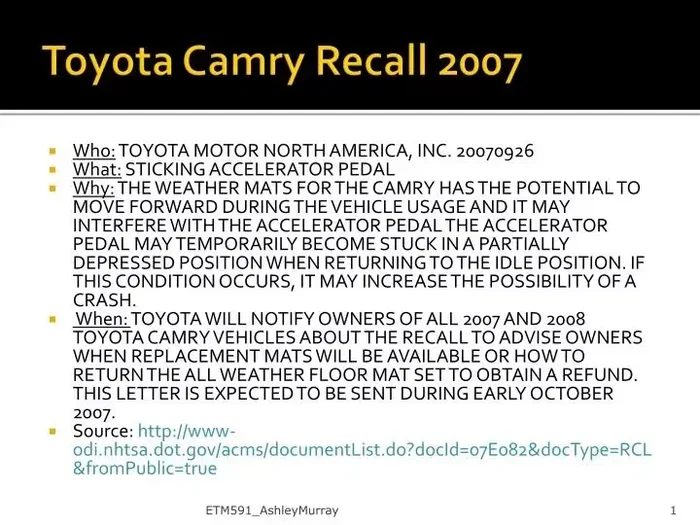
2016 Toyota Camry recalls cover several important safety and mechanical concerns that every owner should be aware of. The most notable recalls involve airbag inflators, fuel pump failures, and brake system defects that could affect driver safety. Checking your Vehicle Identification Number through official Toyota or NHTSA databases is the fastest way to confirm if your specific car is affected. Timely repairs are free and can prevent costly damage or serious accidents down the road.
Owning a 2016 Toyota Camry means you have a reliable, comfortable, and fuel-efficient sedan on your hands. The Camry has long been one of the best-selling cars in America, and for good reason. But even the most dependable vehicles can have issues. That is why understanding 2016 Toyota Camry recalls matters so much.
If you own or are thinking about buying a 2016 Camry, you need to know what recalls exist, how they affect your daily driving, and what you should do about them. This guide covers everything in plain, simple terms. No jargon. No confusion. Just clear answers that help you keep your car safe and running strong.
Recalls are not something to ignore. They exist because manufacturers identify a real safety or performance problem. When Toyota issues a Toyota recall notice, it means they have found a defect that could put you or your passengers at risk. Taking action quickly is always the smart move.
Key Takeaways
- Multiple recalls exist: The 2016 Toyota Camry has had several recall campaigns covering airbags, fuel systems, brakes, and electrical components.
- Free repairs are available: Toyota dealers fix recall-related issues at no cost to the vehicle owner, regardless of warranty status.
- Check your VIN: Using your Vehicle Identification Number through Toyota or NHTSA tools gives you a definitive answer on recall status.
- Airbag recall is critical: Certain airbag inflators in the 2016 Camry pose a serious safety risk and should be addressed immediately.
- Fuel pump issues are common: The 2016 Camry fuel pump recall can cause sudden engine stalling, which is dangerous at highway speeds.
- Stay proactive: Regularly checking for new recalls keeps you and your family safe on the road.
📑 Table of Contents
Understanding 2016 Toyota Camry Recalls
So, what exactly are 2016 Toyota Camry recalls? A recall happens when a car manufacturer or a government safety agency identifies a defect in a vehicle model. This defect could affect safety, performance, or emissions. Once identified, the manufacturer must notify all owners and offer a free fix.
The 2016 Camry is not immune to this process. Like any vehicle produced at scale, it went through several Toyota recall campaigns during its production run. Some of these were minor. Others were serious enough to warrant immediate attention from every Camry owner.
Why Recalls Happen
Recalls do not mean Toyota built a bad car. They mean that a specific part or system was found to have a flaw. This flaw could have been present in a batch of parts, a specific assembly process, or a design oversight. Here are the most common reasons recalls happen:
- Faulty components: A supplier delivers a part that does not meet safety standards.
- Design flaws: A system works most of the time but fails under certain conditions.
- Regulatory findings: The NHTSA (National Highway Traffic Safety Administration) identifies a pattern of complaints.
- Consumer reports: Multiple owners report the same problem, triggering an investigation.
Understanding this helps you see recalls as a normal part of car ownership. They are a sign that the manufacturer cares about keeping you safe.
How Toyota Handles Recalls
Toyota has a well-established process for managing Camry recall repairs. When a recall is issued, Toyota sends notices to registered owners by mail. These notices explain the problem, the risk, and the steps to get it fixed. You can also check online using your VIN (Vehicle Identification Number) through Toyota’s official recall lookup tool or the NHTSA website.
The repair itself is always free. This applies even if your warranty has expired. Toyota dealers are required to perform recall repairs at no charge. This is a federal law, and it applies to all Toyota vehicle recall campaigns.
Common 2016 Camry Recall Issues
Not all 2016 Toyota Camry recalls are the same. Some affect specific parts, while others impact broader systems. Let us break down the most common recall issues that Camry owners should know about.
Airbag Inflator Recall
One of the most serious recalls for the 2016 Camry involves the front passenger airbag inflator. In certain vehicles, the inflator can rupture upon deployment. This happens because of moisture buildup inside the unit, which causes the propellant to degrade over time.
When an airbag inflator ruptures, it can send metal fragments into the cabin. This poses a serious injury risk to the driver and front passenger. Toyota addressed this through a Toyota airbag recall campaign that replaced the affected inflators with safer units.
If you own a 2016 Camry, check your VIN to see if the passenger side airbag inflator is part of this recall. This is one of those issues you do not want to delay.
Fuel Pump Failure
The 2016 Camry fuel pump recall is another significant campaign. In some vehicles, the fuel pump can fail unexpectedly. When this happens, the engine may stall while you are driving. A stalled engine at highway speed is dangerous and can lead to accidents.
The fuel pump issue is linked to a specific electrical connector that can corrode over time. This corrosion interrupts the signal to the fuel pump, causing it to stop working. Toyota replaced the faulty fuel pump assembly on affected vehicles.
Symptoms of a failing fuel pump include:
- Engine stalling without warning
- Difficulty starting the car
- Loss of power while accelerating
- Engine dying after running for a while
If you notice any of these signs, get your Camry checked right away, even if you have not received a recall notice yet.
Brake System Concerns
Brake-related recalls are always a big deal. For the 2016 Camry, certain models had issues with the brake booster and brake system components. A malfunctioning brake system can increase stopping distance or cause uneven braking.
Toyota addressed these Camry brake recall issues by inspecting and replacing the affected parts. The repair is straightforward and done at no cost to the owner. If you have noticed any unusual brake behavior, such as pulling to one side or a soft pedal, this could be related to a recall.
Electrical and Wiring Issues
Some 2016 Camry owners reported electrical and wiring problems that triggered recall investigations. These issues could affect the dashboard lights, power windows, or even the engine control module. Loose or corroded connections in the wiring harness were identified as the root cause in several cases.
While these issues may seem minor, they can escalate over time. A wiring problem that affects the engine control module can cause rough idling, reduced fuel economy, or even engine shutdown. Toyota provided fixes through specific Toyota electrical recall campaigns.
Seat Belt and Seat Track Issues
In a smaller number of 2016 Camry vehicles, the front seat belt retractors and seat tracks were found to have defects. A seat belt that does not retract properly cannot protect you effectively in a crash. Similarly, a loose seat track can cause the seat to shift while driving.
These recalls were less widespread but still important. Toyota replaced the faulty retractors and reinforced the seat tracks on affected units.
How to Check if Your 2016 Camry Has a Recall
Knowing what recalls exist is only half the battle. You also need to know how to check if your specific vehicle is affected. The good news is that this process is simple and free.
Using the Toyota Recall Lookup Tool
Toyota offers an official recall lookup tool on their website. Here is how to use it:
- Go to the official Toyota recalls page.
- Enter your 17-digit Vehicle Identification Number (VIN).
- Click search and wait for the results.
- Review any active recalls listed for your vehicle.
Your VIN can be found on the driver’s side dashboard (visible through the windshield), on the driver’s side door jamb, or on your vehicle registration documents.
Using the NHTSA Recall Database
The National Highway Traffic Safety Administration also maintains a free recall lookup database. This tool covers all makes and models, not just Toyota. You can search by VIN or by vehicle details (year, make, model, and trim).
The NHTSA database is especially useful because it tracks recalls across all manufacturers. If you ever buy a used 2016 Camry, this is a great resource to check before completing the purchase.
What Your Recall Notice Looks Like
If your vehicle is affected, Toyota will send you a recall notice by mail. This notice includes:
- A description of the defect
- The risk or danger associated with the issue
- The steps needed to get the repair
- The name and location of your nearest Toyota dealer
- A timeline for the repair
Do not throw away these notices. Keep them in your vehicle records. They serve as proof that you were notified and can be helpful if any disputes arise later.
What to Do If Your 2016 Camry Has a Recall
Finding out your car has an active recall can feel overwhelming. But the process is simpler than most people think. Here is exactly what you should do.
Step 1: Confirm the Recall
First, double-check using the Toyota or NHTSA lookup tools. Make sure the recall applies to your specific VIN. Not every 2016 Camry is affected by every recall. The recall applies only to vehicles within a specific production range or equipped with certain parts.
Step 2: Contact Your Toyota Dealer
Call your nearest Toyota dealer and schedule a service appointment. Mention the recall by name or number. Most dealers are well-prepared for recall repairs and can usually complete them quickly.
Quick Tip: Call ahead and ask if the dealer has the replacement part in stock. Some recalls are very common, and dealers keep the parts on hand. Others may require a short wait for the part to arrive.
Step 3: Get the Repair Done
Bring your vehicle in at your scheduled time. The dealer will perform the recall repair at no cost to you. This includes parts and labor. The process typically takes one to a few hours, depending on the complexity of the repair.
After the repair is complete, the dealer will update your records. They should also provide you with documentation confirming the recall was addressed.
Step 4: Follow Up
Keep your documentation and monitor for any additional recalls. Sometimes a recall is expanded to cover more vehicles after the initial campaign. Checking your VIN every few months is a smart habit.
Can You Drive with an Active Recall?
In most cases, yes. Toyota generally does not ask you to stop driving your vehicle unless the issue is extremely urgent. However, you should get the repair done as soon as possible. Delaying a recall repair means you are driving with a known defect.
For recalls involving airbags or fuel systems, the urgency is higher. These are safety-critical components, and driving without the fix can put you at real risk.
2016 Camry Recall Repair Process and Costs
One of the biggest concerns owners have about 2016 Toyota Camry recalls is cost. The good news is that recall repairs are always free. Let us break down how this works.
Why Recalls Are Free
Federal law requires manufacturers to cover the full cost of recall repairs. This includes the parts and the labor. It does not matter if your vehicle is under warranty or not. If your 2016 Camry is subject to a recall, the repair is on Toyota.
This policy is designed to encourage owners to get recalls fixed promptly. Without the cost barrier, there is no reason to delay a safety repair.
What If the Dealer Refuses to Help?
In rare cases, a dealer might push back. They might claim the repair is not covered or that parts are not available. If this happens, you have options:
- Contact Toyota customer service directly and provide your VIN.
- File a complaint with the NHTSA if the dealer is not complying.
- Visit a different Toyota dealer in your area.
Toyota is obligated to provide recall repairs. A dealer that refuses to comply is violating federal regulations.
How Long Does a Recall Repair Take?
The timeline depends on the type of recall and parts availability. Simple repairs like a software update might take 30 minutes. More complex repairs, such as replacing a fuel pump or airbag inflator, might take a few hours.
Here is a rough breakdown of repair times for common 2016 Camry recalls:
- Airbag inflator replacement: 1 to 2 hours
- Fuel pump replacement: 2 to 4 hours
- Brake system inspection and repair: 1 to 3 hours
- Wiring harness repair: 2 to 5 hours depending on severity
- Seat belt retractor replacement: 1 to 2 hours
Always confirm the expected time with your dealer before dropping off your vehicle. This helps you plan your day.
Recalls and Resale Value
Some owners worry that a recall history affects resale value. The truth is that having recall repairs completed is a positive. It shows that the vehicle has been properly maintained and that known issues have been addressed. A fully recalled and repaired 2016 Camry is actually more attractive to buyers than one with open recalls.
Staying Safe and Informed as a 2016 Camry Owner
Owning a 2016 Toyota Camry is a great experience. It is a car known for longevity, comfort, and reliability. But staying safe means staying informed about recalls and maintenance.
Make Recall Checks a Habit
Get into the habit of checking for recalls every few months. Toyota updates their recall database regularly, and new campaigns can be announced at any time. A quick VIN check takes just a couple of minutes and can save you from serious trouble.
Keep Your Contact Information Updated
Toyota can only send you recall notices if they have your current address and contact information. Make sure your registration, insurance, and Toyota account all reflect your current details. This ensures you never miss an important notification.
Join Camry Owner Communities
There are many online forums and social media groups for Camry owners. These communities share recall updates, repair tips, and real-world experiences. Joining one can help you stay informed and connect with other owners who may have gone through the same recall process.
Regular Maintenance Goes Hand in Hand with Recalls
Recalls are not a substitute for regular maintenance. Keep up with your Camry’s scheduled service. Oil changes, tire rotations, brake inspections, and fluid checks all contribute to long-term safety and performance. Think of recalls as targeted fixes for specific issues, while maintenance keeps everything else running smoothly.
Trust Your Instincts
If something feels off with your 2016 Camry, do not wait for a recall notice. Take it to a trusted mechanic or Toyota dealer. Sometimes problems are identified by owners before they trigger a formal recall. Your awareness and quick action can make a real difference.
Expert Insight: Why 2016 Camry Owners Should Pay Extra Attention
Automotive safety experts emphasize that the 2016 model year Camry had several overlapping recall campaigns. This means the likelihood of your specific vehicle being affected by at least one recall is higher than average for that era. Paying attention to recall notices and acting quickly is especially important for 2016 Camry owners. The airbag inflator recall and fuel pump recall, in particular, are safety-critical and should not be treated as low-priority items.
Key Takeaways
Let us recap the most important points about 2016 Toyota Camry recalls:
- Multiple recall campaigns exist for the 2016 Camry, covering airbags, fuel systems, brakes, and electrical components.
- All recall repairs are free at Toyota dealerships, regardless of warranty status.
- Checking your VIN through Toyota or NHTSA tools is the fastest way to confirm recall status.
- The airbag inflator and fuel pump recalls are the most safety-critical and should be addressed immediately.
- Staying proactive with regular VIN checks keeps you informed of new campaigns.
- Completed recall repairs can actually improve your Camry’s resale value and buyer confidence.
2016 Toyota Camry recalls are not something to fear. They are a normal part of vehicle ownership, and Toyota handles them efficiently and at no cost to the owner. The key is to stay informed, check your VIN regularly, and act promptly when a recall affects your vehicle.
Your Camry has served you well over the years. Taking a little time to address recalls is a small investment that pays off in safety, reliability, and peace of mind. Do not wait. Check your VIN today and make sure your 2016 Camry is fully up to date on all recall repairs.
When you take care of recalls quickly, you are not just protecting your investment. You are protecting yourself, your passengers, and everyone else on the road. That is what responsible car ownership is all about.
Frequently Asked Questions
How do I find out if my 2016 Toyota Camry has an open recall?
Visit the official Toyota recalls website or the NHTSA recall database and enter your 17-digit VIN. This will show you any active recalls specific to your vehicle. You can also call your local Toyota dealer with your VIN and they will check for you for free.
Are 2016 Toyota Camry recall repairs really free?
Yes, absolutely. Federal law requires manufacturers to cover the full cost of recall repairs, including both parts and labor. This applies regardless of whether your vehicle is still under warranty or has exceeded the warranty period.
What is the most serious recall on the 2016 Toyota Camry?
The airbag inflator recall is considered the most serious. In certain 2016 Camry vehicles, the passenger side airbag inflator can rupture upon deployment, sending metal fragments into the cabin. This poses a significant injury risk and should be addressed as soon as possible.
Can I sell my 2016 Camry if it has an open recall?
Yes, you can sell a vehicle with an open recall. However, it is best practice to have the recall repair completed before selling. Buyers are more confident purchasing a fully serviced vehicle, and having all recalls addressed improves the car’s overall value and appeal.
How long does it take to complete a 2016 Camry recall repair?
Most recall repairs take between one and four hours, depending on the complexity. Simple fixes like software updates take less than an hour, while more involved repairs like fuel pump or airbag inflator replacements may take a few hours. Contact your dealer for a specific time estimate.
What should I do if my Toyota dealer says they cannot perform the recall repair?
If a dealer refuses to perform a recall repair, contact Toyota customer service directly with your VIN. You can also file a complaint with the NHTSA. Manufacturers are legally required to provide free recall repairs, and a dealer that refuses to comply is violating federal regulations.