Can a Subaru Jump Start Another Car Without Trouble
Can a Subaru jump start another car? Yes, it absolutely can, and it is simpler than most drivers think. With the right jumper cables, proper battery connections, and a few basic steps, your Subaru can provide emergency battery power to another vehicle in no time. Knowing the correct process keeps both cars safe and gets you back on the road fast.
Can a Subaru jump start another car? Yes, it absolutely can, and it is one of the most useful skills every Subaru owner should have. Whether you are parked on a quiet roadside or helping a friend in a parking lot, knowing how to use your Subaru’s battery to boost another vehicle is incredibly valuable. Can a Subaru jump start another car without any trouble? The short answer is yes, as long as you follow the right steps and use proper equipment. This guide will walk you through everything you need to know, from connecting jumper cables to avoiding common mistakes that could damage either vehicle. By the end, you will feel confident and ready to handle any dead battery situation with ease.
Jump starting a car is something almost every driver will need at some point in their life. A dead battery can happen anytime, anywhere, and it never seems to happen at a convenient moment. You might be running late for work, heading to an important meeting, or simply running errands when suddenly your car will not turn over. If you own a Subaru, you might be wondering whether your vehicle has what it takes to help another car get back on the road.
The good news is that Subaru vehicles come equipped with reliable batteries and strong electrical systems that can handle jump starting tasks with ease. In this article, we will explore the process in detail, share practical tips, and help you avoid mistakes that could cause damage to either vehicle. Let us dive into everything you need to know about using your Subaru to jump start another car.
Key Takeaways
- Yes, a Subaru can jump start another car: Most Subaru models have reliable 12-volt batteries with enough power to boost a dead battery safely.
- Follow the correct cable connection order: Positive to positive, then negative to the engine block. This prevents sparks and electrical damage.
- Check your Subaru battery health first: A weak Subaru battery may not provide enough power. Use a multimeter to verify voltage before attempting a jump.
- Avoid common mistakes like reversed cable connections: Wrong polarity can damage both vehicles’ electrical systems and batteries.
- Keep jumper cables and a portable jump starter in your trunk: Being prepared for roadside emergencies saves time and stress.
- Cold weather reduces battery performance: In freezing temperatures, battery power drops significantly. Consider a battery warmer for winter driving.
- Let the jumped car run for 15 to 20 minutes after starting: This allows the dead battery to recharge before you turn off the engine.
📑 Table of Contents
How Jump Starting Works
Before you connect any cables, it helps to understand the basics of how jump starting works. When a car battery dies, it simply does not have enough charge to turn the engine over. You need an external power source to provide that initial boost of energy. The process is straightforward and has been used by drivers for decades.
You use jumper cables to connect a working battery to a dead one. The working battery sends electrical power through the cables to the dead battery. This gives the dead battery enough energy to crank the engine and start the car. Once the engine is running, the alternator takes over and begins recharging the battery naturally. The whole process usually takes just a few minutes.
What Happens When a Battery Dies
A dead battery means your car cannot start. You might hear a clicking sound when you turn the key, or nothing might happen at all. Several things can cause a battery to die. Leaving your headlights on overnight is a very common culprit. Extreme cold weather can also drain a battery quickly, especially if the battery is already old. And batteries simply wear out over time, usually lasting between three and five years depending on usage and conditions.
The good thing is that a dead battery does not always mean the battery is completely ruined. Often, it just needs a quick jump to get going again. This is exactly where your Subaru comes in handy. A healthy Subaru battery can provide the power needed to start another car’s engine without any problem.
Why Subaru Batteries Are Great for Jump Starting
Subaru vehicles are known for their reliability, and that reputation extends to their electrical systems as well. Most Subaru models come equipped with standard 12-volt batteries that are well suited for jump starting other cars. The battery capacity in Subaru vehicles is typically strong enough to provide the power needed without putting too much strain on your own electrical system.
Models like the Subaru Outback, Subaru Forester, and Subaru Impreza all have reliable batteries that can handle the jump starting task. The key is making sure your Subaru battery is in good condition before you attempt to jump start another vehicle. A healthy battery in your Subaru will make the entire process smooth, safe, and effective.
Can a Subaru Jump Start Another Car?
The answer is a clear and confident yes. Can a Subaru jump start another car without any issues? In most cases, absolutely. Subaru vehicles have the electrical power and battery capacity needed to help another car get started. Whether you are dealing with a friend’s sedan, a neighbor’s truck, or even a smaller SUV, your Subaru can usually handle the job with ease.
However, there are a few things to keep in mind. Your Subaru battery needs to be in decent health. If your own battery is also weak or old, you may not have enough power to successfully jump start another car. Always check your battery condition first before attempting to help someone else.
Understanding Your Subaru’s Electrical System
To understand why your Subaru can jump start another car so effectively, it helps to know a little about how the electrical system works. Your Subaru’s battery provides the initial power to start the engine. Once the engine is running, the alternator generates electricity to keep the battery charged and power all the electrical systems in the car.
When you use your Subaru to jump start another car, your battery becomes the power source. It sends electrical current through the jumper cables to the other car’s dead battery. The dead battery uses this incoming power to crank the engine and start the car. Your Subaru’s alternator does not get overburdened by this process because the other car’s engine will start running and begin charging its own battery independently.
What You Need Before You Start
Before you attempt to jump start another car, make sure you have everything you need ready. Being prepared is the first step to a successful and safe jump start. Here is a quick checklist of items you should have on hand:
- Quality jumper cables – Make sure they are in good condition with no frayed or damaged wires. Look for cables rated for at least 400 to 600 amps for reliable power transfer.
- A willing helper vehicle – You need a car with a working battery to assist if your own Subaru battery is low or partially drained.
- Safety gloves and glasses – Protect your hands and eyes from any sparks or battery acid that might splash during the process.
- Basic knowledge of battery terminals – Know which terminal is positive and which is negative. The positive terminal is usually marked with a plus sign and often has a red cover.
- Clean cloth or wire brush – Useful for cleaning any corrosion off the battery terminals before making connections.
Having these items ready will make the entire process much smoother, faster, and safer for everyone involved.
Step-by-Step Guide to Jump Starting Another Car
Now that you know your Subaru can handle the job, let us walk through the process step by step. Following these steps carefully is absolutely essential for safety and success. Do not skip any steps or rush through the process.
Step 1: Position the Vehicles Safely
Start by parking the two vehicles close to each other. They should be nose to nose or side by side, but never touching. Make sure both cars are in park or neutral and the engines are completely turned off. Engage the parking brake on both vehicles before you do anything else.
Proper positioning ensures the jumper cables can reach both batteries comfortably without stretching. It also keeps both vehicles stable and safe during the entire process. Never attempt to jump start a car that is leaking fluid or has visible damage to the battery.
Step 2: Identify the Battery Terminals
Open the hood of both vehicles and locate the batteries. You will see two terminals on each battery. The positive terminal is usually marked with a plus sign and is often covered with a red cap or wire. The negative terminal is marked with a minus sign and usually has a black cover. Take a moment to identify both terminals clearly before you touch any cables.
Make sure the terminals are clean and free of corrosion. If there is any white or greenish buildup on the terminals, wipe it off with a clean cloth or use a wire brush. Clean terminals ensure a good electrical connection, which is critical for a successful jump start.
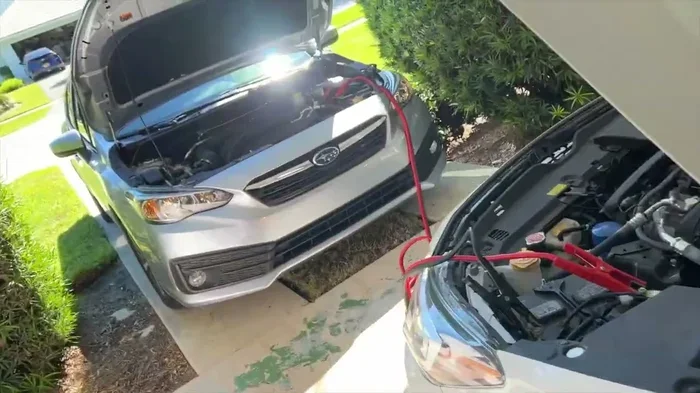
Step 3: Connect the Jumper Cables in the Correct Order
This is the most important step of the entire process. Follow this order carefully and never skip ahead:
- Connect the red clamp to the positive terminal of the dead battery first.
- Connect the other red clamp to the positive terminal of the working battery.
- Connect the black clamp to the negative terminal of the working battery.
- Connect the other black clamp to an unpainted metal surface on the dead car’s engine block, away from the battery and any moving parts.
This order matters a great deal. Connecting the cables in the wrong sequence can cause dangerous sparks or even damage the electrical systems of both vehicles. Always connect the positive cables first and the negative cables last. Never let the clamps touch each other once they are connected to a battery.
Step 4: Start the Engines
Once the cables are connected securely, start the working vehicle first. Let it idle for a few minutes to allow some charge to flow into the dead battery. Then try starting the car with the dead battery. If it starts, let both engines run for several minutes to allow the dead battery to charge.
If the dead car does not start on the first try, wait another minute or two and try again. Do not keep turning the key repeatedly, as this can overheat the starter motor and drain the working battery. After three or four attempts, check your cable connections and try again.
Step 5: Disconnect the Cables in Reverse Order
Once the dead car is running successfully, you can disconnect the cables. Do this in the exact reverse order of how you connected them:
- Remove the black clamp from the dead car’s engine block first.
- Remove the black clamp from the working battery’s negative terminal.
- Remove the red clamp from the working battery’s positive terminal.
- Remove the red clamp from the dead battery’s positive terminal last.
Be careful not to let the clamps touch each other while you are disconnecting them. Once everything is disconnected, let the car that was jumped run for at least 15 to 20 minutes. This gives the dead battery time to recharge before you turn off the engine. If the battery was completely drained, you may need to drive for 30 minutes or more to fully recharge it.
- Always keep a set of jumper cables stored in your Subaru’s trunk. You never know when you will need them.
- Never let the red and black clamps touch each other once they are connected to a battery terminal.
- If you are unsure about any step, call for roadside assistance rather than risk damaging either vehicle’s electrical system.
- Label your jumper cables with red and black markings to avoid confusion during an emergency.
Common Mistakes to Avoid
Jump starting a car is not difficult, but mistakes can happen easily, especially under stress. Avoiding these common errors will keep you and your Subaru safe and prevent costly repairs.
Connecting cables in the wrong order is the most common and dangerous mistake. Always follow the positive-positive-negative-engine block sequence. Reversing the order can fry the electrical systems of both vehicles and cause expensive damage to the alternator and onboard computers.
Letting the clamps touch each other is another risky mistake. If the red and black clamps touch while connected to a battery, you will get a spark. This can damage the batteries, blow fuses, or even cause a fire in extreme cases. Always keep the clamps separated and handle them carefully.
Forgetting to turn off all electronics in both cars before jumping is also important. Turn off the radio, headlights, air conditioning, and any other electrical accessories in both vehicles. This reduces the strain on the electrical system during the jump process and helps both batteries recover faster.
Not checking your own Subaru battery health before attempting a jump can lead to frustration and failure. If your Subaru battery is also weak or old, you may not have enough power to successfully jump start another car. A quick check with a multimeter can save you time and prevent a second roadside emergency.
When a Subaru Cannot Jump Start Another Car
There are certain situations where your Subaru might not be able to jump start another car. Understanding these scenarios will help you set realistic expectations and stay safe on the road.
Battery Health and Age
If your Subaru battery is old or already weak, it may not have enough power to jump start another vehicle. Car batteries typically last between three and five years, depending on how much you drive and the conditions you expose them to. If your battery is near the end of its life, it might not provide the necessary power output for a successful jump start.
You can check your battery’s health easily using a multimeter. A fully charged 12-volt battery should read around 12.6 volts when the engine is off. If it reads below 12.0 volts, it might not be strong enough to jump start another car. In this case, it is better to charge your battery first or use a portable jump starter device instead.
Cold Weather and Starting Power
Cold weather is a battery’s worst enemy. In freezing temperatures, battery performance drops significantly. A battery that works perfectly fine in summer might struggle to provide enough power on a cold winter morning. If you live in a region with harsh winters, keep this in mind when attempting a jump start.
Subaru vehicles are known for their all-wheel drive and excellent performance in snow and ice, but cold weather still affects battery power regardless of the drivetrain. If both your Subaru and the other car have weak batteries on a freezing morning, the jump start might not work. In these situations, a battery warmer or a portable jump starter can make all the difference.
Damaged or Heavily Corroded Battery Terminals
Sometimes the problem is not the battery itself but the terminals. Corrosion on the battery terminals can prevent a good electrical connection between the cables and the battery. If you see white, blue, or greenish buildup on the terminals, cleaning them before attempting a jump start is essential.
You can easily clean corroded terminals using a mixture of baking soda and water. Apply the paste to the terminals and scrub gently with a wire brush or an old toothbrush. Rinse with a small amount of water and dry thoroughly before making cable connections. Clean terminals ensure the best possible connection for a safe and effective jump start.
Comparison of Jump Starting Methods
There are several ways to jump start a car. Here is a comparison of the most common methods to help you choose the best option for your situation:
| Method | Pros | Cons | Best For |
|---|---|---|---|
| Using another car with jumper cables | No extra equipment needed; free and widely available | Requires a helper vehicle; takes a few minutes to set up | Roadside emergencies with another driver nearby |
| Portable jump starter pack | Compact, no helper needed; works anywhere | Costs money to purchase; needs regular recharging | Solo drivers, remote areas, and frequent travelers |
| Battery charger from a wall outlet | Slow but thorough recharge; extends battery life | Takes several hours; requires access to an electrical outlet | Garage use at home after a known battery drain |
| Roadside assistance service | Professional help; no effort required | May involve wait times; costs money per call | When you are unsure about the process or lack equipment |
Each method has its advantages. For most Subaru owners, keeping a set of jumper cables in the trunk and a portable jump starter as a backup covers nearly every scenario you might encounter on the road.
Pro Tips for Subaru Owners
As a Subaru owner, you have some great advantages when it comes to jump starting other vehicles. Here are a few expert tips to keep in mind for the best results.
Keep a portable jump starter in your trunk. These small, compact devices are incredibly useful. They can jump start your Subaru or another car without needing a second vehicle at all. They are especially valuable if you park in remote areas, leave your car sitting for long periods, or frequently travel to areas where help might be far away. A portable jump starter weighs only a few pounds and fits easily in your trunk.
Know your specific Subaru model’s battery specifications. Different Subaru models use different battery sizes and ratings. The Subaru Outback might use a different battery than the Subaru Forester or the Subaru Crosstrek. Knowing your specific battery specs helps you understand its jump starting capabilities and limitations. Check your owner’s manual for the exact battery specifications.
Perform regular battery maintenance checks. Inspect your battery terminals for corrosion every few months. Make sure the battery is securely mounted and the cables are tight. A well-maintained battery is always ready to help you jump start another car when the need arises. Simple maintenance can extend your battery life by a year or more.
Invest in heavy-duty jumper cables. Cheap jumper cables with thin wires may not deliver enough power for a reliable jump start. Look for cables rated for at least 400 to 600 amps with heavy gauge wiring and solid clamp connections. Quality cables make the jump starting process faster, safer, and more effective every single time.
Drive your Subaru regularly. Batteries charge best when the engine is running. If you let your Subaru sit unused for long periods, the battery will slowly lose charge. Driving your car regularly keeps the battery healthy and ready for any jump starting task that comes your way.
Conclusion
Can a Subaru jump start another car without trouble? Absolutely yes. Subaru vehicles are equipped with reliable batteries and strong electrical systems that make them excellent for jump starting other cars on the road. Whether you are helping a friend in a parking lot or dealing with your own roadside emergency, knowing how to properly jump start a car is an essential skill for every Subaru owner.
Remember to follow each step carefully, avoid the common mistakes we discussed, and always prioritize safety above everything else. Keep your jumper cables in good condition and your Subaru battery well maintained through regular checks. With the right preparation and knowledge, you can confidently help anyone who is dealing with a dead battery.
Stay prepared, stay safe, and enjoy the peace of mind that comes with knowing your Subaru has your back in any emergency. A dead battery does not have to be a stressful or scary experience when you know exactly what to do and how to do it safely.
Frequently Asked Questions
Can any Subaru model jump start another car?
Yes, most Subaru models can jump start another car because they all use standard 12-volt batteries. Models like the Subaru Outback, Subaru Forester, and Subaru Crosstrek have batteries with enough power to boost a dead battery. Just make sure your own Subaru battery is in good condition before attempting the jump.
How long should I let the jumped car run after starting it?
You should let the jumped car run for at least 15 to 20 minutes after it starts. This allows the dead battery to recharge partially before you turn off the engine. For best results, drive the car for at least 30 minutes to give the alternator time to fully recharge the battery.
Is it safe to jump start a modern car with a Subaru?
Yes, it is generally safe to jump start a modern car using a Subaru. Modern vehicles have sensitive electronic systems, so you must follow the correct cable connection order to avoid damage. Always connect positive to positive first, then negative to the engine block. Never let the clamps touch each other while connected.
What should I do if my Subaru battery is also dead?
If your Subaru battery is also dead, you will need a second vehicle or a portable jump starter to help. Do not attempt to jump start a car using a dead battery, as it will not provide enough power. Consider keeping a portable jump starter in your trunk for situations like this.
Can cold weather affect my Subaru’s ability to jump start another car?
Yes, cold weather can significantly reduce battery performance. In freezing temperatures, a battery may not have enough power to jump start another car even if it was working fine in warm weather. If you live in a cold climate, consider using a battery warmer and keeping your battery fully charged during winter months.
Do I need any special equipment besides jumper cables?
Jumper cables are the only essential equipment for jump starting a car. However, having safety gloves, safety glasses, and a portable jump starter as a backup is highly recommended. A multimeter is also useful for checking battery voltage before you attempt a jump start. These items are affordable and can be stored easily in your Subaru’s trunk.
=== CONCLUSION ===
Can a Subaru jump start another car without any trouble? The answer is a confident yes. Subaru vehicles are built with reliable batteries and strong electrical systems that make them excellent tools for helping another car get started. From the Subaru Outback to the Subaru Forester, you can trust your Subaru to deliver the power needed for a successful jump start when it matters most.
By following the steps outlined in this guide, avoiding common mistakes, and keeping your equipment in good shape, you will be fully prepared for any dead battery situation. Keep jumper cables in your trunk, maintain your Subaru battery regularly, and consider investing in a portable jump starter for extra peace of mind. Being prepared turns a stressful roadside moment into a quick and simple solution that gets everyone back on the road safely.