Are Tesla Tires Run Flats Everything You Need To Know
Are Tesla tires run flats? The short answer is no. Tesla vehicles do not use run flat tires. Instead, Tesla relies on tire pressure monitoring systems, tire mobility kits, and high-quality OEM tires to keep you safe on the road. Understanding how Tesla handles tire issues can save you time, money, and stress during emergencies.
Are Tesla tires run flats? This is one of the most common questions new Tesla owners ask. The answer might surprise you. Tesla does not equip its vehicles with run flat tires. Instead, the company takes a different approach to handling tire emergencies. In this guide, we will cover everything you need to know about Tesla tires, puncture response, and how to stay safe on the road.
If you own a Tesla or are thinking about buying one, understanding your tire setup is essential. Tires are the only part of your car that touches the road. They affect handling, range, comfort, and safety. Let us dive into the details of how Tesla handles tire technology and what you should do if you get a flat.
Key Takeaways
- Tesla does not use run flat tires: Most Tesla models come with standard tires, not run flat technology.
- TPMS alerts you quickly: Tesla’s tire pressure monitoring system detects pressure loss and warns you in real time.
- Tire mobility kits are standard: Most Teslas include a sealant and air compressor instead of a spare tire.
- Replacement costs vary: Tesla OEM tires can cost between $200 and $400 per tire depending on the model.
- Prevention is key: Regular tire rotation and pressure checks help extend tire life and prevent flats.
- Visit a Tesla service center for major damage: Sidewall damage or large punctures often require professional replacement.
📑 Table of Contents
- What Are Run Flat Tires and How Do They Work
- Do Tesla Tires Come As Run Flats
- What Happens When a Tesla Tire Gets Punctured
- Tesla Tire Replacement and Repair Options
- Tips to Keep Your Tesla Tires in Great Shape
- Common Mistakes Tesla Owners Make with Tires
- Final Thoughts on Tesla Tires and Run Flat Technology
What Are Run Flat Tires and How Do They Work
Before we answer the main question, let us understand what run flat tires actually are. Run flat tires are specially designed tires that allow you to keep driving after a puncture. They have reinforced sidewalls that support the vehicle even when air pressure is lost. This means you can drive for a limited distance, usually around 50 miles, at reduced speed.
Many luxury cars and some SUVs come with run flat technology. Brands like BMW and Mercedes-Benz often use them. The idea is simple. You get a puncture, but you do not need to pull over immediately. You can drive to a safe location or a service center.
The Science Behind Run Flat Technology
Run flat tires work through a few key design features. The sidewalls are much thicker than standard tires. Some use a special rubber compound that stays rigid even without air. Others have a support ring built into the rim that holds the tire in place.
Here are the main benefits of run flat tires:
- Extended mobility after puncture: You can drive up to 50 miles at speeds under 50 mph.
- No spare tire needed: Manufacturers save space and weight by skipping the spare.
- Stable handling: Reinforced sidewalls provide better control after a loss of pressure.
- No sudden deflation: The tire holds its shape, reducing the risk of a blowout.
However, run flat tires also have downsides. They are more expensive. They provide a firmer ride. And once damaged, they usually cannot be repaired. This matters when we look at Tesla’s approach.
Do Tesla Tires Come As Run Flats
Now for the big question. Are Tesla tires run flats? No, they are not. Tesla uses standard tires on all its current models. The company does not offer run flat tires as an option or as standard equipment. Instead, Tesla relies on a combination of technology and accessories to handle tire emergencies.
Tesla selects OEM tires from top brands like Michelin, Continental, and Pirelli. These are high-performance all-season tires designed for comfort, efficiency, and grip. They are optimized for electric vehicles, which means they handle the instant torque and heavier battery weight well.
Tesla Model 3 and Model Y Tire Setup
The Tesla Model 3 and Model Y are the company’s most popular vehicles. Both use standard tires with a tire mobility kit instead of a spare. The Model 3 comes with 18-inch or 19-inch wheels depending on the trim. The Model Y offers similar options with slightly larger tire sizes.
Here is what you get with a new Tesla Model 3 or Model Y:
- Two all-season tires mounted on alloy wheels
- A tire mobility kit including a sealant canister and a 12V air compressor
- TPMS sensors on all four wheels
- No spare tire included in the trunk
This setup is common across the Tesla lineup. Tesla removed spare tires from most models to save weight and improve range. The trade-off is that you need to rely on the mobility kit for minor punctures.
Tesla Model S and Model X Tire Setup
The Model S and Model X are larger vehicles. They use bigger wheels, often 19 or 21 inches. These vehicles also come with standard tires, not run flats. The tire sizes are larger, which means replacement costs can be higher.
The Model S uses tires sized around 245/35R23 or 275/35R23 depending on the configuration. The Model X uses similar sizes. Both vehicles offer all-season tires as standard and optional ultra-high-performance tires for improved grip.
One thing to note is that the larger wheel sizes on Model S and Model X can make the ride firmer. This is true of all performance tires, not just Tesla-specific ones. If you want a softer ride, consider choosing smaller wheel sizes when configuring your vehicle.
What Happens When a Tesla Tire Gets Punctured
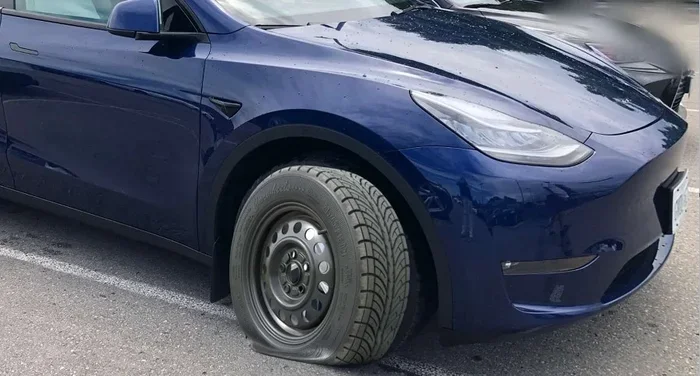
So what actually happens when you get a tire puncture in a Tesla? Since Tesla does not use run flat tires, a puncture can cause the tire to lose air. But Tesla has built-in systems to help you manage the situation safely.
How Tesla TPMS Alerts You
Every Tesla comes with a Tire Pressure Monitoring System, or TPMS. This system uses sensors on each wheel to monitor air pressure in real time. When pressure drops below a safe threshold, you get an alert on the touchscreen.
The warning looks like a horseshoe-shaped icon with an exclamation point. It may also display which specific tire is low. Tesla’s system is very responsive. You will usually get a warning within seconds of a significant pressure loss.
Here is what to do when the TPMS light comes on:
- Reduce speed gradually. Do not slam on the brakes.
- Pull over to a safe location. Avoid highways if possible.
- Check the tire visually. Look for obvious damage like nails or screws.
- Use the tire mobility kit if the puncture is small.
- Call for roadside assistance if the damage is severe.
Tesla also sends notifications through the mobile app. You can monitor tire pressure from anywhere. This is a huge advantage for EV owners who want to stay ahead of tire problems.
Tire Mobility Kit or Spare Tire
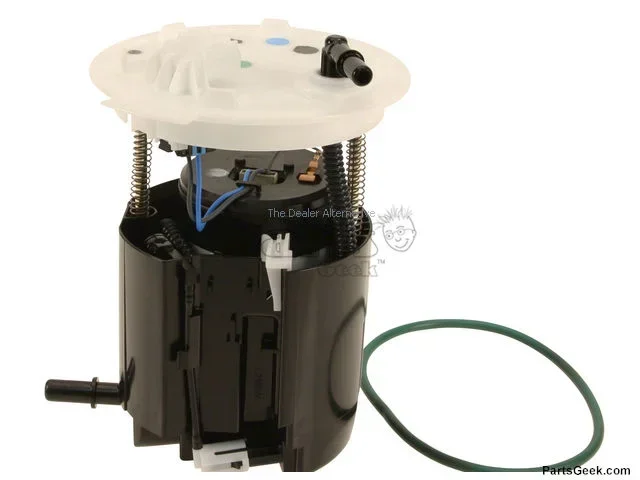
Most Tesla vehicles come with a tire mobility kit instead of a full-size spare. The kit includes two main items. First, a canister of tire sealant. Second, a portable 12V air compressor that plugs into the car’s power outlet.
The sealant works for small punctures. It coats the inside of the tire and plugs small holes. The air compressor then reinflates the tire to the recommended pressure. This process takes about 10 to 15 minutes.
However, the mobility kit has limits. It only works for punctures up to about a quarter-inch in diameter. It does not work for sidewall damage, large cuts, or blowouts. In those cases, you will need a tow or a tire replacement.
Tesla Tire Replacement and Repair Options
If your Tesla tire cannot be repaired with the mobility kit, you have several options. Understanding these options helps you make informed decisions and avoid unexpected costs.
Cost of Replacing Tesla Tires
Tesla OEM tires are not cheap. The cost depends on the model, wheel size, and tire brand. Here is a general breakdown of Tesla tire replacement cost by model:
| Model | Tire Size | Approximate Cost Per Tire |
|---|---|---|
| Model 3 (18 in) | 235/45R18 | $180 – $250 |
| Model 3 (19 in) | 235/40R19 | $200 – $280 |
| Model Y (19 in) | 255/45R19 | $200 – $280 |
| Model S (19 in) | 245/45R19 | $220 – $300 |
| Model X (20 in) | 265/45R20 | $250 – $350 |
These prices cover the tire only. Installation, balancing, and TPMS sensor replacement can add $50 to $100 per tire. If you need a full set of four tires replaced, budget accordingly.
When to Visit a Tesla Service Center
Tesla operates its own network of service centers. These facilities have trained technicians and Tesla-specific equipment. You can book service appointments through the Tesla app.
You should visit a Tesla service center for the following situations:
- Sidewall damage: The sidewall cannot be repaired safely.
- Large punctures: Holes bigger than a quarter inch need professional attention.
- Bead damage: A damaged bead means the tire will not hold air properly.
- Uneven tire wear: This could indicate alignment or suspension issues.
- TPMS sensor failure: A faulty sensor needs replacement by a qualified technician.
Tesla also offers mobile service in some areas. A technician comes to your location to handle tire replacements and other minor repairs. This is incredibly convenient for busy Tesla owners.
Expert Insight
Tesla’s warranty covers tire defects for the duration of the vehicle warranty or a specific tire warranty period, whichever applies. However, damage from road hazards like nails or potholes is typically not covered. Check your specific warranty terms for details on Tesla tire warranty coverage.
Tips to Keep Your Tesla Tires in Great Shape
Prevention is always better than repair. Taking care of your Tesla tires can extend their life, improve range, and keep you safe. Here are some practical tips every Tesla owner should follow.
Maintaining Proper Tire Pressure
Tire pressure is one of the most important factors in tire health. Underinflated tires wear out faster and reduce your driving range. Overinflated tires give a harsh ride and wear unevenly.
Tesla recommends checking tire pressure at least once a month. You can find the recommended pressure on the driver’s side door jamb or in the vehicle settings menu. The Tesla touchscreen displays real-time pressure readings for all four tires.
Here is a simple routine to follow:
- Check pressure when tires are cold. Drive less than a mile before checking for accuracy.
- Use a reliable tire gauge. Do not rely only on the TPMS display.
- Add air as needed. Most gas stations have free air pumps.
- Check the spare or mobility kit. Make sure the sealant and compressor are ready.
Regular Tire Rotation and Inspection
Tire rotation helps ensure even wear across all four tires. Tesla recommends rotating tires every 6,000 to 8,000 miles. Uneven wear is common on Teslas because the heavy battery pack puts more weight on the front or rear axle depending on the drivetrain.
During rotation, have the technician inspect the tires for:
- Uneven tread wear indicating alignment problems
- Cuts or bulges in the sidewall
- Embedded objects like nails or glass
- Tire age tires older than six years should be inspected closely
- Avoid aggressive acceleration and hard braking when possible.
- Use regenerative braking to reduce wear on front tires.
- Keep tires clean and wash off road salt and debris regularly.
- Consider tire covers if you park outdoors in extreme weather.
- Store your Tesla in a garage when possible to protect tires from UV damage.
Common Mistakes Tesla Owners Make with Tires
Even experienced Tesla owners make tire mistakes. Being aware of these common errors can save you time and money. Here are the most frequent issues we see.
Mistake 1: Ignoring TPMS warnings. Some owners dismiss the low-pressure alert, especially if the tire does not look visibly flat. This is dangerous. Driving on low tires causes damage to the sidewall and reduces handling performance.
Mistake 2: Overlooking tire age. Tires degrade over time, even with plenty of tread left. Rubber becomes brittle and cracks after several years. Check the DOT code on the tire sidewall to determine the manufacturing date.
Mistake 3: Using the wrong tire size. Aftermarket wheels or tires must match the recommended size. Putting on the wrong size can trigger error messages, affect range, and compromise safety.
Mistake 4: Relying solely on the mobility kit. The sealant is a temporary fix. It is not a permanent solution. Visit a service center or tire shop as soon as possible after using the kit.
Mistake 5: Skipping tire rotation. Skipping rotation leads to uneven wear and premature tire replacement. It is a simple maintenance task that pays off in the long run.
Final Thoughts on Tesla Tires and Run Flat Technology
So, are Tesla tires run flats? No, they are not. Tesla uses standard high-quality tires paired with advanced TPMS and a tire mobility kit. This approach keeps the vehicle lighter, which helps maximize range. It also keeps costs lower than run flat alternatives.
Understanding your Tesla tire setup is important for every owner. Know what is in your trunk. Monitor your tire pressure regularly. Respond quickly to TPMS alerts. These simple habits keep you safe and your tires lasting longer.
If you ever find yourself with a flat tire, stay calm. Pull over safely. Use your mobility kit for small punctures. Call for help for larger damage. Tesla’s roadside assistance and service network are there to support you.
Tires are a critical part of your Tesla experience. Treat them well, and they will reward you with safe, efficient driving for thousands of miles. Stay proactive, stay informed, and enjoy the ride.
Frequently Asked Questions
Do any Tesla models come with run flat tires?
No, Tesla does not offer run flat tires on any of its current models. All Tesla vehicles come with standard tires and a tire mobility kit instead of a spare wheel or run flat technology.
Can I add run flat tires to my Tesla if I want to?
You can install run flat tires on your Tesla, but it is not recommended by Tesla. Run flat tires may affect ride quality, TPMS accuracy, and range. Always consult a Tesla service advisor before making changes to your tire setup.
What should I do if my Tesla tire goes flat on the highway?
Reduce speed gradually and pull over to a safe location. Turn on your hazard lights. If the puncture is small, use the tire mobility kit. If the tire is severely damaged, call Tesla roadside assistance or a tow truck.
How much does it cost to replace all four Tesla tires?
Replacing all four Tesla tires typically costs between $800 and $1,400 depending on the model and tire size. Installation, balancing, and TPMS sensor replacement may add an additional $100 to $200 to the total cost.
Does Tesla cover flat tire replacement under warranty?
Tesla’s basic vehicle warranty covers manufacturing defects in tires. However, damage from road hazards like potholes, nails, or debris is not covered. Check your specific warranty documents for detailed tire coverage terms.
How often should I check my Tesla tire pressure?
Tesla recommends checking tire pressure at least once a month and before long trips. You can also monitor pressure through the Tesla touchscreen in real time. Keeping pressure at the recommended level improves range, handling, and tire longevity.
=== CONCLUSION ===
Are Tesla tires run flats? The answer is clear. Tesla does not use run flat tires. The company relies on high-quality OEM tires, advanced TPMS technology, and tire mobility kits to handle tire emergencies. This approach keeps Teslas lighter, more efficient, and more affordable to maintain.
By understanding how your Tesla tires work and following simple maintenance routines, you can avoid most tire problems. Check pressure regularly, rotate tires on schedule, and respond quickly to alerts. Your Tesla tires will serve you well for many miles to come.